Balkinization
an unanticipated consequence of
Jack M. Balkin
Balkinization Symposiums: A Continuing List
E-mail:
Jack Balkin:
jackbalkin at yahoo.com
Bruce Ackerman
bruce.ackerman at yale.edu
Ian Ayres
ian.ayres at yale.edu
Corey Brettschneider
corey_brettschneider at brown.edu
Mary Dudziak
mary.l.dudziak at emory.edu
Joey Fishkin
joey.fishkin at gmail.com
Heather Gerken heather.gerken at yale.edu
Abbe Gluck abbe.gluck at yale.edu
Mark Graber
mgraber at law.umaryland.edu
Stephen Griffin
sgriffin at tulane.edu
Jonathan Hafetz
jonathan.hafetz at shu.edu
Jeremy Kessler
jkessler at law.columbia.edu
Andrew Koppelman
akoppelman at law.northwestern.edu
Marty Lederman
msl46 at law.georgetown.edu
Sanford Levinson
slevinson at law.utexas.edu
David Luban
david.luban at gmail.com
Gerard Magliocca
gmaglioc at iupui.edu
Jason Mazzone
mazzonej at illinois.edu
Linda McClain
lmcclain at bu.edu
John Mikhail
mikhail at law.georgetown.edu
Frank Pasquale
pasquale.frank at gmail.com
Nate Persily
npersily at gmail.com
Michael Stokes Paulsen
michaelstokespaulsen at gmail.com
Deborah Pearlstein
dpearlst at yu.edu
Rick Pildes
rick.pildes at nyu.edu
David Pozen
dpozen at law.columbia.edu
Richard Primus
raprimus at umich.edu
K. Sabeel Rahmansabeel.rahman at brooklaw.edu
Alice Ristroph
alice.ristroph at shu.edu
Neil Siegel
siegel at law.duke.edu
David Super
david.super at law.georgetown.edu
Brian Tamanaha
btamanaha at wulaw.wustl.edu
Nelson Tebbe
nelson.tebbe at brooklaw.edu
Mark Tushnet
mtushnet at law.harvard.edu
Adam Winkler
winkler at ucla.edu
Compendium of posts on Hobby Lobby and related cases
The Anti-Torture Memos: Balkinization Posts on Torture, Interrogation, Detention, War Powers, and OLC
The Anti-Torture Memos (arranged by topic)
Recent Posts
Levinson on Constitutional Reform, Part II
![[Powered by Blogger]](https://lh3.googleusercontent.com/blogger_img_proxy/AEn0k_vLS0-q2sFdozX7IDhCRVHhzS1Cv-WHsLsHq7oROGkQGZg9dq9te7BGTpf8cOcJhyGKmhQnUtGtOk8qwMzdQlWPrdbGhTJJLKrCBYuQCv4D=s0-d)
Just A Few Blogs
ACS Blog
Alas, a Blog
Althouse
Arts and Letters Daily
Atrios (Eschaton)
Bill of Health
Buzzflash.com
Buzz Machine
Cato at Liberty
Juan Cole (Informed Comment)
Concurring Opinions
The Constitution in 2020
Corrente
Crooked Timber
Daily Howler
Daily Kos
Dana Boyd
Brad DeLong
Digby (Hullabaloo)
Discriminations
Daniel Drezner
Kevin Drum (Mother Jones)
Electrolite
En Banc
Eunomia (Daniel Larison)
Fafblog
Michael Froomkin (Discourse.net)
GovLab (Beth Noveck)
Rick Hasen (Election Law)
History News Network
How Appealing
Ignatz (Sam Heldman)
The Importance of (Ernie Miller)
Infolaw
Instapundit
International Economic Law and Policy Blog
IntLawGrrls
Jacob Levy
Jesus' General
Jurisdynamics
The Kitchen Cabinet
Mark Kleiman
Law Blog Central
Larry Lessig
Lawyers, Guns and Money
Liberal Oasis
Brian Leiter's Law School Reports
The Leiter Reports
Marginal Revolution
Megan McArdle
Memeorandum
Metafilter
Mirror of Justice
The New Republic
Newseum
No More Mister Nice Blog
Brendan Nyhan
Opinio Juris
Orcinus
The Originalism Blog
Pandagon
Passport (Foreign Policy)
Overcoming Bias
Political Animal (Washington Monthly)
Political Theory Daily Review
Political Wire (Taegan Goddard)
The Poor Man
Virginia Postrel
Prawfsblawg
Public Reason
Jonathan Rauch
Raw Story
Redstate
ReligiousLeftLaw.com
Reporters Committee For Freedom of the Press
Reproductive Rights Blog
Rothman's Roadmap to the Right of Publicity
SCOTUS Blog
Seeing the Forest
Clay Shirky
The Shifted Librarian
The Situationist
Larry Solum (Legal Theory)
Andrew Sullivan
Talking Points Memo
Talk Left
Tapped
Tbogg
TechPresident
The Paper Chase (Jurist)
Tom Paine
Tom Tomorrow (This Modern World)
Eve Tushnet
Uggabugga
University of Chicago Law School Faculty Blog
Unqualified Offerings
The Volokh Conspiracy
War and Piece (Laura Rozen)
Wampum
Oliver Willis
Wonkette
Written Description
Matthew Yglesias
Yin
Your Choice of Feeds
1. XML
powered by

2. Atom Feed
3. RSS 2.0
Levinson on Constitutional Reform, Part II
Anonymous
Part II of my post takes up the idea of "policy catastrophes":
To get a grip on the idea of a policy catastrophe, consider these examples:
1) Collapse and government bailout of savings and loan institutions in the 1980s.
2) Destruction of the space shuttles Challenger (1986) and Columbia (2003).
3) 9/11 terrorist attacks.
4) Inundation of New Orleans in 2005 after Hurricane Katrina due to failure of levees and subsequent inadequate government response.
Note: I invite you to come up with other examples. The Iraq War? The policy response to global warming? But remember: there must be a defensible link to the structure of our constitutional order.
These catastrophes share some characteristics. First, they are all policy outcomes in the sense that they are linked to the pursuit of certain policies by government. Second, no one defends these policy outcomes. While some might question the underlying programs, such as the regulation of banks or the building of space shuttles, no one contests that once government regulates an industry or builds a complex space transportation vehicle, the regulation should be effective and the vehicle should not fail. The savings and loan debacle, for example, cost taxpayers around $150 billion, a gigantic sum that could have been employed for many other useful purposes. If the debacle could have been avoided through some sort of reform, everyone would presumably be interested in at least investigating that possibility.
You may be waiting for me to link these disasters to some constitutional structure. Before I provide some suggestive leads, let’s reflect on the often-presumed pervasive background role that the Constitution plays in our government. My observation is that when policies go well, when government succeeds, the strength and stability of our constitutional system is usually celebrated. Matters seem to be quite different when policies go poorly. In that situation, the somewhat god-like role usually attributed to the Constitution suddenly disappears, replaced by incompetent administrators and feckless politicians. If, however, the Constitution is successful in structuring government action, then we are bound to investigate whether that structure is at fault when policies fail, especially when they fail spectacularly.
Experienced students of government policy know that when policies and program administration goes wrong, there is usually a trail (often long) leading back to Congress. Especially with respect to policies pursued over decades, Congress is still “keystone of the Washington establishment.” (Morris Fiorina’s phrase and see his book of the same name) If our “homeland security” and intelligence agency structure is fragmented, if key regulations governing the savings and loan industry are loosened, if NASA builds a space shuttle scientists scorned (whose components come from congressional districts scattered across the country), and the Army Corps of Engineers had to stretch a Louisiana flood control project designed to be completed in ten years over decades, it is usually because members of Congress wanted it that way.
The tendency of members of Congress to think about their own districts and states rather than the national interest is not new. But the advent of the administrative-welfare-spending state made an extraordinary difference to the impact members of Congress could have on national policy. At Time 1, the federal government assumed no responsibility for preventing or alleviating the consequences of natural disasters such as floods or earthquakes. Once the government did assume this responsibility at Time 2, it became accountable for its policy decisions. If, however, the structure of Congress involves making public policy “almost as an afterthought,” (Fiorina) then it is difficult to see how future policy disasters might be prevented. To be a bit more precise, if making national policy is a byproduct of what Congress is really doing – funneling money and serving as ombudsman to individual districts and states – we might consider a different structure that would encourage policymaking as such.
Critical analysis of our political system often amounts to high-minded hand-wringing over how the national interest is ignored. But the terrorist attacks of 9/11 and the aftermath of Hurricane Katrina should have demonstrated that this sort of analysis is a practical necessity. When poor policy choices or, more likely, the failure to choose results in the deaths of thousands of citizens and the loss of hundreds of billions of dollars (as has actually happened), the inquiry into the consequences of constitutional structure should not be regarded as theoretical or a parlor game about a constitutional convention most people think we are not going to have.
Presumably there is no such thing as a constitutional structure that will allow us to avoid all policy catastrophes. We are still not the angels that Madison invoked in his famous argument and our knowledge of the future is limited. But understanding that there might be a link between such catastrophes and constitutional structure might make us more likely to acknowledge that the Constitution is not exogenous to the problems and faults in our political system. The Constitution is not an impartial spectator, so to speak, but a participant with a set of biases, just like everyone else.
Sandy closes his book by lamenting the inflexibility of Article V. (159-66) He generously cites my work for the proposition that if constitutional change is not allowed because of the difficulty of amendment, then it may occur through other means, such as informal constitutional change through the political system and judicial interpretation. (22) Sandy makes the sound argument that there are limits to this sort of informal adaptation. If we want to adopt a parliamentary form of government in which executive officials serve in the legislature, formal change through Article V is the only way to get there. (163-65) This point applies to nearly all the changes Sandy advocates and explains his interest in making change through Article V easier.
An issue related to Sandy’s point is whether the inflexibility of Article V has had adverse consequences. Here scholars disagree. It is conceded by many that the U.S. Constitution is one of the more difficult constitutions in the world to amend. But Chris Eisgruber has defended the position (in his book Constitutional Self-Government) that having a relatively inflexible constitution increases the truly democratic character of a political order. I wish Sandy had said something about Eisgruber’s argument, but I will take a stab myself.
Any argument about the costs and benefits of the supermajority barriers to constitutional change in Article V necessarily involves some counterfactual speculation about what our constitutional history would have looked like had the framers not built the “iron cage” of Article V, as Sandy puts it. (165) But the question is not entirely about the effects of certain procedural changes. Several generations of Americans have absorbed not only the reality that formal constitutional change is quite difficult, but the normative view that it should be difficult, that we should not “tinker” with the Constitution. The proposal to make formal change through Article V easier thus concerns our “constitutional culture,” a set of views and understandings about how constitutional change should be made, just as much as it concerns alterations to the text of Article V. (as Sandy notes – see 163)
In today’s world, Americans associate prospective constitutional amendments with efforts to alter rights, such as abortion, gay marriage, and flag burning. Scholars interested in constitutional change believe the main issue lies elsewhere – with the still uncertain constitutional status of the New Deal, the administrative state, and the greatly changed role of the presidency after World War II, the Cold War, and now the “war on terror.” Certainly this issue is compatible with Sandy’s focus on the structural aspects of the Constitution, as opposed to its provisions concerning rights. In my experience, however, the existence of a continuing issue with respect to the constitutional legitimacy of the New Deal (as well as the other items mentioned) has proven hard for most legal scholars to grasp. There is a tendency to see these problems as involving questions of constitutional interpretation, not amendment or legitimacy.
Undermining this common view would require a very long detour into the byways of American political history. But in brief, important elements in American conservative thought never accepted the legitimacy of the New Deal. One of the main reasons, a concern which remains alive today, was that conservatives believed it was a change of constitutional dimensions that did not take place through formal amendment. President Roosevelt’s deliberate decision to treat the changes of the New Deal as matters for the Supreme Court and constitutional interpretation had important consequences that were not foreseen at the time. I should say immediately that it is far from clear that it would have been better, all things considered, for FDR to press a set of amendments on the country. There were many difficult issues involved and the right course of action was not obvious. The point I would stress is that there were costs, no matter what choice FDR made.
Many Americans believe that the Constitution does not cover every contingency and that it does impose meaningful limits on government action. It follows that there may be moments in history in which the only legitimate way to obtain constitutional power is through formal amendment. The failure to ratify the New Deal, as well as other important aspects of the contemporary constitutional system, through amendments has created an ongoing issue within American constitutionalism. Of course, some believe such views are the hobbyhorses of repudiated cranks like Barry Goldwater, but that was before the conservatives who supported Goldwater in 1964 came to power with Ronald Reagan in 1980. Nevertheless, the widespread view that amendments are dangerous has operated to suppress the kind of politics and political discussion that may be necessary to provide a full measure of legitimacy for government action in the post-New Deal state. For me, the democratic cost of an inflexible amendment process is the fundamental issue posed by the infrequency of amendment through Article V.
Posted
10:58 PM
by Anonymous [link]
I consider such views unrealistic. The long-run centralizing trends were irresistible. Large corporations were spreading production across state lines in a way no one in the 18th century could forsee. Advances in transportation and communications technology (railroad and telegraphs in the 19th century, cars and telephones in the early 20th) were "shrinking" the country. Mass media were creating an increasingly unified national culture. And people politically identified more and more with the federal government and less with the states. As the country became more integrated, a more centralized government was necessary and inevitable.
The advantage in amending, rather than reinterpeting, the Constitution was twofold. First, it would have prevented conservatives from denying the legitimacy of that increased centralization. Second, it would have established just what we did and did not want to federalize. The uncertainty in that regard creates serious problems to this day.
That being said, I do think it is wise to make amendments to the Constitution difficult. If our Constitution is more difficult to amend than other contries', it is also sparser. (It leaves to the discretion of Congress the entire structure of the executive branch and the courts, for instance). Our Constitution was made intentionally sparse in order to give it flexibility.
I believe the most valuable purpose served in making amendment difficult is to protect our Constitition's sparseness, and to allow the federal government the flexibility needed to deal with a complex world. Anyone who doubts that this is true need look no further than numerous state constitutions, which have become veritable Christmas trees of amendments, many of them seriously constricting governments and interfering with their function. And this problem is worst in the states that make their constitutions easiest to amend, i.e., the ones with the initiative.
In short, I believe the amendment process should, indeed, be used sparingly, for major realignments like the New Deal. A sparse Constitution gives the most room to maneuver, and too many amendments threaten that sparseness.

In circumstances of perceived urgency or crisis, executive and legislative actions of questionable legitimacy, whether various New Deal acts, the Lousiana Purchase, internment of Japanese-Americans, etc., were made, the popular support of which muted and/or delayed any serious political consideration as to the legality or constitutionality of the acts. That extra-legal "flexibility", while less than ideal, is arguably preferable to having Constitutional Amendments allowing for any vague executive action that "promotes the general welfare" or authorizing the detention of citizens without trial to protect "public safety".
As to making the amendment process less difficult, all it would take is passing a single amendment changing Article V itself, allowing for, say, amendment by referendum or initiative. Having found myself in the voting booth trying to parse the language of state constitutional amendments pertaining to anything from what blueberry growers can do to whether certain specific equipment should be exempt from sales tax, I can say for myself that I lean in favor of old-style American republicanism.

The commerce clause jurisprudence signals to me that it is too hard to come to an amendment to the constitution. The federal government has taken over significant parts of State's Powers (which I'm not againt, by the way), but this has happened through interpretation of the commerce clause. I think the power of the federal government should be ratified by the text of the constitution.
In my opinion, the treatment of the constitution as living, derives from the inability to make amendments to the constition. The world isn't the same as in seventeenhunderderdsomething. The constitution has to change accordingly through constitutional changens, if not interpretation of the constitution to the changing world will change the meaning of the constitution.
Living constitutionalism isn't the cure for a broken Article V, it's what broke it.
Priest, so long as we retain (Restore, really; It only takes 5 votes to "ratify" an "amendment" today.) the supermajority requirement, we won't see a laundry list federal Constitution; State constitutions accumulate excess amendments because they are in most cases about as easy to amend as enacting statutes.
I'd propose an amendment to Article V simply providing that any amendment ratified with the same language by the required number of states becomes effective, without regard to where it originated, Congress, the Supreme court, or the states.
It wouldn't have been difficult to draft that as an amendment that everyone would have understood. It's merely that to state it clearly is to understand that the states would never have ratified the amendment.
I don't mind that FDR didn't ratify his expansive views back then, I suggest we do it now.
The interstate commerce case law now says that the federal government can in fact everything that has any to do with interstate effect, so why not put in in the constitution?
Then I would try to limit the power by excluding bills of attainder or actually regulations that seek to single out one state in particular.
But who's talking about amending it? The people who want to return it to the "stone age" are trying to undo an "amendment" which was achieved without compliance with Article V, and which is now, and always will be seen as illegitimate by people who really care about the distinction between the rule of law, and the rule of lawyers.
Seems a simple rule: If you want to change the Constitution, draft an amendment, and send it to the states to ratify or reject. It has the advantage of requiring the amendment to be clear, allowing for public debate, and being the procedure the Constitution actually calls for.
I'll try to respond to your post tomorrow, Shaq. 6 hours time difference isn't helping
It seems to me that even when good laws exist, and good policies have been developed and enacted, the problems most frequently arise due to subsequent political disagreement over funding, entitlement, administration, etc. The fact that such disagreements are often promulgated by the policies political foes might also be worth noting.
Some time ago, I read a book about the development of nuclear power and the challenge of nuclear safety. (Beyond Engineering, Robert Pool, 1999) As witnessed by 3 mile island, the nuclear industry had a long way to go. Similar (non-nuclear) disasters are continuing, such as the recent explosion and fire at a BP plant in Texas City. The reasons for these disasters, or at least the events leading up to them, have many similarities. They also have similarities with the governmental policy catastrophies. Pool makes the argument that it is possible to create a culture of safety that very effectively prevents these failures, and he presents several examples. (unfortunately, I loaned my copy to a friend, so I'm reconstructing from memory here) The two examples that spring to mind are the airline industry, which has a phenomenal safety record and some schools of medical practice, in which bad outcomes have been aggressively reduced.
Basically, there are some very concrete ways of preventing these technological disasters, but they require a culture which is fully aware of the challenge. There is a parallel with governance: In both, the challenge is to develop a system (or policy) which is stable, effective and safe, yet remains flexible in the face of future technological developments, economic and regulatory changes, etc.
So we have a parallel with the constitution, which is a (sparse) set of rules which attempts to lay out a system of governance that is effective and stable, yet responsive and flexible. The failures of governance cited are primarily failures of stability that occurred because a political agenda (deregulate, launch now!, spread the cost) was applied inappropriately to an existing (working) system. The Iraq war is a different type of failure in which the power of the executive has been hijacked for personal vendetta and profit with the complicity of congress under the cloak of a culture of fear and a (largely imagined and highly leveraged) external threat.
Is this a constitutional problem? or a problem with a possible constitutional resolution? As pointed out by others, the constitution was framed before any of the technology that makes our current communication possible was even on the most futuristic horizon. The development of highly sophistocated technology, its impact on culture, and vice versa should not be neglected. The speed of things is increased, and the ability to play the system, in an Enron sort of strategy, is greatly increased by this rapid inter-connected technology driven system.
Based on this, I would rewrite the constitution in a different sort of way: give presidential appointees long terms (>10 years). Ineffective and highly unpopular appointees can be removed by a 3/4 vote in congress AND a 2/3 vote of their employees. This would radically change the cabinet and reduce the influence of the politics du jour on the running of the country. This would also (hopefully) shift the presidential interest away from highly political appointments toward choices on the basis of professionalism. Since the appointee would be in a long-term position, their goal would be to run an effective agency, instead of to protect their political hides, and those of their superiors.
One of the fundamental means of avoiding catastrophe is to make absolutely sure that the person at the top is presented with a range of opinions. This did not occur during the 'group think' of the Bay of Pigs, and it has not occurred under this administration. Under the current system, 'group think' is all too frequent. The president is surrounded by his/her own appointees, usually of his/her own ideology. Making appointments for longer terms would alter this spectrum of advice, and limit the power of the presidency.
Whether or not this would have made the New Deal impossible, I'm not sure.
Obat alami ambeien dan wasir
Obat herbal wasir atau ambeien
Obat tradisional wasir ambeien
Obat alami wasir atau ambeien
Obat tradisional untuk wasir atau ambeien
Obat alami untuk wasir/ambeien
Obat tradisional untuk penyakit wasir atau ambeien
Obat tradisional wasir atau ambeien
Obat tradisional mengobati wasir/ambeien
Obat herbal untuk penyakit wasir/ambeien
Obat herbal untuk wasir atau ambeyen
Obat tradisional untuk ambeyen atau wasir
Obat tradisional ambeien atau wasir
Obat alami wasir atau ambeyen
Obat untuk ambeyen dan wasir
Obat wasir dan ambeien
Obat wasir ambeyen tradisional
Obat wasir atau ambeyen
Obat sipilis Yang manjur
obat sipilis denature indonesia
Obat sipilis resep dokter
Obat sipilis paling manjur
Obat sipilis pada wanita
Obat tradisional menyembuhkan kutil kelamin
Obat minum untuk kutil kelamin
Obat medis untuk kutil kelamin
Obat kutil kelamin DE NATURE
Merek obat kutil kelamin
Obat kutil kelamin de nature
Nama obat kutil kelamin
Nama salep obat kutil kelamin
Obat kutil kelamin tanpa operasi
Obat oles untuk kutil kelamin
Obat kutil di alat kelamin pria
Obat untuk kutil pada kelamin
Obat tradisional kutil pada kelamin
Obat penyakit kutil kelamin
Obat penghilang kutil kelamin
Obat perontok kutil kelamin
Obat tradisional kutil kelamin pada pria
Obat untuk penyakit kutil kelamin
Propolis untuk obat kutil kelamin
Obat alami untuk penyakit kutil kelamin
Obat kutil pd kelamin
Resep obat kutil kelamin
Obat anti sifilis
Obat sipilis dijual di apotik
Obat sipilis murah di apotik
Obat alami sipilis pada pria
Obat sifilis ampuh
Obat sipilis beli di apotik
Obat sipilis buat wanita
Obat sipilis buatan sendiri
Obat sipilis bagi wanita
Obat buat sipilis
Obat biotik sifilis
Obat antibiotik buat sipilis
Obat tradisional buat sipilis
Obat herbal buat sipilis
Obat dokter buat sipilis
Obat generik buat sipilis
Obat sipilis dengan bayam duri
Obat sipilis yang bagus
Obat buat sifilis
Obat sipilis.com
Obat sipilis ciprofloxacin
Obat china sipilis
obat kutil kelamin dan leher
obat alami menghilangkan kutil kelamin
obat tradisional untuk menghilangkan kutil kelamin
kumpulan obat kutil kelamin
obat tradisional kutil kelamin
obat penyakit kutil kelamin
obat tradisional untuk kutil kelamin
obat alami untuk menghilangkan kutil kelamin
obat alami kutil kelamin
Obat kencing nanah pria
Obat kencing nanah dan darah
Obat kencing nanah apotik
Obat kencing nanah antibiotik
Obat kencing nanah amoxicillin
Obat kencing nanah apa
Obat kencing nanah apa ya
Obat kencing nanah atau gonore
Obat kencing nanah akut
Obat kencing nanah ada di apotik
Obat kencing nanah di apotik umum
Obat kencing nanah paling ampuh
Obat kencing nanah yang ampuh
Obat kencing nanah secara alami
Obat kencing nanah bandung
Obat kencing nanah buatan sendiri
Obat kencing nanah yang bisa dibeli di apotik
Obat herbal untuk mengobati kencing nanah
Obat kencing nanah paling bagus
Obat kencing nanah yang bisa dibeli di apotek
Obat kencing nanah di apotik bebas
Obat kencing nanah yang dijual bebas
Books by Balkinization Bloggers

Gerard N. Magliocca, The Actual Art of Governing: Justice Robert H. Jackson's Concurring Opinion in the Steel Seizure Case (Oxford University Press, 2025)

Linda C. McClain and Aziza Ahmed, The Routledge Companion to Gender and COVID-19 (Routledge, 2024)

David Pozen, The Constitution of the War on Drugs (Oxford University Press, 2024)

Jack M. Balkin, Memory and Authority: The Uses of History in Constitutional Interpretation (Yale University Press, 2024)
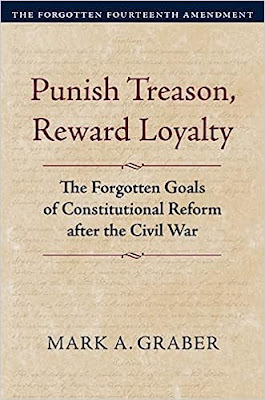
Mark A. Graber, Punish Treason, Reward Loyalty: The Forgotten Goals of Constitutional Reform after the Civil War (University of Kansas Press, 2023)
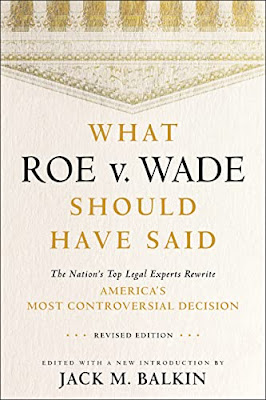
Jack M. Balkin, What Roe v. Wade Should Have Said: The Nation's Top Legal Experts Rewrite America's Most Controversial Decision - Revised Edition (NYU Press, 2023)

Andrew Koppelman, Burning Down the House: How Libertarian Philosophy Was Corrupted by Delusion and Greed (St. Martin’s Press, 2022)

Gerard N. Magliocca, Washington's Heir: The Life of Justice Bushrod Washington (Oxford University Press, 2022)
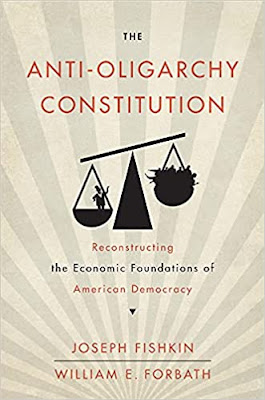
Joseph Fishkin and William E. Forbath, The Anti-Oligarchy Constitution: Reconstructing the Economic Foundations of American Democracy (Harvard University Press, 2022)
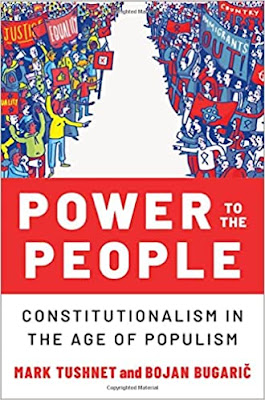
Mark Tushnet and Bojan Bugaric, Power to the People: Constitutionalism in the Age of Populism (Oxford University Press 2021).

Mark Philip Bradley and Mary L. Dudziak, eds., Making the Forever War: Marilyn B. Young on the Culture and Politics of American Militarism Culture and Politics in the Cold War and Beyond (University of Massachusetts Press, 2021).

Jack M. Balkin, What Obergefell v. Hodges Should Have Said: The Nation's Top Legal Experts Rewrite America's Same-Sex Marriage Decision (Yale University Press, 2020)

Frank Pasquale, New Laws of Robotics: Defending Human Expertise in the Age of AI (Belknap Press, 2020)

Jack M. Balkin, The Cycles of Constitutional Time (Oxford University Press, 2020)

Mark Tushnet, Taking Back the Constitution: Activist Judges and the Next Age of American Law (Yale University Press 2020).

Andrew Koppelman, Gay Rights vs. Religious Liberty?: The Unnecessary Conflict (Oxford University Press, 2020)

Ezekiel J Emanuel and Abbe R. Gluck, The Trillion Dollar Revolution: How the Affordable Care Act Transformed Politics, Law, and Health Care in America (PublicAffairs, 2020)

Linda C. McClain, Who's the Bigot?: Learning from Conflicts over Marriage and Civil Rights Law (Oxford University Press, 2020)
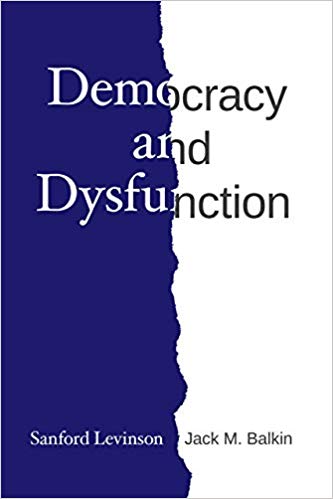
Sanford Levinson and Jack M. Balkin, Democracy and Dysfunction (University of Chicago Press, 2019)

Sanford Levinson, Written in Stone: Public Monuments in Changing Societies (Duke University Press 2018)

Mark A. Graber, Sanford Levinson, and Mark Tushnet, eds., Constitutional Democracy in Crisis? (Oxford University Press 2018)

Gerard Magliocca, The Heart of the Constitution: How the Bill of Rights became the Bill of Rights (Oxford University Press, 2018)

Cynthia Levinson and Sanford Levinson, Fault Lines in the Constitution: The Framers, Their Fights, and the Flaws that Affect Us Today (Peachtree Publishers, 2017)

Brian Z. Tamanaha, A Realistic Theory of Law (Cambridge University Press 2017)

Sanford Levinson, Nullification and Secession in Modern Constitutional Thought (University Press of Kansas 2016)

Sanford Levinson, An Argument Open to All: Reading The Federalist in the 21st Century (Yale University Press 2015)

Stephen M. Griffin, Broken Trust: Dysfunctional Government and Constitutional Reform (University Press of Kansas, 2015)

Frank Pasquale, The Black Box Society: The Secret Algorithms That Control Money and Information (Harvard University Press, 2015)

Bruce Ackerman, We the People, Volume 3: The Civil Rights Revolution (Harvard University Press, 2014)
Balkinization Symposium on We the People, Volume 3: The Civil Rights Revolution

Joseph Fishkin, Bottlenecks: A New Theory of Equal Opportunity (Oxford University Press, 2014)

Mark A. Graber, A New Introduction to American Constitutionalism (Oxford University Press, 2013)

John Mikhail, Elements of Moral Cognition: Rawls' Linguistic Analogy and the Cognitive Science of Moral and Legal Judgment (Cambridge University Press, 2013)

Gerard N. Magliocca, American Founding Son: John Bingham and the Invention of the Fourteenth Amendment (New York University Press, 2013)

Stephen M. Griffin, Long Wars and the Constitution (Harvard University Press, 2013)

Andrew Koppelman, The Tough Luck Constitution and the Assault on Health Care Reform (Oxford University Press, 2013)

James E. Fleming and Linda C. McClain, Ordered Liberty: Rights, Responsibilities, and Virtues (Harvard University Press, 2013)
Balkinization Symposium on Ordered Liberty: Rights, Responsibilities, and Virtues

Andrew Koppelman, Defending American Religious Neutrality (Harvard University Press, 2013)

Brian Z. Tamanaha, Failing Law Schools (University of Chicago Press, 2012)

Sanford Levinson, Framed: America's 51 Constitutions and the Crisis of Governance (Oxford University Press, 2012)

Linda C. McClain and Joanna L. Grossman, Gender Equality: Dimensions of Women's Equal Citizenship (Cambridge University Press, 2012)

Mary Dudziak, War Time: An Idea, Its History, Its Consequences (Oxford University Press, 2012)

Jack M. Balkin, Living Originalism (Harvard University Press, 2011)

Jason Mazzone, Copyfraud and Other Abuses of Intellectual Property Law (Stanford University Press, 2011)

Richard W. Garnett and Andrew Koppelman, First Amendment Stories, (Foundation Press 2011)

Jack M. Balkin, Constitutional Redemption: Political Faith in an Unjust World (Harvard University Press, 2011)

Gerard Magliocca, The Tragedy of William Jennings Bryan: Constitutional Law and the Politics of Backlash (Yale University Press, 2011)

Bernard Harcourt, The Illusion of Free Markets: Punishment and the Myth of Natural Order (Harvard University Press, 2010)

Bruce Ackerman, The Decline and Fall of the American Republic (Harvard University Press, 2010)
Balkinization Symposium on The Decline and Fall of the American Republic

Ian Ayres. Carrots and Sticks: Unlock the Power of Incentives to Get Things Done (Bantam Books, 2010)

Mark Tushnet, Why the Constitution Matters (Yale University Press 2010)

Ian Ayres and Barry Nalebuff: Lifecycle Investing: A New, Safe, and Audacious Way to Improve the Performance of Your Retirement Portfolio (Basic Books, 2010)
.jpg)
Jack M. Balkin, The Laws of Change: I Ching and the Philosophy of Life (2d Edition, Sybil Creek Press 2009)

Brian Z. Tamanaha, Beyond the Formalist-Realist Divide: The Role of Politics in Judging (Princeton University Press 2009)
Andrew Koppelman and Tobias Barrington Wolff, A Right to Discriminate?: How the Case of Boy Scouts of America v. James Dale Warped the Law of Free Association (Yale University Press 2009)

Jack M. Balkin and Reva B. Siegel, The Constitution in 2020 (Oxford University Press 2009)

Heather K. Gerken, The Democracy Index: Why Our Election System Is Failing and How to Fix It (Princeton University Press 2009)

Mary Dudziak, Exporting American Dreams: Thurgood Marshall's African Journey (Oxford University Press 2008)

David Luban, Legal Ethics and Human Dignity (Cambridge Univ. Press 2007)

Ian Ayres, Super Crunchers: Why Thinking-By-Numbers is the New Way to be Smart (Bantam 2007)

Jack M. Balkin, James Grimmelmann, Eddan Katz, Nimrod Kozlovski, Shlomit Wagman and Tal Zarsky, eds., Cybercrime: Digital Cops in a Networked Environment (N.Y.U. Press 2007)
Jack M. Balkin and Beth Simone Noveck, The State of Play: Law, Games, and Virtual Worlds (N.Y.U. Press 2006)

Andrew Koppelman, Same Sex, Different States: When Same-Sex Marriages Cross State Lines (Yale University Press 2006)

Brian Tamanaha, Law as a Means to an End (Cambridge University Press 2006)

Sanford Levinson, Our Undemocratic Constitution (Oxford University Press 2006)

Mark Graber, Dred Scott and the Problem of Constitutional Evil (Cambridge University Press 2006)

Jack M. Balkin, ed., What Roe v. Wade Should Have Said (N.Y.U. Press 2005)

Sanford Levinson, ed., Torture: A Collection (Oxford University Press 2004)
Balkin.com homepage
Bibliography
Conlaw.net
Cultural Software
Writings
Opeds
The Information Society Project
BrownvBoard.com
Useful Links
Syllabi and Exams
