Balkinization
an unanticipated consequence of
Jack M. Balkin
Balkinization Symposiums: A Continuing List
E-mail:
Jack Balkin:
jackbalkin at yahoo.com
Bruce Ackerman
bruce.ackerman at yale.edu
Ian Ayres
ian.ayres at yale.edu
Corey Brettschneider
corey_brettschneider at brown.edu
Mary Dudziak
mary.l.dudziak at emory.edu
Joey Fishkin
joey.fishkin at gmail.com
Heather Gerken heather.gerken at yale.edu
Abbe Gluck abbe.gluck at yale.edu
Mark Graber
mgraber at law.umaryland.edu
Stephen Griffin
sgriffin at tulane.edu
Jonathan Hafetz
jonathan.hafetz at shu.edu
Jeremy Kessler
jkessler at law.columbia.edu
Andrew Koppelman
akoppelman at law.northwestern.edu
Marty Lederman
msl46 at law.georgetown.edu
Sanford Levinson
slevinson at law.utexas.edu
David Luban
david.luban at gmail.com
Gerard Magliocca
gmaglioc at iupui.edu
Jason Mazzone
mazzonej at illinois.edu
Linda McClain
lmcclain at bu.edu
John Mikhail
mikhail at law.georgetown.edu
Frank Pasquale
pasquale.frank at gmail.com
Nate Persily
npersily at gmail.com
Michael Stokes Paulsen
michaelstokespaulsen at gmail.com
Deborah Pearlstein
dpearlst at yu.edu
Rick Pildes
rick.pildes at nyu.edu
David Pozen
dpozen at law.columbia.edu
Richard Primus
raprimus at umich.edu
K. Sabeel Rahmansabeel.rahman at brooklaw.edu
Alice Ristroph
alice.ristroph at shu.edu
Neil Siegel
siegel at law.duke.edu
David Super
david.super at law.georgetown.edu
Brian Tamanaha
btamanaha at wulaw.wustl.edu
Nelson Tebbe
nelson.tebbe at brooklaw.edu
Mark Tushnet
mtushnet at law.harvard.edu
Adam Winkler
winkler at ucla.edu
Compendium of posts on Hobby Lobby and related cases
The Anti-Torture Memos: Balkinization Posts on Torture, Interrogation, Detention, War Powers, and OLC
The Anti-Torture Memos (arranged by topic)
Recent Posts
You Call It "Torture"; We Call It "Coming Into Possession of Classified Information"
![[Powered by Blogger]](https://lh3.googleusercontent.com/blogger_img_proxy/AEn0k_u0b6wAVO8dnXLp_sBr0a3BXLPSmyUauGKzr2PaSsPzkVKQyBSPZZ8VwjIisAjsQvAEsmoNHhsJEhpoevHFGRp9pRAKZunyO1YEBaUWD1Bj=s0-d)
Just A Few Blogs
ACS Blog
Alas, a Blog
Althouse
Arts and Letters Daily
Atrios (Eschaton)
Bill of Health
Buzzflash.com
Buzz Machine
Cato at Liberty
Juan Cole (Informed Comment)
Concurring Opinions
The Constitution in 2020
Corrente
Crooked Timber
Daily Howler
Daily Kos
Dana Boyd
Brad DeLong
Digby (Hullabaloo)
Discriminations
Daniel Drezner
Kevin Drum (Mother Jones)
Electrolite
En Banc
Eunomia (Daniel Larison)
Fafblog
Michael Froomkin (Discourse.net)
GovLab (Beth Noveck)
Rick Hasen (Election Law)
History News Network
How Appealing
Ignatz (Sam Heldman)
The Importance of (Ernie Miller)
Infolaw
Instapundit
International Economic Law and Policy Blog
IntLawGrrls
Jacob Levy
Jesus' General
Jurisdynamics
The Kitchen Cabinet
Mark Kleiman
Law Blog Central
Larry Lessig
Lawyers, Guns and Money
Liberal Oasis
Brian Leiter's Law School Reports
The Leiter Reports
Marginal Revolution
Megan McArdle
Memeorandum
Metafilter
Mirror of Justice
The New Republic
Newseum
No More Mister Nice Blog
Brendan Nyhan
Opinio Juris
Orcinus
The Originalism Blog
Pandagon
Passport (Foreign Policy)
Overcoming Bias
Political Animal (Washington Monthly)
Political Theory Daily Review
Political Wire (Taegan Goddard)
The Poor Man
Virginia Postrel
Prawfsblawg
Public Reason
Jonathan Rauch
Raw Story
Redstate
ReligiousLeftLaw.com
Reporters Committee For Freedom of the Press
Reproductive Rights Blog
Rothman's Roadmap to the Right of Publicity
SCOTUS Blog
Seeing the Forest
Clay Shirky
The Shifted Librarian
The Situationist
Larry Solum (Legal Theory)
Andrew Sullivan
Talking Points Memo
Talk Left
Tapped
Tbogg
TechPresident
The Paper Chase (Jurist)
Tom Paine
Tom Tomorrow (This Modern World)
Eve Tushnet
Uggabugga
University of Chicago Law School Faculty Blog
Unqualified Offerings
The Volokh Conspiracy
War and Piece (Laura Rozen)
Wampum
Oliver Willis
Wonkette
Written Description
Matthew Yglesias
Yin
Your Choice of Feeds
1. XML
powered by

2. Atom Feed
3. RSS 2.0
You Call It "Torture"; We Call It "Coming Into Possession of Classified Information"
Marty Lederman
Why can't Majid Khan have a lawyer, according to the Department of Justice? Because he might tell the lawyer how he was treated by the U.S. government. Think about that for a second.
The theory of the government's case here is contained in the remarkable tenth paragraph of the Declaration of Marilyn Dorn, CIA Information Review Officer. Dorn writes:Information relating to the CIA terrorist detention program has been placed in a TOP Secret/SCI program to enhance protection from unauthorized disclosure. Because Majid Khan was detained by the CIA in this program, he may have come into possession of information, including locations of detention, conditions of detention, and alternative interrogation techniques, that is classified at the TOP SECRET/SCI level.
Joe Marguiles, quoted in the Post article, is right: This goes beyond Orwell into Lewis Carroll territory, topping the formidable list of jaw-dropping Bush Administration euphemisms.
Khan "came into possession" of top secret classified information, eh? And how might that have happened? Part of his job at the CIA? A leak from a rogue CIA employee? By finding a lost memo sitting around some blind alley somewhere?
Or is it, perhaps, that he "came into possession" by virtue of the fact that he is the "classified information"? That is to say, it was the CIA's torture of Khan -- sorry, its "application of alternative interrogation techniques against him" -- that was how Khan "came into possession" of our most closely guarded secrets.
As DOJ sees it, Khan can't have a lawyer because of the risk that he'll tell the lawyer about that classified info that he now "possesses." (Here's the DOJ Brief.)
This argument apparently presumes -- is fundamentally predicated on the notion -- that we could lawfully prevent Khan from announcing to the world the manner in which the U.S. Government has treated him. But is that right?
Of course, the CIA, like other intelligence agencies the world over, is legally authorized to do certain nasty things to people outside our borders. And our intelligence agencies in fact do many things to such people that go close to or over the legal limits. There is ususally very good reason for keeping secret the CIA's tactics and methods. And as a general rule, it makes perfect sense that the agency's sources and methods are presumptively classified under U.S. law. Thus, if the CIA lets you in on those secrets -- say, because you are employed by the agency, or you are a Senator overseeing the agency, or a judge adjudicating a dispute -- it can ordinarily condition your access on a promise that you won't publicly reveal the secrets. (See generally Snepp.) (I remain unconvinced that it is necessary to classify the legal limits on the CIA's interrogation techniques. But for the purposes of this post, I'll assume that there are valid reasons to classify certain information about what the CIA has actually done in particular cases -- an assumption that in turn depends in part on the contested assumption that the CIA's actions were lawful.)
But even if the classification itself were valid, can it really be the case that the persons against whom the CIA employed its methods may be prevented from disclosing such historical facts to the public?
There is not, to my knowledge, any statute purporting to restrict such publication. Indeed, at least to the extent that the writer's audience includes the U.S. public, I would assume that the victim of U.S. government actions has a First Amendment right to publish the story, even if he is an alien abroad (see Lamont). (Perhaps there's a Sixth Amendment right to counsel implicated, too, but I'm less interested in that just now.)
So, for example, if and when Khan is released from U.S. custody, he will be free -- both legally and as a practical matter -- to publicly describe his treatment at the hands of the CIA, even though a CIA employee, or Senator overseeing the agency, might not be likewise free to do so because of the classification. Indeed, several CIA detainees have publicly told the stories of their detention and interrogation, including the book-length treatment by Moazzam Begg and the declaration, in the Khan case itself, of Khaled al-Masri, who was held with Khan in the "Salt Pit." We could not detain Khan because he threatened to reveal what the CIA did to him -- that would be an impermissible prior restraint. (This information does not, in other words,fall within one of the small handful of categories of information -- such as the direction of future troop movements (see Near v. Minnesota) -- whose publication the government may unconditionally prohibit.)
Therefore, even if Khan is legally detained for other, valid reasons, it seems to me that we cannot use the fact -- the fortuity -- of his detention as an excuse for preventing his public speech that would otherwise be constitutionally privileged.
Am I missing something? Are there other cases in which a government has been permitted to restrict, say, inmate speech because of a risk that the inmate will reveal classified information about the way in which he has been treated by the state? Has the issue ever even been addressed in court cases? Thanks in advance for any insights.
Posted
2:54 PM
by Marty Lederman [link]
One problem that we might all have avoided is a tension between thinking about what might make good law in association with sound counterterror strategy and choosing how to think about what the Bush Administration did during the period before the detainee detention act was pass.
In other words, we cannot have a dispassionate and probative discussion about how to handle these issues because we have to deal with the follow (as reported by Suskind at Time magazine):
"The problem is not really with classified information. Most of what these captives told us is already common knowledge or dated; the U.S. hasn't caught any truly significant players in two years. However, discovery in such a case would show that the President and Vice President were involved in overseeing their interrogations, according to senior intelligence officials. *Subpoenas on how evidence was obtained and who authorized what practices would go right into the West Wing.*"
------------
Meanwhile, have you seen that FOX "News" had one of their reporters undergo waterboarding, in order to start desensitizing the American public to such practices?
This is on the same week that O'Reilly made a whole segment out of denouncing the violence in our society and those who propagate it, in the form of "slaher" movies (like "Saw III" or whatever) that show seens of torture. His own "news" channel, within the week, shows their reporting undergoing waterboarding and, himself, calling it "torture". It truly is Orwellian.


Just the fact that we are at war, and you keep talking about non-war ordinary civil and criminal matters not applicable to war.
Says the "Dog"
Do you have a link to the government response brief to which this Exhibit 1 Declaration was attached?
As to your question:
Why can't Majid Khan have a lawyer, according to the Department of Justice?
Does the Justice brief claim that Khan cannot have any lawyer or cannot have the self appointed lawyers from CCR who filed this Petition for Writ of Habeas Corpus? From the Declaration alone, it appears Justice is simply arguing that the identities of allies, locations of Khan's detention and methods of interrogations are all classified Top Secret and that the CCR lawyers will not qualify for this classification. There is nothing unusual, nevertheless Orwellian, about such an argument.
The fact that the Government risks disclosure of this top secret information if Kahn is released at some future time is completely irrelevant to the argument that CCR attorneys should have access to Khan and this information while Khan is under detention.
The more interesting question is how a court will find jurisdiction to even hear this petition after Congress reversed Rasul stripped habeas jurisdiction over alien enemy combatants in enacting the MCA. Does Justice raise this issue in their brief?
Just the fact that we are at war, and you keep talking about non-war ordinary civil and criminal matters not applicable to war.
That we are at war is hardly clear. AG Gonzales says no. I've been asking my congresscritters that; they don't know, only that we are in something that "feels like a war".
Where the "war" looks more like an attack by the Bushies on the rest of us, yeah, "ordinary civil and criminal matters are not applicable".
http://www.npr.org/templates/story/story.php?
storyId=6275386
Goodman plans to argue that despite Congress' clear intent written in the statute, that the MSA is not retroactive in effect and will not effect the petition CCR filed just before the law went into effect.
rothko,
It's currently a "Top video" at the Fox "News" website. The "reporter" was Steve Harrigan.
If there is some highly effective interrogation fandango that ought to be kept out of the al-qa'ida training manuals, then perhaps there is a case to be made to keep it out of open court / out of view. The question for experts is how much is the premise true. Frankly, there is a lot of information freely available about interrogation techniques and good techniques do their work whether you know them in advance or not, arguably, so it would pay to hear more from those who 'do it for a living', before making a decision.
It cannot be reasonable that a single government entity (the Executive, the Sec Def) be responsible both for drawing up the rules and seeing to it that they are adhered to. Everything we know suggests that wishful thinking of this kind almost invariably results in abuse and disgrace of some kind.
Either a person has a right to challenge whether the rules were followed (perhaps not in open court?) or someone else, independent, has the charge to see to it that their complaints are adequately addressed, in a way that keeps "the system" from being turned into a circus. I can't think of too many other options, except maybe a system whose rules are so simple (a standard set so high?) that violation is almost self-evident. Whatever the case, maybe the hardest part is fashioning what the redress might be, if detention is found to violate the established rules.
As for what happened under Bush before "the clarity" of the Detainee Bill, we all have to ultimately decide
1. To pardon Bush/Cheney (hence the campaign to make it all seem not-so-bad, to forestall the public support needed to prosecute the issue politically, or to push the false tradeoff that they must be let go so that others can be locked up)
2. To hold them to account
either
a) as part of a more consistent/comprehensive re-write (the legal aspects of the current MCA law might be adjudicated before that can politically be done, however, it would seem); or
b) as an exception to what is written
...
I do not think that First Amendment freedom of speech is the strongest argument. This seems to me to be a fundamental Due Process, and Fifth and Sixth Amendment issue.
Second, there is a scheme already in place to protect classified information. Everything a prisoner tells the lawyer is presumed classified, and may only be disclosed to the public after review and approval by the government.
Third, no lawyer may file any papers in these cases that have not already been reviewed by the government. All filings that include information from a prisoner have to be written at the secure facility (at which all attorney notes are stored, unless and until they are declassified).
* * * *
On waterboarding, plenty of people have noted the dissonance between the contention that we have to waterboard these hardened, well trained terrorists to get them to reveal the information and the contention that it's no big deal at all, as tortures go.
Khan is currently detained at Guantanamo and is awaiting a Combatant Status Review
Tribunal (“CSRT”), a DoD proceeding in which a Guantanamo detainee’s status as an enemy combatant is reviewed and determined. During CSRT proceedings, a detainee is provided with notice of the unclassified factual basis for his classification as an enemy combatant, he is allowed
to present reasonably available evidence on his own behalf, and the tribunal members then make an independent determination as to whether the detainee should be designated as an enemy combatant.
So much for having counsel from the get go or having your wife send you your birth certificate. :) All this time, and we haven't even designated this guy, referred to in the CIA officer's declaration as an alien terrorist leader, as an enemy combatant.
So, the steps to eternal incarceration without any court proceedings are:
1. Make sure that detainees are captured and held in a Top Secret/SCI program, thereby classifying the factual basis for his future designation as a combatant, and removing the ability of independent counsel to have access to such evidence in order to appeal the decision of the "CSRT."
2. Hold them without determining their status in a "CSRT" for an indefinite period while legislation is made more specific and retroactive.
3. Use that legislation to specifically deny the detainees the ability to obtain any hearings in district courts unless they pertain to constitutional or procedural problems with the status review process.
4. Never initiate the status review process.
1 Samuel 27:9: And David smote the land, and left neither man nor woman alive....
1 Samuel 27:11: And David saved neither man nor woman alive, to bring tidings to Gath, saying, Lest they should tell on us, saying, So did David, and so will be his manner all the while he dwelleth in the country of the Philistines.
"Lest they should tell on us...."
thanks so much i like very so much your post
حلي الاوريو الفطر الهندي صور تورتة حلى قهوه طريقة عمل السينابون طريقة عمل بلح الشام بيتزا هت كيكة الزبادي حلا سهل صور كيك
عجينة العشر دقائق
طريقة عمل الدونات طريقة عمل البان كيك طريقة عمل الكنافة طريقة عمل البسبوسة طريقة عمل الكيك طريقة عمل عجينة البيتزا فوائد القرفه
Obat sipilis dengan bayam duri
Obat sipilis yang bagus
Obat china sipilis
Cara obat sipilis di apotik
Cara obat sipilis pada pria
Cari obat sipilis
Contoh obat sipilis
http://agusus1.blogspot.com/
http://agusyafii.blogspot.com/
http://amateursexxxx.blogspot.co.id/
Obat sipilis Obat kutil kelamin obat wasirhttp://oplosanobatkutilkelamin.blogspot.com/
http://www.smaboy.com/u/obatkutil
http://tinyblogs.net/u/obatkutil/
http://tinyblogs.net/u/obatkutil/
http://obatkutil.blogszino.com/
http://obatkutil.over-blog.com/
http://obatkutilkelamin-tradisional.jimdo.com/
http://www.lautanindonesia.com/blog/obatkutilkelamindanjenggerayam/
http://obatkutilmanjur.weebly.com/
http://obatkutilampuh.livejournal.com/
http://obatkutilkelamintradisional123.blogdetik.com/
http://obatkutil12345.edublogs.org/
http://pengobatankutil.blog.planetbiru.com/
http://obatkutil.freeblog.biz/
http://batkutil.blog.com/
Obat kutil di sekitar kelamin
Obat farmasi untuk kutil kelamin
Obat generik untuk kutil kelamin
Obat kutil kelamin imiquimod
Jual obat kutil kelamin
Jual obat kutil kelamin murah
Obat kutil kelamin yg di jual di apotik
Jual obat penghilang kutil kelamin
Obat kimia kutil kelamin
Kapur sirih untuk obat kutil kelamin
Obat kutil kelamin medis
Obat menghilangkan kutil kelamin
Obat kutil kelamin tradisional
Obat kutil kelamin
Obat kutil kelamin wanita
Obat kutil kelamin di apotik
Obat kutil kelamin untuk ibu hamil
Obat kutil kelamin untuk wanita
Obat kutil kelamin mujarab
Obat kutil kelamin di anus
Obat kutil kelamin/jengger ayam
Obat kutil kelamin paling murah
obat gonore pada ibu hamil
obat gonore tradisional
obat gonore tenggorokan
obat gonore paling efektif
obat gonore pada wanita
obat gonore atau kencing nanah
obat alternatif gonore
obat gonore yang ampuh
obat gonore yg ampuh
obat gonore yang paling ampuh
obat gonore yang dijual di apotik
obat buat gonore
obat bakteri gonore
obat paten penyakit gonore
obat herbal untuk penyakit gonore
obat antibiotik untuk penyakit gonore
obat tradisional untuk penyakit gonore
resep obat gonore
ramuan obat gonore
obat sakit gonore
obat suntik gonore
obat untuk sakit gonore
supertetra obat gonore
obat alami sembuhkan gonore
obat gonore tradisional
obat gonore terbaik
obat gonore terbaru
obat gonore tangerang
Obat herpes tradisional yang ampuh
Obat herpes zoster
Obat herpes kulit
Obat herpes simplex
Obat herpes genital
Obat herpes di apotik
Obat herpes kulit di apotik
Pengobatan ambeien keluar benjolan tanpa operasi
Pengobatan wasir stadium 4 tanpa operasi
Obat wasir untuk ibu setelah melahirkan
Obat wasir tradisional yang ampuh
Cara ampuh atasi wasir pada wanita
Obat yang bagus untuk wasir
Obat wasir aman buat ibu hamil
Obat wasir aman ibu menyusui
Obat wasir untuk ibu habis melahirkan
Obat de nature khusus untuk wasir stdium 4
Cara mengobati wasir tana perlu operasi
Pengobatan wasir dan ambeien mujarab
Pengobatan wasir tanpa operasi
Obat wasir dan ambeien stadium 4
Obat penyakit wasir herbal De Nature
Obat untuk wasir pada ibu hamil
Cara mengobati wasir yang parah tanpa operasi
Obat ambeien tradisional
Obat wasir herbal De Nature
Obat wasir ambeclear
Obat wasir alami
Obat wasir ambeven
Obat wasir berdarah
Obat wasir ampuh
Obat wasir untuk ibu hamil
Obat wasir ardium
Obat wasir ampuh di apotik
Obat wasir luar
Obat wasir paling ampuh
obat gonore tenggorokan
obat gonore paling efektif
obat gonore pada wanita
obat gonore atau kencing nanah
obat gonore apa
obat alternatif gonore
obat gonore yang ampuh
obat gonore yg ampuh
obat gonore yang paling ampuh
obat gonore yang dijual di apotik
obat buat gonore
obat bakteri gonore
obat gonore dijual bebas
obat pembunuh bakteri gonore
buah obat gonore
obat gonore dan klamidia
obat gonore dokter
nama obat gonore di apotek
jenis obat gonore di apotik
harga obat gonore di apotik
merk obat gonore di apotik
obat sifilis dan gonore
fungsi obat gonore
obat gejala gonore
obat kutil kelamin apotik
obat kutil kelamin murah
obat kutil kelamin de nature
obat kutil kelamin untuk ibu hamil
obat kutil kelamin dokter
Cara mengobati jengger ayam dan kutil kelamin
Obat untuk kutil kelamin pada wanita
Pengobatan kutil pada kelamin pria
Ciri ciri kutil kelamin dan obatnya
Cara mengobati wasir dengan cepat
Cara mengobati wasir dengan propolis
Cara mengobati wasir tanpa obat
Cara mengobati wasir yang sudah parah
Cara mengobati wasir berdarah secara alami
Cara mengobati wasir luar secara alami
Cara mengobati wasir dengan lidah buaya
Cara mengobati wasir setelah melahirkan
Cara mengobati wasir luar tanpa operasi
Cara mengobati wasir alami
Cara mengobati wasir akut
Cara mengobati wasir atau ambeyen
Cara mengobati wasir/ambeyen
Cara mengobati wasir atau ambien
Cara mengobati wasir/ambien
Cara mengobati wasir yang alami
Cara mengobati penyakit wasir ambeyen
Obat sipilis beli di apotik
Obat sipilis buat wanita
Obat sipilis buatan sendiri
Obat sipilis bagi wanita
Obat buat sipilis
Obat biotik sifilis
Obat antibiotik buat sipilis
Obat tradisional buat sipilis
Obat herbal buat sipilis
Obat dokter buat sipilis
Obat generik buat sipilis
Obat sipilis dengan bayam duri
Obat sipilis yang bagus
Obat buat sifilis
Obat sipilis.com
Obat sipilis ciprofloxacin
Obat china sipilis
obat kutil kelamin dan leher
obat alami menghilangkan kutil kelamin
obat tradisional untuk menghilangkan kutil kelamin
kumpulan obat kutil kelamin
obat tradisional kutil kelamin
obat penyakit kutil kelamin
obat tradisional untuk kutil kelamin
http://www.5starhoroscopes.com/
ابراج اليوم ماغي فرح
الابراج اليوم
برجك اليوم
الابراج والحب
الابراج
حظك اليوم
Books by Balkinization Bloggers

Gerard N. Magliocca, The Actual Art of Governing: Justice Robert H. Jackson's Concurring Opinion in the Steel Seizure Case (Oxford University Press, 2025)

Linda C. McClain and Aziza Ahmed, The Routledge Companion to Gender and COVID-19 (Routledge, 2024)

David Pozen, The Constitution of the War on Drugs (Oxford University Press, 2024)

Jack M. Balkin, Memory and Authority: The Uses of History in Constitutional Interpretation (Yale University Press, 2024)
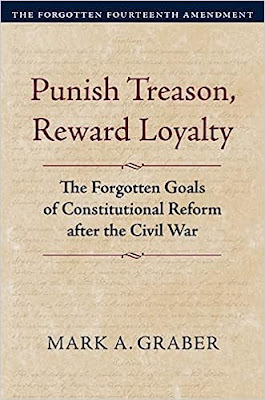
Mark A. Graber, Punish Treason, Reward Loyalty: The Forgotten Goals of Constitutional Reform after the Civil War (University of Kansas Press, 2023)
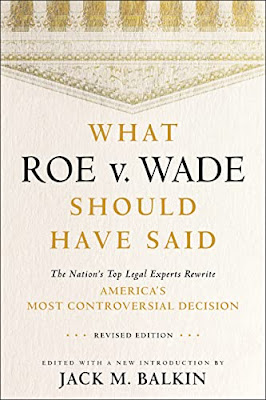
Jack M. Balkin, What Roe v. Wade Should Have Said: The Nation's Top Legal Experts Rewrite America's Most Controversial Decision - Revised Edition (NYU Press, 2023)

Andrew Koppelman, Burning Down the House: How Libertarian Philosophy Was Corrupted by Delusion and Greed (St. Martin’s Press, 2022)

Gerard N. Magliocca, Washington's Heir: The Life of Justice Bushrod Washington (Oxford University Press, 2022)
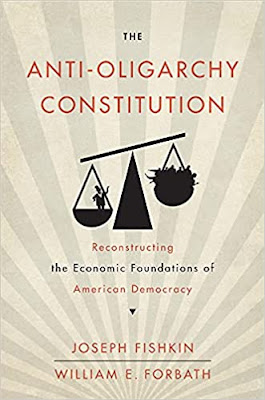
Joseph Fishkin and William E. Forbath, The Anti-Oligarchy Constitution: Reconstructing the Economic Foundations of American Democracy (Harvard University Press, 2022)
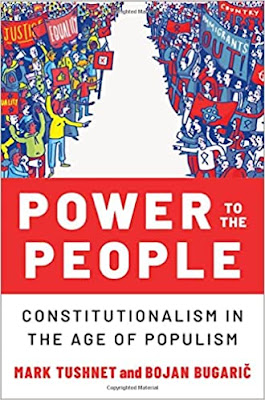
Mark Tushnet and Bojan Bugaric, Power to the People: Constitutionalism in the Age of Populism (Oxford University Press 2021).

Mark Philip Bradley and Mary L. Dudziak, eds., Making the Forever War: Marilyn B. Young on the Culture and Politics of American Militarism Culture and Politics in the Cold War and Beyond (University of Massachusetts Press, 2021).

Jack M. Balkin, What Obergefell v. Hodges Should Have Said: The Nation's Top Legal Experts Rewrite America's Same-Sex Marriage Decision (Yale University Press, 2020)

Frank Pasquale, New Laws of Robotics: Defending Human Expertise in the Age of AI (Belknap Press, 2020)

Jack M. Balkin, The Cycles of Constitutional Time (Oxford University Press, 2020)

Mark Tushnet, Taking Back the Constitution: Activist Judges and the Next Age of American Law (Yale University Press 2020).

Andrew Koppelman, Gay Rights vs. Religious Liberty?: The Unnecessary Conflict (Oxford University Press, 2020)

Ezekiel J Emanuel and Abbe R. Gluck, The Trillion Dollar Revolution: How the Affordable Care Act Transformed Politics, Law, and Health Care in America (PublicAffairs, 2020)

Linda C. McClain, Who's the Bigot?: Learning from Conflicts over Marriage and Civil Rights Law (Oxford University Press, 2020)
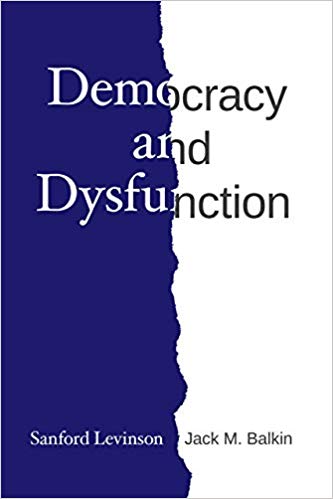
Sanford Levinson and Jack M. Balkin, Democracy and Dysfunction (University of Chicago Press, 2019)

Sanford Levinson, Written in Stone: Public Monuments in Changing Societies (Duke University Press 2018)

Mark A. Graber, Sanford Levinson, and Mark Tushnet, eds., Constitutional Democracy in Crisis? (Oxford University Press 2018)

Gerard Magliocca, The Heart of the Constitution: How the Bill of Rights became the Bill of Rights (Oxford University Press, 2018)

Cynthia Levinson and Sanford Levinson, Fault Lines in the Constitution: The Framers, Their Fights, and the Flaws that Affect Us Today (Peachtree Publishers, 2017)

Brian Z. Tamanaha, A Realistic Theory of Law (Cambridge University Press 2017)

Sanford Levinson, Nullification and Secession in Modern Constitutional Thought (University Press of Kansas 2016)

Sanford Levinson, An Argument Open to All: Reading The Federalist in the 21st Century (Yale University Press 2015)

Stephen M. Griffin, Broken Trust: Dysfunctional Government and Constitutional Reform (University Press of Kansas, 2015)

Frank Pasquale, The Black Box Society: The Secret Algorithms That Control Money and Information (Harvard University Press, 2015)

Bruce Ackerman, We the People, Volume 3: The Civil Rights Revolution (Harvard University Press, 2014)
Balkinization Symposium on We the People, Volume 3: The Civil Rights Revolution

Joseph Fishkin, Bottlenecks: A New Theory of Equal Opportunity (Oxford University Press, 2014)

Mark A. Graber, A New Introduction to American Constitutionalism (Oxford University Press, 2013)

John Mikhail, Elements of Moral Cognition: Rawls' Linguistic Analogy and the Cognitive Science of Moral and Legal Judgment (Cambridge University Press, 2013)

Gerard N. Magliocca, American Founding Son: John Bingham and the Invention of the Fourteenth Amendment (New York University Press, 2013)

Stephen M. Griffin, Long Wars and the Constitution (Harvard University Press, 2013)

Andrew Koppelman, The Tough Luck Constitution and the Assault on Health Care Reform (Oxford University Press, 2013)

James E. Fleming and Linda C. McClain, Ordered Liberty: Rights, Responsibilities, and Virtues (Harvard University Press, 2013)
Balkinization Symposium on Ordered Liberty: Rights, Responsibilities, and Virtues

Andrew Koppelman, Defending American Religious Neutrality (Harvard University Press, 2013)

Brian Z. Tamanaha, Failing Law Schools (University of Chicago Press, 2012)

Sanford Levinson, Framed: America's 51 Constitutions and the Crisis of Governance (Oxford University Press, 2012)

Linda C. McClain and Joanna L. Grossman, Gender Equality: Dimensions of Women's Equal Citizenship (Cambridge University Press, 2012)

Mary Dudziak, War Time: An Idea, Its History, Its Consequences (Oxford University Press, 2012)

Jack M. Balkin, Living Originalism (Harvard University Press, 2011)

Jason Mazzone, Copyfraud and Other Abuses of Intellectual Property Law (Stanford University Press, 2011)

Richard W. Garnett and Andrew Koppelman, First Amendment Stories, (Foundation Press 2011)

Jack M. Balkin, Constitutional Redemption: Political Faith in an Unjust World (Harvard University Press, 2011)

Gerard Magliocca, The Tragedy of William Jennings Bryan: Constitutional Law and the Politics of Backlash (Yale University Press, 2011)

Bernard Harcourt, The Illusion of Free Markets: Punishment and the Myth of Natural Order (Harvard University Press, 2010)

Bruce Ackerman, The Decline and Fall of the American Republic (Harvard University Press, 2010)
Balkinization Symposium on The Decline and Fall of the American Republic

Ian Ayres. Carrots and Sticks: Unlock the Power of Incentives to Get Things Done (Bantam Books, 2010)

Mark Tushnet, Why the Constitution Matters (Yale University Press 2010)

Ian Ayres and Barry Nalebuff: Lifecycle Investing: A New, Safe, and Audacious Way to Improve the Performance of Your Retirement Portfolio (Basic Books, 2010)
.jpg)
Jack M. Balkin, The Laws of Change: I Ching and the Philosophy of Life (2d Edition, Sybil Creek Press 2009)

Brian Z. Tamanaha, Beyond the Formalist-Realist Divide: The Role of Politics in Judging (Princeton University Press 2009)
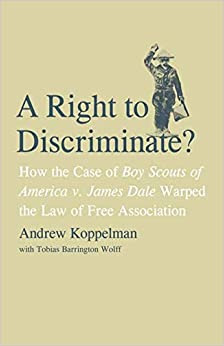
Andrew Koppelman and Tobias Barrington Wolff, A Right to Discriminate?: How the Case of Boy Scouts of America v. James Dale Warped the Law of Free Association (Yale University Press 2009)

Jack M. Balkin and Reva B. Siegel, The Constitution in 2020 (Oxford University Press 2009)

Heather K. Gerken, The Democracy Index: Why Our Election System Is Failing and How to Fix It (Princeton University Press 2009)

Mary Dudziak, Exporting American Dreams: Thurgood Marshall's African Journey (Oxford University Press 2008)

David Luban, Legal Ethics and Human Dignity (Cambridge Univ. Press 2007)

Ian Ayres, Super Crunchers: Why Thinking-By-Numbers is the New Way to be Smart (Bantam 2007)

Jack M. Balkin, James Grimmelmann, Eddan Katz, Nimrod Kozlovski, Shlomit Wagman and Tal Zarsky, eds., Cybercrime: Digital Cops in a Networked Environment (N.Y.U. Press 2007)
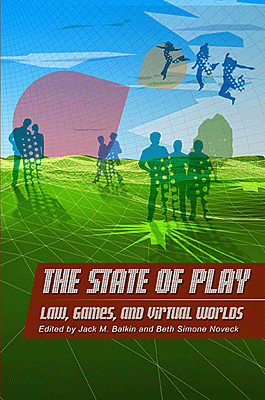
Jack M. Balkin and Beth Simone Noveck, The State of Play: Law, Games, and Virtual Worlds (N.Y.U. Press 2006)

Andrew Koppelman, Same Sex, Different States: When Same-Sex Marriages Cross State Lines (Yale University Press 2006)

Brian Tamanaha, Law as a Means to an End (Cambridge University Press 2006)

Sanford Levinson, Our Undemocratic Constitution (Oxford University Press 2006)

Mark Graber, Dred Scott and the Problem of Constitutional Evil (Cambridge University Press 2006)

Jack M. Balkin, ed., What Roe v. Wade Should Have Said (N.Y.U. Press 2005)

Sanford Levinson, ed., Torture: A Collection (Oxford University Press 2004)
Balkin.com homepage
Bibliography
Conlaw.net
Cultural Software
Writings
Opeds
The Information Society Project
BrownvBoard.com
Useful Links
Syllabi and Exams
