Balkinization
an unanticipated consequence of
Jack M. Balkin
Balkinization Symposiums: A Continuing List
E-mail:
Jack Balkin:
jackbalkin at yahoo.com
Bruce Ackerman
bruce.ackerman at yale.edu
Ian Ayres
ian.ayres at yale.edu
Corey Brettschneider
corey_brettschneider at brown.edu
Mary Dudziak
mary.l.dudziak at emory.edu
Joey Fishkin
joey.fishkin at gmail.com
Heather Gerken heather.gerken at yale.edu
Abbe Gluck abbe.gluck at yale.edu
Mark Graber
mgraber at law.umaryland.edu
Stephen Griffin
sgriffin at tulane.edu
Jonathan Hafetz
jonathan.hafetz at shu.edu
Jeremy Kessler
jkessler at law.columbia.edu
Andrew Koppelman
akoppelman at law.northwestern.edu
Marty Lederman
msl46 at law.georgetown.edu
Sanford Levinson
slevinson at law.utexas.edu
David Luban
david.luban at gmail.com
Gerard Magliocca
gmaglioc at iupui.edu
Jason Mazzone
mazzonej at illinois.edu
Linda McClain
lmcclain at bu.edu
John Mikhail
mikhail at law.georgetown.edu
Frank Pasquale
pasquale.frank at gmail.com
Nate Persily
npersily at gmail.com
Michael Stokes Paulsen
michaelstokespaulsen at gmail.com
Deborah Pearlstein
dpearlst at yu.edu
Rick Pildes
rick.pildes at nyu.edu
David Pozen
dpozen at law.columbia.edu
Richard Primus
raprimus at umich.edu
K. Sabeel Rahmansabeel.rahman at brooklaw.edu
Alice Ristroph
alice.ristroph at shu.edu
Neil Siegel
siegel at law.duke.edu
David Super
david.super at law.georgetown.edu
Brian Tamanaha
btamanaha at wulaw.wustl.edu
Nelson Tebbe
nelson.tebbe at brooklaw.edu
Mark Tushnet
mtushnet at law.harvard.edu
Adam Winkler
winkler at ucla.edu
Compendium of posts on Hobby Lobby and related cases
The Anti-Torture Memos: Balkinization Posts on Torture, Interrogation, Detention, War Powers, and OLC
The Anti-Torture Memos (arranged by topic)
Recent Posts
US Foreign Policy: From Anything Is Better Than Communist, To Anything Is Better Than Islamic
![[Powered by Blogger]](https://lh3.googleusercontent.com/blogger_img_proxy/AEn0k_uckKQwNbTgRActBlXU9jo2qp6ylxvB-omXXVC4n5RmizR9srYxY_kwUGIbr6EnqnLQSSvVgUdCBnf8AA6oG6T1Y1uZVTtXTvfe2-BVXFpP=s0-d)
Just A Few Blogs
ACS Blog
Alas, a Blog
Althouse
Arts and Letters Daily
Atrios (Eschaton)
Bill of Health
Buzzflash.com
Buzz Machine
Cato at Liberty
Juan Cole (Informed Comment)
Concurring Opinions
The Constitution in 2020
Corrente
Crooked Timber
Daily Howler
Daily Kos
Dana Boyd
Brad DeLong
Digby (Hullabaloo)
Discriminations
Daniel Drezner
Kevin Drum (Mother Jones)
Electrolite
En Banc
Eunomia (Daniel Larison)
Fafblog
Michael Froomkin (Discourse.net)
GovLab (Beth Noveck)
Rick Hasen (Election Law)
History News Network
How Appealing
Ignatz (Sam Heldman)
The Importance of (Ernie Miller)
Infolaw
Instapundit
International Economic Law and Policy Blog
IntLawGrrls
Jacob Levy
Jesus' General
Jurisdynamics
The Kitchen Cabinet
Mark Kleiman
Law Blog Central
Larry Lessig
Lawyers, Guns and Money
Liberal Oasis
Brian Leiter's Law School Reports
The Leiter Reports
Marginal Revolution
Megan McArdle
Memeorandum
Metafilter
Mirror of Justice
The New Republic
Newseum
No More Mister Nice Blog
Brendan Nyhan
Opinio Juris
Orcinus
The Originalism Blog
Pandagon
Passport (Foreign Policy)
Overcoming Bias
Political Animal (Washington Monthly)
Political Theory Daily Review
Political Wire (Taegan Goddard)
The Poor Man
Virginia Postrel
Prawfsblawg
Public Reason
Jonathan Rauch
Raw Story
Redstate
ReligiousLeftLaw.com
Reporters Committee For Freedom of the Press
Reproductive Rights Blog
Rothman's Roadmap to the Right of Publicity
SCOTUS Blog
Seeing the Forest
Clay Shirky
The Shifted Librarian
The Situationist
Larry Solum (Legal Theory)
Andrew Sullivan
Talking Points Memo
Talk Left
Tapped
Tbogg
TechPresident
The Paper Chase (Jurist)
Tom Paine
Tom Tomorrow (This Modern World)
Eve Tushnet
Uggabugga
University of Chicago Law School Faculty Blog
Unqualified Offerings
The Volokh Conspiracy
War and Piece (Laura Rozen)
Wampum
Oliver Willis
Wonkette
Written Description
Matthew Yglesias
Yin
Your Choice of Feeds
1. XML
powered by

2. Atom Feed
3. RSS 2.0
US Foreign Policy: From Anything Is Better Than Communist, To Anything Is Better Than Islamic
Brian Tamanaha
The recent military victory by Islamic militiamen in Mogadishu over Somali warlords reportedly "caught Washington and the world by surprise." A report by Marc Lacey in the New York Times yesterday offers the following appraisal of the uncertain situation in the aftermath of the victory:With the old warlords gone, Mogadishu is safer, and more dangerous, too. It is a happier place, and a more oppressive one. It is a capital city that is also a rundown shantytown, churning with change....
In the old Mogadishu, militiamen would barge into a home and haul a girl or woman away and rape her. Bullets rang out routinely, and gunmen set up roadblocks and charged taxes on anybody who happened by.
Fewer guns are visible now. The man-made roadblocks have disappeared, leaving livestock and huge craters as the main obstructions to navigation. But a new, more silent battle us under way, for control of the Islamic movement in Somalia.
By all accounts, the situation in Mogadishu under the warlords was terrible for the people of the city: more than a decade of unrelenting insecurity, violence and pockets of anarchy. One would think, therefore, that we would rejoice in the victory of Islamic forces.
It is thus surprising to learn, as documented in this report, that the US government provided financial and other forms of support to the warlords against the Islamic forces, over the opposition of officials in the UN and the government of Somalia. Some of this support went to the very same warlords who attacked US and UN troops in Mogadishu in the 1990s. Our apparent reason for supporting the warlords is the fear that an Islamic-run city will provide a haven for terrorists (notwithstanding explicit denials of this by the Islamic forces involved in the takeover).
So let's get this straight: our government supported warlords--who created anarchy and brutalized their own people--owing to the fear that an Islamic takeover--which would bring peace to the city--might provide a training ground for terrorists. Granted, it is not yet clear what shape the Islamic-run city will take, but it is absolutely clear that the previous situation was horrendous and intolerable for its people.
Never mind the dubious morality of choosing to sacrifice the lives of the residents of Mogadishu in this manner for our own speculative, distant benefit; never mind the dubious morality of providing support for warlords who killed our troops a decade ago. Moral considerations such as these apparently don't carry much weight with the realpolitik crowd.
Let's instead ask a realpolitik question. In the long run, what has the greater potential to facilitate terrorism: a generation of ruined and hopeless lives, and a city of perpetual disorder and insecurity, or a peaceful Islamic society?
Our government's policy in this matter brings to mind the old cold war days, when we formed alliances with right-wing dictators in the belief that they were preferable to socialist or communist governments. The cost of that policy, in terms of lives lost and damage to the reputation of the US, is still being tallied. Is the current view of our government that anything (even anarchy) is better than an Islamic government?
Posted
12:12 PM
by Brian Tamanaha [link]
With all due respect, your "realpolitick" question undercuts your argument and identifies your fatal flaw - that the US had a choice between a "good" and "bad option."
Foreign policy is almost entirely about choosing between the bad and worse. The end of your question contains, "...or a peaceful Islamic society?" Very false choice...
I am no expert on Somalia, so I must acknowledge my general ignorance. But, Somalia could very well turn into another Afghanistan. If I remember correctly, the Taliban were seen as the "heroes" - they came in establishing order and building schools, however their radical elements only came to the forefront once they had entrenched themselves. We all know what happened afterwards.
This is not to say that Somalia under this Islamic leadership will go the way of the Taliban, but it is at least a distinct possibility.
Further, to take on your analogy to the Cold War, despite the many errors committed by the United States recent scholarship has shown that "overall" our strategy did pay off. Countries in which Communist leaders did take over (even if democractically elected and popular) quickly devolved into chaos, corruption, political oppression and more often than not mass murder. It is easy to point to the US to blame her for the failings in Latin and South American for example. But, the ENTIRE history of Communism in every state in which it held power resulted in the aggregate of the deaths of untold millions. Arguably, our efforts during the Cold War and the regimes we supported, while responsible for deaths of their own, were far better than the alternatives. Once against, please don't make the false assumption that somehow, someway, if we had just left them alone, nothing bad would have happened. While a theoretical possibility, history and logic compel a different conclusion.
For a different example, I recommend Paul Johnson's Modern Times. In it he chronicles how very easily the west could have destroyed Lenin right as he was consolidating his power in Russia. A few Westerners actually toyed with the idea. Churchill himself at that time foresaw the brutalality of the regime coming to power. But was unwilling to do anything about it. For better or worse, it was "a Russian matter."
After all, hadn't the czar been a brutal authoritarian? Well yes he had, but as it turned out he was nothing compared to Lenin and later Stalin. Such is history.

This is not just an important practical question, but a political one as well. Whenever those of us liberals, who do support a foreign policy that could fairly be described as "Wilsonian" or even "T. Rooseveltian", criticize neo-con foreign policy adventures, we are tarred and feathered with the leading question: "well what do you propose we do, go back to the sort of foreign policy 'realism' that led to 9/11?". This rhetorical attack hides the reality of neo-con foreign policy being a new gloss on the same realism which they posit we liberals have adopted and which they claim to criticize.
It is a shame that more people in positions of public exposure are not calling our "new-fangled" Bush admin foreign policy for what it is -- more of the same tired old un-realistic realism that got us into this mess in the first place. Instead they let the neo-conservatives play "bait and switch" between their language and actions and allow the rest of us to be tarred with the foreign policy label of sin that should be applied to the neo-cons themselves. I wish more people actually thought seriously about our foreign policy and saw through the rhetoric that obfuscates the reality of how those currently in charge of our foreign policy really learned nothing from 9/11 even as they use 9/11 to justify everything they do and claim that those of us who oppose them have learned nothing from 9/11, which is only true to the extent that we realized the flaws in "realist" foreign policy long before 9/11 anyway.
Good Comment. However, I have a quibble. I could have sworn that the 2002 NSS was more concerned with terrorists and state sponsors of terrorists. Granted, this doesn't provide any more argument in favor of the invasion of Iraq, but I think your emphasis on the "imminence of the threat" is misplaced.
(Of course, I could be remembering incorrectly).
Oh, one other point. I've always understood the preemption doctrine to entail more than just "imminent threats."
The argument is that in the age of WMD and missiles, etc. waiting until the threat is imminent may well be too late. Action must be taken to preempt such threats before they become imminent, hence, the invasion of Iraq.
Once again, I may have misunderstood...
شركة عزل اسطح بالرياض
شركة عزل خزنات بالرياض
شركة تنظيف موكيت بالرياض
شركة تنظيف مجالس بالرياض
شركة تنظيف سجاد بالرياض
شركة تنظيف ستائر بالرياض
شركة تنظيف واجهات حجر بالرياض
شركة تنظيف واجهات زجاج بالرياض
شركة مكافحة برص بالرياض
شركة صيانة مسابح بالرياض
شركة تنظيف مسابح بالرياض
افضل شركة تنظيف بالرياض
شركة تنظيف بجدة
شركة تنظيف فلل بجدة
شركة تنظيف منازل بجدة
شركة غسيل شقق بالمدينة المنورة
شركة غسيل خزانات بالمدينة المنورة
مكافحة حشرات بجدة
شركة مكافحة حشرات بالدمام
شركة جلي رخام بالرياض
Obat sipilis raja singa paling ampuh
obat sipilis amoxicillin
obat sipilis adalah
obat sipilis atau raja singa
obat sipilis apa
obat sipilis anjuran dokter
obat sipilis apa ya
obat sifilis akut
obat sipilis apa namanya
obat alami sipilis pada pria
obat antibiotik sipilis di apotik
obat sifilis ampuh
apa obat sipilis
obat sifilis apotek
obat sifilis adalah
obat sifilis atau raja singa
Cara paling ampuh mengobati kutil kelamin
pengobatan ampuh kutil kelamin pada wanita
obat kutil kelamin yang ada di apotik
obat kutil kelamin yg dijual di apotik
obat kutil di kemaluan wanita
pengobatan kutil kelamin pada pria
pengobatan penyakit kutil kelamin pada pria
obat penyakit kutil pada kelamin pria
Pengobatan kutil kelamin aman dan tanpa operasi
obat kutil pada alat kelamin pria
pengobatan kutil kelamin
Obat herpes zoster tradisional
Obat herpes untuk ibu hamil
Obat herpes ampuh
Obat herpes untuk anak
Obat herpes mulut
Obat herpes tradisional yang ampuh
Obat herpes selain acyclovir
Obat herpes di wajah
Obat herpes alami
Obat herpes di leher
Obat salep buat kutil kelamin
Obat cina kutil kelamin
Cuka obat kutil kelamin
Obat cina untuk kutil kelamin
Obat cina penghilang kutil kelamin
Obat china untuk kutil kelamin
Obat kutil di kelamin pria
Obat tradisional kutil di kelamin
Obat kutil di daerah kelamin
Obat untuk menghilangkan kutil di kelamin
Obat sipilis
Obat sipilis Yang manjur
obat sipilis denature indonesia
Obat sipilis resep dokter
Obat sipilis paling manjur
Obat sipilis pada wanita
Obat sipilis paling ampuh
Obat sipilis manjur
Obat sipilis ampuh
Obat sipilis atau raja singa
Obat sipilis herbal
Obat sipilis murah
Obat sipilis anjuran dokter
Obat sipilis apa namanya
Obat sipilis dijual di apotik
Obat alami sipilis pada pria
Obat sifilis ampuh
Obat sipilis buat wanita
Obat sipilis bagi wanita
Obat buat sipilis
Obat kutil di sekitar kelamin
Obat farmasi untuk kutil kelamin
Obat generik untuk kutil kelamin
Obat kutil kelamin imiquimod
Jual obat kutil kelamin
Jual obat kutil kelamin murah
Obat kutil kelamin yg di jual di apotik
Jual obat penghilang kutil kelamin
Obat kimia kutil kelamin
Obat kutil kelamin/jengger ayam
Obat kutil kelamin paling murah
Obat kutil kelamin dari dalam
Obat antibiotik kutil kelamin
Obat kutil kelamin yang dijual di apotik
Beli obat kutil kelamin di apotik
Nama obat kutil kelamin di apotek
Obat kutil kelamin yang tersedia di apotik
Obat kutil kelamin tradisional
Obat kutil kelamin
Obat kutil kelamin wanita
Obat kutil kelamin di apotik
Obat kutil kelamin mujarab
http://oplosanobatkutilkelamin.blogspot.com/
http://www.smaboy.com/u/obatkutil
http://tinyblogs.net/u/obatkutil/
http://tinyblogs.net/u/obatkutil/
http://obatkutil.over-blog.com/
http://obatkutilkelamin-tradisional.jimdo.com/
http://www.lautanindonesia.com/blog/obatkutilkelamindanjenggerayam/
http://obatkutilmanjur.weebly.com/
http://obatkutilampuh.livejournal.com/
http://obatkutilkelamintradisional123.blogdetik.com/
http://obatkutil12345.edublogs.org/
http://pengobatankutil.blog.planetbiru.com/
http://obatkutil.freeblog.biz/
http://batkutil.blog.com/
Pengobatan kencing nanah atau gonore manjur
Obat kencing nanah pada pria
Obat kencing nanah pada pria di apotik
Obat kencing nanah di apotik
Obat kencing nanah di apotek
Obat kencing nanah herbal
Obat kencing nanah yang ada di apotik
Obat kencing nanah di apotik kimia farma
Obat kencing nanah yang di jual di apotik
Obat kencing nanah dari dokter
Obat kencing nanah ampuh
Obat kencing nanah kaskus
Obat kencing nanah surabaya
Obat kencing nanah jogja
Obat kencing nanah yang tersedia di apotik
Obat kencing nanah apotek
Obat kencing nanah yang ada di apotek
Cara mengobati sipilis atau gonore (GO)
Cara pengobatan kencing nanah dan sipilis
obat kutil kelamin untuk ibu hamil
obat kutil kelamin tanpa operasi
obat kutil kelamin kaskus
obat kutil kelamin dokter
obat kutil kelamin mujarab
obat kutil kelamin di jakarta
obat kutil kelamin untuk wanita
obat kutil kelamin/jengger ayam
obat kutil kelamin surabaya
obat kutil kelamin yang ada di apotik
obat kutil kelamin bandung
Kapur sirih untuk obat kutil kelamin
Obat kutil kelamin medis
Obat menghilangkan kutil kelamin
Obat menyembuhkan kutil kelamin
Obat tradisional menyembuhkan kutil kelamin
Obat minum untuk kutil kelamin
Obat medis untuk kutil kelamin
Merek obat kutil kelamin
Obat kutil kelamin de nature
Nama obat kutil kelamin
Obat tradisional buat sipilis
Obat herbal buat sipilis
Obat dokter buat sipilis
Obat generik buat sipilis
Obat sipilis dengan bayam duri
Obat sipilis yang bagus
Obat china sipilis
Cara obat sipilis di apotik
Cari obat sipilis
Contoh obat sipilis
http://agusus1.blogspot.com/
http://agusyafii.blogspot.com/
http://amateursexxxx.blogspot.co.id/
Obat jengger ayam
obat jengger ayam pada wanita
obat jengger ayam pada anus
obat jengger ayam di anus
obat jengger ayam hitam
obat sakit jengger ayam
obat penyakit jengger ayam pada pria
obat penghilang jengger ayam
harga obat jengger ayam
obat apotik jengger ayam
obat dokter jengger ayam
obat herbal untuk jengger ayam
obat penyakit kulit jengger ayam
Cara mengobati jengger ayam ampuh
Cara paling ampuh mengobati gonore atau kencing nanah
nama obat gonore di apotek
obat oral gonore
obat gonore propolis
obat gonore pdf
obat penyakit gonore
obat paten gonore
obat penderita gonore
resep obat penyakit gonore
obat cina penyakit gonore
obat dari penyakit gonore
Agen Judi Online Terpercaya
Books by Balkinization Bloggers

Mark Tushnet and Bojan Bugaric, Constitutionalism and Its Discontents (University of Chicago Press, 2026)

Gerard N. Magliocca, The Actual Art of Governing: Justice Robert H. Jackson's Concurring Opinion in the Steel Seizure Case (Oxford University Press, 2025)

Linda C. McClain and Aziza Ahmed, The Routledge Companion to Gender and COVID-19 (Routledge, 2024)

David Pozen, The Constitution of the War on Drugs (Oxford University Press, 2024)

Jack M. Balkin, Memory and Authority: The Uses of History in Constitutional Interpretation (Yale University Press, 2024)
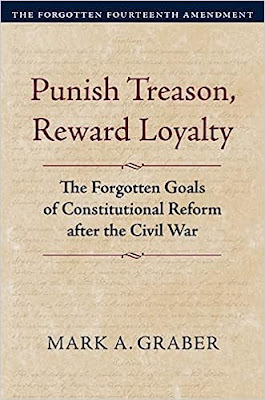
Mark A. Graber, Punish Treason, Reward Loyalty: The Forgotten Goals of Constitutional Reform after the Civil War (University of Kansas Press, 2023)
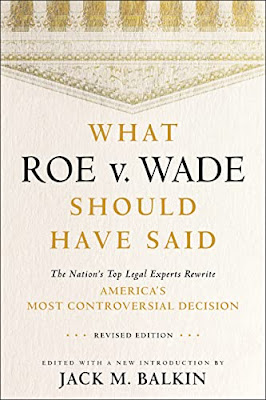
Jack M. Balkin, What Roe v. Wade Should Have Said: The Nation's Top Legal Experts Rewrite America's Most Controversial Decision - Revised Edition (NYU Press, 2023)

Andrew Koppelman, Burning Down the House: How Libertarian Philosophy Was Corrupted by Delusion and Greed (St. Martin’s Press, 2022)

Gerard N. Magliocca, Washington's Heir: The Life of Justice Bushrod Washington (Oxford University Press, 2022)
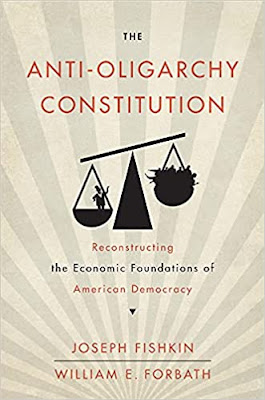
Joseph Fishkin and William E. Forbath, The Anti-Oligarchy Constitution: Reconstructing the Economic Foundations of American Democracy (Harvard University Press, 2022)
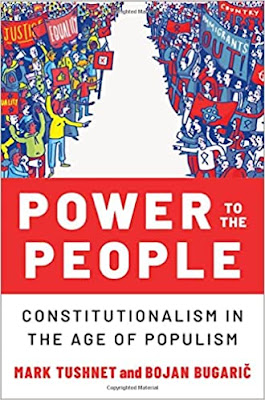
Mark Tushnet and Bojan Bugaric, Power to the People: Constitutionalism in the Age of Populism (Oxford University Press 2021).

Mark Philip Bradley and Mary L. Dudziak, eds., Making the Forever War: Marilyn B. Young on the Culture and Politics of American Militarism Culture and Politics in the Cold War and Beyond (University of Massachusetts Press, 2021).

Jack M. Balkin, What Obergefell v. Hodges Should Have Said: The Nation's Top Legal Experts Rewrite America's Same-Sex Marriage Decision (Yale University Press, 2020)

Frank Pasquale, New Laws of Robotics: Defending Human Expertise in the Age of AI (Belknap Press, 2020)

Jack M. Balkin, The Cycles of Constitutional Time (Oxford University Press, 2020)

Mark Tushnet, Taking Back the Constitution: Activist Judges and the Next Age of American Law (Yale University Press 2020).

Andrew Koppelman, Gay Rights vs. Religious Liberty?: The Unnecessary Conflict (Oxford University Press, 2020)

Ezekiel J Emanuel and Abbe R. Gluck, The Trillion Dollar Revolution: How the Affordable Care Act Transformed Politics, Law, and Health Care in America (PublicAffairs, 2020)

Linda C. McClain, Who's the Bigot?: Learning from Conflicts over Marriage and Civil Rights Law (Oxford University Press, 2020)
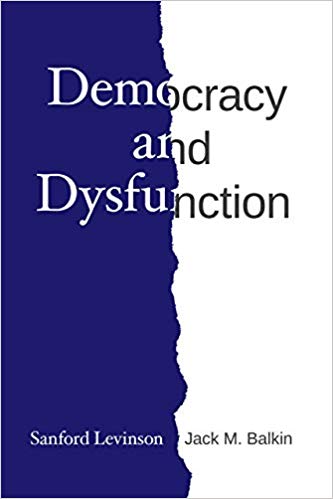
Sanford Levinson and Jack M. Balkin, Democracy and Dysfunction (University of Chicago Press, 2019)

Sanford Levinson, Written in Stone: Public Monuments in Changing Societies (Duke University Press 2018)

Mark A. Graber, Sanford Levinson, and Mark Tushnet, eds., Constitutional Democracy in Crisis? (Oxford University Press 2018)

Gerard Magliocca, The Heart of the Constitution: How the Bill of Rights became the Bill of Rights (Oxford University Press, 2018)

Cynthia Levinson and Sanford Levinson, Fault Lines in the Constitution: The Framers, Their Fights, and the Flaws that Affect Us Today (Peachtree Publishers, 2017)

Brian Z. Tamanaha, A Realistic Theory of Law (Cambridge University Press 2017)

Sanford Levinson, Nullification and Secession in Modern Constitutional Thought (University Press of Kansas 2016)

Sanford Levinson, An Argument Open to All: Reading The Federalist in the 21st Century (Yale University Press 2015)

Stephen M. Griffin, Broken Trust: Dysfunctional Government and Constitutional Reform (University Press of Kansas, 2015)

Frank Pasquale, The Black Box Society: The Secret Algorithms That Control Money and Information (Harvard University Press, 2015)

Bruce Ackerman, We the People, Volume 3: The Civil Rights Revolution (Harvard University Press, 2014)
Balkinization Symposium on We the People, Volume 3: The Civil Rights Revolution

Joseph Fishkin, Bottlenecks: A New Theory of Equal Opportunity (Oxford University Press, 2014)

Mark A. Graber, A New Introduction to American Constitutionalism (Oxford University Press, 2013)

John Mikhail, Elements of Moral Cognition: Rawls' Linguistic Analogy and the Cognitive Science of Moral and Legal Judgment (Cambridge University Press, 2013)

Gerard N. Magliocca, American Founding Son: John Bingham and the Invention of the Fourteenth Amendment (New York University Press, 2013)

Stephen M. Griffin, Long Wars and the Constitution (Harvard University Press, 2013)

Andrew Koppelman, The Tough Luck Constitution and the Assault on Health Care Reform (Oxford University Press, 2013)

James E. Fleming and Linda C. McClain, Ordered Liberty: Rights, Responsibilities, and Virtues (Harvard University Press, 2013)
Balkinization Symposium on Ordered Liberty: Rights, Responsibilities, and Virtues

Andrew Koppelman, Defending American Religious Neutrality (Harvard University Press, 2013)

Brian Z. Tamanaha, Failing Law Schools (University of Chicago Press, 2012)

Sanford Levinson, Framed: America's 51 Constitutions and the Crisis of Governance (Oxford University Press, 2012)

Linda C. McClain and Joanna L. Grossman, Gender Equality: Dimensions of Women's Equal Citizenship (Cambridge University Press, 2012)

Mary Dudziak, War Time: An Idea, Its History, Its Consequences (Oxford University Press, 2012)

Jack M. Balkin, Living Originalism (Harvard University Press, 2011)

Jason Mazzone, Copyfraud and Other Abuses of Intellectual Property Law (Stanford University Press, 2011)

Richard W. Garnett and Andrew Koppelman, First Amendment Stories, (Foundation Press 2011)

Jack M. Balkin, Constitutional Redemption: Political Faith in an Unjust World (Harvard University Press, 2011)

Gerard Magliocca, The Tragedy of William Jennings Bryan: Constitutional Law and the Politics of Backlash (Yale University Press, 2011)

Bernard Harcourt, The Illusion of Free Markets: Punishment and the Myth of Natural Order (Harvard University Press, 2010)

Bruce Ackerman, The Decline and Fall of the American Republic (Harvard University Press, 2010)
Balkinization Symposium on The Decline and Fall of the American Republic

Ian Ayres. Carrots and Sticks: Unlock the Power of Incentives to Get Things Done (Bantam Books, 2010)

Mark Tushnet, Why the Constitution Matters (Yale University Press 2010)

Ian Ayres and Barry Nalebuff: Lifecycle Investing: A New, Safe, and Audacious Way to Improve the Performance of Your Retirement Portfolio (Basic Books, 2010)
.jpg)
Jack M. Balkin, The Laws of Change: I Ching and the Philosophy of Life (2d Edition, Sybil Creek Press 2009)

Brian Z. Tamanaha, Beyond the Formalist-Realist Divide: The Role of Politics in Judging (Princeton University Press 2009)
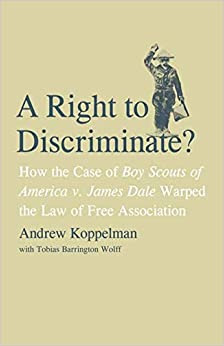
Andrew Koppelman and Tobias Barrington Wolff, A Right to Discriminate?: How the Case of Boy Scouts of America v. James Dale Warped the Law of Free Association (Yale University Press 2009)

Jack M. Balkin and Reva B. Siegel, The Constitution in 2020 (Oxford University Press 2009)

Heather K. Gerken, The Democracy Index: Why Our Election System Is Failing and How to Fix It (Princeton University Press 2009)

Mary Dudziak, Exporting American Dreams: Thurgood Marshall's African Journey (Oxford University Press 2008)

David Luban, Legal Ethics and Human Dignity (Cambridge Univ. Press 2007)

Ian Ayres, Super Crunchers: Why Thinking-By-Numbers is the New Way to be Smart (Bantam 2007)

Jack M. Balkin, James Grimmelmann, Eddan Katz, Nimrod Kozlovski, Shlomit Wagman and Tal Zarsky, eds., Cybercrime: Digital Cops in a Networked Environment (N.Y.U. Press 2007)
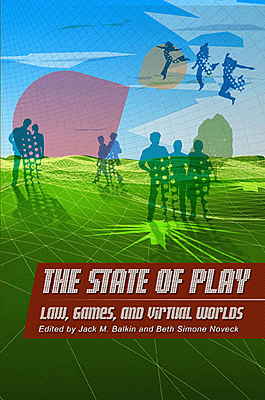
Jack M. Balkin and Beth Simone Noveck, The State of Play: Law, Games, and Virtual Worlds (N.Y.U. Press 2006)

Andrew Koppelman, Same Sex, Different States: When Same-Sex Marriages Cross State Lines (Yale University Press 2006)

Brian Tamanaha, Law as a Means to an End (Cambridge University Press 2006)

Sanford Levinson, Our Undemocratic Constitution (Oxford University Press 2006)

Mark Graber, Dred Scott and the Problem of Constitutional Evil (Cambridge University Press 2006)

Jack M. Balkin, ed., What Roe v. Wade Should Have Said (N.Y.U. Press 2005)

Sanford Levinson, ed., Torture: A Collection (Oxford University Press 2004)
Balkin.com homepage
Bibliography
Conlaw.net
Cultural Software
Writings
Opeds
The Information Society Project
BrownvBoard.com
Useful Links
Syllabi and Exams
