Balkinization
an unanticipated consequence of
Jack M. Balkin
Balkinization Symposiums: A Continuing List
E-mail:
Jack Balkin:
jackbalkin at yahoo.com
Bruce Ackerman
bruce.ackerman at yale.edu
Ian Ayres
ian.ayres at yale.edu
Corey Brettschneider
corey_brettschneider at brown.edu
Mary Dudziak
mary.l.dudziak at emory.edu
Joey Fishkin
joey.fishkin at gmail.com
Heather Gerken heather.gerken at yale.edu
Abbe Gluck abbe.gluck at yale.edu
Mark Graber
mgraber at law.umaryland.edu
Stephen Griffin
sgriffin at tulane.edu
Jonathan Hafetz
jonathan.hafetz at shu.edu
Jeremy Kessler
jkessler at law.columbia.edu
Andrew Koppelman
akoppelman at law.northwestern.edu
Marty Lederman
msl46 at law.georgetown.edu
Sanford Levinson
slevinson at law.utexas.edu
David Luban
david.luban at gmail.com
Gerard Magliocca
gmaglioc at iupui.edu
Jason Mazzone
mazzonej at illinois.edu
Linda McClain
lmcclain at bu.edu
John Mikhail
mikhail at law.georgetown.edu
Frank Pasquale
pasquale.frank at gmail.com
Nate Persily
npersily at gmail.com
Michael Stokes Paulsen
michaelstokespaulsen at gmail.com
Deborah Pearlstein
dpearlst at yu.edu
Rick Pildes
rick.pildes at nyu.edu
David Pozen
dpozen at law.columbia.edu
Richard Primus
raprimus at umich.edu
K. Sabeel Rahmansabeel.rahman at brooklaw.edu
Alice Ristroph
alice.ristroph at shu.edu
Neil Siegel
siegel at law.duke.edu
David Super
david.super at law.georgetown.edu
Brian Tamanaha
btamanaha at wulaw.wustl.edu
Nelson Tebbe
nelson.tebbe at brooklaw.edu
Mark Tushnet
mtushnet at law.harvard.edu
Adam Winkler
winkler at ucla.edu
Compendium of posts on Hobby Lobby and related cases
The Anti-Torture Memos: Balkinization Posts on Torture, Interrogation, Detention, War Powers, and OLC
The Anti-Torture Memos (arranged by topic)
Recent Posts
How Torture Works
![[Powered by Blogger]](https://lh3.googleusercontent.com/blogger_img_proxy/AEn0k_to0W7apUIgR38gpOUoSPrFGsJxW1_1rG4DIBt2E9mEChju4ln9x-tcaTLxOFHUjI424J9on0v6qKzaFRN_o_Q8WWZynuCNzQVY5-IKA3fr=s0-d)
Just A Few Blogs
ACS Blog
Alas, a Blog
Althouse
Arts and Letters Daily
Atrios (Eschaton)
Bill of Health
Buzzflash.com
Buzz Machine
Cato at Liberty
Juan Cole (Informed Comment)
Concurring Opinions
The Constitution in 2020
Corrente
Crooked Timber
Daily Howler
Daily Kos
Dana Boyd
Brad DeLong
Digby (Hullabaloo)
Discriminations
Daniel Drezner
Kevin Drum (Mother Jones)
Electrolite
En Banc
Eunomia (Daniel Larison)
Fafblog
Michael Froomkin (Discourse.net)
GovLab (Beth Noveck)
Rick Hasen (Election Law)
History News Network
How Appealing
Ignatz (Sam Heldman)
The Importance of (Ernie Miller)
Infolaw
Instapundit
International Economic Law and Policy Blog
IntLawGrrls
Jacob Levy
Jesus' General
Jurisdynamics
The Kitchen Cabinet
Mark Kleiman
Law Blog Central
Larry Lessig
Lawyers, Guns and Money
Liberal Oasis
Brian Leiter's Law School Reports
The Leiter Reports
Marginal Revolution
Megan McArdle
Memeorandum
Metafilter
Mirror of Justice
The New Republic
Newseum
No More Mister Nice Blog
Brendan Nyhan
Opinio Juris
Orcinus
The Originalism Blog
Pandagon
Passport (Foreign Policy)
Overcoming Bias
Political Animal (Washington Monthly)
Political Theory Daily Review
Political Wire (Taegan Goddard)
The Poor Man
Virginia Postrel
Prawfsblawg
Public Reason
Jonathan Rauch
Raw Story
Redstate
ReligiousLeftLaw.com
Reporters Committee For Freedom of the Press
Reproductive Rights Blog
Rothman's Roadmap to the Right of Publicity
SCOTUS Blog
Seeing the Forest
Clay Shirky
The Shifted Librarian
The Situationist
Larry Solum (Legal Theory)
Andrew Sullivan
Talking Points Memo
Talk Left
Tapped
Tbogg
TechPresident
The Paper Chase (Jurist)
Tom Paine
Tom Tomorrow (This Modern World)
Eve Tushnet
Uggabugga
University of Chicago Law School Faculty Blog
Unqualified Offerings
The Volokh Conspiracy
War and Piece (Laura Rozen)
Wampum
Oliver Willis
Wonkette
Written Description
Matthew Yglesias
Yin
Your Choice of Feeds
1. XML
powered by

2. Atom Feed
3. RSS 2.0
How Torture Works
JB
From a Washington Post review of Suskind's new book: Torture works all right. It's very effective at what it does. It undermines our credibility. It stains our image in the world. It corrupts our officials. It barbarizes our soldiers. It evicerates our commitment to human rights and the rule of law. The only thing it doesn't do is keep us safe."I said [Abu Zubaydah] was important," Bush reportedly told Tenet at one of their daily meetings. "You're not going to let me lose face on this, are you?" "No sir, Mr. President," Tenet replied. Bush "was fixated on how to get Zubaydah to tell us the truth," Suskind writes, and he asked one briefer, "Do some of these harsh methods really work?" Interrogators did their best to find out, Suskind reports. They strapped Abu Zubaydah to a water-board, which reproduces the agony of drowning. They threatened him with certain death. They withheld medication. They bombarded him with deafening noise and harsh lights, depriving him of sleep. Under that duress, he began to speak of plots of every variety -- against shopping malls, banks, supermarkets, water systems, nuclear plants, apartment buildings, the Brooklyn Bridge, the Statue of Liberty. With each new tale, "thousands of uniformed men and women raced in a panic to each . . . target." And so, Suskind writes, "the United States would torture a mentally disturbed man and then leap, screaming, at every word he uttered."
And for this we shredded our Constitution.
Posted
8:17 AM
by JB [link]

For those that don't know, June is Torture Awareness month. I really recommend the "Anti-Torture Memos" on this site to everyone that's at all interested in the issue. It's a great resource, and the professors here should be really proud. The list of arguments articles here is really long, and so for Torture Awareness Month, I've I've linked to what I think are some of Balkinization's most important Memos from the last year or so. I hope people find them useful. We need all the help we can get.
Come on now. Such hyperbole is the reason your arguments don't have the resonance and forcefulness that they should.
It's your blog, so of course you can say what you want. But if all it takes to "shred our Constitution" is Bush authorizing harsh interrogation on Abu Zubaydah, then I'll just stop paying my taxes. The Constitution is shredded after all, so its worthless now right?
By the way, I do disagree with Bush's choice, but I think it is important for language to properly reflect the actual severity of the event. I'd love to see what you would have written about Abe Lincoln, FDR etc...
As you probably know from reading this blog, Marty Lederman and I have been pointing out in a number of different posts that in order to justify the violation of laws banning torture and cruel, inhuman and degrading treament, the President has asserted that he has inherent authority under Article II to disregard federal laws limiting any actions he may take in his capacity as Commander-in-Chief. This argument was an important aspect of the infamous torture memo. The idea that the President may disregard federal law on his own say so undermines a basic principle of constitutionalism, not to mention his constitutional duties under Article II to take care that the laws be faithfully executed.
Moreover, as Marty and I have pointed out, this inherent power argument is one of the President's justifications for the NSA's domestic surveillance program; the President argues that he has inherent power under Article II to disregard FISA.
I don't think it's at all an exaggeration to point out that in order to engage in torture, the President has developed a theory that, in essence, makes him a law unto himself. This theory does indeed strike at the very heart of our Constitution. It is important that we say so, not only because torture and cruel, inhuman and degrading treatment of prisoners is evil, but because the way that President has justified breaking the law so that he may enage in these acts threatens our constitutional system of checks and balances.
I do agree that President Bush has taken it upon himself to expand his powers under the rubric of fighting terrorism. However, throughout our history, there has been a constant ebb and flow of Presidential power. Generally, in war times (I'm including the War on Terror as a war, granted of course we don't have an actual declaration of war, etc.) the President does grab more power than technically authorized through statute and possibly the Constitution. However, this history itself informs the Constitutionality of the enterprise. For better or worse, the country accepts that in certain situations that the President is allowed to take it upon himself to act forcefully - to be the energetic executive - to combat threats to our security. I view his actions as being not all that different from past Presidents. Now, they may very well have been just as wrong as Bush. However, doesn't this very history of Presidential action inform the debate on the Constitutionality of Bush's actions?
And, yes, I do realize the slippery slope this line of argument raises. However, if it is an accurate assessment, then there is not too much to fear, because just as history provides excuse for Bush it also informs the response. We do need such active critics as yourself to remind us of what we are losing and the true dangers posed. If things do not abate by the end of the threat, then I will be right there with you - protesting at every step. In the mean time, my argument is just to remind that this is part of a historical, and arguably necessary process.
I am leaving out the harder issues: the possible length of the war on terror with the problems that poses for my argument and the torture of Abu Zubaydah (which does probably go beyond the steps taken by past Presidents).
I think that generalizing the point like this underplays the extremist nature of Bush's actions. As Prof. Balkin pointed out, Bush's claims fundamentally undercut the Constitutional system. He's claiming powers that the English denied to their kings; by no stretch of the imagination can a President exercise them.
It's more than that, however. Bush has claimed these expansive powers in order to act in ways which are morally reprehensible, ways our society has long rejected. Indefinite detention without charge? That was what led to the crisis of 1628 and the Petition of Right. Torture? It's not just that all civilized nations and people reject it as immoral, the English Common Law tradition rejected it hundreds of years ago:
"Sir John Fortescue Chiefe Justice of England, wrote his Book in commendation of the lawes of England; and therein preferreth the same for the government of this countrey before the Civill Law; and particularly that all tortures and torments of parties accused were directly against the Common Lawes of England, and showeth the inconvenience
thereof by fearfull example, to whom I refer you being worthy
your reading. So as there is no law to warrant tortures in this land, nor can they be justified by any prescription being so lately brought in.
And the Poet in describing the iniquity of Radamanthus, that cruell Judge of Hell, saith,
'Castigatque, auditque dolos, subigitque fateri.'
First, he punished before he heard, and when he had heard his deniall, he compelled the party accused by torture to confesse it. But far otherwise doth Almighty God proceed postqua´ reus diffamatus est. 1. Vocat. 2. Interrogat. 3. Judicat. To conclude this point, it [torture] is against Magna Carta, cap. 29. Nullus liber homo, &c. aliquo modo destruatur, nec super cum ibimus, nec super eum
mittemus, nisi per legale judicium parium suorum, aut per legem terrae. And accordingly all the said ancient Authors are against any paine, or torment to
be put or inflicted upon the prisoner before attainder, nor after attainder, but according to the judgement. And there is no one opinion in our Books, or judiciall Record (that we have seen and remember) for the maintenance of
tortures or torments, &c." Coke, Institutes, Ch. 2 Treason.
And daily Congress claims powers the Americans denied their Legislature. So whoop dee doo. Wake me when liberals care about Constitutional limits on power that stop things they think are GOOD.
So your position is that the Clean Water Act and torture are equally reprehensible?
But that's the point: I'll believe you care about the Constitution, as such, on the day you show some concern about whether something you LIKE is constitutional or not. So far as I can see, unconstitutionality only interests liberals when it can be used to stop something they oppose for entirely unrelated reasons. The Constitution could be converted into so much confetti, and you wouldn't give a damn, if it was done in a cause you liked.
But, let's take it to the next level. Let's take the sort of unconstitutional actions being committed. Clean Air Act. Now, of course, some might not think -- the recent wetland plurality aside -- that the law went beyond the Constitution.
Still, it is a sort of different calibier, for instance the democratic way it was carried forth (oh well, republican, since our agents did it) vs. the secret lying way Bush is doing things.
And, this blog goes further on why this sort of thing is particularly bad. But, that's just a taste.
I'll assume you're consistent in wanting the Constitution enforced as you believe it was originally intended. I'll assume you apply that to the Executive Branch as well. If I'm right about your consistency, then when it comes to Bush's usurpations, we're on the same side. So why the friendly fire?
Joe is right -- whatever power Congress has "usurped", it has done so in full public view and subject to repeated elections. Its acts can be and are reviewed by the courts. When Congress asserts "legislative privilege" to hide its actions and prevent judicial review of them, then I'll consider the cases equivalent. When the results are equally abhorrent, then I'll consider the cases equally important.
Because your concern about unconstitutionality is nothing but a pretense, which you'll abandon the moment the Constitution stands in the way of something you happen to want.
Congress, for instance, tries to enact abortion laws... Do you say, "What they heck, they're democratically elected, and they passed them out in the open!". No. So you don't REALLY think that's any excuse for unconstitutionality.
No, what you really think is that policies you like ought to be permitted regardless of their unconstitutionality, and policies you don't like ought to be prohibited regardless of whether they're constitutional.
I have no particular problem with engaging in alliances of convenience with people who arrive on the same side of a particular contraversy as a result of entirely different principles. I AM, however, highly allergic to people trying to con me into such alliances.
And that's all that's going on here. I'd actually be more persuaded if you'd ditch the blather about a Constitution you don't value, and said, "Torture is bad, let's stop it!" It would be less insulting.
I consider that kind of treatment of a U.S. citizen, purely on the say-so of the president (backed by torture-extracted "identification"), to constitute a major shredding of the Constitution.
I'm not quite sure I understand your point. Are you implying that Padilla was tortured as well? Or just arguing that both cases seperately show a "shredding of our Constitution"?
I don't recall credible allegations that Padilla suffered water boarding or the like, but I may have missed them. I would be very troubled if Padilla was tortured as Abu Zubadyah was.
Now, given that AZ was saying all kinds of things under torture, and that very little information of any other kind linking Padilla to any terror planning, much less attacks, has been provided by the government, it is quite possible that Padilla is guilty of nothing at all but being an American Muslim in Pakistan.
However, the administration, quite clearly operating on the one percent doctrine in this case, decided that the alleged crime was so terrifying that habeas corpus would simply be suspended for this particular U.S. citizen. Once that is permitted by the courts of this country, no U.S. citizen has any protections.
If the "evidence" used to justify this withdrawal of fundamental constitutional protections can be statements obtained by torture, then truly, there are no limits on what the government can do.
Padilla was held in secret for months, denied access to lawyers for almost a year. His mother had no idea where he was for ten months. I have no idea whether he was tortured or not, but that is not my point. A U.S. citizen held in secret, with no charges and no access to the outside world, for months, by itself shreds the constitution.
The conditions in question are those most favorable to torture and mistreatment, but they are a grave injustice and a danger to our constitutional protections, if upheld, all by themselves.
Summing up:
Holding someone in secret and incommunicado without charges: serious violation of the constitution.
Doing so on the basis of someone else's statements made under torture: right out of freaking 1984!
I hope my point is clearer now.
مكافحة النمل الابيض بالرياض
شركة كشف تسربات المياه بجدة
شركة مكافحة حشرات بالدمام
شركة تخزين عفش بالرياض
شركة عزل خزانات بالرياض
شركة كشف تسربات المياه بالدمام
شركة مكافحة حشرات بجدة
شركة تنظيف بالدمام
شركة نقل اثاث بالدمام
شركة تسليك مجاري بالدمام
شركة عزل خزانات بجدة
شركة نقل اثاث بالمدينة المنورة
شركة جلي رخام بالرياض
Obat sipilis raja singa paling ampuh
obat sipilis amoxicillin
obat sipilis adalah
obat sipilis atau raja singa
obat sipilis apa
obat sipilis anjuran dokter
obat sipilis apa ya
obat sifilis akut
obat sipilis apa namanya
obat alami sipilis pada pria
obat antibiotik sipilis di apotik
obat sifilis ampuh
apa obat sipilis
obat sifilis apotek
obat sifilis adalah
obat sifilis atau raja singa
Cara paling ampuh mengobati kutil kelamin
pengobatan ampuh kutil kelamin pada wanita
obat kutil kelamin yang ada di apotik
obat kutil kelamin yg dijual di apotik
obat kutil di kemaluan wanita
pengobatan kutil kelamin pada pria
pengobatan penyakit kutil kelamin pada pria
obat penyakit kutil pada kelamin pria
Pengobatan kutil kelamin aman dan tanpa operasi
obat kutil pada alat kelamin pria
pengobatan kutil kelamin
Obat herpes zoster tradisional
Obat herpes untuk ibu hamil
Obat herpes ampuh
Obat herpes untuk anak
Obat herpes mulut
Obat herpes tradisional yang ampuh
Obat herpes selain acyclovir
Obat herpes di wajah
Obat herpes alami
Obat herpes di leher
Obat salep buat kutil kelamin
Obat cina kutil kelamin
Cuka obat kutil kelamin
Obat cina untuk kutil kelamin
Obat cina penghilang kutil kelamin
Obat china untuk kutil kelamin
Obat kutil di kelamin pria
Obat tradisional kutil di kelamin
Obat kutil di daerah kelamin
Obat untuk menghilangkan kutil di kelamin
Obat sipilis
Obat sipilis Yang manjur
obat sipilis denature indonesia
Obat sipilis resep dokter
Obat sipilis paling manjur
Obat sipilis pada wanita
Obat sipilis paling ampuh
Obat sipilis manjur
Obat sipilis ampuh
Obat sipilis atau raja singa
Obat sipilis herbal
Obat sipilis murah
Obat sipilis anjuran dokter
Obat sipilis apa namanya
Obat sipilis dijual di apotik
Obat alami sipilis pada pria
Obat sifilis ampuh
Obat sipilis buat wanita
Obat sipilis bagi wanita
Obat buat sipilis
http://obatkutil.over-blog.com/
http://obatkutilkelamin-tradisional.jimdo.com/
http://www.lautanindonesia.com/blog/obatkutilkelamindanjenggerayam/
http://obatkutilmanjur.weebly.com/
http://obatkutilampuh.livejournal.com/
http://obatkutilkelamintradisional123.blogdetik.com/
http://obatkutil12345.edublogs.org/
http://pengobatankutil.blog.planetbiru.com/
http://obatkutil.freeblog.biz/
http://batkutil.blog.com/
Pengobatan kencing nanah atau gonore manjur
Obat kencing nanah pada pria
Obat kencing nanah pada pria di apotik
Obat kencing nanah di apotik
Obat kencing nanah di apotek
Obat kencing nanah herbal
Obat kencing nanah yang ada di apotik
Obat kencing nanah di apotik kimia farma
Obat kencing nanah yang di jual di apotik
Obat kencing nanah dari dokter
Obat kencing nanah ampuh
Obat kencing nanah kaskus
Obat kencing nanah surabaya
Obat kencing nanah jogja
Obat kencing nanah yang tersedia di apotik
Obat kencing nanah apotek
Obat kencing nanah yang ada di apotek
Cara mengobati sipilis atau gonore (GO)
Cara pengobatan kencing nanah dan sipilis
obat kutil kelamin untuk ibu hamil
obat kutil kelamin tanpa operasi
obat kutil kelamin kaskus
obat kutil kelamin dokter
obat kutil kelamin mujarab
obat kutil kelamin di jakarta
obat kutil kelamin untuk wanita
obat kutil kelamin/jengger ayam
obat kutil kelamin surabaya
obat kutil kelamin yang ada di apotik
obat kutil kelamin bandung
Kapur sirih untuk obat kutil kelamin
Obat kutil kelamin medis
Obat menghilangkan kutil kelamin
Obat menyembuhkan kutil kelamin
Obat tradisional menyembuhkan kutil kelamin
Obat minum untuk kutil kelamin
Obat medis untuk kutil kelamin
Merek obat kutil kelamin
Obat kutil kelamin de nature
Nama obat kutil kelamin
Obat tradisional buat sipilis
Obat herbal buat sipilis
Obat dokter buat sipilis
Obat generik buat sipilis
Obat sipilis dengan bayam duri
Obat sipilis yang bagus
Obat china sipilis
Cara obat sipilis di apotik
Cari obat sipilis
Contoh obat sipilis
http://agusus1.blogspot.com/
http://agusyafii.blogspot.com/
http://amateursexxxx.blogspot.co.id/
Obat jengger ayam
obat jengger ayam pada wanita
obat jengger ayam pada anus
obat jengger ayam di anus
obat jengger ayam hitam
obat sakit jengger ayam
obat penyakit jengger ayam pada pria
obat penghilang jengger ayam
harga obat jengger ayam
obat apotik jengger ayam
obat dokter jengger ayam
obat herbal untuk jengger ayam
obat penyakit kulit jengger ayam
Cara mengobati jengger ayam ampuh
Cara paling ampuh mengobati gonore atau kencing nanah
nama obat gonore di apotek
obat oral gonore
obat gonore propolis
obat gonore pdf
obat penyakit gonore
obat paten gonore
obat penderita gonore
resep obat penyakit gonore
obat cina penyakit gonore
obat dari penyakit gonore
Agen Judi Online Terpercaya
Books by Balkinization Bloggers

Gerard N. Magliocca, The Actual Art of Governing: Justice Robert H. Jackson's Concurring Opinion in the Steel Seizure Case (Oxford University Press, 2025)

Linda C. McClain and Aziza Ahmed, The Routledge Companion to Gender and COVID-19 (Routledge, 2024)

David Pozen, The Constitution of the War on Drugs (Oxford University Press, 2024)

Jack M. Balkin, Memory and Authority: The Uses of History in Constitutional Interpretation (Yale University Press, 2024)
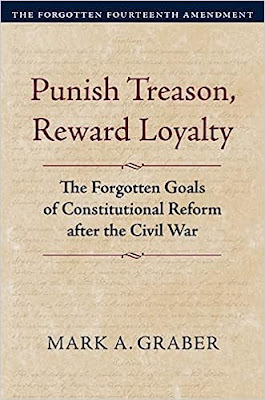
Mark A. Graber, Punish Treason, Reward Loyalty: The Forgotten Goals of Constitutional Reform after the Civil War (University of Kansas Press, 2023)
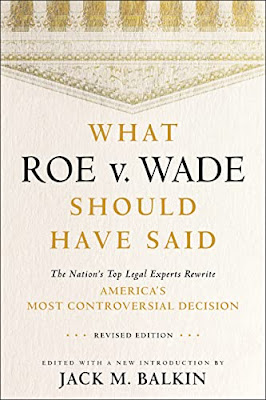
Jack M. Balkin, What Roe v. Wade Should Have Said: The Nation's Top Legal Experts Rewrite America's Most Controversial Decision - Revised Edition (NYU Press, 2023)

Andrew Koppelman, Burning Down the House: How Libertarian Philosophy Was Corrupted by Delusion and Greed (St. Martin’s Press, 2022)

Gerard N. Magliocca, Washington's Heir: The Life of Justice Bushrod Washington (Oxford University Press, 2022)
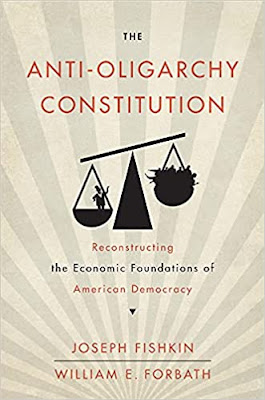
Joseph Fishkin and William E. Forbath, The Anti-Oligarchy Constitution: Reconstructing the Economic Foundations of American Democracy (Harvard University Press, 2022)
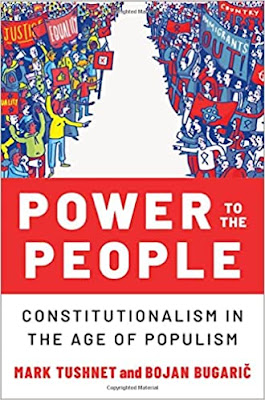
Mark Tushnet and Bojan Bugaric, Power to the People: Constitutionalism in the Age of Populism (Oxford University Press 2021).

Mark Philip Bradley and Mary L. Dudziak, eds., Making the Forever War: Marilyn B. Young on the Culture and Politics of American Militarism Culture and Politics in the Cold War and Beyond (University of Massachusetts Press, 2021).

Jack M. Balkin, What Obergefell v. Hodges Should Have Said: The Nation's Top Legal Experts Rewrite America's Same-Sex Marriage Decision (Yale University Press, 2020)

Frank Pasquale, New Laws of Robotics: Defending Human Expertise in the Age of AI (Belknap Press, 2020)

Jack M. Balkin, The Cycles of Constitutional Time (Oxford University Press, 2020)

Mark Tushnet, Taking Back the Constitution: Activist Judges and the Next Age of American Law (Yale University Press 2020).

Andrew Koppelman, Gay Rights vs. Religious Liberty?: The Unnecessary Conflict (Oxford University Press, 2020)

Ezekiel J Emanuel and Abbe R. Gluck, The Trillion Dollar Revolution: How the Affordable Care Act Transformed Politics, Law, and Health Care in America (PublicAffairs, 2020)

Linda C. McClain, Who's the Bigot?: Learning from Conflicts over Marriage and Civil Rights Law (Oxford University Press, 2020)
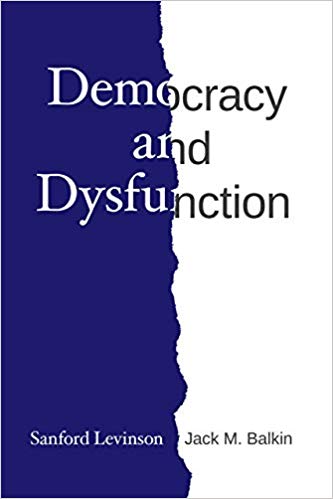
Sanford Levinson and Jack M. Balkin, Democracy and Dysfunction (University of Chicago Press, 2019)

Sanford Levinson, Written in Stone: Public Monuments in Changing Societies (Duke University Press 2018)

Mark A. Graber, Sanford Levinson, and Mark Tushnet, eds., Constitutional Democracy in Crisis? (Oxford University Press 2018)

Gerard Magliocca, The Heart of the Constitution: How the Bill of Rights became the Bill of Rights (Oxford University Press, 2018)

Cynthia Levinson and Sanford Levinson, Fault Lines in the Constitution: The Framers, Their Fights, and the Flaws that Affect Us Today (Peachtree Publishers, 2017)

Brian Z. Tamanaha, A Realistic Theory of Law (Cambridge University Press 2017)

Sanford Levinson, Nullification and Secession in Modern Constitutional Thought (University Press of Kansas 2016)

Sanford Levinson, An Argument Open to All: Reading The Federalist in the 21st Century (Yale University Press 2015)

Stephen M. Griffin, Broken Trust: Dysfunctional Government and Constitutional Reform (University Press of Kansas, 2015)

Frank Pasquale, The Black Box Society: The Secret Algorithms That Control Money and Information (Harvard University Press, 2015)

Bruce Ackerman, We the People, Volume 3: The Civil Rights Revolution (Harvard University Press, 2014)
Balkinization Symposium on We the People, Volume 3: The Civil Rights Revolution

Joseph Fishkin, Bottlenecks: A New Theory of Equal Opportunity (Oxford University Press, 2014)

Mark A. Graber, A New Introduction to American Constitutionalism (Oxford University Press, 2013)

John Mikhail, Elements of Moral Cognition: Rawls' Linguistic Analogy and the Cognitive Science of Moral and Legal Judgment (Cambridge University Press, 2013)

Gerard N. Magliocca, American Founding Son: John Bingham and the Invention of the Fourteenth Amendment (New York University Press, 2013)

Stephen M. Griffin, Long Wars and the Constitution (Harvard University Press, 2013)

Andrew Koppelman, The Tough Luck Constitution and the Assault on Health Care Reform (Oxford University Press, 2013)

James E. Fleming and Linda C. McClain, Ordered Liberty: Rights, Responsibilities, and Virtues (Harvard University Press, 2013)
Balkinization Symposium on Ordered Liberty: Rights, Responsibilities, and Virtues

Andrew Koppelman, Defending American Religious Neutrality (Harvard University Press, 2013)

Brian Z. Tamanaha, Failing Law Schools (University of Chicago Press, 2012)

Sanford Levinson, Framed: America's 51 Constitutions and the Crisis of Governance (Oxford University Press, 2012)

Linda C. McClain and Joanna L. Grossman, Gender Equality: Dimensions of Women's Equal Citizenship (Cambridge University Press, 2012)

Mary Dudziak, War Time: An Idea, Its History, Its Consequences (Oxford University Press, 2012)

Jack M. Balkin, Living Originalism (Harvard University Press, 2011)

Jason Mazzone, Copyfraud and Other Abuses of Intellectual Property Law (Stanford University Press, 2011)

Richard W. Garnett and Andrew Koppelman, First Amendment Stories, (Foundation Press 2011)

Jack M. Balkin, Constitutional Redemption: Political Faith in an Unjust World (Harvard University Press, 2011)

Gerard Magliocca, The Tragedy of William Jennings Bryan: Constitutional Law and the Politics of Backlash (Yale University Press, 2011)

Bernard Harcourt, The Illusion of Free Markets: Punishment and the Myth of Natural Order (Harvard University Press, 2010)

Bruce Ackerman, The Decline and Fall of the American Republic (Harvard University Press, 2010)
Balkinization Symposium on The Decline and Fall of the American Republic

Ian Ayres. Carrots and Sticks: Unlock the Power of Incentives to Get Things Done (Bantam Books, 2010)

Mark Tushnet, Why the Constitution Matters (Yale University Press 2010)

Ian Ayres and Barry Nalebuff: Lifecycle Investing: A New, Safe, and Audacious Way to Improve the Performance of Your Retirement Portfolio (Basic Books, 2010)
.jpg)
Jack M. Balkin, The Laws of Change: I Ching and the Philosophy of Life (2d Edition, Sybil Creek Press 2009)

Brian Z. Tamanaha, Beyond the Formalist-Realist Divide: The Role of Politics in Judging (Princeton University Press 2009)
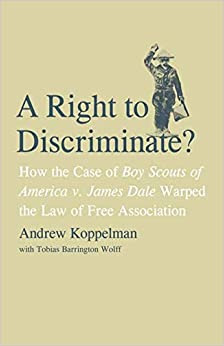
Andrew Koppelman and Tobias Barrington Wolff, A Right to Discriminate?: How the Case of Boy Scouts of America v. James Dale Warped the Law of Free Association (Yale University Press 2009)

Jack M. Balkin and Reva B. Siegel, The Constitution in 2020 (Oxford University Press 2009)

Heather K. Gerken, The Democracy Index: Why Our Election System Is Failing and How to Fix It (Princeton University Press 2009)

Mary Dudziak, Exporting American Dreams: Thurgood Marshall's African Journey (Oxford University Press 2008)

David Luban, Legal Ethics and Human Dignity (Cambridge Univ. Press 2007)

Ian Ayres, Super Crunchers: Why Thinking-By-Numbers is the New Way to be Smart (Bantam 2007)

Jack M. Balkin, James Grimmelmann, Eddan Katz, Nimrod Kozlovski, Shlomit Wagman and Tal Zarsky, eds., Cybercrime: Digital Cops in a Networked Environment (N.Y.U. Press 2007)
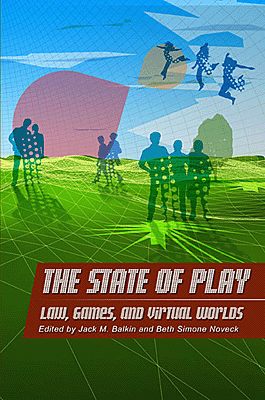
Jack M. Balkin and Beth Simone Noveck, The State of Play: Law, Games, and Virtual Worlds (N.Y.U. Press 2006)

Andrew Koppelman, Same Sex, Different States: When Same-Sex Marriages Cross State Lines (Yale University Press 2006)

Brian Tamanaha, Law as a Means to an End (Cambridge University Press 2006)

Sanford Levinson, Our Undemocratic Constitution (Oxford University Press 2006)

Mark Graber, Dred Scott and the Problem of Constitutional Evil (Cambridge University Press 2006)

Jack M. Balkin, ed., What Roe v. Wade Should Have Said (N.Y.U. Press 2005)

Sanford Levinson, ed., Torture: A Collection (Oxford University Press 2004)
Balkin.com homepage
Bibliography
Conlaw.net
Cultural Software
Writings
Opeds
The Information Society Project
BrownvBoard.com
Useful Links
Syllabi and Exams
