Balkinization
an unanticipated consequence of
Jack M. Balkin
Balkinization Symposiums: A Continuing List
E-mail:
Jack Balkin:
jackbalkin at yahoo.com
Bruce Ackerman
bruce.ackerman at yale.edu
Ian Ayres
ian.ayres at yale.edu
Corey Brettschneider
corey_brettschneider at brown.edu
Mary Dudziak
mary.l.dudziak at emory.edu
Joey Fishkin
joey.fishkin at gmail.com
Heather Gerken heather.gerken at yale.edu
Abbe Gluck abbe.gluck at yale.edu
Mark Graber
mgraber at law.umaryland.edu
Stephen Griffin
sgriffin at tulane.edu
Jonathan Hafetz
jonathan.hafetz at shu.edu
Jeremy Kessler
jkessler at law.columbia.edu
Andrew Koppelman
akoppelman at law.northwestern.edu
Marty Lederman
msl46 at law.georgetown.edu
Sanford Levinson
slevinson at law.utexas.edu
David Luban
david.luban at gmail.com
Gerard Magliocca
gmaglioc at iupui.edu
Jason Mazzone
mazzonej at illinois.edu
Linda McClain
lmcclain at bu.edu
John Mikhail
mikhail at law.georgetown.edu
Frank Pasquale
pasquale.frank at gmail.com
Nate Persily
npersily at gmail.com
Michael Stokes Paulsen
michaelstokespaulsen at gmail.com
Deborah Pearlstein
dpearlst at yu.edu
Rick Pildes
rick.pildes at nyu.edu
David Pozen
dpozen at law.columbia.edu
Richard Primus
raprimus at umich.edu
K. Sabeel Rahmansabeel.rahman at brooklaw.edu
Alice Ristroph
alice.ristroph at shu.edu
Neil Siegel
siegel at law.duke.edu
David Super
david.super at law.georgetown.edu
Brian Tamanaha
btamanaha at wulaw.wustl.edu
Nelson Tebbe
nelson.tebbe at brooklaw.edu
Mark Tushnet
mtushnet at law.harvard.edu
Adam Winkler
winkler at ucla.edu
Compendium of posts on Hobby Lobby and related cases
The Anti-Torture Memos: Balkinization Posts on Torture, Interrogation, Detention, War Powers, and OLC
The Anti-Torture Memos (arranged by topic)
Recent Posts
All's FAIR in Law and War
![[Powered by Blogger]](https://lh3.googleusercontent.com/blogger_img_proxy/AEn0k_s9TrbBucOE5YdKlF4rhgd5B0kLe9QArk0ezQKCZWhxHWr2IzXIFS5nMMU0IY2NGcQm2dQ3Jnia7t19G6SJ89sfwd9G5YATHqDliVk84Xk_=s0-d)
Just A Few Blogs
ACS Blog
Alas, a Blog
Althouse
Arts and Letters Daily
Atrios (Eschaton)
Bill of Health
Buzzflash.com
Buzz Machine
Cato at Liberty
Juan Cole (Informed Comment)
Concurring Opinions
The Constitution in 2020
Corrente
Crooked Timber
Daily Howler
Daily Kos
Dana Boyd
Brad DeLong
Digby (Hullabaloo)
Discriminations
Daniel Drezner
Kevin Drum (Mother Jones)
Electrolite
En Banc
Eunomia (Daniel Larison)
Fafblog
Michael Froomkin (Discourse.net)
GovLab (Beth Noveck)
Rick Hasen (Election Law)
History News Network
How Appealing
Ignatz (Sam Heldman)
The Importance of (Ernie Miller)
Infolaw
Instapundit
International Economic Law and Policy Blog
IntLawGrrls
Jacob Levy
Jesus' General
Jurisdynamics
The Kitchen Cabinet
Mark Kleiman
Law Blog Central
Larry Lessig
Lawyers, Guns and Money
Liberal Oasis
Brian Leiter's Law School Reports
The Leiter Reports
Marginal Revolution
Megan McArdle
Memeorandum
Metafilter
Mirror of Justice
The New Republic
Newseum
No More Mister Nice Blog
Brendan Nyhan
Opinio Juris
Orcinus
The Originalism Blog
Pandagon
Passport (Foreign Policy)
Overcoming Bias
Political Animal (Washington Monthly)
Political Theory Daily Review
Political Wire (Taegan Goddard)
The Poor Man
Virginia Postrel
Prawfsblawg
Public Reason
Jonathan Rauch
Raw Story
Redstate
ReligiousLeftLaw.com
Reporters Committee For Freedom of the Press
Reproductive Rights Blog
Rothman's Roadmap to the Right of Publicity
SCOTUS Blog
Seeing the Forest
Clay Shirky
The Shifted Librarian
The Situationist
Larry Solum (Legal Theory)
Andrew Sullivan
Talking Points Memo
Talk Left
Tapped
Tbogg
TechPresident
The Paper Chase (Jurist)
Tom Paine
Tom Tomorrow (This Modern World)
Eve Tushnet
Uggabugga
University of Chicago Law School Faculty Blog
Unqualified Offerings
The Volokh Conspiracy
War and Piece (Laura Rozen)
Wampum
Oliver Willis
Wonkette
Written Description
Matthew Yglesias
Yin
Your Choice of Feeds
1. XML
powered by

2. Atom Feed
3. RSS 2.0
All's FAIR in Law and War
JB
I haven't said much about the FAIR v. Rumsfeld case, in part because I have been a plaintiff in the Yale faculty litigation, Burt v. Rumsfeld, which raised many of the same issues. Now that the Supreme Court has delivered its opinion in FAIR, it's worth taking stock of the controversy. In this post I explain why I joined the lawsuit, even though it pursued claims far broader than I would have liked. I also explain what the Court's decision means for constitutional challenges to antidiscrimination laws using Boy Scouts of America v. Dale. Finally, and, perhaps most important, I explain why the Court's decision doesn't end the controversy over the application of the Solomon Amendment to law schools. Indeed, as I shall point out at the conclusion of this post, the Court's opinion appeared to concede that law faculties and law schools had a First Amendment right against at least some applications of the Solomon Amendment. That aspect of the decision, I predict, will not make the military happy. Although the case was widely reported as a complete loss for the law schools and a victory for the military, things are actually a bit more complicated, and litigation over the Solomon Amendment may not be quite at an end. There's lots to cover here, so let's get started. Why I joined the litigation I believed that the constitutional theory behind both the FAIR lawsuit, which I was not involved in, and the Yale lawsuit (Burt v. Rumsfeld), which I joined as a plaintiff, was a long shot. Moreover, I believed that, if successful, these lawsuits might cause problems for other areas of antidiscrimination law, in particular, in the area of Title VI and Title IX law. The reason is that Title VI and Title IX impose antidiscrimination obligations on schools that receive federal funds. If the FAIR and Yale plaintiffs had first amendment rights to be excused from the Solomon Amendment, racist and sexist institutions might claim that they were entitled to be excused from Title VI and Title IX obligations. There are ways to distinguish the two situations, but it requires some fairly fancy footwork and it might cause even more problems down the road. Therefore, when I joined the Yale suit as a platinff, my preference was for a much narrower theory of the case, one that would pose no danger of undermining federal antidiscrimination laws. I favored an as-applied challenge. The goal would be to show not that the Solomon Amendment was unconstitutional on its face, or even that the Federal government could not condition funding, but rather that the Defense Department's regulations implementing the Solomon Amendment were unconstitutional as applied to particular law schools like Yale. The basic idea was that these regulations had been drafted and applied in an unnecessarily harsh way, in order, in the words of one military official, "to send a message" to pointy headed intellectuals at the nation's top law schools that they were being unpatriotic and that they shouldn't mess with the military. It's important to note (although it was not widely reported in the media) that the military had what was practically speaking effective access to Yale law students. The school repeatedly emphasized that it did not prevent or hinder access to students but rather required that the military's access be different than that enjoyed by non-discriminating employers. Nevertheless, the military objected to the symbolism of not being treated exactly the same as employers who had agreed not to discriminate. It resented, in short, the message that the law school was conveying. Hence, the regulations had been interpreted and applied out of a political motivation, to punish law schools like Yale because they publicly opposed the military's policy. If these facts had been proved at trial they might have been sufficient to show an unconstitutional motivation in the application of the Solomon Amendment to Yale. The difficulty with this as applied theory, of course, would be making the requisite showing of illegal motivation. Nevertheless, I believed that we had at least some evidence that the Defense Department's real objection was the message that the law school was conveying by symbolically offering military recruiters a different form of access; I also believe that there was considerable evidence of ideological hostility toward the law school for opposing the military's policy on homosexuals. Note that this sort of evidence would not be sufficient in a facial challenge, because under United States v. O'Brien, one is not permitted to inquire into legislative motivation. However, O'Brien does not apply to executive interpretation and implementation of laws in an as applied challenge. This, along with nonconstitutional objections based on stautory interpretation and administrative law, was my favored approach. However, the FAIR litigation, (and the Yale litigation) as they developed, became a more general challenge to the statute under the theory of compelled speech and freedom of association. The Supreme Court rejected these broader grounds. Even though the litigation did not choose a narrower theory that I preferred, and even though the theory it did offer was, in my view, a long shot, I joined the Yale litigation for a simple reason: The military insisted that Yale make a special exception to its nondiscrimination policy for one employer only, the U.S. military, and it required Yale to make this exception because the military wished to discriminate against homosexuals. (Under the Clinton Administration's Don't Ask Don't Tell policy, homosexuals may not openly serve in the military.) I believe that this policy, like the previous policy which simply excluded all homosexuals, is deeply unjust. It is wrong, and, I believe, someday it will also be regarded as unconstitutional as well. Someday, I hope and I predict, our country will be ashamed of our military's long history of discrimination against homosexuals. Someday we will look back on this episode and wonder what kind of country we lived in that would refuse to allow people to serve honorably in the nation's military simply because of their sexual orientation. Someday, I believe, we will see the military's prejudice and its homophobia as wrongful and shameful in much the same way that we now regard as wrongful and shameful the military's long history of discrimination against blacks and its requirement of segregation of black and white troops. I believed then, and I continue to believe, that it was appropriate to bring this case to protest the military's unjust and discriminatory policies. Much litigation is brought, and has been brought in our nation's history, not merely because the litigants hope to win in the courts, but because whether or not it succeeds it puts an important issue before the public eye. Indeed, every important social movement in the country's history, from abolitionism to the conservative movements of the late twentieth century, has brought litigation of this sort. In particular, I thought it appropriate to join this litigation to protest the military's threat to punish Yale and other educational institutions if they did not make a special exception to their nondiscrimination policies so as to facilitate the military's own unjust and discriminatory policy. It is one thing for the military to demand special treatment that no other employer enjoys; it is another to demand special treatment so that the military can continue to engage in an unjust policy of discrimination that this country should rightly be ashamed of. One might well object that if the policy is unjust, it should be attacked directly. One should not employ the First Amendment as a proxy for gay rights. In the abstract, I agree. Using proxy-based litigation (arguing for right A when one really wants to secure right B) in public interest litigation often backfires. As Karl Llewellyn once said in a different context, covert tools are never reliable tools. As I noted earlier, if the plaintiffs won, they might do so through a decision that made bad law. However, the history of social movement litigation has often made use of such proxy based arguments. For example, the NAACP often argued for First Amendment rights, as in the Herndon case, to promote black civil rights. Indeed, during the 30's and 40's the NAACP even used Plessy v. Ferguson in a series of equalization suits to try to improve conditions for black schoolteachers. A purist may object to such proxy-based litigation, but the history of social movements shows that in each case one has to make a contextual judgment about what is likely to do the most good and the least harm in the long run. In this particular instance, I believed that the litigation could do some good and would probably do very little harm whether the plaintiffs won or lost. What the FAIR opinion does In hindsight, my hope was borne out. Even though the FAIR plaintiffs lost, Chief Justice Roberts' opinion was carefully and skillfully written to make almost no new law. Clearly the Justices understood that they would have to thread the needle fairly carefully to achieve the unanimous opinion that would avoid making bad law for future cases. Although news reports suggest that the 8-0 opinion was little more than a smackdown of the law schools' position, closer inspection reveals that it is very carefully written to avoid a whole host of problems that would arise if the Court had chosen a broader based rejection of the positions that the law schools offered. That is to say, the great thing about Roberts' opinion is that he makes the result look easy, and he makes it look easy by artfully dodging every interesting constitutional law question in sight. Several commentators have suggested that the law schools didn't know what they were doing in bringing the case; but in fact, the care and precision with which Roberts' opinion is written belies that claim. Only by writing an opinion as narrowly (and skillfully) as Roberts did could the Court avoid the Scylla of seriously entertaining the larger problems raised by the plaintiffs' claims and the Charybdis of expanding the law in several unfortunate directions. In the last part of this post, I'll give an example of one of the difficult doctrinal problems that remains unresolved by Roberts' opinion. If one looks carefully at Roberts' beautifully written opinion, one discovers that the linchpin of the argument is his claim that Roberts' view, by contrast, is that nothing so grand is going on; rather law schools are simply operating glorified hiring halls to shuttle their students into the arms of corporate firms and other legal employers. A person with a more cynical cast of mind might argue that both the law schools and Roberts are right. The law schools are engaged in pedagogy and they are instilling values through the way they run their placement services, but the values they are promoting are that students should happily become cogs in corporate law firms, and that is why placement offices (especially at elite schools like Harvard and Yale) make the transition from law school to corporate firm relatively effortless; students who seek alternatives to the smooth escalator ride to corporate law practice must do considerably more work on their own. That is, in fact, the educational message that many students draw from law schools' placement policies; whether it is the message that law schools deliberately seek to instill is another matter. Viewed from this cynical perspective, Chief Justice Roberts has a point: if law schools are trying to instill messages about high minded professionalism in their placement policies, they are doing a pretty poor job, so poor, in fact, that the Supreme Court is justified in assuming that the placement function of law schools is purely utilitarian and has no important expressive elements. A second notable feature of Roberts' opinion is its treatment of Boy Scouts of America v. Dale. Many gay rights advocates dislike Dale because it allowed the Boy Scouts to escape New Jersey's public accommodations laws. Conversely, some libertarian scholars who think that antidiscrimination laws have gone too far have embraced Dale as the thin opening wedge of a larger First Amendment attack on public accommodations law, and even some elements of employment law, such as sexual harassment law and hostile environment liability. If Dale were read broadly to support the plaintiffs' arguments in FAIR, many people worried that it would hasten the expansion of First Amendment defenses to antidiscrimination laws generally. That is one reason why many people, including myself, had qualms about some of the broader claims made in the FAIR litigation, and why I preferred a much narrower, as-applied challenge. (I should note that I also favored a nonconstitutional challenge based on administrative law and statutory interpretation.) Fortunately, Chief Justice Roberts's opinion in FAIR reads Dale quite narrowly, in ways, I think, that may limit some future First Amendment attacks on antidiscrimination laws. He reads Dale as simply a case about membership and about laws that burden the right of an organization to choose their members or make membership in the organization less valuable and desirable to its members: FAIR correctly notes that the freedom of expressive association protects more than just a group's membership decisions. For example, we have held laws unconstitutional that require disclosure of membership lists for groups seeking anonymity, or impose penalties or withhold benefits based on membership in a disfavored group. Although these laws did not directly interfere with an organization's composition, they made group membership less attractive, raising the same First Amendment concerns about affecting the group's ability to express its message. The Solomon Amendment has no similar effect on a law school's associational rights. Students and faculty are free to associate to voice their disapproval of the military's message; nothing about the statute affects the composition of the group by making group membership less desirable. What the FAIR opinion leaves unresolved-- and why the military may not be happy with the result Finally, FAIR v. Rumsfeld suggests that law schools may engage in "counter-speech" that criticizes the military's discriminatory policies. They can stage protests nearby military recruiters and they can offer official statements that criticize the military for its policies. Students, as well, are free to protest the military's policies. If the Solomon Amendment means that law schools must treat the military just as well as employers that promise not to discriminate, then why doesn't the very counter-speech that the Court seems to suggest is permissible violate the Solomon Amendment? After all, if students routinely protest near the military recruiters, and if the school consistently sends a message that these recruiters are disfavored because they discriminate against homosexual students who seek to join the military, does this practice really treat the military as well as other, non-discriminating employers? Wouldn't this counter-speech, if persuasive (and pervasive), have the effect of making students shun the military, and won't it make the military recruiters feel unwelcome? The Court refuses to engage with these questions, merely suggesting blithely (as it also did in oral argument) that there's nothing wrong with students and law schools openly protesting and criticizing the military and military recruitment because of its policies. That activity, the Court insists, is mere speech, not prohibited conduct. But this answer is far too simple. If a school (and its faculty) were repeatedly to send the message that its black students were not welcome, even though the school did nothing else to prevent the students from attending the school, I have little doubt that the school would have violated Title VI of the 1964 Civil Rights Act. Similarly, if a restaurant had signs at its entrance saying "blacks go home" and "we resent serving blacks" and placed those signs deliberately in order to make blacks feel unwelcome, but did not refuse service to those blacks who came inside, the owners of the restaurant would probably be in violation of Title II. In other antidiscrimination laws, equal access isn't simply a requirement of no formal limits on physical access. Equal access usually means that you aren't allowed to send signals that the group is disfavored and unwelcome so as to discourage the group from entering and using the facility. All this puts the Court between a rock and a hard place. What the Court seems to allow in FAIR v. Rumsfeld is the creation of a sort of "hostile environment" for military recruiters-- through speech and protest, to be sure-- as long as military recruiters are not physically barred from meeting students on campus and can use the same computer matching facilities. But if that's all the Solomon Amendment guarantees, it doesn't guarantee as much as the military thought it would. In particular, it doesn't give the military what it really wanted-- respect. Suppose, then that the military objects, and argues that these demonstrations and signs of unwelcomeness violate the Solomon Amendment because no other employer is treated in the same way. Then the Court will once again be faced with a conflict between the Solomon Amendment and the First Amendment rights of law schools, only in a new guise. If the Court says that schools can't make military recruiters feel unwelcome with speech and protests, because that would in effect be unequal access, then it undermines its arguments in FAIR v. Rumsfeld that the Solomon Amendment creates no First Amendment problems because it regulates conduct, not speech, and that there is no First Amendment problem as long as the law schools can organize anti-military protests and make clear to the student body that it disapproves of the military's discriminatory employment policies. On the other hand, if the Court follows the reasoning offered in Chief Justice Roberts' opinion (and at oral argument), then it must hold that law schools and faculty can put up disapproving signs and even organize protests against the military that let the military know of the schools' disapproval. (For example, law schools might put signs next to the door where the military recruiters sit labeled "homophobes," and it might arrange for military recruiters to undergo a "walk of shame" as they enter the building). In that case, however, the Court must explain why the same reasoning would not apply in Title VI and Title II cases where racist schools and racist restaurants seek to drive off blacks by giving them formal access but sending a clear message that they are not wanted. That is to say, if the Court makes good on its promise of the law schools' and the law faculty's First Amendment rights to shun and protest military recruiters, it be must treating the equal access provisions of the Solomon Amendment differently than other antidiscrimination measures. That means that it will not really enforce the Solomon Amendment to give the military the same access as non-discriminating employers, because to do so would violate the free speech and associational rights of the law schools, their students, and their faculty. If the Court takes this path, and follows through on what it said in FAIR v. Rumsfeld, then, ironically, it will have accepted that the Solomon Amendment does not really mean what it says: faculty and students must have the First Amendment right to make the military feel unwelcome, which is to say, they must have a First Amendment right to treat the military differently from other employers. And that would mean that the Court, without saying it directly, has actually accepted an important aspect of the law schools' argument in FAIR v. Rumsfeld. What looked at first like an 8-0 rebuff of law schools may turn out to be something quite different, something the military won't like one bit. I have no idea what will happen in the future, but I strongly suspect that several law schools (although perhaps not Yale) will try to push the envelope as far as they can, employing their First Amendment rights as the Court describes them in FAIR v. Rumsfeld. The military will almost certainly object to this treatment, in part because one of the central purposes of the Solomon Amendment (and the military's implementation of it) was to get back at academics for failing to display what the military regarded as sufficient respect. That is to say, the Solomon Amendment wasn't really about access (there was effective access at Yale); it was about symbolism and respect, and it was about sticking it to pointy-headed liberal intellectuals in universities. Thus, if law schools and law school faculty begin to protest military recruitment in earnest, and the military begins to complain that it feels unwelcome and isn't receiving truly equal access under the Solomon Amendment, then the case will wind up in the courts all over again. And the issues that Chief Justice Roberts so artfully dodged in his opinion in FAIR v. Rumsfeld will come back to haunt the both him and Court.accommodating the military's message does not affect the law schools' speech, because the schools are not speaking when they host interviews and recruiting receptions. Unlike a parade organizer's choice of parade contingents, a law school's decision to allow recruiters on campus is not inherently expressive. Law schools facilitate recruiting to assist their students in obtaining jobs. A law school's recruiting services lack the expressive quality of a parade, a newsletter, or the editorial page of a newspaper; its accommodation of a military recruiter's message is not compelled speech because the accommodation does not sufficiently interfere with any message of the school.
By describing the placement office of law schools as essentially functional and ministerial, Roberts is able to argue that it is not all that different from, say, a shopping mall as in the Pruneyard case. The law schools, by contrast, argued that their placement function was continuous with their educational policies and was tied to their general interests in pedagogy. That is to say, law schools claimed that the way they structure the placement office is part of their job of teaching students how to behave as professionals. That is why they spend considerable amounts of time and effort in trying to attract public service employers and why they impose their nondiscrimination policy. If shaping the placement service in this way is paternalistic (as many have argued), it is the sort of paternalism that occurs naturally with education. Schools are describing what appropriate professional behavior is and what sorts of jobs their law students should aspire to. Law schools therefore "associate" with military recruiters in the sense that they interact with them. But recruiters are not part of the law school. Recruiters are, by definition, outsiders who come onto campus for the limited purpose of trying to hire students -- not to become members of the school's expressive association. This distinction is critical. Unlike the public accommodations law in Dale, the Solomon Amendment does not force a law school "'to accept members it does not desire.'" The law schools say that allowing military recruiters equal access impairs their own expression by requiring them to associate with the recruiters, but just as saying conduct is undertaken for expressive purposes cannot make it symbolic speech, so too a speaker cannot "erect a shield" against laws requiring access "simply by asserting" that mere association "would impair its message.
(citations ommitted.) Thus, if a group seeks to discriminate against those who do not seek to become members of the group, Dale does not apply. This makes Dale essentially irrelevant to a large number of antidiscrimination laws.Law schools remain free under the statute to express whatever views they may have on the military's congressionally mandated employment policy, all the while retaining eligibility for federal funds. See Tr. of Oral Arg. 25 (Solicitor General acknowledging that law schools "could put signs on the bulletin board next to the door, they could engage in speech, they could help organize student protests"). As a general matter, the Solomon Amendment regulates conduct, not speech. It affects what law schools must do -- afford equal access to military recruiters -- not what they may or may not say.
This language seems to resolve the case in a neat and tidy way. In fact, it leaves open a very important issue that will amost certainly arise in the future. At what point does protest and criticism of the military constitute unequal access under the Solomon Amendment? In FAIR v. Rumsfeld the Court fudged this question, sweeping a much more complicated set of issues under the rug for the moment.
Posted
6:34 PM
by JB [link]

My recollection is that the Solicitor General was pushed on this point at the oral argument, and stated fairly plainly that law schools could do these things. Surely that will give some comfort to the schools that these activities are not pushing the envelope.
Secondly you're concerned about the Court having somehow foolishly or irresponsibly left room for future antics by law school faculty to give them problems reconciling the right to behave in that way with their support for antidiscrimination law. I would like to point out that you don't have to be a right wing theocrat to see this as a profoundly amusing prospect.
From the other side, FAIR's case was weak. A better case could have been made by the students that they were denied access to truthful information about their legal careers in violation of their First Amendment rights. Likewise, the FAIR argument seemed to want to turn back the Logan Valley doctrine -- access to a "company town". In this respect, I tend to agree with our host that FAIR got off easy. There was no countersuit. If there had been, FAIR would have been the one who was enjoined. Although a statute is an injunction I suppose.
Although, I'm not really convinced by my own argument.
Cari obat sipilis
Contoh obat sipilis
http://agusus1.blogspot.com/
http://agusyafii.blogspot.com/
http://amateursexxxx.blogspot.co.id/
Obat jengger ayam
obat jengger ayam pada wanita
obat jengger ayam pada anus
obat jengger ayam di anus
obat jengger ayam hitam
obat sakit jengger ayam
obat penyakit jengger ayam pada pria
obat penghilang jengger ayam
harga obat jengger ayam
obat apotik jengger ayam
obat dokter jengger ayam
obat herbal untuk jengger ayam
obat penyakit kulit jengger ayam
Cara mengobati jengger ayam ampuh
Cara paling ampuh mengobati gonore atau kencing nanah
nama obat gonore di apotek
obat oral gonore
obat gonore propolis
obat gonore pdf
obat penyakit gonore
obat paten gonore
obat penderita gonore
resep obat penyakit gonore
obat cina penyakit gonore
obat dari penyakit gonore
Obat kutil di sekitar kelamin
Obat farmasi untuk kutil kelamin
Obat generik untuk kutil kelamin
Obat kutil kelamin imiquimod
Jual obat kutil kelamin
Jual obat kutil kelamin murah
Obat kutil kelamin yg di jual di apotik
Jual obat penghilang kutil kelamin
Obat kimia kutil kelamin
Kapur sirih untuk obat kutil kelamin
Obat kutil kelamin medis
Obat menghilangkan kutil kelamin
Obat kutil kelamin tradisional
Obat kutil kelamin
Obat kutil kelamin wanita
Obat kutil kelamin di apotik
Obat kutil kelamin untuk ibu hamil
Obat kutil kelamin untuk wanita
Obat kutil kelamin mujarab
Obat kutil kelamin di anus
Obat kutil kelamin/jengger ayam
Obat kutil kelamin paling murah
obat gonore pada ibu hamil
obat gonore tradisional
obat gonore tenggorokan
obat gonore paling efektif
obat gonore pada wanita
obat gonore atau kencing nanah
Obat herpes untuk bayi
Obat herpes untuk ibu hamil
Obat herpes ampuh
Obat herpes untuk anak
Obat herpes mulut
Pengobatan herbal kutil kelamin wanita
pengobatan ampuh kutil kelamin pada wanita
obat kutil kelamin yang ada di apotik
obat kutil kelamin yg dijual di apotik
obat kutil di kemaluan wanita
pengobatan kutil kelamin pada pria
pengobatan penyakit kutil kelamin pada pria
obat penyakit kutil pada kelamin pria
Pengobatan kutil kelamin aman dan tanpa operasi
obat kutil pada alat kelamin pria
pengobatan kutil kelamin
pengobatan kutil kelamin pada pria dan wanita
pengobatan kutil kelamin pria
pengobatan kutil kelamin wanita
pengobatan kutil kelamin dengan cuka apel
pengobatan kutil kelamin di anus
Cara mengobati kutil di kelamin wanita hamil
pengobatan kutil kelamin di bandung
Cara mengobati jengger ayam dan kutil kelamin
obat kutil kelamin
Obat wasir herbal tanpa operasi
Obat wasir herbal stadium 4 tanpa operasi
Cara mengobati wasir dan ambeien
Pengobatan ambeien keluar benjolan tanpa operasi
Pengobatan wasir stadium 4 tanpa operasi
Obat wasir untuk ibu setelah melahirkan
Obat wasir tradisional yang ampuh
Cara ampuh atasi wasir pada wanita
Obat yang bagus untuk wasir
Obat wasir aman buat ibu hamil
Obat wasir aman ibu menyusui
Obat wasir untuk ibu habis melahirkan
Obat de nature khusus untuk wasir stdium 4
Cara mengobati wasir tana perlu operasi
Pengobatan wasir dan ambeien mujarab
Pengobatan wasir tanpa operasi
Obat wasir dan ambeien stadium 4
Obat penyakit wasir herbal De Nature
Obat untuk wasir pada ibu hamil
Cara mengobati wasir yang parah tanpa operasi
Obat ambeien tradisional
Obat wasir herbal De Nature
Obat wasir ambeclear
Obat wasir alami
Obat wasir ambeven
Obat wasir berdarah
Obat wasir ampuh
Obat wasir untuk ibu hamil
Obat wasir ardium
Obat wasir ampuh di apotik
Obat wasir luar
Obat wasir paling ampuh
Obat kutil di sekitar kelamin
Obat farmasi untuk kutil kelamin
Obat generik untuk kutil kelamin
Obat kutil kelamin imiquimod
Jual obat kutil kelamin
Jual obat kutil kelamin murah
Obat kutil kelamin yg di jual di apotik
Jual obat penghilang kutil kelamin
Obat kimia kutil kelamin
Kapur sirih untuk obat kutil kelamin
Obat kutil kelamin medis
Obat menghilangkan kutil kelamin
Obat kutil kelamin tradisional
Obat kutil kelamin
Obat kutil kelamin wanita
Obat kutil kelamin di apotik
Obat kutil kelamin untuk ibu hamil
Obat kutil kelamin untuk wanita
Obat kutil kelamin mujarab
Obat kutil kelamin di anus
Obat kutil kelamin/jengger ayam
Obat kutil kelamin paling murah
obat gonore pada ibu hamil
obat gonore tradisional
obat gonore tenggorokan
obat gonore paling efektif
obat gonore pada wanita
obat gonore atau kencing nanah
obat alternatif gonore
obat gonore yang ampuh
obat gonore yg ampuh
obat gonore yang paling ampuh
obat gonore yang dijual di apotik
obat buat gonore
obat bakteri gonore
obat paten penyakit gonore
obat herbal untuk penyakit gonore
obat antibiotik untuk penyakit gonore
obat tradisional untuk penyakit gonore
resep obat gonore
ramuan obat gonore
obat sakit gonore
obat suntik gonore
obat untuk sakit gonore
supertetra obat gonore
obat alami sembuhkan gonore
obat gonore tradisional
obat gonore terbaik
obat gonore terbaru
obat gonore tangerang
Obat herpes tradisional yang ampuh
Obat herpes zoster
Obat herpes kulit
Obat herpes simplex
Obat herpes genital
Obat herpes di apotik
Obat herpes kulit di apotik
Pengobatan ambeien keluar benjolan tanpa operasi
Pengobatan wasir stadium 4 tanpa operasi
Obat wasir untuk ibu setelah melahirkan
Obat wasir tradisional yang ampuh
Cara ampuh atasi wasir pada wanita
Obat yang bagus untuk wasir
Obat wasir aman buat ibu hamil
Obat wasir aman ibu menyusui
Obat wasir untuk ibu habis melahirkan
Obat de nature khusus untuk wasir stdium 4
Cara mengobati wasir tana perlu operasi
Pengobatan wasir dan ambeien mujarab
Pengobatan wasir tanpa operasi
Obat wasir dan ambeien stadium 4
Obat penyakit wasir herbal De Nature
Obat untuk wasir pada ibu hamil
Cara mengobati wasir yang parah tanpa operasi
Obat ambeien tradisional
Obat wasir herbal De Nature
Obat wasir ambeclear
Obat wasir alami
Obat wasir ambeven
Obat wasir berdarah
Obat wasir ampuh
Obat wasir untuk ibu hamil
Obat wasir ardium
Obat wasir ampuh di apotik
Obat wasir luar
Obat wasir paling ampuh
Books by Balkinization Bloggers

Gerard N. Magliocca, The Actual Art of Governing: Justice Robert H. Jackson's Concurring Opinion in the Steel Seizure Case (Oxford University Press, 2025)

Linda C. McClain and Aziza Ahmed, The Routledge Companion to Gender and COVID-19 (Routledge, 2024)

David Pozen, The Constitution of the War on Drugs (Oxford University Press, 2024)

Jack M. Balkin, Memory and Authority: The Uses of History in Constitutional Interpretation (Yale University Press, 2024)
Mark A. Graber, Punish Treason, Reward Loyalty: The Forgotten Goals of Constitutional Reform after the Civil War (University of Kansas Press, 2023)
Jack M. Balkin, What Roe v. Wade Should Have Said: The Nation's Top Legal Experts Rewrite America's Most Controversial Decision - Revised Edition (NYU Press, 2023)

Andrew Koppelman, Burning Down the House: How Libertarian Philosophy Was Corrupted by Delusion and Greed (St. Martin’s Press, 2022)

Gerard N. Magliocca, Washington's Heir: The Life of Justice Bushrod Washington (Oxford University Press, 2022)
Joseph Fishkin and William E. Forbath, The Anti-Oligarchy Constitution: Reconstructing the Economic Foundations of American Democracy (Harvard University Press, 2022)
Mark Tushnet and Bojan Bugaric, Power to the People: Constitutionalism in the Age of Populism (Oxford University Press 2021).

Mark Philip Bradley and Mary L. Dudziak, eds., Making the Forever War: Marilyn B. Young on the Culture and Politics of American Militarism Culture and Politics in the Cold War and Beyond (University of Massachusetts Press, 2021).

Jack M. Balkin, What Obergefell v. Hodges Should Have Said: The Nation's Top Legal Experts Rewrite America's Same-Sex Marriage Decision (Yale University Press, 2020)

Frank Pasquale, New Laws of Robotics: Defending Human Expertise in the Age of AI (Belknap Press, 2020)

Jack M. Balkin, The Cycles of Constitutional Time (Oxford University Press, 2020)

Mark Tushnet, Taking Back the Constitution: Activist Judges and the Next Age of American Law (Yale University Press 2020).

Andrew Koppelman, Gay Rights vs. Religious Liberty?: The Unnecessary Conflict (Oxford University Press, 2020)

Ezekiel J Emanuel and Abbe R. Gluck, The Trillion Dollar Revolution: How the Affordable Care Act Transformed Politics, Law, and Health Care in America (PublicAffairs, 2020)

Linda C. McClain, Who's the Bigot?: Learning from Conflicts over Marriage and Civil Rights Law (Oxford University Press, 2020)
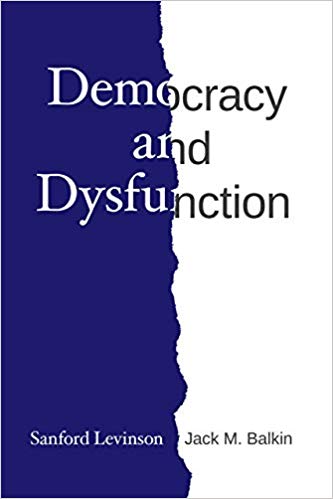
Sanford Levinson and Jack M. Balkin, Democracy and Dysfunction (University of Chicago Press, 2019)

Sanford Levinson, Written in Stone: Public Monuments in Changing Societies (Duke University Press 2018)

Mark A. Graber, Sanford Levinson, and Mark Tushnet, eds., Constitutional Democracy in Crisis? (Oxford University Press 2018)

Gerard Magliocca, The Heart of the Constitution: How the Bill of Rights became the Bill of Rights (Oxford University Press, 2018)

Cynthia Levinson and Sanford Levinson, Fault Lines in the Constitution: The Framers, Their Fights, and the Flaws that Affect Us Today (Peachtree Publishers, 2017)

Brian Z. Tamanaha, A Realistic Theory of Law (Cambridge University Press 2017)

Sanford Levinson, Nullification and Secession in Modern Constitutional Thought (University Press of Kansas 2016)

Sanford Levinson, An Argument Open to All: Reading The Federalist in the 21st Century (Yale University Press 2015)

Stephen M. Griffin, Broken Trust: Dysfunctional Government and Constitutional Reform (University Press of Kansas, 2015)

Frank Pasquale, The Black Box Society: The Secret Algorithms That Control Money and Information (Harvard University Press, 2015)

Bruce Ackerman, We the People, Volume 3: The Civil Rights Revolution (Harvard University Press, 2014)
Balkinization Symposium on We the People, Volume 3: The Civil Rights Revolution

Joseph Fishkin, Bottlenecks: A New Theory of Equal Opportunity (Oxford University Press, 2014)

Mark A. Graber, A New Introduction to American Constitutionalism (Oxford University Press, 2013)

John Mikhail, Elements of Moral Cognition: Rawls' Linguistic Analogy and the Cognitive Science of Moral and Legal Judgment (Cambridge University Press, 2013)

Gerard N. Magliocca, American Founding Son: John Bingham and the Invention of the Fourteenth Amendment (New York University Press, 2013)

Stephen M. Griffin, Long Wars and the Constitution (Harvard University Press, 2013)

Andrew Koppelman, The Tough Luck Constitution and the Assault on Health Care Reform (Oxford University Press, 2013)

James E. Fleming and Linda C. McClain, Ordered Liberty: Rights, Responsibilities, and Virtues (Harvard University Press, 2013)
Balkinization Symposium on Ordered Liberty: Rights, Responsibilities, and Virtues

Andrew Koppelman, Defending American Religious Neutrality (Harvard University Press, 2013)

Brian Z. Tamanaha, Failing Law Schools (University of Chicago Press, 2012)

Sanford Levinson, Framed: America's 51 Constitutions and the Crisis of Governance (Oxford University Press, 2012)

Linda C. McClain and Joanna L. Grossman, Gender Equality: Dimensions of Women's Equal Citizenship (Cambridge University Press, 2012)

Mary Dudziak, War Time: An Idea, Its History, Its Consequences (Oxford University Press, 2012)

Jack M. Balkin, Living Originalism (Harvard University Press, 2011)

Jason Mazzone, Copyfraud and Other Abuses of Intellectual Property Law (Stanford University Press, 2011)

Richard W. Garnett and Andrew Koppelman, First Amendment Stories, (Foundation Press 2011)

Jack M. Balkin, Constitutional Redemption: Political Faith in an Unjust World (Harvard University Press, 2011)

Gerard Magliocca, The Tragedy of William Jennings Bryan: Constitutional Law and the Politics of Backlash (Yale University Press, 2011)

Bernard Harcourt, The Illusion of Free Markets: Punishment and the Myth of Natural Order (Harvard University Press, 2010)

Bruce Ackerman, The Decline and Fall of the American Republic (Harvard University Press, 2010)
Balkinization Symposium on The Decline and Fall of the American Republic

Ian Ayres. Carrots and Sticks: Unlock the Power of Incentives to Get Things Done (Bantam Books, 2010)

Mark Tushnet, Why the Constitution Matters (Yale University Press 2010)

Ian Ayres and Barry Nalebuff: Lifecycle Investing: A New, Safe, and Audacious Way to Improve the Performance of Your Retirement Portfolio (Basic Books, 2010)
.jpg)
Jack M. Balkin, The Laws of Change: I Ching and the Philosophy of Life (2d Edition, Sybil Creek Press 2009)

Brian Z. Tamanaha, Beyond the Formalist-Realist Divide: The Role of Politics in Judging (Princeton University Press 2009)
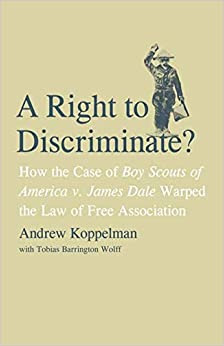
Andrew Koppelman and Tobias Barrington Wolff, A Right to Discriminate?: How the Case of Boy Scouts of America v. James Dale Warped the Law of Free Association (Yale University Press 2009)

Jack M. Balkin and Reva B. Siegel, The Constitution in 2020 (Oxford University Press 2009)

Heather K. Gerken, The Democracy Index: Why Our Election System Is Failing and How to Fix It (Princeton University Press 2009)

Mary Dudziak, Exporting American Dreams: Thurgood Marshall's African Journey (Oxford University Press 2008)

David Luban, Legal Ethics and Human Dignity (Cambridge Univ. Press 2007)

Ian Ayres, Super Crunchers: Why Thinking-By-Numbers is the New Way to be Smart (Bantam 2007)

Jack M. Balkin, James Grimmelmann, Eddan Katz, Nimrod Kozlovski, Shlomit Wagman and Tal Zarsky, eds., Cybercrime: Digital Cops in a Networked Environment (N.Y.U. Press 2007)
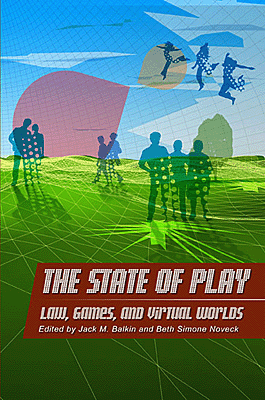
Jack M. Balkin and Beth Simone Noveck, The State of Play: Law, Games, and Virtual Worlds (N.Y.U. Press 2006)

Andrew Koppelman, Same Sex, Different States: When Same-Sex Marriages Cross State Lines (Yale University Press 2006)

Brian Tamanaha, Law as a Means to an End (Cambridge University Press 2006)

Sanford Levinson, Our Undemocratic Constitution (Oxford University Press 2006)

Mark Graber, Dred Scott and the Problem of Constitutional Evil (Cambridge University Press 2006)

Jack M. Balkin, ed., What Roe v. Wade Should Have Said (N.Y.U. Press 2005)

Sanford Levinson, ed., Torture: A Collection (Oxford University Press 2004)
Balkin.com homepage
Bibliography
Conlaw.net
Cultural Software
Writings
Opeds
The Information Society Project
BrownvBoard.com
Useful Links
Syllabi and Exams
