Balkinization
an unanticipated consequence of
Jack M. Balkin
Balkinization Symposiums: A Continuing List
E-mail:
Jack Balkin:
jackbalkin at yahoo.com
Bruce Ackerman
bruce.ackerman at yale.edu
Ian Ayres
ian.ayres at yale.edu
Corey Brettschneider
corey_brettschneider at brown.edu
Mary Dudziak
mary.l.dudziak at emory.edu
Joey Fishkin
joey.fishkin at gmail.com
Heather Gerken heather.gerken at yale.edu
Abbe Gluck abbe.gluck at yale.edu
Mark Graber
mgraber at law.umaryland.edu
Stephen Griffin
sgriffin at tulane.edu
Jonathan Hafetz
jonathan.hafetz at shu.edu
Jeremy Kessler
jkessler at law.columbia.edu
Andrew Koppelman
akoppelman at law.northwestern.edu
Marty Lederman
msl46 at law.georgetown.edu
Sanford Levinson
slevinson at law.utexas.edu
David Luban
david.luban at gmail.com
Gerard Magliocca
gmaglioc at iupui.edu
Jason Mazzone
mazzonej at illinois.edu
Linda McClain
lmcclain at bu.edu
John Mikhail
mikhail at law.georgetown.edu
Frank Pasquale
pasquale.frank at gmail.com
Nate Persily
npersily at gmail.com
Michael Stokes Paulsen
michaelstokespaulsen at gmail.com
Deborah Pearlstein
dpearlst at yu.edu
Rick Pildes
rick.pildes at nyu.edu
David Pozen
dpozen at law.columbia.edu
Richard Primus
raprimus at umich.edu
K. Sabeel Rahmansabeel.rahman at brooklaw.edu
Alice Ristroph
alice.ristroph at shu.edu
Neil Siegel
siegel at law.duke.edu
David Super
david.super at law.georgetown.edu
Brian Tamanaha
btamanaha at wulaw.wustl.edu
Nelson Tebbe
nelson.tebbe at brooklaw.edu
Mark Tushnet
mtushnet at law.harvard.edu
Adam Winkler
winkler at ucla.edu
Compendium of posts on Hobby Lobby and related cases
The Anti-Torture Memos: Balkinization Posts on Torture, Interrogation, Detention, War Powers, and OLC
The Anti-Torture Memos (arranged by topic)
Recent Posts
Bad Originalism
![[Powered by Blogger]](https://lh3.googleusercontent.com/blogger_img_proxy/AEn0k_ujnfemtAr7JkQ5kr5UucuzTV97F4WfdYr8To_Oo-q_47tn317ETDjVvUmBdOcEIFl1cKph8BEAmZTVQtK8GDmiL7L2qR8NbN83wDJXX_GD=s0-d)
Just A Few Blogs
ACS Blog
Alas, a Blog
Althouse
Arts and Letters Daily
Atrios (Eschaton)
Bill of Health
Buzzflash.com
Buzz Machine
Cato at Liberty
Juan Cole (Informed Comment)
Concurring Opinions
The Constitution in 2020
Corrente
Crooked Timber
Daily Howler
Daily Kos
Dana Boyd
Brad DeLong
Digby (Hullabaloo)
Discriminations
Daniel Drezner
Kevin Drum (Mother Jones)
Electrolite
En Banc
Eunomia (Daniel Larison)
Fafblog
Michael Froomkin (Discourse.net)
GovLab (Beth Noveck)
Rick Hasen (Election Law)
History News Network
How Appealing
Ignatz (Sam Heldman)
The Importance of (Ernie Miller)
Infolaw
Instapundit
International Economic Law and Policy Blog
IntLawGrrls
Jacob Levy
Jesus' General
Jurisdynamics
The Kitchen Cabinet
Mark Kleiman
Law Blog Central
Larry Lessig
Lawyers, Guns and Money
Liberal Oasis
Brian Leiter's Law School Reports
The Leiter Reports
Marginal Revolution
Megan McArdle
Memeorandum
Metafilter
Mirror of Justice
The New Republic
Newseum
No More Mister Nice Blog
Brendan Nyhan
Opinio Juris
Orcinus
The Originalism Blog
Pandagon
Passport (Foreign Policy)
Overcoming Bias
Political Animal (Washington Monthly)
Political Theory Daily Review
Political Wire (Taegan Goddard)
The Poor Man
Virginia Postrel
Prawfsblawg
Public Reason
Jonathan Rauch
Raw Story
Redstate
ReligiousLeftLaw.com
Reporters Committee For Freedom of the Press
Reproductive Rights Blog
Rothman's Roadmap to the Right of Publicity
SCOTUS Blog
Seeing the Forest
Clay Shirky
The Shifted Librarian
The Situationist
Larry Solum (Legal Theory)
Andrew Sullivan
Talking Points Memo
Talk Left
Tapped
Tbogg
TechPresident
The Paper Chase (Jurist)
Tom Paine
Tom Tomorrow (This Modern World)
Eve Tushnet
Uggabugga
University of Chicago Law School Faculty Blog
Unqualified Offerings
The Volokh Conspiracy
War and Piece (Laura Rozen)
Wampum
Oliver Willis
Wonkette
Written Description
Matthew Yglesias
Yin
Your Choice of Feeds
1. XML
powered by

2. Atom Feed
3. RSS 2.0
Bad Originalism
JB
This argument by Edward Whelan tries to show that it is obvious that Brown v. Board of Education is consistent with the original understanding of the Fourteenth Amendment. But what Whelan shows instead is how difficult it is to make that case. More importantly, his essay shows that the desire to reach a particular result usually results in bad originalism, which engages in anachronisms and pays insufficient attention to the historical record. I'm all for serious historical analysis into the original public meaning of the constitutional text, but such inquiries will only take us so far. The fact that Brown cannot easily be reconciled with the original understanding should *not* be regarded as a knock-down argument against the use of originalist arguments generally; rather it simply shows that our practices of constitutional interpretation have, and legitimately have, made use of many other modalities of interpretation besides appeals to the original understanding. Failure to recognize this basic fact about the American constitutional tradition leads to Whelan's strained attempt to show that Brown is "really" an originalist decision. But let's get to his actual arguments. Whelan first notes that although Whelan's fallback position is that what Congress did, either in 1862 or in 1868, made no difference because Congress assumed that it wasn't bound by the Fourteenth Amendment (or by the equal protection clause), whose text seems to apply only to the states. This is perfectly reasonable, but given Whelan's originalist premises this suggests that Bolling v. Sharpe-- which holds that the federal government cannot segregate the D.C. public schools, and thus the 1995 Adarand case-- which holds that federal affirmative action programs are subject to strict scrutiny-- are inconsistent with original understanding. This is a result that will discomfit both liberals and conservatives. Indeed, in my 2001 book What Brown v. Board of Education Should Have Said, Michael McConnell had the courage of his convictions-- he argued that the result in Bolling could not be sustained under the Due Process Clause of the Fifth Amendment(ratified in 1791), and that the Constitution does not forbid the federal government from engaging in race discrimination. (Judge Robert Bork took the same position in his 1991 book The Tempting of America). Instead, McConnell argued that segregating the D.C. schools was beyond the D.C. school board's power because Congress had not specifically authorized the school board to do so. Of course, Congress had not specifically told the school board that it could not do so, and throughout the early 20th century I suspect that most Congressmen and Senators, particularly those from the South, would be very surprised to learn that the D.C. schools didn't have the authority to segregate their pupils by race. Indeed, they expected that it did have such authority, and they expected those schools to be segregated, as in fact they were. McConnell's ultra vires argument is pretty unpersuasive given the actual history of segregation in the District of Columbia; it is his way of reconciling his sincere originalist views with the unpalatability of their consequences. While I'm on the subject of McConnell's scholarship on Brown, his originalist argument for Brown is that Congress considered but ultimately rejected a ban on segregated public schooling in what ultimately became the Civil Rights Act of 1875, which was designed to enforce the Fourteenth Amendment. (There are many ironies here, including the possibility that if McConnell is right, then the Civil Rights Cases, which held that the 1875 Act was not a valid attempt to enforce the Fourteenth Amendment, is probably wrong. But don't get me started.). McConnell correctly points out that many of the people who voted for the Fourteenth Amendment also voted for the school desegregation language in the 1875 Act, hence he concludes that this is evidence of what they intended in 1868. The problem with McConnell's argument is that he must concede, as he does in his 1995 study, that at the time of the ratification of the Fourteenth Amendment, "school desegregation was deeply unpopular among whites, in both North and South, and school segregation was very commonly practiced." Indeed, McConnell contends that the Fourteenth Amendment, along with the Fifteenth, is virtually unique among amendments in the sense that it contradicted contemporary popular opinion rather than being consistent with it. As a result, he argues that the views of the actual ratifiers of the Fourteenth Amendment in the states-- who largely opposed school desegregation-- should be disregarded to the extent that they contradict the views of those framers who voted for school desegregation in subsequent debates over the 1875 Civil Rights Act in Congress. To put it mildly, this is a very controversial view about the Amendment process. Given the importance that originalists usually put on the ratification debates in the states, McConnell's argument, which rejects the views of the actual ratifiers of the Amendment, and which is based on what was, at the end of the day, a piece of legislation that failed in Congress, is not particularly persuasive. Whelan's next argument is that the 1880 case of Strauder v. West Virginia demonstrates that segregation was prohibited by the Fourteenth Amendment. Even in its notorious 1896 ruling in Plessy v. Ferguson, the majority stated that the "object of the [Fourteenth] amendment was undoubtedly to enforce the absolute equality of the two races before the law." But then, in the sort of freewheeling non-originalist excursion that advocates of the phony "living Constitution" have come to celebrate, the majority looked to the mystery of the universe to assert that "in the nature of things" the Fourteenth Amendment "could not have been intended to abolish distinctions based upon color, or to enforce social, as distinguished from political, equality." By contrast, Justice Harlan's celebrated dissent quoted Strauder and declared that the purpose of the Fourteenth Amendment was to "remove[] the race line from our governmental systems." The great irony is that Whelan thinks that this language from Plessy is "living constitutionalism" because he appears to be unfamiliar with the history. He simply assumes that the Fourteenth Amendment must have been about colorblindness and that the Plessy Court must have been engaged in nonoriginalist judicial activism because he uses the doctrinal categories and the political debates of our own day to understand Plessy. This is a perfect example of what I regard as bad originalism-- anachronistic special pleading that is insensitive to the complications of history. In fact the central issue in Plessy is not whether the constitution is colorblind in our modern day sense of that word. It is whether sitting next to whites in railway carriages (or, by extension, in public schools) is an attribute of civil or social equality. Seven Justices believed that it was an attribute of social equality, only one (Justice Harlan) believed that it was a matter of civil equality. Indeed, Justice Harlan-- the great prophet of colorblindness-- does not support the idea of colorblindness in our modern sense. He also believed in the distinction between civil, political, and social equality. Thus, he went out of his way to emphasize the very point that Whelan mistakenly associates with the dreaded doctrine of living constitutionalism-- that just because blacks are civilly and politically equal doesn't mean that they are socially equal, or indeed, ever will be so. One of the great ironies of the Plessy dissent is that in the sentences immediately prior to Harlan's invocation that "our Constitution is colorblind"-- he points out that And later he notes that All of this suggests the real problem with Whelan's originalism. He doesn't appear to understand the historical distinctions that animated the Fourteenth Amendment. If he was really serious about originalism, he would support the tripartite distinction between civil, political and social equality, and demand that the Court reinstate it in its jurisprudence. That would mean, among other things, that Loving v. Virginia-- the case that first announces the rule of strict scrutiny for all racial classifications under the Equal Protection Clause-- was wrongly decided. And that would mean, for example, that Virginia could today make the originalist Justice Clarence Thomas's marriage illegal, as indeed interracial marriage was in Virginia before the Loving decision. Next Whelan rolls out Robert Bork's well-known argument for why Brown is consistent with original understanding: And in that way I do not think any damage is done—you can even look at it more severely. You could say suppose they had written a clause that said “we want equality and that can be achieved by separation and we want that too.” By 1954 it was perfectly apparent that you could not have both equality and separation. Now the court has to violate one aspect or the other of that clause, as I have framed it hypothetically. It seems to me that the way the actual amendment was written, it was natural to choose the equality segment, and the court did so. I think it was proper constitutional law, and I think we are all better off for it. It's important to recognize that this objection is about whether Bork gets his history right as an originalist, not whether his argument for Brown is a good or bad argument in general. In fact, I think that Bork's argument for Brown is quite plausible; it has similarities to the argument that I make in my own opinion in What Brown v. Board of Education Should Have Said. But my point is that it is not an originalist argument. Rather, it is, dare I say it, a perfect example of how one does living constitutionalism-- it views changed circumstances and prudential considerations as having significant weight in interpreting the meaning of the document. I believe that originalist argument is an important modality of constitutional interpretation. My disagreement with today's originalists is that it is not the only or even the most important modality. I repeat, the issue is not about whether appeals to original understanding are legitimate or illegitimate. It is about whether originalism is the only touchstone of legitimate constitutional interpretation. I do not think that Brown can be justified solely on originalist grounds. However, that does not undermine the use of original understanding as a method of ascertaining constitutional meaning. What it does undermine is the view that judicial decisions are legitimate only if they can be squared with original understanding, and that decisions that appeal to text, post-enactment history, structure, prudential considerations, precedents (both judicial and non-judicial), traditions, and national ethos are illegitimate if they are unsupported by original understandings. The real debate is over unimodal versus multimodal interpretation. I am a multimodal interpreter, and I regard Brown v. Board of Education (and even more powerfully Bolling v. Sharpe) as strong examples for why a multimodal approach to constitutional interpretation is superior, and, I would say, far more legitimate than a unimodal approach. Indeed, the lesson I draw from Whelan's bad originalism is that people who claim to be strict originalists are usually multimodal interpreters too; they just don't recognize it or are not willing to admit it. As a result, they misunderstand or misuse history in order to shoe horn their conclusions into the language of original understanding. Whelan's essay is a good example of this unfortunate trend. You can't really discuss what the Fourteenth Amendment "plainly" says from an originalist standpoint without understanding the theories of citizenship which generated that particular text. In this case, the basic idea was that all citizens-- men and women alike, were granted civil equality, but not political or social equality. Whelan is right that the text doesn't say "separate but equal." But it also doesn't say "no distinctions on the basis of color." That's because the idea behind the Fourteenth Amendment was not our modern idea of suspect classifications, but rather a vision under which *all* citizens had certain basic rights, the elements of civil equality, while a smaller group had rights of political participation, and the states were permitted to recognize and maintain certain features of social inequality that concerned marriage and racial mixing. (Hence Pace v. Alabama is unanimous even though it involves a clear racial classification and imposes a separate but equal rule). The underlying theory of citizenship is why the particular words used in the Fourteenth Amendment were chosen and not others. If you don't understand the history, you don't understand what the words actually chosen mean, and so you come up with anachronistic interpretations about what the words "plainly" meant at the time. The irony is that Whelan argues that folks like me, who have spent some time thinking and writing about the history of the Fourteenth Amendment and about Brown v Board of Education, "can't be trusted", when in fact his posts suggest that he himself knows little about the history of the period. This is what I mean by "bad originalism."the 37th Congress created segregated public schools for black children in D.C. in 1862, but it was a later, different Congress — the 39th — that in 1866 proposed the Fourteenth Amendment, which was ratified in 1868. As the brilliant scholar (and now tenth-circuit judge) Michael McConnell explains in his 1995 Virginia Law Review article "Originalism and the Desegregation Decisions": "At no time after the Fourteenth Amendment did Congress vote in favor of segregated schools in the District [of Columbia] (although Congress appropriated money for the segregated schools that already existed)." In addition, the restrictions of the Fourteenth Amendment apply only to states, not to Congress, so congressional action with respect to D.C. schools provides a shaky foundation for any inference as to the contemporaneous understanding of the Fourteenth Amendment.
But the very fact that Congress appropriated money to segregated schools that already existed following ratification of the Fourteenth Amendment doesn't really suggest that such schools were constitutionally suspect. In fact, it suggests the opposite, that such schools were constitutionally legitimate. Indeed, Congress's financial support for segregated schools in the District of Columbia is not surprising, for as I discuss later in conjunction with Michael McConnell's arguments, the idea of school desegregation was quite unpopular in 1868, and school segregation was widely practiced throughout the country.As early as 1880 — a mere twelve years after ratification of the Fourteenth Amendment — the Supreme Court in Strauder v. West Virginia read the Fourteenth Amendment as "declaring that the law in the States shall be the same for the black as for the white; that all persons, whether colored or white, shall stand equal before the laws of the States, and, in regard to the colored race, for whose protection the amendment was primarily designed, that no discrimination shall be made against them by law because of their color."
Whelan's argument associating Strauder with a strict colorblindness rule and Plessy v. Ferguson with nonoriginalist living constitutionalism suggests that he understands very little about the history of the ratification of the Fourteenth Amendment. The Fourteenth Amendment did guarantee "equality under the law," but that phrase meant civil equality-- equal rights to sue and be sued, make contracts, own property, and, under some formulations, equal rights to free speech and free exercise of religion. Civil equality was distinguished from political equality-- the equal right of blacks to vote, serve on juries or hold political office, and it did not mean social equality, including the rights of blacks to intermarry with whites or the right to associate in civil society with whites on an equal footing. A strict colorblindness rule was rejected because it would give blacks the vote and lead to racial mixing. That is why the language of the Fourteenth Amendment is carefully chosen to guarantee only civil equality-- this is what the words "privileges and immunities" and "equal protection of the laws" meant in 1868-- and that is why a Fifteenth Amendment specifically guaranteeing blacks the right to vote (a feature of political equality) was required in 1870. (One of the interesting features of Strauder is that it blurs the civil/political distinction recognized by the framers, on which see Justice Field's dissent in the companion case of Ex Parte Virginia). All of these historical features of the original understanding appear to be lost on Whelan, who reads the text through 21st century eyes. In 1868, moderate Republicans could not stomach the idea of giving blacks the right to vote permanently (although they did vote in various state conventions), and they could not stomach striking down existing laws against miscegenation. So when Whelan quotes Strauder, he is quoting language that in its own day would have been understood to refer to civil equality, and because the Fifteenth Amendment had been ratified by that point, to political equality as well. Moreover, when Plessy states that "in the nature of things" the Fourteenth Amendment "could not have been intended to abolish distinctions based upon color, or to enforce social, as distinguished from political, equality," (emphasis supplied) it is essentially stating the original understanding of the Fourteenth and Fifteenth Amendments.The white race deems itself to be the dominant race in this country. And so it is, in prestige, in achievements, in education, in wealth, and in power. So, I doubt not, it will continue to be for all time, if it remains true to its great heritage, and holds fast to the principles of constitutional liberty.
social equality no more exists between two races when traveling in a passenger coach or a public highway than when members of the same races sit by each other in a street car or in the jury box, or stand or sit with each other in a political assembly, or when they use in common the streets of a city or town, or when they are in the same room for the purpose of having their names placed on the registry of voters, or when they approach the ballot box in order to exercise the high privilege of voting.
So Harlan and the majority both agree that the Fourteenth Amendment does not guarantee colorblindness in all cases, only in cases of civil or political equality. The only issue that divides them is whether an issue of civil or social equality is being raised. In 1883, in Pace v. Alabama, which considered an Alabama statute that punished interracial cohabitation more stringently than cohabitation between members of the same race, the court unanimously upheld the law. Harlan did not dissent because this was a question of social equality, and where social equality is concerned separate but equal was perfectly constitutional.Under an alternative originalist approach, as Judge Bork and others have argued, even if the ratifiers of the Fourteenth Amendment assumed that segregated public schools were consistent with equality, objective comparisons of facilities and resources had, by the time of Brown, long since disproved this assumption. Under this approach, an originalist opinion in Brown would therefore have concluded that the Fourteenth Amendment's clear purpose of establishing racial equality under the law required an end to segregated schooling.
The problem here is that Bork's argument isn't actually originalist. Here's Bork's actual argument, taken from his confirmation hearings:[P]assing [some] historical evidence, which I think casts some doubt on the flat assumption that the 14th Amendment really meant separate but equal, let me say this. [The framers] wrote a clause that does not say anything about separation. They wrote a clause that says “equal protection of the laws.” I think it may well be true . . . that they had an assumption . . . that equality could be achieved with separation. Over the years it became clear that that assumption would not be borne out in reality ever. Separation would never produce equality.
I think when the background assumption proved false, it was entirely proper for the court to say “we will carry out the rule they wrote” and if they would have been a little surprised that it worked out this way, that is too bad. That is the rule they wrote and they assumed something that is not true.
One problem with this argument is that it is anachronistic-- it pays no attention to the civil/political/social distinction around which the language of the Fourteenth Amendment was crafted. It is no accident that the words "privileges and immunities" and "equal protection" were used instead of more general formulas that were proposed and rejected. Bork assumes that if faced with a conflict between equality and separation of the races, the framers would have chosen to promote equality even if this resulted in some racial mixing. That makes sense from the standpoint of our own values, in a post-Brown world, but not necessarily from theirs. As Paul Brest points out in the casebook that I co-edit, a more plausible translation of the civil/political/social distinction that animated the Fourteenth Amendment is "We want equality, but not if it requires mixing the races in schools or other such places." That is, in fact, why they chose the language they chose-- they wanted to exclude considerations of equality from certain spheres of social life, most prominently those having to do with marriage, family, and social integration.
UPDATE: Whelan's response is here. It's a very puzzling performance, which seems to suggest that he hasn't done his homework. His argument seems to be that the Fourteenth Amendment's plain language reaches all distinctions based on race, i.e., that "the purpose of the Fourteenth Amendment was to “remove[] the race line from our governmental systems." I'm sorry to report that this just isn't the case. For one thing, it doesn't explain why a Fifteenth Amendment was necessary. Whelan doesn't seem to get why Congress used the actual language it did, rather than language that was offered to Congress (and rejected) that would have instituted a more general colorblindness rule. That is to say, Whelan reads the language of the Fourteenth Amendment anachronistically, rather than trying to figure out what it meant to people in its own day, as any good originalist (and any good historian) should. He also doesn't seem to get how the civil/political/social distinction worked, or what it was designed to achieve, and so he doesn't understand the reasons why Harlan could join in Pace v. Alabama and dissent in Plessy. (By the way, on Strauder, the reason why Strauder blurs the civil/political distinction is not because the distinction wasn't real in 1868, but because of the subsequent ratification of the Fifteenth Amendment, as my colleague Akhil Amar points out in his book on the The Bill of Rights. Justice Field dissented because he thought that Strauder was brought as a Fourteenth Amendment, and not a Fifteenth Amendment case.)
Posted
9:38 PM
by JB [link]
As to the Civil Rights Cases, a good originalist case probably can be made to suggest they were wrong decided. It is striking, at any rate, how the Rehnquist Court repeatedly cites them as if they are worth of our respect.

www.m11.in
www.classified.m11.in
www.classifieds.m11.in
www.blog.m11.in
www.games.m11.in
www.forum.m11.in
www.backlinks.m11.in
www.m11in.blogspot.com
www.noregclassified.co.cc
nice blog
very very nice
blog have written.
حلي الاوريو الفطر الهندي صور تورتة حلى قهوه طريقة عمل السينابون طريقة عمل بلح الشام بيتزا هت كيكة الزبادي حلا سهل صور كيك عجينة العشر دقائق طريقة عمل الدونات طريقة عمل البان كيك طريقة عمل الكنافة طريقة عمل البسبوسة طريقة عمل الكيك طريقة عمل عجينة البيتزا فوائد القرفه
lihat ini
Afkar888
sumber
baca selengkapnya
reademore
lihat ini
kunjungi ini
sumber
kunjungi ini
kunjungi ini
baca selengkapnya
sumber
lihat ini
kunjungi ini
klik disini
baca selengkapnya<
lihat ini
sumber
Bagaimana Cara Mengobati Jengger Ayam
Obat Tradisional Penyakit Jengger Ayam
Cara Pengobatan Jengger Ayam Mujarab
Cara Menyembuhkan Jengger Ayam
Obat Herbal Penyakit Jengger Ayam
Obat Mujarab Untuk Jengger Ayam
Mengobati Jengger Ayam Pada Wanita
Mengobati Jengger Ayam Pada Pria
Pengobatan Tradisional Jengger Ayam
Apa Nama Obat Jengger Ayam
Obat Jengger Ayam Ampuh di Apotik
Nama Obat Herpes Genital Ampuh
Cara Mengobati Herpes Genital Manjur
Pengobatan Herpes Genital Untuk Wanita
Pengobatan Herpes Genital Untuk Pria
Cara Mengobati Penyakit Herpes Genital
Cara Pengobatan Herpes Genital Mujarab
Obat Penyakit Herpes Genital Manjur
Obat Tradisional Penyakit Herpes
Pengobatan Ampuh Herpes Genital
Obat Herpes Genital di Apotik
Tips Pengobatan Herpes Genital

Obat Kondiloma Akuminata Manjur
Pengobatan Kondiloma Akuminata Mujarab
Nama Obat Kondiloma Atau Kutil Kelamin
Cara Mengobati Kondiloma Akuminata Herbal
Pengobatan Ampuh Kondiloma Akuminata Tradisional
Bagaimana Mengobati Kondiloma
Obat Penyakit Kondiloma Akuminata Alami
Kondiloma Akuminata dan Pengobatannya
Pengobatan Alternatif Kondiloma Akuminata
Pengobatan Kondiloma Akuminata Pada Wanita
Penyebab Kondiloma dan Pengobatannya
Obat Kanker Payudara Paling Manjur
Mengobati Kanker Payudara Dengan Cepat dan Aman
Pengobatan Herbal Kanker Payudara Stadium 3
Mengobati Kanker Payudara Tanpa Operasi
Cara Mengobati Kanker Payudara Ampuh Stadium Akhir
Cara Mengobati Kanker Payudara Mujarab
Inilah Obat Kanker Payudara Yang Ampuh
Penyakit Kanker Payudara Tanpa Operasi
Obat Kanker Payudara Tanpa Operasi Stadium 2
Cara Tradisional Menyembuhkan Kanker Payudara
Cara Menyembuhkan Kanker Payudara Tanpa Operasi
Pengobatan Klamidia Pada Wanita, Cara Mengobati Klamidia Ampuh, Pengobatan Klamidia Pada Pria, Pengobatan Klamidia Mujarab, Obat Klamidia Paling Ampuh, Cara Mengobati Klamidia Ampuh, Cara Mengobati Klamidia Mujarab, Cara Mengobati Klamidia Dengan Cepat, Cara Menyembuhkan Klamidia, Obat Tradisional Penyakit Klamidia, Obat Klamidia Paling Manjur, Pengobatan Manjur Penyakit Klamidia, Obat Tradisional Klamidia, Obat Alternatif Klamidia, Cara Pengobatan Klamidia, Cara Mengobati Penyakit Klamidia, Cara Mengobati Klamidia Ampuh, Obat Herbal Penyakit Klamidia, Obat Klamidia Paling Manjur, Cara Obat Klamidia Paling Manjur, 1, 2, 3, 4, 5, 6, 7, 8, 9, 10, 11, 12, 13, 14, 15, 16, 17, 18
Nama Obat Gonore Ampuh di Apotik, Cara Mengobati Penyakit Gonore, Cara Pengobatan Gonore Manjur, Obat Gonore Ampuh, Cara Mengobati Gonore Pada Wanita, Cara Mengobati Gonore Ampuh, Obat Penyakit Gonore Pada Pria, Obat Gonore Manjur, Cara Mengatasi Gonore Aman, Pengobatan Gonore Ampuh De Nature, Obat Penyakit Gonore Paling Ampuh, Pengobatan Paling Ampuh Gonore, Cara Pengobatan Gonore, Cara Mengobati Gonore Pada Pria, Cara Mengobati Gonore Pada Pria, Penyakit Gonore dan Obatnya, Obat Gonore Tradisional, Obat Gonore Paling Manjur De Nature, Obat Gonore Ampuh Resep Dokter, Obat Gonore Tradisional || Pengobatan Penyakit Sipilis Paling Ampuh, Obat Penyakit Sipilis Paling Ampuh, Pengobatan Penyakit Sipilis Pada Wanita, Cara Menyembuhkan Sipilis, Obat Herbal Untuk Penyakit Sipilis, Cara Mengobati Sipilis Paling Manjur, Cara Menyembuhkan Gejala Sipilis, Cara Pengobatan Penyakit Sipilis, Obat Alami Untuk Gejala Penyakit Sipilis, Obat Penyakit Sipilis De Nature, Cara Menghilangkan Gejala Sipilis, Nama Obat Sipilis Paling Ampuh, Pengobatan Sipilis Untuk Pria, Resep Obat Sipilis Tradisional, Mengobati Penyakit Sipilis, Apa Obat Sipilis Yang Ampuh, Mengobati Penyakit Sipilis Dengan Cepat, Pengobatan Sipilis Ampuh di Bandung, Cara Pengobatan Sipilis Pada Pria, Cara Pengobatan Sipilis Pada Wanita
Obat kondiloma di apotik, Obat kondiloma untuk ibu hamil, Obat kondiloma akuminatum, Obat herbal kondiloma, Obat tradisional kondiloma, Obat penyakit kondiloma, Obat tradisional kondiloma akuminata, Obat herbal kondiloma akuminata, Jual obat kondiloma, Obat oles kondiloma, Obat alami kondiloma akuminata, Cara Mengobati Kondiloma Akuminata Herbal, Pengobatan Kondiloma Akuminata, Cara Mengobati Kondiloma Akuminata Tradisional, Obat Herbal Kondiloma Akuminata, Cara Mengobati Kondiloma Akuminata Ampuh, Ciri Ciri Penyakit Kondiloma Akuminata, Cara Mengobati Kondiloma Akuminata Alami, Cara Pengobatan Kondiloma Akuminata, Cara Mengobati Kondiloma Akuminata Mujarab, Obat Penyakit Kondiloma Akuminata, Cara Mengobati Kondiloma Akuminata Paling Ampuh, Obat kondiloma di apotik, Cara Mengobati Kondiloma Akuminata Dengan Cepat, Tips Menyembuhkan Kondiloma Akuminata, Cara Mengobati Kondiloma Akuminata 3 Hari, Tanda Tanda Kondiloma Akuminata, Cara Mengobati Kondiloma Akuminata 2 Hari, Nama Obat Penyakit Kondiloma Akuminata, Obat Kondiloma Akuminata Murah, Cara Mengobati Kondiloma Akuminata Paling Cepat, Cara Menyembuhkan Kondiloma Akuminata, Obat De Nature
Cara mengobati kanker dengan herbal, Cara mengobati kanker dengan tradisional, Cara mengobati kanker dengan alami, Cara mengobati kanker dengan cepat, Cara mengobati kanker stadium 3, Cara mengobati kanker stadium 4, Cara mengobati kanker stadium awal, Cara mengobati kanker stadium 2, Cara mengobati kanker stadium akhir, Cara mengobati kanker tanpa ke dokter, Gambar obat kanker yang ampuh, Gambar obat kanker yang ampuh, Obat kanker ampuh dengan singkong, Cara mengobati kanker stadium awal tanpa operasi, Obat kanker manjur dari tumbuhan, Cara mengobati kanker stadium 1 tanpa operasi, Obat kanker ampuh dengan daun sirsak, Cara mengobati kanker stadium 2 tanpa operasi, Obat kanker paling mujarab yang efektif, Cara mengobati kanker stadium 3 tanpa operasi, Cara mengobati kanker stadium 3, Cara mengobati kanker stadium 4 tanpa operasi, Obat kanker paling manjur 2016, Cara mengobati kanker stadium akhir tanpa operasi, Pengobatan kanker mujarab tanpa operasi, Cara pengobatan kanker yang manjur, Pengobatan kanker manjur dan aman, Cara pengobatan kanker yang mujarab, Cara pengobatan kanker tanpa operasi, Cara pengobatan kanker yang ampuh, Obat kanker mujarab tanpa operasi, Obat kanker manjur tanpa operasi, Obat De Nature
Obat Ambeien Dalam
Obat Ambeien Tradisional Cina
Obat Ambeien Ardium
Obat Ambeien Herbal Yang Ampuh
Obat Ambeien Salep
Obat Ambeien Ibu Menyusui
Obat Ambeien Untuk Anak
Obat Ambeien Apotik
Obat Ambeien Ambeclear
Obat Wasir Yang Murah dan Ampuh
Obat Ambeien Secara Alami
Obat Ambeien 3 Hari Tuntas | Cara Mengobati Wasir
Obat Ambeien 3 Hari Tuntas | Cara Mengobati Wasir
Obat Ambeien 3 Hari Tuntas | Cara Mengobati Wasir
Obat Ambeien 3 Hari Tuntas | Cara Mengobati Wasir
Obat Ambeien 3 Hari Tuntas | Cara Mengobati Wasir
Obat Ambeien 3 Hari Tuntas | Cara Mengobati Wasir
Obat Ambeien 3 Hari Tuntas | Cara Mengobati Wasir
Obat Ambeien 3 Hari Tuntas | Cara Mengobati Wasir
Obat Ambeien 3 Hari Tuntas | Cara Mengobati Wasir
Obat Ambeien 3 Hari Tuntas | Cara Mengobati Wasir
obat penyakit herpes kelamin pria
pengobatan herpes kelamain pria
apa obat herpes genital
apa obat herpes genital
tanaman obat herpes genital
nama obat herpes genital
Obat herpes alat kelamin
Obat alami untuk herpes genital
obat herpes kulit untuk anak
harga obat herpes genital
obat herpes di kelamin
obat herbal untuk herpes genital
obat herpes kumplulan tips
obat medis herpes genital
obat untuk menyembuhkan herpes genital
perkembangan obat herpes genital
obat alami untuk mencegah kanker serviks
obat medis untuk kanker serviks
wwwobat kanker serviks
obat vaksin kanker serviks
obat untuk mengatasi kanker serviks
Tumbuhan untuk obat kanker serviks
Obat untuk menyembuhkan kanker serviks
obat untuk penderita kanker serviks
obat tradisional untuk kanker serviks
obat utk kanker serviks
obat untuk kanker serviks
obat tradisional utk kanker serviks
sirsak obat kanker serviks
obat sakit kanker serviks
hello world obat untuk kanker rahim stadium 3
obat herbal kanker rahim stadium 4
obat kanker rahim stadium 1 1
Obat kanker rahim stadium 2
Obat penyakit herpes kelamin pria
resep obat herpes
ramuan obat herpes
obat herpes kulit ringan
obat herpes selain acyclovir
obat herpes salep acyclovir
obat herpes secara alami
obat herpes sembuh total
obat herpes selangkangan
Obat kutil kelamin/jengger ayam
Obat kutil kelamin paling murah
Obat kutil kelamin dari dalam
Obat antibiotik kutil kelamin
Obat kutil kelamin yang dijual di apotik
Beli obat kutil kelamin di apotik
Nama obat kutil kelamin di apotek
Obat kutil kelamin yang tersedia di apotik
Cuka apel obat kutil kelamin
Obat ampuh menghilangkan kutil kelamin
Obat alami menyembuhkan kutil kelamin
Obat apotek untuk kutil kelamin
Apa obat untuk kutil kelamin
Obat alami untuk mengobati kutil kelamin
Obat kutil kelamin yang ada di apotik
Obat kutil kelamin bandung
Beli obat kutil kelamin
Dimana beli obat kutil kelamin
Obat wasir anoral
Obat wasir ambeven
Obat wasir ardium hd
Obat wasir berdarah di apotik
Obat wasir bentuk peluru
Obat wasir bengkak
Obat wasir boraginol
Obat wasir bagus
Obat wasir paling ampuh
Obat wasir ardium
Obat wasir di apotik
Obat wasir luar
Obat wasir ampuh di apotik
Obat wasir alami dari tumbuhan
Obat wasir untuk ibu menyusui
Obat wasir parah
Obat wasir venaron
Obat wasir dalam
Obat wasir alami bagus
Obat wasir ampuh tanpa operasi
Obat wasir ambeien
Obat wasir ambeclear
Obat wasir akut
Obat wasir atau ambeien
Obat wasir aman untuk ibu hamil
Obat wasir ampuh bagus
Obat wasir alami untuk ibu hamil
Obat wasir anak
Cuka apel obat kutil kelamin
Obat ampuh menghilangkan kutil kelamin
Obat alami menyembuhkan kutil kelamin
Obat apotek untuk kutil kelamin
Apa obat untuk kutil kelamin
Obat kutil kelamin yang ada di apotik
Dimana beli obat kutil kelamin
Obat tradisional buat kutil kelamin
Beli obat kutil kelamin
Obat salep buat kutil kelamin
Www.obat kutil kelamin.com
Obat cina kutil kelamin
Cuka obat kutil kelamin
Obat cina untuk kutil kelamin
Obat cina penghilang kutil kelamin
Obat china untuk kutil kelamin
Obat kutil di kelamin pria
Obat tradisional kutil di kelamin
Obat kutil di daerah kelamin
Obat untuk menghilangkan kutil di kelamin
Obat dokter untuk kutil kelamin
Obat kutil di sekitar kelamin
Obat farmasi untuk kutil kelamin
Obat generik untuk kutil kelamin
Obat kutil kelamin imiquimod
Jual obat kutil kelamin
Jual obat kutil kelamin murah
Obat kutil kelamin yg di jual di apotik
Jual obat penghilang kutil kelamin
Usaha sampingan pelajar
Usaha sampingan mahasiswa
Usaha sampingan pns
Usaha sampingan bisnis online
Usaha sampingan pertanian
Harga mesin bordir komputer
Harga mesin cuci panasonic
Harga mesin jahit
Harga mesin fotocopy canon
Harga mesin cuci lg
Menghilangkan bopeng bekas jerawat
Menghilangkan jerawat punggung
Menghilangkan noda hitam jerawat
Menghilangkan jerawat tradisional
Menghilangkan jerawat membandel
obat herpes kulit kumpulan tips
obat herpes apa
obat herpes biar cepat kering
obat buat herpes genital
obat herpes genital wanita
obat herpes kulit alami
obat herpes mujarab
obat herpes pada mulut
obat herpes resep dokter
obat herpes tumbuhan
obat tradisional herpes genital
kanker serviks stadium 1b
kanker serviks stadium lanjut
kanker serviks adalah penyakit kanker yang menyerang
kanker serviks apakah menular
kanker serviks apakah bisa sembuh
kanker serviks apa bisa hamil
kanker rahim apakah bisa disembuhkan
kanker serviks bisa disembuhkan
kanker serviks bisa melahirkan
mengenal kanker serviks cara pengobatan
kanker serviks dan pengobatannya
obat herpes alami
obat herpes kulit
obat herpes agar cepat kering
obat alami herpes kulit
obat herpes biar cepet kering
obat herpes paling cepat
obat herpes dokter
obat herpes genital pria
obat herpes genital di apotik
obat herpes genital wanita
obat herbal herpes genital
obat jitu herpes
Obat sipilis raja singa paling ampuh
obat sipilis amoxicillin
obat sipilis adalah
obat sipilis atau raja singa
obat sipilis apa
obat sipilis anjuran dokter
obat sipilis apa ya
obat sifilis akut
obat sipilis apa namanya
obat alami sipilis pada pria
obat antibiotik sipilis di apotik
obat sifilis ampuh
apa obat sipilis
obat sifilis apotek
obat sifilis adalah
obat sifilis atau raja singa
Cara paling ampuh mengobati kutil kelamin
pengobatan ampuh kutil kelamin pada wanita
obat kutil kelamin yang ada di apotik
obat kutil kelamin yg dijual di apotik
obat kutil di kemaluan wanita
pengobatan kutil kelamin pada pria
pengobatan penyakit kutil kelamin pada pria
obat penyakit kutil pada kelamin pria
Pengobatan kutil kelamin aman dan tanpa operasi
obat kutil pada alat kelamin pria
pengobatan kutil kelamin
Obat herpes zoster tradisional
Obat herpes untuk ibu hamil
Obat herpes ampuh
Obat herpes untuk anak
Obat herpes mulut
Obat herpes tradisional yang ampuh
Obat herpes selain acyclovir
Obat herpes di wajah
Obat herpes alami
Obat herpes di leher
Obat salep buat kutil kelamin
Obat cina kutil kelamin
Cuka obat kutil kelamin
Obat cina untuk kutil kelamin
Obat cina penghilang kutil kelamin
Obat china untuk kutil kelamin
Obat kutil di kelamin pria
Obat tradisional kutil di kelamin
Obat kutil di daerah kelamin
Obat untuk menghilangkan kutil di kelamin
Obat sipilis
Obat sipilis Yang manjur
obat sipilis denature indonesia
Obat sipilis resep dokter
Obat sipilis paling manjur
Obat sipilis pada wanita
Obat sipilis paling ampuh
Obat sipilis manjur
Obat sipilis ampuh
Obat sipilis atau raja singa
Obat sipilis herbal
Obat sipilis murah
Obat sipilis anjuran dokter
Obat sipilis apa namanya
Obat sipilis dijual di apotik
Obat alami sipilis pada pria
Obat sifilis ampuh
Obat sipilis buat wanita
Obat sipilis bagi wanita
Obat buat sipilis
http://obatkutil.over-blog.com/
http://obatkutilkelamin-tradisional.jimdo.com/
http://www.lautanindonesia.com/blog/obatkutilkelamindanjenggerayam/
http://obatkutilmanjur.weebly.com/
http://obatkutilampuh.livejournal.com/
http://obatkutilkelamintradisional123.blogdetik.com/
http://obatkutil12345.edublogs.org/
http://pengobatankutil.blog.planetbiru.com/
http://obatkutil.freeblog.biz/
http://batkutil.blog.com/
Pengobatan kencing nanah atau gonore manjur
Obat kencing nanah pada pria
Obat kencing nanah pada pria di apotik
Obat kencing nanah di apotik
Obat kencing nanah di apotek
Obat kencing nanah herbal
Obat kencing nanah yang ada di apotik
Obat kencing nanah di apotik kimia farma
Obat kencing nanah yang di jual di apotik
Obat kencing nanah dari dokter
Obat kencing nanah ampuh
Obat kencing nanah kaskus
Obat kencing nanah surabaya
Obat kencing nanah jogja
Obat kencing nanah yang tersedia di apotik
Obat kencing nanah apotek
Obat kencing nanah yang ada di apotek
Cara mengobati sipilis atau gonore (GO)
Cara pengobatan kencing nanah dan sipilis
obat herbal alami penyakit herpes
obat alami mengatasi herpes
obat alami menyembuhkan penyakit herpes
pengobatan tradisional herpes genitalis
obat alami penghilang bekas herpes
obat alami atasi herpes
obat tradisional herpes atau dompo
obat penyakit kulit herpes alami
pengobatan alami herpes simplex
obat penyakit herpes alami
obat alami herpes simplek
rehabilitasi kanker serviks
kanker serviks stadium 1 sampai 4
kanker rahim serviks
kanker serviks pada wanita belum menikah
kanker serviks pembalut berbahaya
kanker serviks pembunuh wanita
obat kanker serviks tradisional
kanker serviks tanpa operasi
kanker rahim obat herbal
kanker serviks ovarium
kanker serviks di negara berkembang
kanker serviks menyerang umur berapa
kanker serviks awal
kanker rahim akibat
kanker rahim ciri
kanker rahim ciri2nya
kanker serviks etiologi
kanker serviks figo
forum kanker serviks
kanker serviks gatal
kanker serviks hpv
kanker serviks itu apa
informasi kanker serviks
obat herpes alami
obat herpes anak
obat herpes apa ya
obat herpes ampuh
obat herpes bagus
obat cacar herpes
obat herpes cream
obat herpes di paha
obat herpes genetal
obat herpes genitalia
obat herpes ibu hamil
tanaman obat herbal herpes
obat kanker serviks menurut who manjur
obat kanker serviks manjur
obat kanker serviks manjur de nature
obat kanker serviks menurut depkes manjur
obat kanker serviks yang menyerang manjur
obat kanker serviks pengobatan dan pencegahan
obat kanker serviks alami manjur
obat kanker serviks tradisional manjur
obat manghindari risiko kanker serviks manjur
obat kanker serviks pencegahan manjur
obat kanker serviks atasi penularan manjur
obat herpes pada leher manjur
obat herpes genital sembuh total manjur
obat herpes genital manjur
obat herpes genital simplex alami manjur
obat herpes genital manjur
obat herpes simplex genital manjur
obat untuk virus herpes genital simplex manjur
obat virus herpes genital amnjur
obat untuk herpes genital manjur
obat herpes untuk anak aman
obat tradisional herpes genitalis manjur
obat herpes tumbuhan ternyata manjur
obat kanker serviks manjur
obat kanker serviks manjur
obat kanker serviks manjur
obat kanker serviks manjur
obat kanker serviks manjur
obat kanker serviks manjur
Obat Sipilis Adalah
Obat Sipilis Apa
Obat sifilis Akut
Obat Sipilis Apa Namanya
Obat Sipilis Alami
Obat Sipilis Tradisional
Obat Sipilis Di Apotik
Obat Sipilis Paling Ampuh
Obat Sipilis Dengan Bayam Duri
Obat Sipilis Di Apotik
Obat Sipilis Alami
Obat Sipilis Paling Ampuh
Obat Sipilis Dengan Bayam Duri
Obat Sipilis Raja Singa
Obat Sipilis Jogja
Obat Sipilis De nature
Obat Sipilis Tradisional Daun Sirih
Obat Sipilis Di Apotik Umum
Obat Sipilis Kimia Farma
Obat Sipilis Adalah
Obat Sipilis Apa
Obat sifilis Akut
Obat Sipilis Apa Namanya
Obat Sipilis Alami
Obat Sipilis Tradisional
Obat Sipilis Di Apotik
Obat Sipilis Paling Ampuh
Obat Sipilis Dengan Bayam Duri
Obat Sipilis Di Apotik
Obat Sipilis Alami
Obat Sipilis Paling Ampuh
Obat Sipilis Dengan Bayam Duri
Obat Sipilis Raja Singa
Obat Sipilis Jogja
Obat Sipilis De nature
Obat Sipilis Tradisional Daun Sirih
Obat Sipilis Di Apotik Umum
Obat Sipilis Kimia Farma
sipilis kimia farma
sipilis dokter
obat sipilis resep dokter
sipilis generik
Obat Sipilis Jogja
Obat Sipilis Tradisional Daun Sirih
obat sipilis di apotik umum
obat sipilis kimia farma
obat sipilis dokter
obat sipilis resep dokter
obat sipilis generik
cari obat sipilis di apotik
cara obat sipilis
resep obat sipili tradisional
cefixime obat sipilis
ciproxin obat sipilis
Obat Sipilis Tradisional Daun Sirih
obat sipilis generik
obat sipilis yang paling ampuh
obat sipilis pada pria rumah
obat sipilis murah
obat sipilis
obat sipilis tradisional
obat sipilis di apotik
Obat Sipilis Alami
obat sipilis paling ampuh
Obat Sipilis Dengan Bayam Duri
obat sipilis pada pria
obat sipilis raja singa
manjur
obat kanker serviks ampuh
herbal
Obat kanker serviks mujarab herbal
obat kanker serviks paten
herbal
obat kanker serviks manjur
herbal 2016
obat paten kanker
serviks manjur paten ampuh
obat kanker serviks
herbal klik disini
obat
herbal paten untuk kanker serviks
Obat kanker serviks herbal
di tahun ini
obat kanker serviks herbal klik
manjur
obat kanker serviks herbal baca penting
obat herpes genital manjur
herbal
obat herpes genital ampuh
herbal
Obat herpes genital paten
herbal
obat herpes genital mujarab herbal
obat herpes genital herbal
mujarab
obat herpes genital herbal
manjur
obat herpes genital ampuh baca
sekarang
obat herpes genital
manjur baca sekarang
obat herpes genital mujarab
baca sekarang
obat herpes genital paten
baca sekarang
Obat herpes genital herbal
baca sekarang
obat herpes genital herbal bersama de
nature
obat herpes genital herbal
bersama de nature
Obat Ambeien Tanpa Operasi
Obat Ambeien Tanpa Operasi
Obat Ambeien Tanpa Operasi
Obat Ambeien Tanpa Operasi
Obat Ambeien Tanpa Operasi
Obat Ambeien Tanpa Operasi
Obat Ambeien Tanpa Operasi
Obat Ambeien Tanpa Operasi
Obat Ambeien Tanpa Operasi
Obat Ambeien Tanpa Operasi
Obat Ambeien Tanpa Operasi
Obat Ambeien Tanpa Operasi
Obat Ambeien Tanpa Operasi
Obat Ambeien Tanpa Operasi
Obat Ambeien Tanpa Operasi
Obat Ambeien Tanpa Operasi
Obat Ambeien Tanpa Operasi
Obat Ambeien Tanpa Operasi
Obat Ambeien Tanpa Operasi
Obat Ambeien Tanpa Operasi
Obat Ambeien Tanpa Operasi
Obat Ambeien Tanpa Operasi
Obat Ambeien Tanpa Operasi
Obat Ambeien Tanpa Operasi
Obat Ambeien Tanpa Operasi
Obat Ambeien Tanpa Operasi
Obat Ambeien Tanpa Operasi
Obat Ambeien Tanpa Operasi
Obat Ambeien Tanpa Operasi
Obat Ambeien Tanpa Operasi
obat kanker serviks manjur facebook
obat herpes genital manjur
obat herpes genital manjur
obat herpes genital manjur
obat herpes genital manjur
obat herpes genital manjur
obat herpes genital manjur
obat herpes genital manjur
obat herpes genital manjur
obat herpes genital manjur
obat herpes genital manjur
obat herpes genital manjur
obat herpes genital manjur
obat herpes genital manjur
obat herpes genital manjur
obat herpes genital manjur
obat herpes genital manjur
obat herpes genital manjur
obat herpes genital manjur
obat herpes genital manju
Obat herpes genital manjur
Obat herpes genital manujur di youtube
Obat kanker dan herpes di twitter
obat herpes genital manjur facebook
obat kanker serviks manjur facebook
obat herpes genital manjur
obat herpes genital manjur
obat herpes genital manjur
obat herpes genital manjur
obat herpes genital manjur
obat herpes genital manjur
obat herpes genital manjur
obat herpes genital manjur
obat herpes genital manjur
obat herpes genital manjur
obat herpes genital manjur
obat herpes genital manjur
obat herpes genital manjur
obat herpes genital manjur
obat herpes genital manjur
obat herpes genital manjur
obat herpes genital manjur
obat herpes genital manjur
obat herpes genital manju
Obat herpes genital manjur
Obat herpes genital manujur di youtube
Obat kanker dan herpes di twitter
obat herpes genital manjur facebook
Cara Menghilangkan Komedo
cara Memutihkan Gigi
cara menghilangkan jerawat
cara menghilangkan jerawat secara alami
penghilang jerawat
cara memutihkan kulit
pemutih wajah alami
pemutih kulit
pemutih muka alami
Agen Judi Online Terpercaya
obat untuk mengobati gonore
obat tradisional menyembuhkan gonore
obat tradisional mengobati gonore
obat ampuh menyembuhkan gonore
obat alami menyembuhkan gonore
merk obat gonore di apotik
merk obat gonore
obat non gonore
nama obat gonore di apotik
nama obat gonore
nama obat gonore yang dijual di apotik
obat oral gonore
obat gonore propolis
obat gonore pdf
obat gonore pria
obat gonore pada perempuan
obat gonore paten
obat penyakit gonore
obat penyakit gonore yang ada di apotik
obat penyakit gonore pada wanita
obat penyembuh gonore
obat penyakit gonore yang dijual di apotik
obat pilihan gonore
obat penyakit gonore pada pria
obat gonore resep dokter
resep obat gonore
ramuan obat gonore
resep obat gonore di apotik
obat gonore di apotik
obat gonore pada wanita
obat gonore ampuh
obat gonore murah
obat gonore alami
obat gonore pada pria
obat gonore herbal
obat gonore yang dijual di apotik
obat gonore kaskus
obat gonore apotik
obat gonore de nature
obat gonore yg dijual di apotik
obat gonore terbaik
obat gonore ciprofloxacin
obat gonore generik
obat gonore tenggorokan
obat gonore dari tumbuhan
obat gonore kimia farma
obat gonore atau kencing nanah
obat gonore resisten
obat gonore azithromycin
obat gonore adalah
obat gonore antibiotik
obat gonore akut
obat gonore ace maxs
obat gonore amoxicillin
obat ampuh gonore di apotik
obat alternatif gonore
obat antibiotik gonore di apotik
obat gonore di apotik kimia farma
obat gonore paling ampuh
obat gonore yang ada di apotik
obat penyakit gonore alami
obat gonore yg ada di apotik
obat gonore untuk wanita hamil
harga obat gonore
harga obat gonore di apotik
obat gonore injeksi
obat infeksi gonore
obat gonore untuk ibu menyusui
obat gonore yang aman untuk ibu hamil
obat gonore jakarta
obat gonore jogja
obat gonore di apotik jogja
jual obat gonore
jenis obat gonore di apotik
jenis obat gonore
jamu obat gonore
jual obat gonore jakarta
obat gonore kencing nanah
obat kimia gonore
obat konjungtivitis gonore
obat khusus gonore
obat kapsul gonore
obat keputihan gonore
kombinasi obat gonore
levofloxacin obat gonore
obat gonore manjur
obat gonore medis
obat gonore murah di apotik
obat minum gonore
obat menyembuhkan gonore
obat mujarab gonore
obat mata gonore
obat gonore paling manjur
obat gonore secara medis
obat untuk menyembuhkan gonore
obat tradisional menyembuhkan gonore
obat tradisional mengobati gonore
obat ampuh menyembuhkan gonore
obat alami menyembuhkan gonore
merk obat gonore di apotik
merk obat gonore
obat non gonore
nama obat gonore di apotik
nama obat gonore
nama obat gonore yang dijual di apotik
obat oral gonore
obat gonore propolis
obat gonore pdf
obat gonore pria
obat gonore pada perempuan
obat gonore paten
obat penyakit gonore
obat penyakit gonore yang ada di apotik
obat penyakit gonore pada wanita
obat penyembuh gonore
obat penyakit gonore yang dijual di apotik
obat pilihan gonore
obat penyakit gonore pada pria
obat gonore resep dokter
resep obat gonore
ramuan obat gonore
resep obat gonore di apotik
obat sipilis
obat sipilis tradisional
obat sipilis Di Apotik
obat Daging Tumbuh
de nature asli
de nature indonesia
Menghilangkan Bekas Jerawat
Cara Memutihkan Wajah
Cara Menghilangkan komedo
Cara Menghilangkan Jerawat
Cara Menghilangkan Jerawat Secara Alami
Cara Menghilangkan Bekas Jerawat
Jerawat Batu
Suntik Jerawat Batu
Jerawat Pasir
Books by Balkinization Bloggers

Gerard N. Magliocca, The Actual Art of Governing: Justice Robert H. Jackson's Concurring Opinion in the Steel Seizure Case (Oxford University Press, 2025)

Linda C. McClain and Aziza Ahmed, The Routledge Companion to Gender and COVID-19 (Routledge, 2024)

David Pozen, The Constitution of the War on Drugs (Oxford University Press, 2024)

Jack M. Balkin, Memory and Authority: The Uses of History in Constitutional Interpretation (Yale University Press, 2024)
Mark A. Graber, Punish Treason, Reward Loyalty: The Forgotten Goals of Constitutional Reform after the Civil War (University of Kansas Press, 2023)
Jack M. Balkin, What Roe v. Wade Should Have Said: The Nation's Top Legal Experts Rewrite America's Most Controversial Decision - Revised Edition (NYU Press, 2023)

Andrew Koppelman, Burning Down the House: How Libertarian Philosophy Was Corrupted by Delusion and Greed (St. Martin’s Press, 2022)

Gerard N. Magliocca, Washington's Heir: The Life of Justice Bushrod Washington (Oxford University Press, 2022)
Joseph Fishkin and William E. Forbath, The Anti-Oligarchy Constitution: Reconstructing the Economic Foundations of American Democracy (Harvard University Press, 2022)
Mark Tushnet and Bojan Bugaric, Power to the People: Constitutionalism in the Age of Populism (Oxford University Press 2021).

Mark Philip Bradley and Mary L. Dudziak, eds., Making the Forever War: Marilyn B. Young on the Culture and Politics of American Militarism Culture and Politics in the Cold War and Beyond (University of Massachusetts Press, 2021).

Jack M. Balkin, What Obergefell v. Hodges Should Have Said: The Nation's Top Legal Experts Rewrite America's Same-Sex Marriage Decision (Yale University Press, 2020)

Frank Pasquale, New Laws of Robotics: Defending Human Expertise in the Age of AI (Belknap Press, 2020)

Jack M. Balkin, The Cycles of Constitutional Time (Oxford University Press, 2020)

Mark Tushnet, Taking Back the Constitution: Activist Judges and the Next Age of American Law (Yale University Press 2020).

Andrew Koppelman, Gay Rights vs. Religious Liberty?: The Unnecessary Conflict (Oxford University Press, 2020)

Ezekiel J Emanuel and Abbe R. Gluck, The Trillion Dollar Revolution: How the Affordable Care Act Transformed Politics, Law, and Health Care in America (PublicAffairs, 2020)

Linda C. McClain, Who's the Bigot?: Learning from Conflicts over Marriage and Civil Rights Law (Oxford University Press, 2020)
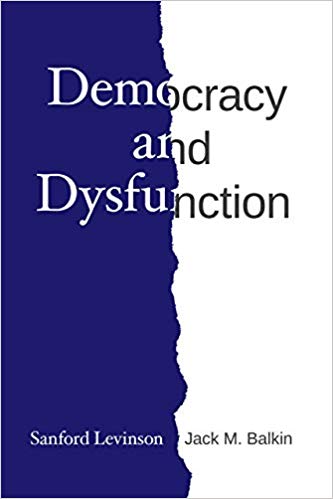
Sanford Levinson and Jack M. Balkin, Democracy and Dysfunction (University of Chicago Press, 2019)

Sanford Levinson, Written in Stone: Public Monuments in Changing Societies (Duke University Press 2018)

Mark A. Graber, Sanford Levinson, and Mark Tushnet, eds., Constitutional Democracy in Crisis? (Oxford University Press 2018)

Gerard Magliocca, The Heart of the Constitution: How the Bill of Rights became the Bill of Rights (Oxford University Press, 2018)

Cynthia Levinson and Sanford Levinson, Fault Lines in the Constitution: The Framers, Their Fights, and the Flaws that Affect Us Today (Peachtree Publishers, 2017)

Brian Z. Tamanaha, A Realistic Theory of Law (Cambridge University Press 2017)

Sanford Levinson, Nullification and Secession in Modern Constitutional Thought (University Press of Kansas 2016)

Sanford Levinson, An Argument Open to All: Reading The Federalist in the 21st Century (Yale University Press 2015)

Stephen M. Griffin, Broken Trust: Dysfunctional Government and Constitutional Reform (University Press of Kansas, 2015)

Frank Pasquale, The Black Box Society: The Secret Algorithms That Control Money and Information (Harvard University Press, 2015)

Bruce Ackerman, We the People, Volume 3: The Civil Rights Revolution (Harvard University Press, 2014)
Balkinization Symposium on We the People, Volume 3: The Civil Rights Revolution

Joseph Fishkin, Bottlenecks: A New Theory of Equal Opportunity (Oxford University Press, 2014)

Mark A. Graber, A New Introduction to American Constitutionalism (Oxford University Press, 2013)

John Mikhail, Elements of Moral Cognition: Rawls' Linguistic Analogy and the Cognitive Science of Moral and Legal Judgment (Cambridge University Press, 2013)

Gerard N. Magliocca, American Founding Son: John Bingham and the Invention of the Fourteenth Amendment (New York University Press, 2013)

Stephen M. Griffin, Long Wars and the Constitution (Harvard University Press, 2013)

Andrew Koppelman, The Tough Luck Constitution and the Assault on Health Care Reform (Oxford University Press, 2013)

James E. Fleming and Linda C. McClain, Ordered Liberty: Rights, Responsibilities, and Virtues (Harvard University Press, 2013)
Balkinization Symposium on Ordered Liberty: Rights, Responsibilities, and Virtues

Andrew Koppelman, Defending American Religious Neutrality (Harvard University Press, 2013)

Brian Z. Tamanaha, Failing Law Schools (University of Chicago Press, 2012)

Sanford Levinson, Framed: America's 51 Constitutions and the Crisis of Governance (Oxford University Press, 2012)

Linda C. McClain and Joanna L. Grossman, Gender Equality: Dimensions of Women's Equal Citizenship (Cambridge University Press, 2012)

Mary Dudziak, War Time: An Idea, Its History, Its Consequences (Oxford University Press, 2012)

Jack M. Balkin, Living Originalism (Harvard University Press, 2011)

Jason Mazzone, Copyfraud and Other Abuses of Intellectual Property Law (Stanford University Press, 2011)

Richard W. Garnett and Andrew Koppelman, First Amendment Stories, (Foundation Press 2011)

Jack M. Balkin, Constitutional Redemption: Political Faith in an Unjust World (Harvard University Press, 2011)

Gerard Magliocca, The Tragedy of William Jennings Bryan: Constitutional Law and the Politics of Backlash (Yale University Press, 2011)

Bernard Harcourt, The Illusion of Free Markets: Punishment and the Myth of Natural Order (Harvard University Press, 2010)

Bruce Ackerman, The Decline and Fall of the American Republic (Harvard University Press, 2010)
Balkinization Symposium on The Decline and Fall of the American Republic

Ian Ayres. Carrots and Sticks: Unlock the Power of Incentives to Get Things Done (Bantam Books, 2010)

Mark Tushnet, Why the Constitution Matters (Yale University Press 2010)

Ian Ayres and Barry Nalebuff: Lifecycle Investing: A New, Safe, and Audacious Way to Improve the Performance of Your Retirement Portfolio (Basic Books, 2010)
.jpg)
Jack M. Balkin, The Laws of Change: I Ching and the Philosophy of Life (2d Edition, Sybil Creek Press 2009)

Brian Z. Tamanaha, Beyond the Formalist-Realist Divide: The Role of Politics in Judging (Princeton University Press 2009)
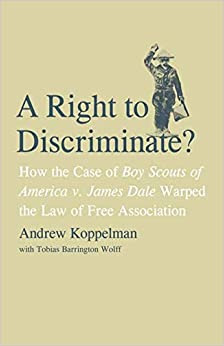
Andrew Koppelman and Tobias Barrington Wolff, A Right to Discriminate?: How the Case of Boy Scouts of America v. James Dale Warped the Law of Free Association (Yale University Press 2009)

Jack M. Balkin and Reva B. Siegel, The Constitution in 2020 (Oxford University Press 2009)

Heather K. Gerken, The Democracy Index: Why Our Election System Is Failing and How to Fix It (Princeton University Press 2009)

Mary Dudziak, Exporting American Dreams: Thurgood Marshall's African Journey (Oxford University Press 2008)

David Luban, Legal Ethics and Human Dignity (Cambridge Univ. Press 2007)

Ian Ayres, Super Crunchers: Why Thinking-By-Numbers is the New Way to be Smart (Bantam 2007)

Jack M. Balkin, James Grimmelmann, Eddan Katz, Nimrod Kozlovski, Shlomit Wagman and Tal Zarsky, eds., Cybercrime: Digital Cops in a Networked Environment (N.Y.U. Press 2007)
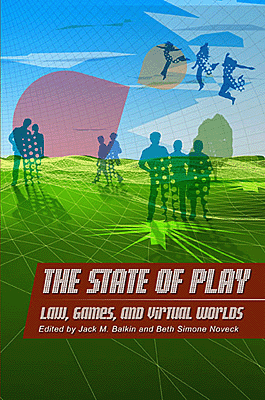
Jack M. Balkin and Beth Simone Noveck, The State of Play: Law, Games, and Virtual Worlds (N.Y.U. Press 2006)

Andrew Koppelman, Same Sex, Different States: When Same-Sex Marriages Cross State Lines (Yale University Press 2006)

Brian Tamanaha, Law as a Means to an End (Cambridge University Press 2006)

Sanford Levinson, Our Undemocratic Constitution (Oxford University Press 2006)

Mark Graber, Dred Scott and the Problem of Constitutional Evil (Cambridge University Press 2006)

Jack M. Balkin, ed., What Roe v. Wade Should Have Said (N.Y.U. Press 2005)

Sanford Levinson, ed., Torture: A Collection (Oxford University Press 2004)
Balkin.com homepage
Bibliography
Conlaw.net
Cultural Software
Writings
Opeds
The Information Society Project
BrownvBoard.com
Useful Links
Syllabi and Exams
