Balkinization
an unanticipated consequence of
Jack M. Balkin
Balkinization Symposiums: A Continuing List
E-mail:
Jack Balkin:
jackbalkin at yahoo.com
Bruce Ackerman
bruce.ackerman at yale.edu
Ian Ayres
ian.ayres at yale.edu
Corey Brettschneider
corey_brettschneider at brown.edu
Mary Dudziak
mary.l.dudziak at emory.edu
Joey Fishkin
joey.fishkin at gmail.com
Heather Gerken heather.gerken at yale.edu
Abbe Gluck abbe.gluck at yale.edu
Mark Graber
mgraber at law.umaryland.edu
Stephen Griffin
sgriffin at tulane.edu
Jonathan Hafetz
jonathan.hafetz at shu.edu
Jeremy Kessler
jkessler at law.columbia.edu
Andrew Koppelman
akoppelman at law.northwestern.edu
Marty Lederman
msl46 at law.georgetown.edu
Sanford Levinson
slevinson at law.utexas.edu
David Luban
david.luban at gmail.com
Gerard Magliocca
gmaglioc at iupui.edu
Jason Mazzone
mazzonej at illinois.edu
Linda McClain
lmcclain at bu.edu
John Mikhail
mikhail at law.georgetown.edu
Frank Pasquale
pasquale.frank at gmail.com
Nate Persily
npersily at gmail.com
Michael Stokes Paulsen
michaelstokespaulsen at gmail.com
Deborah Pearlstein
dpearlst at yu.edu
Rick Pildes
rick.pildes at nyu.edu
David Pozen
dpozen at law.columbia.edu
Richard Primus
raprimus at umich.edu
K. Sabeel Rahmansabeel.rahman at brooklaw.edu
Alice Ristroph
alice.ristroph at shu.edu
Neil Siegel
siegel at law.duke.edu
David Super
david.super at law.georgetown.edu
Brian Tamanaha
btamanaha at wulaw.wustl.edu
Nelson Tebbe
nelson.tebbe at brooklaw.edu
Mark Tushnet
mtushnet at law.harvard.edu
Adam Winkler
winkler at ucla.edu
Compendium of posts on Hobby Lobby and related cases
The Anti-Torture Memos: Balkinization Posts on Torture, Interrogation, Detention, War Powers, and OLC
The Anti-Torture Memos (arranged by topic)
Recent Posts
Scalia and "trash talk"
Constitutional Conventions, the Judicial Separation of Powers, and Justice Scalia's Replacement
A Remembrance and A Suggestion
Antonin Scalia, Rest in Peace
From Selma to Ferguson
A Symposium on Calabresi's The Future of Law and Economics
The Emerging Law of Algorithms, Robots, and Predictive Analytics
Bernie Sanders' continuing obtuseness
Flint and the Right of Local Self-Government
Informal Constitutional Change and the “Irrelevance” of Formal Amendments
Overturning Citizens United
Federalist Society Debate on Ted Cruz's Eligibility to be President
What is “constitutional” about “constitutional political economy”?
The Limits of Bernie Sanders' Imagination
Populism and Progressivism, Traditionalism and Cosmopolitanism, and the Struggle over the Republican Party
More grist for the law professors' mill-- indicting a presidential candidate
Can the Constitution of Opportunity Carry the Day in American Politics?
Only One Place of Redress? How the Supreme Court Unleashed Racist Terror and Divided White from Black Workers
John Roberts, Ted Olson, and the Judicial Separation of Powers
Donald Trump and the Politics of Disjunction
![[Powered by Blogger]](https://lh3.googleusercontent.com/blogger_img_proxy/AEn0k_u1dGpHlrmfISZR5jCjbHIsnGNoelV3SyaN_tLamWEb6kpit_GJPwcfZO9Gi_ivs9Wl07IBM_QrALHGufHqapJEoX0FCRaXOZXAazbFoWwH=s0-d)
Just A Few Blogs
ACS Blog
Alas, a Blog
Althouse
Arts and Letters Daily
Atrios (Eschaton)
Bill of Health
Buzzflash.com
Buzz Machine
Cato at Liberty
Juan Cole (Informed Comment)
Concurring Opinions
The Constitution in 2020
Corrente
Crooked Timber
Daily Howler
Daily Kos
Dana Boyd
Brad DeLong
Digby (Hullabaloo)
Discriminations
Daniel Drezner
Kevin Drum (Mother Jones)
Electrolite
En Banc
Eunomia (Daniel Larison)
Fafblog
Michael Froomkin (Discourse.net)
GovLab (Beth Noveck)
Rick Hasen (Election Law)
History News Network
How Appealing
Ignatz (Sam Heldman)
The Importance of (Ernie Miller)
Infolaw
Instapundit
International Economic Law and Policy Blog
IntLawGrrls
Jacob Levy
Jesus' General
Jurisdynamics
The Kitchen Cabinet
Mark Kleiman
Law Blog Central
Larry Lessig
Lawyers, Guns and Money
Liberal Oasis
Brian Leiter's Law School Reports
The Leiter Reports
Marginal Revolution
Megan McArdle
Memeorandum
Metafilter
Mirror of Justice
The New Republic
Newseum
No More Mister Nice Blog
Brendan Nyhan
Opinio Juris
Orcinus
The Originalism Blog
Pandagon
Passport (Foreign Policy)
Overcoming Bias
Political Animal (Washington Monthly)
Political Theory Daily Review
Political Wire (Taegan Goddard)
The Poor Man
Virginia Postrel
Prawfsblawg
Public Reason
Jonathan Rauch
Raw Story
Redstate
ReligiousLeftLaw.com
Reporters Committee For Freedom of the Press
Reproductive Rights Blog
Rothman's Roadmap to the Right of Publicity
SCOTUS Blog
Seeing the Forest
Clay Shirky
The Shifted Librarian
The Situationist
Larry Solum (Legal Theory)
Andrew Sullivan
Talking Points Memo
Talk Left
Tapped
Tbogg
TechPresident
The Paper Chase (Jurist)
Tom Paine
Tom Tomorrow (This Modern World)
Eve Tushnet
Uggabugga
University of Chicago Law School Faculty Blog
Unqualified Offerings
The Volokh Conspiracy
War and Piece (Laura Rozen)
Wampum
Oliver Willis
Wonkette
Written Description
Matthew Yglesias
Yin
Your Choice of Feeds
1. XML
powered by

2. Atom Feed
3. RSS 2.0
Scalia and "trash talk"
Sandy Levinson
I have recently published a comment in the online Harvard Law Review Forum discussing a very interesting article by Columbia Law Professor David Pozen, in the hard-copy February issue of the Review, in which he analyzes the notion of "good" and "bad faith" constitutional argument. In my comment, I noted that Justice Scalia and, at least in Obergefell, Chief Justice Roberts basically impugned the integrity of those who disagreed with them, rather than admit the possibility that "good faith" disagreement about constitutional meaning was possible. I.e., the majority was not merely mistaken, but knowingly derelict in complying with their oath of constitutional fidelity. With Scalia, of course, that was nothing new. There is a reason that the Washington Post, in their early stories following news of his death, included one on his comments in opinions that made him the "king of sarcasm" on the Supreme Court.
I published a piece in this morning's Dallas Morning News, drawn in part from my Harvard comment, suggesting that Scalia had brought "trash talk" to the Supreme Court. As Daniel Farber noted in his contribution to a Politico symposium on Scalia's legacy, there was more than a bit of the Donald Trump in his approach to public rhetoric, not least because, like Trump, he was more interested in building a public movement than in "working well with others" on the Court. As Farber notes, Scalia bears his own responsibility for the nasty polarization that now characterizes almost all aspects of American political life (and often reflected in the tone of the comments offered on the Balkinazation discussion threads. In a Commentary symposium (scroll down and you'll find my comment) in 2003, I explicitly refused to criticize Scalia as being "unfaithful" to the Constitution and emphasized instead that he had a very different vision--I think a mistaken one--from the Constitution than my own. He did not, I think, accord the same courtesy to those who disagreed with him.
Antonin Scalia left a complex legacy, including some opinions I am happy to applaud. (I am less happy than Jack with the revival of originalism, not least because, as manifested in many of his own opinions, almost all judges, reflecting the (non-)training they received in law school, are incompetent as historians. But his legacy was indeed "complex," and one of the most important aspects was his propensity for "trash talk" and encouragement of his acolytes to take great pleasure in simply dismissing those on the other side.
Posted
12:11 PM
by Sandy Levinson [link]
(71) comments
Constitutional Conventions, the Judicial Separation of Powers, and Justice Scalia's Replacement
Neil Siegel
Curtis Bradley and Neil Siegel
The timing of
the death of Justice Antonin Scalia is prompting much discussion—for example, here,
here,
here,
and here—about
whether there are “constitutional conventions” relevant to efforts to fill his
seat—or to oppose filling his seat—before the next presidential election.
As one of us noted in a previous post,
a major theme of a new article
we have written is that such conventions may be relevant to separation of
powers controversies where the subject matter concerns the courts—what we call
the “judicial separation of powers.”
Our article discusses the general concept of constitutional conventions as developed by
British (and, more broadly, Commonwealth) theorists, as well as specific issues
surrounding appointments to the Supreme Court. Conventions do not possess
the status of mere politics, partisanship, or policy preferences.
Instead, conventions offer normative guidance to government officials about how
they are permitted to exercise their political discretion; they are obligatory
matters of political morality, despite not being legally binding.
Constitutional conventions help the constitutional system function by keeping partisanship
within reasonable bounds. For vacancies on the Supreme Court, conventions
about appointment and confirmation help ensure that the Court can continue to
execute its responsibilities effectively. Although the Constitution does
not mandate nine seats, the Court has had that number of seats since shortly
after the Civil War, and having an odd number of Justices will often be
essential to resolving issues of nationwide importance. When Justices
have retired at the end of a Term, there arguably has been a convention of
working hard to get a new Justice in place by the start of the next Term—again,
because of the need for the Court to function effectively.
In the case of the vacancy that now exists on the Court, there are difficult and interesting
issues concerning: (1) whether there are applicable conventions regarding the
conduct of the President and the Senate; (2) what those conventions entail; and
(3) the implications of any such conventions. Tierney Sneed reports
that Senate Republicans would have to reach back to the mid-1800s to find an
instance in which the Senate blocked a nominee for reasons having nothing to do
with the nominee himself—that is, just in order to obstruct the President. Moreover,
over the course of American history—from 1796 to 1988—at
least 14 Justices have been confirmed during election years. And as
Emily Bazelon notes,
under somewhat analogous circumstances a Senate controlled by the opposing
party confirmed Reagan’s appointment of Anthony Kennedy in February 1988, when
Reagan had about 14 months left in office.
Although we have not independently researched the relevant historical record, there appear
to be few if any instances during the past century and a half in which the
Senate has blocked nominees to the Court based simply on opposition to allowing
the President an appointment. That lack of past practice might reflect,
at least in part, normative concerns about the impact of obstruction on the
proper functioning of the constitutional system.
On the other hand, the lack of precedent might merely reflect the fact that there are very
few modern instances in which the issue arose. For example, Bazelon notes
that “[o]nly three Supreme Court justices have died in office in more than 60
years. Most have controlled the timing of their retirements, and have
chosen to leave the bench when the party that selected them holds the
presidency and the Senate.”
Moreover, in
recent times some of the norms concerning Court appointments may have
shifted—for example, as a result of President Reagan’s failed nomination of
Judge Robert Bork. Bork was Reagan’s first choice and was nominated days
after Justice Powell retired in June 1987, when Reagan had more than a year and
a half left in his presidential term; Kennedy was his third choice and was
nominated six months later, after the Senate refused to confirm Bork and after
Reagan’s second nominee, Douglas Ginsburg, dropped out of consideration.
Even if there is a relevant convention relating to the replacement of Justice Scalia on the
Court, it may be difficult to discern the precise responsibilities entailed by
such a convention for both the President and the Senate in these circumstances.
Although Obama can reasonably claim that the ability to nominate a new
Justice falls within his four-year electoral mandate, Senate Republicans can
similarly claim that ensuring that the nominee is politically acceptable falls
within their electoral mandate. Thus, perhaps Obama has some duty to
nominate someone plausibly acceptable to Republicans.
On the other hand, even if there is no convention requiring the Senate to confirm any
particular nominee, there might be a convention precluding it from repeatedly
voting down (or refusing to consider) a series of nominees, especially if it is
clear that the President is attempting to nominate a relative moderate.
(The confirmation of Kennedy is arguably consistent with such a convention.)
Whatever the best answers to these and related questions, it is noteworthy—and
revealing—that much of the public discussion in the immediate aftermath of
Justice Scalia’s passing concerns constitutional conventions of proper conduct
by President Obama and Senate Republicans. The constitutional text and
the original meaning of the constitutional text, both of which Justice Scalia
often championed, seem to be playing less of a role.
Posted
4:33 PM
by Neil Siegel [link]
A Remembrance and A Suggestion
Gerard N. Magliocca
Though Justice Scalia did not know me, he had a significant influence on my life. In 1994, I was a college student trying to decide whether to attend law school or pursue a career in the foreign service. I had the good fortune to attend a program that the Justice did for about twenty students in which he was his usual provocative self. He made the law seem so exciting that I decided that night that I just had to go to law school. Now here I am two decades trying to do something similar for law students. We are all working to reach the best understanding of the Constitution, and it is sad when someone who contributed so much leaves us.
I want to address the question of Justice Scalia's successor. President Obama says that he intends to nominate a new Justice in due course. Senator McConnell says that no nominee will be confirmed until the next President is in office. I hope that the Senator reconsiders.
Without a confirmation this year, the Court will be significantly impaired for the next two Terms. The earliest that a new President could confirm someone is Spring 2017, which basically means that the prospect of 4-4 ties will continue until the 2017-'18 Term. And this assumes that the other eight Justices will be "just fine" until then, which is not something that we can rely on.
There are also political risks for both sides in not confirming a new Justice this year. What if the GOP wins the presidency this Fall? Then President Obama will lose his chance to name the next Justice. But what if Democrats retain the presidency and win the Senate this Fall? Then the GOP will lose any chance to influence the next Justice. This mutual risk opens the door for a compromise.
But who could this compromise candidate be? Not someone young, as neither side would take a risk on somebody who could serve for 30 years. Not someone obviously liberal, conservative, or simply unknown. That will never work.
I'll throw one idea on the table: Sandra Day O'Connor. It would be easy for Justice O'Connor to return to her former role. She is someone who could command bipartisan support. (Put another way, she is the most conservative person that the President would consider nominating and the most liberal person who could get confirmed by a Republican Senate.) And since she is 85, she would probably only serve for a few years. Perhaps there is another compromise candidate out there, but I'm hard pressed to think of anyone else.
Posted
9:43 PM
by Gerard N. Magliocca [link]
(80) comments
Antonin Scalia, Rest in Peace
JB
Justice Antonin Scalia passed away in his sleep Saturday at a luxury resort in West Texas, according to initial reports from San Antonio media and the New York Times.
I send my most heartfelt and sincere condolences to the Justice's family and friends. I only had the pleasure of meeting Justice Scalia once, and we had a lively and amusing conversation.
Justice Scalia lived a full and significant life and became one of the most important figures in American law. Television shows and operas were written about him. He was the subject of at least two biographies during his own lifetime. Harvard Law School now has an annual lecture in his honor. There are few Justices who were more talked about and more consequential in their own time.
The occasion of his death is as monumental as it is unexpected, and it is likely to add another major issue to the presidential contest in 2016.
There will be enormous pressure on the Senate to nominate a successor this year. Nevertheless, at the moment, it seems doubtful that the currently Republican controlled Senate would allow President Obama to make a new Supreme Court appointment, tilting the balance of the Court from conservative to liberal. Instead, I expect that the Senate will do nothing, arguing that this is an election year, and hoping that the next President will be a Republican who can appoint someone like Justice Scalia.
Justice Scalia's death will also throw into uncertainty a large number of very important cases that were likely to be decided by 5-4 margins this Term. Some of these cases have already been argued, and initial votes have already been taken and opinions assigned. Others have yet to be argued. What will become of these cases is not entirely clear.
Justice Scalia did more than perhaps any judge of his generation to move the Supreme Court toward originalism in constitutional interpretation and textualism in statutory interpretation. There is no doubt that he had and will continue to have a lasting impact on many different areas of federal constitutional and statutory law. Surely he must rank among the most important and most influential Justices of the past half-century, and perhaps, depending on how the future unfolds, of all time.
In the short run, Justice Scalia will be remembered for his many staunchly conservative positions, including his opposition to gay rights and his support for Second Amendment rights.
How he will be remembered in the long run will depend very much on the direction that American politics takes. Justice Oliver Wendell Holmes, Jr., another great stylist, took many positions that people today find objectionable. But his legacy was secured by the larger direction of American politics in the decades that followed him.
Writing about judicial greatness in 2003, I speculated about whether Chief Justice Rehnquist and Justice Scalia would be considered great Justices. I wrote then:
Whether William Rehnquist will eventually be regarded as a great Justice (and Chief Justice) will, in the long run, rest on whether he has been on the right side of the most important questions he fought over as judged by future generations. . . . If, in the long run, many or most of [the positions he took] become admired, Rehnquist will be regarded as a great Justice, perhaps even one of the greatest. On the other hand, if the positions that he staked out and defended eventually are regarded as reactionary or unjust from the standpoint of the future, Rehnquist will be regarded like Justice Peckham, who wrote Lochner v. New York, or Justice Brown, who wrote Plessy v. Ferguson, or perhaps like Chief Justice Taney, whose importance cannot be denied but who had the misfortune to support slavery and was the author of Dred Scott v. Sanford.
In the meantime, let us pay our respects to one of the most important jurists of his age.
Many of the same points apply to Rehnquist’s conservative ally on the Court, Justice Antonin Scalia. Scalia’s lively style and his very opinionated opinions suggest that he, too, is a potential candidate for greatness. Like Rehnquist, he has a coterie of devoted conservative admirers who can praise his achievements and can downplay his failings. If the politics of the future agree with a sizeable segment of Scalia’s views, his judicial sins will be washed away and he will take his place in the pantheon of Supreme Court greatness. Only time will tell whose politics eventually triumph.
Posted
6:01 PM
by JB [link]
From Selma to Ferguson
Jason Mazzone
Yesterday the Department of Justice sued Ferguson, Missouri, following the collapse of the settlement to overhaul that city's police department to remedy a long history of civil rights abuses. Stephen Rushin (who teaches at the University of Alabama and is an expert on police reform) and I have just finished a draft article on federal responses to police misconduct. Given the widespread nature of police misconduct and failures of past reform efforts, we offer a new way forward. The article draft is titled From Selma to Ferguson: The Voting Rights Act as a Blueprint for Police Reform and the abstract is as follows:
The Voting Rights Act of 1965 revolutionized access to the voting booth. Rather than responding to claims of voter suppression through litigation against individual states or counties, the Voting Rights Act introduced a coverage formula that preemptively regulated a large number of localities across the country. In doing so, the Voting Rights Act replaced reactive, piecemeal litigation with a proactive structure of continual federal oversight. As the most successful civil rights law in the nation’s history, the Voting Rights Act provides a blueprint for responding to one of the most pressing civil rights problems the country faces today: police misconduct. As with voter suppression in the mid-twentieth century, abusive police conduct against minority citizens is a national problem perpetrated by thousands of localities. Federal efforts to cure the problem through litigation against individual police departments have failed to produce widespread reform. This Article applies the lessons of the Voting Rights Act in proposing the use of a coverage formula to identify and regulate local police departments engaged in a pattern of unconstitutional misconduct. While this proposal would significantly enhance federal power over police departments, such a change is both necessary to curb police misconduct and constitutionally permissible.
Posted
7:18 PM
by Jason Mazzone [link]
A Symposium on Calabresi's The Future of Law and Economics
Frank Pasquale

Kenneth Abraham, Pearls Beyond Price
Ian Ayres, The Liability Rule Continuum(s)
Dan Cole, Beyond Law and Economics
Lee Fennell and Richard McAdams, Means and Ends in Law and Economics
Frank Pasquale, (R)evolution in Law & Economics
Carol Rose, Markets, Morals and Guido Calabresi’s The Future of Law and Economics
Arden Rowell, Law and Economics for the Read-Write Generation
I highly recommend the book as a profound reflection on the relationship between social science and law, and much more.
Posted
12:29 PM
by Frank Pasquale [link]
The Emerging Law of Algorithms, Robots, and Predictive Analytics
Frank Pasquale
In 1897, Holmes famously pronounced, "For the rational study of the law the blackletter man may be the man of the present, but the man of the future is the man of statistics and the master of economics." He could scarcely envision at the time the rise of cost-benefit analysis, and comparative devaluation of legal process and non-economic values, in the administrative state. Nor could he have foreseen the surveillance-driven tools of today's predictive policing and homeland security apparatus. Nevertheless, I think Holmes's empiricism and pragmatism still animate dominant legal responses to new technologies. Three conferences this Spring show the importance of "statistics and economics" in future tools of social order, and the fundamental public values that must constrain those tools.
Advances in information and communications technology and the “datafication” of broadening fields of human endeavor are generating unparalleled quantities and kinds of data about individual and group behavior, much of which is now being deployed to assess risk by governments worldwide. For example, law enforcement personnel are expected to prevent terrorism through data-informed policing aimed at curbing extremism before it expresses itself as violence. And police are deployed to predicted “hot spots” based on data related to past crime. Judges are turning to data-driven metrics to help them assess the risk that an individual will act violently and should be detained before trial.
Posted
9:11 PM
by Frank Pasquale [link]
Bernie Sanders' continuing obtuseness
Sandy Levinson
First, just to clear something up. I have been accused of "hating" the U.S Constitution. I do not. There are some attractive things in it, beginning, most importantly, with the Preamble, which is inspiring in setting out the point of our constitutional order. I'd also include some of the features "below the fold." Obviously, I think there is also a lot to criticize in the Constitution, which is why I continue to advocate a new constitutional convention. And, of course, I'm more than happy to wrap myself in the mantle of the Founders, especially the Publius of Federalists 1 and 14, who emphasized our ability to engage in "reflection and choice," based on the "lessons of experience," as to how we should be governed.
What has turned me into something of a crank is not my dislike of the Constitution, per se but, rather, the inexplicable wilful refusal to assess it, in any serious way, that is typical of even the elite punditry and almost all of those running for political office. A refreshing counter-example is Texas Governor Greg Abbott, who has notably called for a new constitutional convention to consider nine separate amendments that he christens the "Texas Plan." His suggestions are generally (no not completely) terrible, but that is almost beside the point. He deserves great credit for putting the adequacy of the Constitution on the table as something seriously to discuss.
As one can tell from the subject heading, though, my ire is directed at Bernie Sanders, the ostensibly "revolutionary" candidate who is making all sorts of promises that cannot possibly be carried through in our present political system, operating under the 1787 Constitution, unless one truly believes in magic.
So why does Sen. Sanders, whom I admire and have contributed to (in his campaigns for the Senate) display the obtuseness I identify with inside-the-Beltway pundits who are more than willing to denounce given individuals, but pull back from engaging in genuinely systematic analysis? It has occurred to me that one possibility is that the Senator from Vermont would have to address the embarrassing fact that one of the most indefensible features of our Constitution is the decision, made under threat of walking out by Delaware and other small states, to award equal voting power to all states in the Senate. I happen to like the Vermont senatorial delegation of Sanders and Leahy more than any other dynamic duo, and I probably like the Texas duo of Cornyn and Cruz (who would bring down any rating on his own) least of all. But there is really no justification for Vermont having the same number of votes as Texas. Vermont in 2014 had a population of of roughly 650,000 people; Texas is approaching 27 million people. This, of course, is not the most extreme disparity; that's reserved for Wyoming and California.
If one wants to talk about how the "game is rigged," one could do worse than begin with the U.S. Senate, whose equal-vote rule helps to explain why we have a terrible agricultural policy (including subsidies for the dairy industry that I am certain that Sen. Sanders has voted for) and why, in addition, we are unlikely ever to get a cogent energy policy, given the excessive voting power of senators from coal-producing states. As I've said many times before, but never tire of repeating, James Madison was absolutely right when he described the allocation of voting power in the Senate as an "evil," even if, as with the compromise over slavery, it was arguably in 1787 a "lesser evil" to having no constitution at all. We did get rid of slavery, at least as a formal institution (at the cost of 750,000 lives). Alas, we're still stuck with the Senate.
Perhaps Sen. Sanders recognizes that he could scarcely embark on a serious discussion of the Senate without challenging the legitimacy of his own excessive power in that institution. But, honestly, who knows. The only thing we can know with certainty is that he is deluding his impressionable supporters to believe that the very act of electing him would the revolutionary transformation that would make all things possible. It won't be, and the Constitution guarantees that, unless one can believe that Sanders will see, when he gets to the White House, a Senate with at least 60 Democrats, all pledged to support a democratic socialist program, and a House that has flipped to a strong Democratic majority equally committed to becoming as much like Scandanavia as possible. One might offer the same cautionary warnings to Tea Party devotees, already livid over the inconsequentiality of the 2014 elections, should, for example, Ted Cruz become president while the Democrats take back the Senate (and thus don't have to worry about a Republican Senate simply eliminating the filibuster). A Cruz presidency would be terrible beyond belief, but not because under "divided government" the Republicans would in fact be able to enact into law their perfidious agenda.
I am truly afraid that Sanders is wasting an opportunity to educate the public about important constitutional issues. To say that every American should be recognized as having a "right' to health care is lovely (even if somewhat meaningless, as a practical matter). What he should be addressing is why it has proved impossible, over the past century, to engage in genuinely radical reform of the health-care-delivery industry, which is a mixture of American ideology and the institutions foisted on us by those who mistrusted democracy in 1787. I'd like to "feel the Bern," but I feel that we are being confronted with yet another politician who believes that he (or she) by virtue of good intentions and an inchoate "movement" can turn the dinosaur that is the American constitutional order around.
Posted
4:29 PM
by Sandy Levinson [link]
(106) comments
Flint and the Right of Local Self-Government
Nelson Tebbe
[I'm posting this for Rich Schragger, who ran into technical difficulty putting it up. - NT]
Rich Schragger
Posted
3:21 PM
by Nelson Tebbe [link]
Informal Constitutional Change and the “Irrelevance” of Formal Amendments
Stephen Griffin
Posted
3:04 PM
by Stephen Griffin [link]
Overturning Citizens United
Gerard N. Magliocca
Let's suppose you think that Citizens United was a terrible decision that should be overruled. (I don't, but stay with me for a minute.) You might think that the best way to accomplish that goal is by voting for Bernie Sanders, who recently said:
"No nominee of mine, if I'm elected president, to the United States Supreme Court will get that nomination unless he or she is loud and clear, and says they will vote to overturn Citizens United."
Sounds good, right? Unfortunately, like a lot of what Senator Sanders says, this isn't well thought out. Actually, he is the only candidate who, if elected President, could not get Citizens United overruled. Why? Because any Justice he nominates who is confirmed would have to recuse from reconsidering that precedent if he or she were "loud and clear" that they would overrule that case prior to taking the bench.
Now it's fair to say that this is nothing more than a legal fiction. Presidents nominate people that they think will overrule one precedent or another all the time. But that is different from saying that saying that only an explicit guarantee will do. Excuse me if I'm not feeling the Bern.
Posted
11:06 AM
by Gerard N. Magliocca [link]
(21) comments
Federalist Society Debate on Ted Cruz's Eligibility to be President
JB
On Friday, February 5th at Harvard Law School, Larry Tribe and I debated whether Ted Cruz is a natural born citizen.
Larry argued no, at least if one is an originalist like Cruz, and that in any event, the question is unsettled.
Speaking as an originalist, I argued that the best interpretation of the Constitution is that Ted Cruz is a natural born citizen and eligible to be president. I used the question of natural born citizenship as a way to introduce some of the ideas in Living Originalism, as well as the distinction between thick and thin conceptions of original public meaning. The debate is a series of short clips, one following the next.
Posted
9:35 AM
by JB [link]
What is “constitutional” about “constitutional political economy”?
Guest Blogger
For the Symposium on the Constitution and Economic Inequality
Posted
1:35 PM
by Guest Blogger [link]
The Limits of Bernie Sanders' Imagination
Sandy Levinson
Sen. Sanders, whom I admire a great deal though I in fact support Hillary Clinton, has in recent speeches, including that last night in Iowa, of calling for a political "revolution." Moreover, he repeatedly emphasizes, altogether accurately, that "the game is rigged" in favor of the well off and that something has to be done about that. He also proudly proclaims his identity as a democratic socialist and his esteem for Eugene V. Debs, who ran a serious campaign for the presidency in 1912 in which he received just short of 6:% of the popular vote.
I love the 1912 election, not least because both Wilson and Roosevelt explicitly attacked aspects of the 1787 Constitution and suggested constitutional reform, while Debs was arguing in behalf of serious, but non-revolutionary, socialism. The incumbent, William Howard Taft, was an able defender of a traditional view of the Constitution. There was a truly serious public debate about the future of the country and the necessity of significant reform, including constitutional change. Taft, of course, was swamped, and the teens were notable as a period of constitutional change, with the proposal and ratification of the 16th, 17th, 18th, and 19th Amendments.
Now, however, even former presidents of the Harvard Law Review seem unable to render a single interesting observation about the Constitution. It's so much easier to condemn the Republican Party (however deserved) than a constitutional system that gives the Republicans an inordinate degree of power. Sanders, a non-lawyer, seems equally unable (or unwilling) to connect the dots and to teach his audience that the rigging began, and is fundamentally enabled by, the Constitution of 1787, which has been insufficiently amended to make it more truly democratic and open to the genuine possibility of radical change (such as adopting the kind of medical care systems found in many, many countries across the world). It is not only that we are increasingly governed, at the national level, by an oligarchy or politicians funded by oligarchs. It is that even if one of the branches (i.e., House, Senate, or presidency) really were put in the hands of "the people," it wouldn't matter, because the system requires that an insurgent movement of the kind Sanders purports to be leading must capture control of all of these branches plus, of course, a majority of the Supreme Court lest it invalidate changes passed by Congress and signed by the President (see what almost happened to Obamacare). Jack Balkin refers to the "constitutional trifecta," though maybe it should really be the "quadrifecta." As in horse racing, it's really hard to pick four winners. Similarly, the Constitution was designed to make it extremely difficult for insurgent movements actually to prevail, given the institutional hurdles they must surmount. The sheer number of veto points give a huge advantage to denizens of the status quo, even if, on rare occasions, the stars have aligned to allow some fundamental change.
If one purpose of Sanders' campaign is to educate especially his young admirers about the realities of life in these United States, he might actually discuss our defective Constitution. He might even commend Texas Governor Greg Abbott for suggesting that it is time for a new constitutional convention to create a constitution adequate to the new realities of the 21st century., even if, of course, he would go on to indicate his vehement disagreement with Abbott's specific proposals. But that would serve to further the long-overdue national debate of the kind the country was capable of having in, say, 1912 and seems wholly unable to have today.
Even if he were to be elected, by some miracle, or if Clinton is elected, as I expect will be the case, neither will be able to achieve anything at all that requires legislation unless, by an equal miracle, both the Senate and the House are Democratic (and the new Democratic majority in the Senate has the backbone to eliminate the filibuster entirely). Otherwise, Republicans will continue to say no to everything, as the Constitution empowers them to do even if, for example, they control only the House (not least because of ruthless gerrymanders and voter suppression) and the Senate has reverted to Democratic control. The aftermath of a Sanders election, following the elation of his supporters, would be identical to the aftermath of the Tea Party win of 2014: Both sides would realize that the system is rigged to make elections near meaningless because of the veto gates that make campaign promises, even if sincere, near irrelevant. The youngsters who "feel the Bern" are being set up for a monumental disillusionment, especially if their candidate stumbles into the presidency because Clinton falters and the Republican Party fully implodes (perhaps helped along by a quixotic campaign by yet another billionaire, Michael Bloomberg).
Surely Sanders realizes all of this. And surely he realizes that he is extremely unlikely to become President. But he has nobly seized the opportunity to say things that have long needed saying, and he has pulled the Democratic Party and its likely candidate to the left. So why doesn't he take the opportunity truly to electrify the country by supporting a new constitutional convention? Can he really be admirer of the Constitution that structures our current polity? He now enjoys a unique platform, with the liberty that comes from being 73-years-old, secure in the knowledge that he's not really going to be the next President, and being able to say whatever he wants to audiences that are really listening to his message. I've always admired the adage that if one is going to hang for stealing a lamb, why not steal a sheep and, indeed, the whole damned flock.
For the Republicans in the audience, I'm interested in what they think that their favorite candidates should say about Abbott and his proposal. Ted Cruz, after all, is going to spend quite a bit of time in Texas prior to the March 1 primary. Surely someone will ask him about the Abbott proposal. What do they want him to say? Will young Marco really embrace the call for a new constitutional convention and make that a major aspect of his campaign? He's flirted with the idea, but, then, he's flirted with so many different ideas before dropping them when they're politically inconvenient.
Posted
11:44 PM
by Sandy Levinson [link]
(157) comments
Populism and Progressivism, Traditionalism and Cosmopolitanism, and the Struggle over the Republican Party
JB
In a series of posts, Sean Trende has diagnosed the current split in the Republican Party as a conflict between cultural cosmpolitianism and cultural traditionalism. Back in 1995, I described a related split in terms of the opposition between populism and progressivism. In this context, "progressivism" stands for embrace of expertise, elite culture, and elite values--and not necessarily for left-wing or progressive social policies. Hence there are populist and "progressive" wings in both major political parties. Even though there are few liberal Republicans left, you have plenty of highly-educated elites and intellectuals in the Republican Party who believe in expertise and embrace elite values. They just disagree with the experts and elites on the left. The conservative counter-establishment, which includes conservative think tanks, policy organs, media organizations like National Review, and conservative academia-- is their natural home.
For the last generation or so the Republican political strategy has attempted to identify conservatism and the Republican Party with populism and cultural traditionalism, and to portray liberals and Democrats as "progressives" (in my language) or cultural cosmopolitans (in Trende's). This strategy has often been very effective, because the modern (post-Reagan) Democratic Party leadership has usually been more progressive than populist in its orientation. Nevertheless, this strategy has put many Republican elites in a bind, because their values and attitudes are often not really populist at all. They are cosmopolitan.
Nevertheless, conservative elites have been able to paper over these problems skillfully, by claiming to identify with and speak for the values and concerns of working class (usually white) Americans. For generations, very well-educated businesspeople and intellectuals have defied political gravity by arguing that their economic agenda of low taxes for the wealthy, deregulation, free trade, and immigration reform was also (or should be) the agenda of the conservative working class. Cosmopolitan conservative elites often paid lip service to culture war issues as the price of a very successful political alliance. This is conservative elites' version of the challenges that liberal elites faced in attempting to speak for the interests of working class and poor people, an association that conservative intellectuals have repeatedly and gleefully attacked. To the extent that these attacks succeeded, conservative elites were simply more successful than liberals in hiding the tensions within their own coalition.
That is, until now.
Donald Trump's candidacy has disrupted this strategy, and revealed the tension within the party clearly. He is appealing to cultural traditionalism or populism, capitalizing on resentment against elites and elite values on both the left and the right. Although he himself is a member of the elite (he loves to point out that he is very smart and went to Wharton) his style of speaking is demotic and blunt, and he comes across as someone in touch with populist concerns and populist values.
If The Donald did not exist, some other candidate would have figured out how to exploit the populist/progressive traditional/cosmopolitan divide within the Republican Party. Indeed, as Trende points out, Rick Santorum and Mike Huckabee offered earlier examples of the strategy. But Trump had the talent--and, let's admit it, the shamelessness--to pull it off powerfully and effectively. Even if he loses the Republican nomination, the damage to the Republican coalition has been done. Other politicians will figure out how they can also play on this divide to their personal advantage. Decades of clever attacks leveled against liberal elites for being out of touch and opposed to the interests of "real Americans" can pretty easily be reshaped and deployed against conservative elites. The Republican Party will be in a state of turmoil for some time to come.
Posted
12:15 PM
by JB [link]
More grist for the law professors' mill-- indicting a presidential candidate
JB
Over at the New Reform Club, Seth Barrett Tillman argues that law professors and media commentators are wasting their time speculating about Ted Cruz's eligibility, when there is an even more complicated set of issues that could provide endless grist for the scholarly mill: He asks what would happen if a major party candidate (say, Hillary Clinton) were indicted and/or convicted (a) before the party convention, (b) before the November election, (c) before the electors meet, (d) before inauguration, or (e) after inauguration.
Tillman's post is designed to generate discussion of Clinton's particular case. But the legal issues are more general. Although I doubt that Hillary Clinton will be indicted, you may recall that in August of 2015, former Texas Governor Rick Perry, who had announced his candidacy, was indicted by a Texas grand jury. He quickly dropped out of the race, but his legal troubles continue. If you don't like using Clinton as an example because you think she's been treated unfairly, imagine that Donald Trump or Marco Rubio were indicted for shady business dealings. Tillman is certainly right that the legal issues are at least as interesting as the meaning of "natural born citizen."
Posted
11:14 AM
by JB [link]
Can the Constitution of Opportunity Carry the Day in American Politics?
Guest Blogger
For the Symposium on the Constitution and Economic Inequality
Cynthia
Estlund
Posted
12:15 PM
by Guest Blogger [link]
Only One Place of Redress? How the Supreme Court Unleashed Racist Terror and Divided White from Black Workers
Guest Blogger
For the Symposium on the Constitution and Economic Inequality
Posted
3:00 PM
by Guest Blogger [link]
John Roberts, Ted Olson, and the Judicial Separation of Powers
Neil Siegel
Posted
1:37 PM
by Neil Siegel [link]
Donald Trump and the Politics of Disjunction
Gerard N. Magliocca
We've had an extended discussion on the blog about whether Barack Obama is a "reconstructive" President as described in the groundbreaking scholarship of Stephen Skowronek. Part of the answer turns on the outcome of 2016 presidential election. Will Obama's successor build on what he did or repudiate his legacy? That remains to be seen.
There is another way, though, of looking at this question. Skowronek's presidential typology says that political coalitions in decline tend to turn to outsiders who have, for lack of a better term, a reputation as a "Mr Fix-It" rather than deep connections to the party's ideology or constituencies. Past examples include Herbert Hoover, a self-made millionaire who (though it'a hard to remember now) was widely thought of as a problem solver before he was elected. Jimmy Carter is another example--he was an engineer by training--who was a classic outsider in 1976. On the losing side, there was Wendell Wilkie (the GOP nominee in 1940) who had never been elected to anything and was touted for his business success. These are the "disjunctive" presidents or presidential candidates.
The Republican Party went with this sort of strategy in 2012. Mitt Romney was mainly known as a success in business and as a highly competent manager (of, for example, the Winter Olympics). As Governor of Massachusetts for one term, he certainly did not come from the heartland of the GOP coalition and did not have broad government experience. There was a plausible advantage in this, though, as he also did not carry much of the baggage that a party insider or crusader would.
Now we are getting disjunction on steroids with Donald Trump. He is also pitching himself as "Mr Fix-It" without any significant commitment to the traditional ideology of the party or, of course, any service in office. He is presenting this as a plus, and certain party elites are in the process of deciding that this he be better than someone closely identified with the party's ideology--Ted Cruz. You can also contrast Trump's success with the weakness of the obvious Establishment candidate--Jeb Bush--to see how far the traditional formula for success in the GOP primary is falling short this time.
Why does this matter? Because disjunctive candidates only do well at the end of a particular coalition, which implies that the other side represents the start of a new one. But has that already happened with Obama's election, or will it happen after, say, President Trump has a disastrous term?
Posted
11:10 AM
by Gerard N. Magliocca [link]
(147) comments
Books by Balkinization Bloggers

Gerard N. Magliocca, The Actual Art of Governing: Justice Robert H. Jackson's Concurring Opinion in the Steel Seizure Case (Oxford University Press, 2025)

Linda C. McClain and Aziza Ahmed, The Routledge Companion to Gender and COVID-19 (Routledge, 2024)

David Pozen, The Constitution of the War on Drugs (Oxford University Press, 2024)

Jack M. Balkin, Memory and Authority: The Uses of History in Constitutional Interpretation (Yale University Press, 2024)
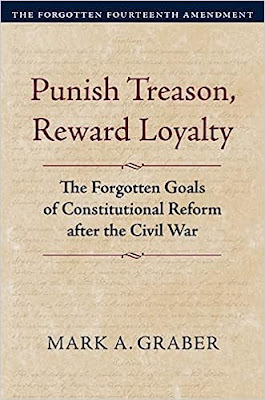
Mark A. Graber, Punish Treason, Reward Loyalty: The Forgotten Goals of Constitutional Reform after the Civil War (University of Kansas Press, 2023)
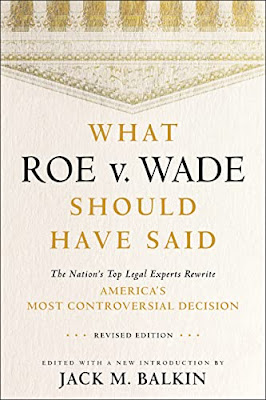
Jack M. Balkin, What Roe v. Wade Should Have Said: The Nation's Top Legal Experts Rewrite America's Most Controversial Decision - Revised Edition (NYU Press, 2023)

Andrew Koppelman, Burning Down the House: How Libertarian Philosophy Was Corrupted by Delusion and Greed (St. Martin’s Press, 2022)

Gerard N. Magliocca, Washington's Heir: The Life of Justice Bushrod Washington (Oxford University Press, 2022)
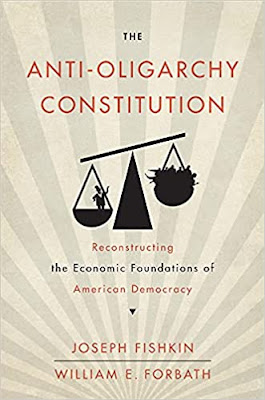
Joseph Fishkin and William E. Forbath, The Anti-Oligarchy Constitution: Reconstructing the Economic Foundations of American Democracy (Harvard University Press, 2022)
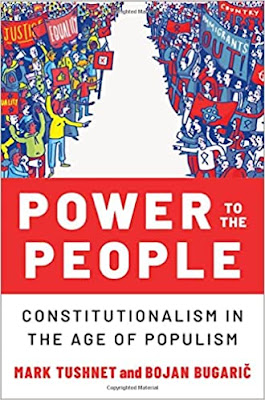
Mark Tushnet and Bojan Bugaric, Power to the People: Constitutionalism in the Age of Populism (Oxford University Press 2021).

Mark Philip Bradley and Mary L. Dudziak, eds., Making the Forever War: Marilyn B. Young on the Culture and Politics of American Militarism Culture and Politics in the Cold War and Beyond (University of Massachusetts Press, 2021).

Jack M. Balkin, What Obergefell v. Hodges Should Have Said: The Nation's Top Legal Experts Rewrite America's Same-Sex Marriage Decision (Yale University Press, 2020)

Frank Pasquale, New Laws of Robotics: Defending Human Expertise in the Age of AI (Belknap Press, 2020)

Jack M. Balkin, The Cycles of Constitutional Time (Oxford University Press, 2020)

Mark Tushnet, Taking Back the Constitution: Activist Judges and the Next Age of American Law (Yale University Press 2020).

Andrew Koppelman, Gay Rights vs. Religious Liberty?: The Unnecessary Conflict (Oxford University Press, 2020)

Ezekiel J Emanuel and Abbe R. Gluck, The Trillion Dollar Revolution: How the Affordable Care Act Transformed Politics, Law, and Health Care in America (PublicAffairs, 2020)

Linda C. McClain, Who's the Bigot?: Learning from Conflicts over Marriage and Civil Rights Law (Oxford University Press, 2020)
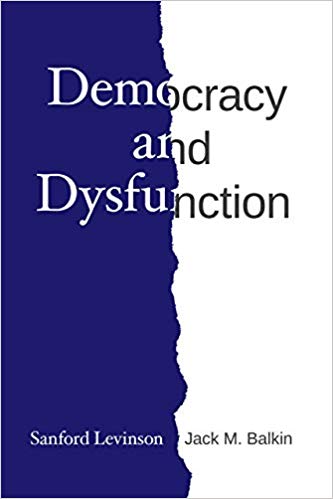
Sanford Levinson and Jack M. Balkin, Democracy and Dysfunction (University of Chicago Press, 2019)

Sanford Levinson, Written in Stone: Public Monuments in Changing Societies (Duke University Press 2018)

Mark A. Graber, Sanford Levinson, and Mark Tushnet, eds., Constitutional Democracy in Crisis? (Oxford University Press 2018)

Gerard Magliocca, The Heart of the Constitution: How the Bill of Rights became the Bill of Rights (Oxford University Press, 2018)

Cynthia Levinson and Sanford Levinson, Fault Lines in the Constitution: The Framers, Their Fights, and the Flaws that Affect Us Today (Peachtree Publishers, 2017)

Brian Z. Tamanaha, A Realistic Theory of Law (Cambridge University Press 2017)

Sanford Levinson, Nullification and Secession in Modern Constitutional Thought (University Press of Kansas 2016)

Sanford Levinson, An Argument Open to All: Reading The Federalist in the 21st Century (Yale University Press 2015)

Stephen M. Griffin, Broken Trust: Dysfunctional Government and Constitutional Reform (University Press of Kansas, 2015)

Frank Pasquale, The Black Box Society: The Secret Algorithms That Control Money and Information (Harvard University Press, 2015)

Bruce Ackerman, We the People, Volume 3: The Civil Rights Revolution (Harvard University Press, 2014)
Balkinization Symposium on We the People, Volume 3: The Civil Rights Revolution

Joseph Fishkin, Bottlenecks: A New Theory of Equal Opportunity (Oxford University Press, 2014)

Mark A. Graber, A New Introduction to American Constitutionalism (Oxford University Press, 2013)

John Mikhail, Elements of Moral Cognition: Rawls' Linguistic Analogy and the Cognitive Science of Moral and Legal Judgment (Cambridge University Press, 2013)

Gerard N. Magliocca, American Founding Son: John Bingham and the Invention of the Fourteenth Amendment (New York University Press, 2013)

Stephen M. Griffin, Long Wars and the Constitution (Harvard University Press, 2013)

Andrew Koppelman, The Tough Luck Constitution and the Assault on Health Care Reform (Oxford University Press, 2013)

James E. Fleming and Linda C. McClain, Ordered Liberty: Rights, Responsibilities, and Virtues (Harvard University Press, 2013)
Balkinization Symposium on Ordered Liberty: Rights, Responsibilities, and Virtues

Andrew Koppelman, Defending American Religious Neutrality (Harvard University Press, 2013)

Brian Z. Tamanaha, Failing Law Schools (University of Chicago Press, 2012)

Sanford Levinson, Framed: America's 51 Constitutions and the Crisis of Governance (Oxford University Press, 2012)

Linda C. McClain and Joanna L. Grossman, Gender Equality: Dimensions of Women's Equal Citizenship (Cambridge University Press, 2012)

Mary Dudziak, War Time: An Idea, Its History, Its Consequences (Oxford University Press, 2012)

Jack M. Balkin, Living Originalism (Harvard University Press, 2011)

Jason Mazzone, Copyfraud and Other Abuses of Intellectual Property Law (Stanford University Press, 2011)

Richard W. Garnett and Andrew Koppelman, First Amendment Stories, (Foundation Press 2011)

Jack M. Balkin, Constitutional Redemption: Political Faith in an Unjust World (Harvard University Press, 2011)

Gerard Magliocca, The Tragedy of William Jennings Bryan: Constitutional Law and the Politics of Backlash (Yale University Press, 2011)

Bernard Harcourt, The Illusion of Free Markets: Punishment and the Myth of Natural Order (Harvard University Press, 2010)

Bruce Ackerman, The Decline and Fall of the American Republic (Harvard University Press, 2010)
Balkinization Symposium on The Decline and Fall of the American Republic

Ian Ayres. Carrots and Sticks: Unlock the Power of Incentives to Get Things Done (Bantam Books, 2010)

Mark Tushnet, Why the Constitution Matters (Yale University Press 2010)

Ian Ayres and Barry Nalebuff: Lifecycle Investing: A New, Safe, and Audacious Way to Improve the Performance of Your Retirement Portfolio (Basic Books, 2010)
.jpg)
Jack M. Balkin, The Laws of Change: I Ching and the Philosophy of Life (2d Edition, Sybil Creek Press 2009)

Brian Z. Tamanaha, Beyond the Formalist-Realist Divide: The Role of Politics in Judging (Princeton University Press 2009)
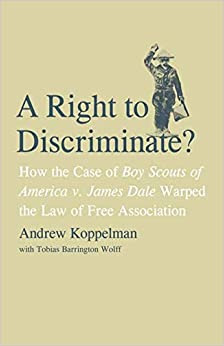
Andrew Koppelman and Tobias Barrington Wolff, A Right to Discriminate?: How the Case of Boy Scouts of America v. James Dale Warped the Law of Free Association (Yale University Press 2009)

Jack M. Balkin and Reva B. Siegel, The Constitution in 2020 (Oxford University Press 2009)

Heather K. Gerken, The Democracy Index: Why Our Election System Is Failing and How to Fix It (Princeton University Press 2009)

Mary Dudziak, Exporting American Dreams: Thurgood Marshall's African Journey (Oxford University Press 2008)

David Luban, Legal Ethics and Human Dignity (Cambridge Univ. Press 2007)

Ian Ayres, Super Crunchers: Why Thinking-By-Numbers is the New Way to be Smart (Bantam 2007)

Jack M. Balkin, James Grimmelmann, Eddan Katz, Nimrod Kozlovski, Shlomit Wagman and Tal Zarsky, eds., Cybercrime: Digital Cops in a Networked Environment (N.Y.U. Press 2007)

Jack M. Balkin and Beth Simone Noveck, The State of Play: Law, Games, and Virtual Worlds (N.Y.U. Press 2006)

Andrew Koppelman, Same Sex, Different States: When Same-Sex Marriages Cross State Lines (Yale University Press 2006)

Brian Tamanaha, Law as a Means to an End (Cambridge University Press 2006)

Sanford Levinson, Our Undemocratic Constitution (Oxford University Press 2006)

Mark Graber, Dred Scott and the Problem of Constitutional Evil (Cambridge University Press 2006)

Jack M. Balkin, ed., What Roe v. Wade Should Have Said (N.Y.U. Press 2005)

Sanford Levinson, ed., Torture: A Collection (Oxford University Press 2004)
Balkin.com homepage
Bibliography
Conlaw.net
Cultural Software
Writings
Opeds
The Information Society Project
BrownvBoard.com
Useful Links
Syllabi and Exams
