Balkinization
an unanticipated consequence of
Jack M. Balkin
Balkinization Symposiums: A Continuing List
E-mail:
Jack Balkin:
jackbalkin at yahoo.com
Bruce Ackerman
bruce.ackerman at yale.edu
Ian Ayres
ian.ayres at yale.edu
Corey Brettschneider
corey_brettschneider at brown.edu
Mary Dudziak
mary.l.dudziak at emory.edu
Joey Fishkin
joey.fishkin at gmail.com
Heather Gerken heather.gerken at yale.edu
Abbe Gluck abbe.gluck at yale.edu
Mark Graber
mgraber at law.umaryland.edu
Stephen Griffin
sgriffin at tulane.edu
Jonathan Hafetz
jonathan.hafetz at shu.edu
Jeremy Kessler
jkessler at law.columbia.edu
Andrew Koppelman
akoppelman at law.northwestern.edu
Marty Lederman
msl46 at law.georgetown.edu
Sanford Levinson
slevinson at law.utexas.edu
David Luban
david.luban at gmail.com
Gerard Magliocca
gmaglioc at iupui.edu
Jason Mazzone
mazzonej at illinois.edu
Linda McClain
lmcclain at bu.edu
John Mikhail
mikhail at law.georgetown.edu
Frank Pasquale
pasquale.frank at gmail.com
Nate Persily
npersily at gmail.com
Michael Stokes Paulsen
michaelstokespaulsen at gmail.com
Deborah Pearlstein
dpearlst at yu.edu
Rick Pildes
rick.pildes at nyu.edu
David Pozen
dpozen at law.columbia.edu
Richard Primus
raprimus at umich.edu
K. Sabeel Rahmansabeel.rahman at brooklaw.edu
Alice Ristroph
alice.ristroph at shu.edu
Neil Siegel
siegel at law.duke.edu
David Super
david.super at law.georgetown.edu
Brian Tamanaha
btamanaha at wulaw.wustl.edu
Nelson Tebbe
nelson.tebbe at brooklaw.edu
Mark Tushnet
mtushnet at law.harvard.edu
Adam Winkler
winkler at ucla.edu
Compendium of posts on Hobby Lobby and related cases
The Anti-Torture Memos: Balkinization Posts on Torture, Interrogation, Detention, War Powers, and OLC
The Anti-Torture Memos (arranged by topic)
Recent Posts
The Founders and Economic Inequality
Shameless plugs (two of them)
Being "Good" at Picking Judges
Roberts, construction, and bias
Abortion, the First Amendment, and the Fourth Circuit’s "Kangaroo Court"
Calling Balls and Strikes
Theodore Roosevelt on the Federal Government's "unenumerated problem-solving powers"
Rumor Has It: What Are the Rules for Supreme Court Clerks?
The Generational Cycle -- 2012
"Leakapalooza"
"Changing His Mind" versus "Making Up His Mind"
A "Precedent" Doesn't Mean Anything on the Day It's Decided
Did the Chief Justice Have to Decide the Commerce Clause Question in NFIB?
Reasons for Thinking that Law Mattered
My View on Drafting NFIB
Jack Balkin Breaks My Heart
Constitutional Redemption/Constitutional Faith
Research Note: The Postwar Right’s Constitutionalist Anti-Tax Movement
Clear Statement Rules and Taxes
How Much Should We Worry About Poison Pills and Loaded Guns Post-ACA?
The strange new limits on the spending power
Let's Make a Deal
![[Powered by Blogger]](https://lh3.googleusercontent.com/blogger_img_proxy/AEn0k_vRVPACSNxAPzfai7G1bOVKXt9OSsKrtHt4bsZCzvNHxD3MIMRgkZyS0MRBRv7BzLmTAhNkpyIDYqZ7z0DqCrDanjxKKfaQ6VxEIGX3znkQ=s0-d)
Just A Few Blogs
ACS Blog
Alas, a Blog
Althouse
Arts and Letters Daily
Atrios (Eschaton)
Bill of Health
Buzzflash.com
Buzz Machine
Cato at Liberty
Juan Cole (Informed Comment)
Concurring Opinions
The Constitution in 2020
Corrente
Crooked Timber
Daily Howler
Daily Kos
Dana Boyd
Brad DeLong
Digby (Hullabaloo)
Discriminations
Daniel Drezner
Kevin Drum (Mother Jones)
Electrolite
En Banc
Eunomia (Daniel Larison)
Fafblog
Michael Froomkin (Discourse.net)
GovLab (Beth Noveck)
Rick Hasen (Election Law)
History News Network
How Appealing
Ignatz (Sam Heldman)
The Importance of (Ernie Miller)
Infolaw
Instapundit
International Economic Law and Policy Blog
IntLawGrrls
Jacob Levy
Jesus' General
Jurisdynamics
The Kitchen Cabinet
Mark Kleiman
Law Blog Central
Larry Lessig
Lawyers, Guns and Money
Liberal Oasis
Brian Leiter's Law School Reports
The Leiter Reports
Marginal Revolution
Megan McArdle
Memeorandum
Metafilter
Mirror of Justice
The New Republic
Newseum
No More Mister Nice Blog
Brendan Nyhan
Opinio Juris
Orcinus
The Originalism Blog
Pandagon
Passport (Foreign Policy)
Overcoming Bias
Political Animal (Washington Monthly)
Political Theory Daily Review
Political Wire (Taegan Goddard)
The Poor Man
Virginia Postrel
Prawfsblawg
Public Reason
Jonathan Rauch
Raw Story
Redstate
ReligiousLeftLaw.com
Reporters Committee For Freedom of the Press
Reproductive Rights Blog
Rothman's Roadmap to the Right of Publicity
SCOTUS Blog
Seeing the Forest
Clay Shirky
The Shifted Librarian
The Situationist
Larry Solum (Legal Theory)
Andrew Sullivan
Talking Points Memo
Talk Left
Tapped
Tbogg
TechPresident
The Paper Chase (Jurist)
Tom Paine
Tom Tomorrow (This Modern World)
Eve Tushnet
Uggabugga
University of Chicago Law School Faculty Blog
Unqualified Offerings
The Volokh Conspiracy
War and Piece (Laura Rozen)
Wampum
Oliver Willis
Wonkette
Written Description
Matthew Yglesias
Yin
Your Choice of Feeds
1. XML
powered by

2. Atom Feed
3. RSS 2.0
The Founders and Economic Inequality
Ken Kersch
A huge amount of “popular” constitutional discourse these days – on the internet, on TV, etc. – is constituted by quotations from the Founders. Many of these, of course, are wrenched out of the context, not only of their times, but even of the broader framework of the thinking of the quoted Founder himself, who may actually hold positions directly opposite to those for which he is purported to stand. Most populist originalism takes place on the Right, so it’s not surprising that I’ve come across very little of it that speaks to the Founders concerns with economic inequality. Since, back around the time of Charles Beard, liberals/progressives lost the habit of basing their political arguments on appeals to the (eighteenth century) Founders, much of the originalist discourse of economic inequality is thus missing from contemporary constitutional debate. (To the extent they engage in originalist argument on the theme of equality, liberals – reflecting a preoccupation with race and (later) sex, and not economics -- focus almost entirely on the Civil War Amendments.).
We know from other contexts, though, that there was lots of discussion of economic inequality at the time of the (eighteenth century) Founding. Much of this discussion was constitutional. It won’t do to dismiss these concerns as held only by those “defeated” politically at that time (first, the concerns were more widespread; second, constitutional “defeat” has hardly led people to dismiss out of hand the concern for state sovereignty/states rights, strict legalism, and strict construction, etc. of, e.g., the Anti-federalists -- which, as we well know, lives on to the present day). One of my current pleasures is to get frequent updates on this discussion from the political theorist/intellectual historian Clement Fatovic (a friend from graduate school) who is researching and writing a book (for the University Press of Kansas) on precisely this unduly neglected constitutional discourse.
Here's one nugget, for just a taste. This is from John F. Mercer, a Maryland delegate to the Constitutional Convention, in a 1792 speech in the House of Representatives, about those who hold most of their wealth in stocks:
“A love and veneration of equality is the vital principle of free Governments. It dies when the general wealth is thrown in a few hands. The effect of stocks is to transfer the fruits of the labor of the many, who are able to anticipate its value by the difficulty of acquirement, and would convert it into useful improvement, into the hands of the opulent few, who exchange them for foreign luxuries, and consume in an hour the labor of industrious families for years. It prevents a general diffusion of wealth by drawing it to a centre, and saps the foundation of a Republican Government, especially in a large Continent.”
Mercer went on to say:
“But wealthy stockholders who have lent their money to Government, are interested in no particular spot of land or manufacture. They improve nothing, but take something from all. They are citizens of the world; oftener foreigners than natives; attached to no country. At the first appearance of danger, they sell out, and sink your credit at the moment it becomes essential. As your distresses increase, they fly you. When the impending cloud of misfortune casts its gloom beyond you, these sunshine friends disappear in a moment.”
You won’t find this sort of stuff quoted on conservative websites. It is certainly relevant to contemporary political/constitutional debates. (See also Willy Forbath’s recent Op-Ed entitled “Workingman’s Constitution” in The New York Times).
Jack Balkin has called upon liberals and progressives to avail themselves of originalist analysis, undertaken in the spirit of a “living” constitutionalism. Constitutional history of the sort that Clem is working on suggests that, on these issues, some “dead” originalism might do just as well.
Posted
3:29 PM
by Ken Kersch [link]
Shameless plugs (two of them)
Mark Tushnet
Someone asked why I was blogging so much on NFIB and not on Alvarez, about which I have strong (negative) views.* The answer is that the blog posts are very rough first stabs at stuff I'm going to include in my book on the Roberts Court, to be published next year by W.W. Norton with the title (at least as of now) of The Roberts Court and Politics Today. Of course there's going to be a chapter about NFIB, and there's probably going to be one dealing with First Amendment cases including Alvarez, but I have only begun to think about the approach I want to take in the First Amendment chapter (if I indeed end up writing it). But, when the time comes, expect something about Alvarez.
* Although I had critical views about the Ninth Circuit's decision in Alvarez, they might have been strengthened when my sister received a Presidential Citizen's Medal from President Obama for her work in creating The Soldiers Project, which provides free mental health services to combat veterans.
Posted
12:55 PM
by Mark Tushnet [link]
Being "Good" at Picking Judges
Mark Tushnet
Marc Thiessen has a remarkably stupid op-ed in today's Washington Post. asking "Why are Republicans so awful at picking Supreme Court Justices?" Its premise is that being "good" at picking Supreme Court Justices means -- by definition -- picking Justices who will vote in favor of the positions of the party whose President nominated them, whatever those positions happen to be. And, in particular, it means that a Justice will simply look at what the Party position is at the time a case comes before them, and will interpret the Constitution to validate that position.
Things don't work that way, though. Presidents pick nominees at a specific moment in time, and they do try to strengthen their party, over both the short and long run, with their choices. But, parties sometimes change in unexpected ways, and a nominee who is entirely in tune with his or her party's position when nominated might not be in tune with the party if its positions change. (See Richard Posner's comments on NPR on this.)
So, consider this possibility (unrealistic because the inquiries I'm going to describe are done through nods and winks, not explicitly): Suppose that in 2005 when the Bush administration was considering whether to nominate John Roberts to the Supreme Court, it was also considering making a substantial effort to get Congress to enact a national health care program along the lines touted by the Heritage Foundation and some other conservative think tanks, which would have had an individual mandate. And suppose the administration's judge-pickers asked Roberts, "We suppose you've read David Rivkin's arguments that an individual mandate would be unconstitutional under the Commerce Clause. If we do get Congress to enact a mandate under the Commerce Clause, do you think it would be constitutional? And, by the way, what if we're able to characterize the penalty for failing to buy health insurance as a tax? Would the statute be unconstitutional under the Tax Power?" I'm quite confident that an answer somewhere in the range between, "Of course it would be constitutional under either theory" to "Gee, those are hard questions, and I'd have to see the details, but at the moment I'm inclined to think that it would be constitutional" would have been entirely acceptable.
The only reason that Bush's judge-pickers were "awful" is that they didn't anticipate how the Republican Party's positions would change -- or that they didn't look for someone fairly describable as a partisan hack who would read the morning newspapers to find out what the Republican Party leadership thought and then write that into the Constitution. Instead, they looked for someone whose approach to constitutional interpretation was likely over the long run to generate results consistent with the views of important constituencies within the Republican Party. That's clearly what they got in Antonin Scalia and Clarence Thomas -- not people who were going to do whatever the Republican Party happened to want, but people who had deep-rooted views about the Constitution that were quite likely to be consistent with Party positions most of the time. Despite the Chief Justice's vote in NFIB, I'm pretty sure that that's what they got with John Roberts too.
One final point: Thiessen contrasts Republican failures with Democratic successes. The reason for the difference, though, is that the Democratic Party has changed less over the past couple of decades than the Republican Party has. (See Mann and Ornstein on that.) Which means that people chosen in the 1990s because they had constitutional visions consistent with those of the then-Democratic Party are still articulating views consistent with those of today's Democratic Party. (Thiessen apparently doesn't remember Byron White, who throughout his career was a good Kennedy Democrat, which made him "more conservative" by the time he retired because the Democratic Party had changed.)
Posted
12:46 PM
by Mark Tushnet [link]
Roberts, construction, and bias
Andrew Koppelman
In the recent, extraordinary leak about the internal deliberations of the Supreme Court in the healthcare case, Jan Crawford reports (while leaving ambiguous whether this comes from her leakers) that Chief Justice Roberts was worried about the lack of existing doctrinal support in the challengers’ case. “To strike down the mandate as exceeding the Commerce Clause, the court would have to craft a new theory, which could have opened it up to criticism that it reached out to declare the president’s healthcare law unconstitutional. Roberts was willing to draw that line, but in a way that decided future cases, and not the massive healthcare case.”
Professor John Yoo has told the New York Times that, if the story is true, Roberts has misunderstood his job. “His job is not to finesse the place of the Supreme Court in the political world, in which he and most justices are rank amateurs, but to get the Constitution right first and then defend the institution second.” But this occludes the complexities with which Roberts was faced. New constitutional constructions, of the kind that undergirded the challenge to the mandate, raise deep issues about the appropriate role of the judiciary – issues that go far beyond the healthcare case. Roberts was right to be cautious.
Randy Barnett, the intellectual father of the healthcare challenge, usefully distinguishes between constitutional interpretation and constitutional construction. In his book “Restoring the Lost Constitution,” he notes that “there is often a gap between abstract or general principles of the kind found in the Constitution and the rules of law that are needed to put those principles into action. This does not mean, however, that the choice of rules is unguided by these abstract or general principles.” Judges must create new rules in order to give effect to those principles. “Given the limits of interpretation, construction is inevitable and the Constitution would not long survive without it.”
You can find the rest of this post at Salon.com, here.
Posted
9:52 AM
by Andrew Koppelman [link]
Abortion, the First Amendment, and the Fourth Circuit’s "Kangaroo Court"
Guest Blogger
Jennifer Keighley
Crisis Pregnancy Centers (CPCs) do not provide or refer for abortion or birth control services. Baltimore passed a law requiring such centers to post a sign stating that they do not provide or refer for these services. Pretty straightforward stuff, especially given the evidence that women visiting the centers often erroneously believe that they do provide such services. Last week, however, the Fourth Circuit affirmed the district court’s permanent injunction of Baltimore’s law, holding that Baltimore’s law violates the centers’ First Amendment rights. This case raises novel and complex questions about the First Amendment, and in particular, about the definition of commercial speech: if the court had held that the disclosure applied to commercial speech, it almost certainly would have withstood review.
First, some background on CPCs and the motivation behind the Baltimore law. The explicit goal of "Crisis Pregnancy Centers" is to target "abortion-minded" or "abortion-vulnerable" pregnant woman with offers of pregnancy-related services, and to then encourage these women to carry to term. These pro-life centers, however, have a long history of deceiving and misleading women, as documented by numerous reports. Planned Parenthood provides a nice summary of the tactics some of these centers use, from giving false information about the medical and emotional effects of abortion, to telling women they aren’t really pregnant in an attempt to delay, and ultimately to prevent, women from accessing abortions. In addition, many CPCs give off the appearance of being a licensed medical facility—many centers offer ultrasounds, collect insurance information, and even go so far as to have their employees dress in medical scrubs—even though many of these centers are in fact not licensed as medical facilities, and do not have a licensed medical provider on staff. In the face of this evidence, several cities, such as NYC, Austin, and Baltimore, passed laws requiring these centers to post disclosures informing women about what services the centers does not provide, and in NYC’s case, whether the center is a licensed medical facility.
The CPCs have challenged these laws as compelling speech, in violation of their First Amendment rights. So far, the courts have bought their arguments (the decision on the NYC law, Evergreen Assoc. Inc. v. New York, 801 F. Supp. 2d 197 (S.D.N.Y. 2011), is currently on appeal to the Second Circuit). The Fourth Circuit decision, however, is notable for the strength of its dissent by Judge King. He calls the majority’s decision "indefensible," and describes the proceedings as following "a course more fitting a kangaroo court than a court of the United States." Importantly, he faults the majority for discounting "the real possibility that the Ordinance targets only commercial speech."
Commercial disclosure laws are subject to rational basis scrutiny under Zauderer v. Office of Disciplinary Council, a test these laws could most certainly meet. The courts considering the CPC disclosure laws, however, have concluded that Zauderer is inapplicable because the CPCs, which provide their services for free, are not engaged in commercial speech. Looking to the Court’s narrowest definition of commercial speech in Virginia Pharmacy as "speech which does no more than propose a commercial transaction," these courts have concluded that the offer of free services does not qualify. But the definition of commercial speech is not so simple—the Court outlined a multi-factor approach in Bolger v. Youngs Drug Products Corp. , making clear that the definition of commercial speech should not depend solely on the economic motivations of the speaker. Judge Niemeyer’s majority opinion in the Fourth Circuit, however, does just that, concluding that the free nature of the centers’ services is dispositive to the commercial speech inquiry because "there is no indication that the Pregnancy Center is motivated by an economic interest or that it is proposing any commercial transaction."
In contrast, Judge King looks to the Bolger factors, and concludes that when evaluating the commercial nature of a speech act, "context matters." In Judge King’s view, "[f]rom a First Amendment free speech perspective, that context includes the viewpoint of the listener, for ‘[c]ommercial expression not only serves the economic interest of the speaker, but also assists consumers and furthers the societal interest in the fullest possible dissemination of information.’ " (quoting Central Hudson and citing Dean Robert Post’s UCLA Law Review Article, The Constitutional Status of Commercial Speech). Under Judge King’s analysis, the CPCs cannot escape the commercial speech doctrine simply because their services are free—the definition of commercial speech depends on the context of their speech in a commercial marketplace, and on the perspective of women who are the audience for the CPCs’ offer of services.
Judge King advocates exactly the type of context-specific inquiry that I outline in my forthcoming piece in the University of Pennsylvania Journal of Constitutional Law, which deals with several open questions about the compelled commercial speech doctrine, including questions raised by the graphic tobacco labeling requirements currently before the D.C. Circuit. The Second Circuit has yet to hear arguments on the CPC’s challenge to NYC’s law, but arguments are scheduled for this fall. Scholars from the Information Society Project at Yale Law School, where I am currently a resident fellow, filed an amicus brief on the commercial speech question in the Second Circuit case, making a context-specific inquiry that looks to the perspective of the listener. Maybe the Second Circuit will take Judge King’s lead and engage in a more three-dimensional commercial speech inquiry in deciding the appropriate level of scrutiny to apply to NYC’s law. For now, we will have to rest with Judge King’s dissent.
Jennifer Keighley is a resident fellow at the Program for the Study of Reproductive Justice at Yale’s Information Society Project. You can reach her by e-mail at jennifer.keighley at gmail.com
Posted
8:16 AM
by Guest Blogger [link]
Calling Balls and Strikes
Mark Tushnet
I can't refrain from some snark: Some conservatives are developing the argument that the Chief Justice's opinion in NFIB is so unpersuasive that he must have been influenced by extraneous (and nefarious) matters. I wonder whether (or when?) the very thought that such an argument might be correct will worm its way into their unconscious, and then surface -- leading to the thought that perhaps in Citizens United he wasn't just calling balls and strikes (either). (I don't doubt that people have a large capacity to keep separate mental accounts.)
Posted
7:39 PM
by Mark Tushnet [link]
Theodore Roosevelt on the Federal Government's "unenumerated problem-solving powers"
John Mikhail
The joint dissent written by Justices Scalia, Kennedy, Thomas, and Alito in the health care cases makes for interesting reading. One noteworthy feature is the joint dissent's response to Justice Ginsburg’s reference to Resolution VI of the Virginia Plan, an amended version of which gave Congress the authority to legislate “in all Cases for the General Interests of the Union, and also in those Cases to which the States are separately incompetent.”
In an important section of her opinion joined by Justices Breyer, Sotomayor, and Kagan, Justice Ginsburg suggests that Congress’s Article I powers were meant to encompass this broad grant of authority, including the implied power to address whatever national problems the states are incapable or unwilling to address on their own; in short, to solve collective action problems. Seeking to stamp out this heresy, Justices Scalia, Kennedy, Thomas, and Alito write:
Later, Justice Scalia and his colleagues underscore the point, referring dismissively to “the Federal Government’s unenumerated problem-solving powers.”
Are the joint dissenters correct? A few reasons for doubt below the fold:
Read more »
Posted
11:05 PM
by John Mikhail [link]
Rumor Has It: What Are the Rules for Supreme Court Clerks?
Neil Siegel
I had thought the rules were what Chief Justice Rehnquist told my co-clerks and me: keep confidential what you learn about the inner workings of the Court, and under no circumstances may you talk to the press. Perhaps there was uncertainty about whether the rules applied always and forever (that is, decades after the clerkship ended). But there was zero uncertainty about whether the rules applied during the very year we clerks were at the Court—or during a good number of subsequent years.
Now it appears that the rules may have changed. Rumor has it that certain clerks in certain chambers were revealing the Court’s deliberations to certain members of the news media while NFIB v. Sebelius was pending and within days after it was handed down. It would sure be illuminating if those responsible would own up to it and let the rest of us know their understanding of the duty of confidentiality that Supreme Court clerks owe the Conference.
Short of that unlikely possibility, perhaps the Court as a whole could issue some clear guidance to clerks past, present, and future. I learned all sorts of things during my clerkship that would be of interest to students of the Court and members of the news media. Surely every other Supreme Court clerk possesses similar information. If some clerks are going to spread rumors about vote switches, other clerks may be well situated to discuss their frequency. If there is a good reason why different rules should apply to different clerks, that reason eludes me.
Posted
4:16 PM
by Neil Siegel [link]
The Generational Cycle -- 2012
Gerard N. Magliocca
Readers of the blog know that in my two books I talk about "the generational cycle," which refers to a robust pattern in American constitutional development that repeats itself (with some variations) every thirty years or so. In my view, we are in the initial phase of a new turn of this cycle, and the Court decision on Thursday tends to confirm that hypothesis.
Here are the basics of the cycle. Periodically a popular movement arises that seeks to overthrow long-established constitutional principles or apply them in a novel way. The movement takes the White House in an election that marks the beginning of a realignment that establishes that party as the majority for the next generation. The victors then push through a transformative statute (or series of statutes). These proposals lead to especially bitter debate in Congress and spur a counter-mobilization by those who see the movement-party as dangerous. Eventually, the transformative law (or laws) come before a Supreme Court dominated by Justices of the opposite party. Sometimes the Court issues a sweeping opinion nullifying these enactments and throwing down the gauntlet to the political branches, in an act that I call a "preemptive opinion." Sometimes the Court upholds the revolutionary statute, but does so in a contorted way that is meant to signal to legal elites and voters that something extraordinary is going on and that voters must take action now to stop this runaway train. A presidential election follows that, if won by the President's party, confirms the realignment and consolidates the new regime.
Consider some examples:
1800: Jefferson wins the Presidency and realigns the electorate against the Federalists.
1802: Jefferson's party repeals the Judiciary Act of 1801 over very intense opposition.
1803: The Supreme Court upholds this repeal in Stuart v. Laird and (indirectly) in Marbury; a famously slippery opinion by Chief Justice Marshall.
1804: Jefferson is reelected with a large majority in Congress and confirms his party's preeminence.
1828: Jackson wins the Presidency and creates the modern Democratic Party.
1830: Congress enacts the Removal Act to "assist" the Cherokee Nation's departure from Georgia, which is fiercely opposed by a coalition that becomes the Whig Party.
1832: The Supreme Court (indirectly) criticizes the Removal Act in Worcester v. Georgia; another slippery opinion by Chief Justice Marshall.
1832: Jackson is reelected and carries the House of Representatives, which establishes the Democrats as the leading party until the Civil War.
1932: FDR is elected in a landslide that realigns the country in favor of Democrats
1933: The Hundred Days Legislation is enacted and is followed by a third-party challenge on the left led by Huey Long (and others).
1935: The Supreme Court upholds the gold devaluation of Treasury Bonds in Perry v. United States; a very slippery opinion by Chief Justice Hughes.
1935-1936: The Court invalidates many other New Deal statutes
1936: FDR is reelected overwhelmingly and the Democrats rule the roost for decades.
Some generations played out a little differently. In the 1850s, the Supreme Court challenge to the Republican movement came before 1860 (in Dred Scott). In the 1890s, the preemptive opinion also came before the critical election (Pollock) and the movement-party (the Populists) was beaten.
But look at what we've seen in the last four years:
2008: President Obama is elected with the largest popular vote for a Democrat since 1964.
2010: The Affordable Care Act passes, which leads directly to the creation of the Tea Party.
2012: The Supreme Court upholds the Affordable Care Act in a slippery opinion by Chief Justice Roberts.
2012: President Obama (is or is not) reelected?
There are many other comparisons that can be made between these periods (notably, that in each the movement-party levels sharp attacks on the legitimacy or independence of the Supreme Court). But what lesson can be drawn from this history for the 2012 election?
One thing is clear: the Affordable Care Act is on the verge of becoming a fixture in our law. It could be repealed if Mitt Romney wins and carries a Republican Congress. If President Obama wins, though, the health care statute will probably NEVER be repealed. Social Security became permanent after 1936. The Cherokees were exiled from Georgia after 1832. The voters had spoken.
Posted
1:19 PM
by Gerard N. Magliocca [link]
(63) comments
"Leakapalooza"
Mark Tushnet
I didn't intend to contribute to "leakapalooza," but I have. A couple of things about my own contribution: (a) I reported a "rumor" I had heard, sourced to a law clerk (I know not whom). I'd heard the rumor before the decision was announced but did not mention it, except to a handful of colleagues, some of whom had already heard it, until after the announcement. (b) It's not clear that, if rumors really were swirling around, anyone took them all that seriously. On the day before the announcement, Intrade had "unconstitutional" trading at 77; maybe the rumors depressed the price from the 80s, but I'm skeptical. I'd been saying "60-40 to uphold" pretty consistently (even after I'd heard the rumor), though I admit that I wasn't thinking about the tax argument.
More interesting to me are the apparently changing norms about law clerk and Justice behavior. When I clerked in 1972-73, it was something of an embarrassment when a law clerk, mistakenly thinking that Time magazine had gone to press, chatted with a Time reporter on a flight to Washington and mentioned that the abortion cases were going to be decided the next Monday, which Time duly reported (as I recall). Woodward and Armstrong got clerks -- and, reportedly, some Justices (Stewart and Brennan were the names most frequently mentioned) -- to talk relatively soon after the clerks left the chambers (with lag times ranging from one to three or four years, I think). The result was an explosion within the Court, and the production of a law clerk's code of conduct sternly emphasizing the duty of confidentiality. Several years after Bush v. Gore Vanity Fair published an "inside" account, sourced to numerous law clerks.
Of course there's a statute of limitations on confidentiality. Tom Krattenmaker recently published a terrific inside account of Cohen v. California, with the observation that the statute of limitations for him as Justice Harlan's law clerk had clearly expired. I think the same is true for me with respect to Justice Marshall, for whom I was a law clerk nearly forty years ago. And, maybe the rule should be that the statute has clearly expired when internal Court documents, such as Justice Blackmun's papers, become available with respect to any Term.
What's unusual about "leakapalooza" is that it's happening in pretty close to real-time. Three sources (Crawford's and Campos's) talked within days of NFIB. I credit Crawford's and Campos's claims that their sources were in a position to know some of what they spoke about (though not, I think, about the Chief Justice's reasons for "changing/making up his mind"). There are candidates other than law clerks (and Justices), of course -- workers in the printer's office, for example, or in the office of the Clerk of the Court. If the sources are law clerks, there really is something new happening.
Posted
3:42 AM
by Mark Tushnet [link]
"Changing His Mind" versus "Making Up His Mind"
Mark Tushnet
My sense is that the narrative that the Chief Justice "changed his mind" in NFIB has taken reasonably firm hold -- certainly in the conservative blogosphere, and to some extent in the liberal one as well. I've suggested an alternative narrative, that he "made up his mind" as he worked on his opinion. Why might "changed his mind" have more purchase than "made up his mind"? (1) Simplicity. But that's a vice in settings when we're dealing with issues of personal decision-making within institutions in connection with complex matters. No one writing about how foreign policy is made, for example, would think it sufficient to say, "The Secretary of State changed her mind," without providing a much thicker description of the informational and institutional setting in which the change in views occurred. We don't yet have anything approaching the required thickness about the Chief Justice's decision-making process.
Probably more interesting, (2) "Politics large and small." Liberals like the "changed his mind" narrative because it helps them with the argument they've been making against conservative constitutional theorists, that politics in the large -- visions of the Constitution's meaning set in a framework connected to but somewhat independent of quotidian "low" and "merely partisan" politics -- properly plays a role in constitutional decision-making. So, if the Chief Justice "changed his mind" because he came to a greater appreciation of the impact a decision striking the ACA down would have on the Court's ongoing role in American political life, that's all to the good, because it shows how "high" politics can work. Conservatives like the "changed his mind" narrative because it illustrates for them the defects of letting "low" politics -- the Democratic working the refs after the oral arguments -- affect constitutional decision-making. Randy Barnett and Ilya Somin have articulated this position particularly well. (for me, the episode suggests some difficulties with the "high versus low politics" framework: In general, high politics works through the exercise of low politics, as a reading of Pauline Meier's terrific book Ratification shows to my satisfaction.)
With the exception of Rick Garnett (and even he's a little wobbly on the matter), no one seems to credit the possibility that the Chief Justice actually thought that he was providing a better legal analysis than the alternative. Is that because liberals and conservatives have come to agree that law really doesn't matter to the Supreme Court? (I invite people to consider the Court's recent Confrontation Clause jurisprudence, which I think is best explained by the hypothesis that each Justice actually thinks that the Confrontation Clause is properly interpreted to mean what he or she says it means.)
Posted
3:16 AM
by Mark Tushnet [link]
A "Precedent" Doesn't Mean Anything on the Day It's Decided
Mark Tushnet
A judicial decision resolves a case by invoking a rule that supports the conclusion the court reaches in awarding victory and defeat. The rule's meaning is, at the moment of decision, only that it covers this specific case. Its content will be developed as later courts deal with new cases.
Two examples: The prevailing view in NFIB on whether Congress can regulate something is whether it's an "activity" or a failure to engage in action. (I use "prevailing view" because here I'm not interested in the bubbling dispute over whether that view is dictum or holding.) The content of that rule depends on how you characterize the target of the regulation. Consider an old statute, the federal Railway Safety Appliance Act. It requires those who operate railcars in interstate commerce to have automatic coupling devices. Is operating a railcar with only a manual coupling device an activity or an inactivity: "Activity," when characterized as "operating a railcar"; "inactivity," when characterized as "operating a railcar with a manual coupling device but not with an automatic coupler." It's the "but not" that shifts the thing we're talking about from one category into the other. (I know, I know: The Safety Appliance ACt is constitutional because it regulates an instrumentality of interstate commerce, a separate doctrine. I'm using it only to lay out the structure of the "activity"/"inactivity" distinction.)
Now, follow David Bernstein and imagine Governor Romney winning the election in November and appointing a few new, young conservatives to the Court. It's not hard to imagine the "Romney-Roberts" Court being aggressive about characterizing regulations as bearing on inactivity -- inserting lots of "but nots" into the characterization -- and therefore unconstitutional -- whereas a more"liberal" Court would choose "activity" characterizations.
My other example is more antic: Imagine that President Obama is reelected and gets to appoint a couple of liberal justices to replace Justices Scalia and Kennedy (or, if they outlast him, that a Democrat is elected in 2016 and makes such appointments). Congress enacts a new "individual mandate" to engage in some activity. It's challenged as inconsistent with NFIB. The defenders say, "Wait a minute. NFIB says that one important reason for finding the ACA unconstitutional is that it's a completely novel method of regulation. But, this new statute isn't completely novel: The precedent for it is the ACA. True, you told us that was unconstitutional because it was novel, but this one isn't novel in the same sense, so it's constitutional." (It should go without saying that this isn't a winning argument until the Court's composition changes, but it's not an argument that NFIB "in itself" makes frivolous.)
NIFB can't possibly be a Pyrrhic victory, a cloud with a silver lining, a battle won though the war was lost, a war that was won though the battle was lost -- I refrain from providing the links -- until we see what courts in the future make of it.
This has been a lesson in Legal Realism 101, with a shout-out to Jan Deutsch's great article, PRecedent and Adjudication, 83 Yale Law Journal 1553 (1974). The takeaway is obvious: Elections matter.
Posted
9:08 PM
by Mark Tushnet [link]
Did the Chief Justice Have to Decide the Commerce Clause Question in NFIB?
Mark Tushnet
Short answer: On one view, yes. A brief course in statutory interpretation is needed here. There is a "canon" of statutory construction known as the "constitutional avoidance" canon. It comes in two versions, now labeled the "classical" version and the "modern" one. On the modern version, a judge faced with a statute that, most naturally read, raises difficult constitutional questions, should adopt instead a construction -- if one is fairly available -- that does not raise such questions. On the modern version, then, the Chief Justice didn't have to address the Commerce Clause question; all he needed to do was to note that the question was difficult and that construing the statute to impose a tax was an available reading.
The classical version is different. On that version, the canon of constitutional avoidance comes into play only when the statute, given its most natural reading, would in fact be unconstitutional. Only if it would be unconstitutional can the judge search for an alternate, available construction that would make the statute constitutional.
The Chief Justice appears to have used the classical version of the canon of constitutional avoidance in NFIB.
Posted
8:45 PM
by Mark Tushnet [link]
Reasons for Thinking that Law Mattered
Mark Tushnet
This post is going to get pretty deep in the weeds, and unless you're a real fanatic you might want to skip it.
The evidence that the initial conference vote was 5-4 to strike down the ACA is pretty strong. Not only is there the internal stylistic evidence, but there were rumors before the decision to that effect. Within a couple of weeks of the arguments, I heard a rumor, sourced to a law clerk, that the Court had voted to strike the ACA down. The route to me had some credibility, but one could also raise some questions about the interests lying behind the rumor's circulation (interests not in the litigation but in establishing that the intermediary was a person who had inside sources). (I'll return to the issue of interests shortly.) Several weeks later I heard that a Washington law firm -- I forget which -- was saying that the Medicaid expansion was going to invalidated. And, on June 2, Ranesh Ponuru stated that he had heard from inside the Court that the initial vote was 5-4, but that the Chief Justice had gotten "squishy." The June 2 date is significant because, according to Jan Crawford, the Chief Justice's proposed opinion was scheduled to be circulated on June 1.
On the possibility of joint opinions, with parts divided among the justices: It's been done before, most notably recently in McConnell v. FEC, which upheld the McCain-Feingold Bipartisan Campaign Finance Reform Act. The conditions for doing it tend to be complexity, in the sense that the case contains multiple but somewhat independent issues, and time pressure. Those conditions seem present in the ACA litigation. But, it's worth emphasizing that the Justices have staffs of smart law clerks who can be put to work really hard over a short period of time, which is why it's plausible that the Chief Justice drafted the entire decision.
The "least persuaded" assignment is something political scientists have written extensively about. The theory is that the Justice with the opinion assignment power gives the opinion to the Justice who is least persuaded, in the hope that the act of writing will cement the writer's position (and out of concern that assigning the opinion to a Justice with stronger views might drive the least persuaded Justice to the other side). The complication here is that, on my preferred account, the opinion assigner was himself the least persuaded.
And, sometimes the least persuaded finds that the opinion won't write. The most recent prominent example of which I'm aware is Justice Kennedy's opinion in Lee v. Weisman, the high-school graduation prayer case (discussed in my book, A Court Divided: The Rehnquist Court and the Future of Constitutional Law at pages 186-87; I quote Kennedy as saying that his draft opinion allowing the prayer "looked quite wrong"). Of course, when this happens in a 5-4 case the now-dissenters tend to get quite annoyed.
On the question of institutional concerns: One difficulty with giving them a prominent role is that they were apparent from the very beginning. The Chief Justice would have to have been quite out of touch had he not understood, on the day the tentative vote was taken, that a narrative of "the partisan Republican Court" linking Bush v. Gore, Citizens United, and NFIB -- and perhaps Fisher v. University of Texas and other cases to come -- would readily develop. Now, it's possible, though I think unlikely, that the liberal challenge to the Court after the argument deepened the Chief Justice's appreciation of this point, somehow pushing him over the edge when he hadn't been there on the day the tentative vote was taken.
Finally, on the interests at stake in describing what happened: Lyle Denniston describes some aspects of this issue. I'd add only that between the argument and decision day both liberals and conservatives were "working the refs," trying to construct narratives -- for liberals, of the partisan Republican Court, for conservatives, of liberals attempting to intimidate the Court -- that were, I think, designed for the long-term but that might -- just might -- have had some effects in the short run. It's reasonably clear that Crawford's and Campos's sources are continuing the effort to work the refs. There's usually some relation between the facts and what people with (different) interests in working the refs report, but I'd be cautious about accepting their assertions without thinking about what interests are being served by the leaks.
Posted
8:35 PM
by Mark Tushnet [link]
My View on Drafting NFIB
Mark Tushnet
One advantage of being without regular internet access is that there's time to think. I'm going to post a series of entries about NFIB. This first one lays out my take on the drafting process in NFIB. (To keep it within length, I'll use a second entry to explain some of the reasons I have for my interpretation.) Before beginning, I should say that I have no inside sources, only a sense of how the Court works and who the Justices are. (Of course, Paul Campos and Jan Crawford have reported information they say came from inside sources at the Court. Their accounts being inconsistent, someone's not telling one -- or both -- of them the truth.)
I have two accounts, and give the first about a 60% chance of being right. On that account, the Conference vote after the oral argument was 5-4 to invalidate all portions of the ACA. The arguments came reasonably late in the Term, and there were a lot of issues. So, the majority decided to divide the work up, parceling out various issues -- the Tax Injunction Act, severability, and the rest -- to different justices. The Chief Justice took, or assigned, the tax issue to himself, perhaps because he was the "least persuaded" among the majority about the correctness of their tentative position.
As he and his law clerks worked on the tax issue, the Chief Justice discovered that the opinion "wouldn't write." He couldn't come up with an account of the tax power -- persuasive to him -- that would invalidate the ACA. Perhaps his difficulty in getting an opinion that "would write" was influenced by institutional concerns about the long-term standing of the Court, or somewhat different institutional concerns about his ability to pursue a conservative legal agenda on matters more important to him over the long run. And, though less plausibly, perhaps these institutional concerns came to have more salience as liberals mounted their post-argument challenges to an anticipated decision invalidating the ACA. But, I would guess, those things operated -- if they did, and I'm skeptical -- well below the surface. Mostly, the Chief Justice found that the opinion wouldn't write.
On this view, the Chief Justice didn't "switch" his vote, because he hadn't been firmly committed to the view that the ACA couldn't be defended under the tax power. Once he indicated his view on the tax issue, the rest of the opinions fell into place. The four now-dissenters assembled their separate contributions into their joint dissent and tacked on some discussion of the Chief Justice's new position.
The second account (the 40% one) contains the "the opinion wouldn't write" idea, but has the Chief Justice taking the entire opinion for himself, drafting all the parts, and circulating everything. Having sat back awaiting the Chief Justice's draft, the four now-dissenters were under some time pressure and simply appropriated into their joint opinion the non-tax parts of the Chief Justice's opinion. (This is close to Campos's account.)
I think I want to end this post with the observation that if either of my accounts is right, it turns out that law mattered quite a bit -- maybe not completely, because of the sub-surface level on which institutional issues might have operated, but quite a bit. For some, that observation will make the Chief Justice look better in their eyes, for others worse.
My next blog post will go through some of the reasons I have for these two accounts.
Posted
7:59 PM
by Mark Tushnet [link]
Jack Balkin Breaks My Heart
Andrew Koppelman
How our fearless leader does that is the topic of an article I just published in the Maryland Law Review, here.
The piece is part of a symposium on Jack's work, here.
Posted
2:21 PM
by Andrew Koppelman [link]
Constitutional Redemption/Constitutional Faith
JB
The University of Marlyand Law Review has published a symposium on my 2011 book, Constitutional Redemption: Political Faith in an Unjust World (Harvard University Press, 2011) and the republication of Sandy Levinson's Constitutional Faith (Princeton University Press 1989, 2011). Symposium: Constitutional Redemption & Constitutional Faith: Introduction, Natalie A. Waryck [PDF] How I Lost My Constitutional Faith, Sanford Levinson [PDF] Fourteenth Amendment Originalism, Jamal Greene [PDF] Freedom Struggles and the Limits of Constitutional Continuity, Aziz Rana [PDF] The Constitutional Imaginary: Just Stories About We the People, Gerald Torres & Lani Guinier [PDF] Redeeming and Living with Evil, Mark A. Graber [PDF] Constitutional Faith, Constitutional Redemption, and Political Science: Can Faith and Political Science Coexist?, H.W. Perry, Jr. [PDF] Respect and Contempt in Constitutional Law, or, Is Jack Balkin Heartbreaking?, Andrew Koppelman [PDF] The Distribution of Political Faith, Jack M. Balkin [PDF]Volume 71, Issue 4
SYMPOSIUM: CONSTITUTIONAL REDEMPTION & CONSTITUTIONAL FAITH
Posted
1:50 PM
by JB [link]
Research Note: The Postwar Right’s Constitutionalist Anti-Tax Movement
Ken Kersch
In the wake of the Supreme Court’s holding that the ACA mandate is a tax, we’re probably due to recall that while there was certainly staunch objection on the Right to the expansive new interpretations of the commerce clause that underwrote the New Deal, conservatives also had vigorous objections to its innovative taxation initiatives as well. They even got up considerable steam for calling a constitutional convention to deal with tax issues. David Beito wrote an important book on this that is well worth a look (David Beito, Taxpayers in Revolt: Tax Resistance during the Great Depression (Chapel Hill: University of North Carolina Press, 1989)).
As the Supreme Court’s decision in the Health Care Cases came down, I happened to be writing on one of the leaders of the Right’s postwar anti-tax crusade, Vivien Kellems (1896-1975), a wealthy industrialist (she was founder and president of the Kellems Cable Grip Company, whose grips were used in the construction of the Chrysler Building, the George Washington Bridge, and other structures), feminist (she was a strong proponent of the Equal Rights Amendment) – and an outspoken opponent of taxes in general, and the federal income tax in particular. Kellems was convinced that the federal requirement that she withhold taxes from her employees’ paychecks was unconstitutional. In 1948, with the aim of spurring a test case, she withheld her withholding. Her tax resistance was a sensation: she defended her actions as one of the first women to appear on Meet the Press (September 26, 1948), and on Eleanor Roosevelt’s Sunday television show Today with Mrs. Roosevelt (March 3, 1950), where the subject was “Is the tax system of the U.S. unfair?” Kellems subsequently set out her position (and story) at greater length in her book Toil, Taxes, and Trouble (1952). There, Kellems set out her position against the federal tax system inaugurated by the adoption of the Sixteenth Amendment, which had laid waste to approach to taxation that had been “so carefully designed and perfected by the brilliant men who wrote our Constitution.” “When we adopted this income tax amendment,” Kellems insisted, “we departed from our constitutional method of taxation.”:
Read more »
Posted
9:24 AM
by Ken Kersch [link]
Clear Statement Rules and Taxes
Gerard N. Magliocca
UPDATE: Here is a paper by Akhil Amar (written well before the opinion came down), that rejects the position that I take in this post. You can take a look at that portion and decide who's right!
Posted
8:53 PM
by Gerard N. Magliocca [link]
(31) comments
How Much Should We Worry About Poison Pills and Loaded Guns Post-ACA?
Deborah Pearlstein
It’s been striking to read all the commentary (e.g. here, here) lamenting
that the Court’s decision largely to uphold the ACA was accompanied by dicta on
the Commerce Clause and a decision on the Spending Clause that will be used to
weaken federal power in even more destructive ways in the future. I disagree with the Court’s conclusions on
these issues for a host of reasons. But
I’m having a hard time seeing the decision as quite so necessarily damaging on
its own to the future power of the feds.
Posted
4:34 PM
by Deborah Pearlstein [link]
The strange new limits on the spending power
Andrew Koppelman
You can read the rest of this post on Salon.com, here.
Posted
3:27 PM
by Andrew Koppelman [link]
Let's Make a Deal
Gerard N. Magliocca
Randy Barnett was on MSNBC this weekend, and his take on the Health Care Cases was (and I'm paraphrasing here) that eight Justices acted in a principled way and one rendered a political decision. Now I do not agree with this. Chief Justice Roberts' opinion is principled--it's just a different kind of principle. But even if I accept Randy's premise, he's still wrong.
In fact, six Justices voted in a "principled" way and three voted "politically" or "pragmatically." It is hard to believe that Breyer and Kagan went into conference thinking that the Medicaid expansion was unconstitutional. That is totally inconsistent with their prior opinions or stated views, though I'm sure that someone will soon write a clever article explaining why they (and the Chief Justice) paid no heed to external considerations. They must have offered that concession (or were persuaded to offer it) to solidify the Chief's vote on the individual mandate.
I think your take on the decision may come down to this: What makes the Court look more political? A party-line vote invalidating the most significant piece of legislation enacted by the other party in forty years, or an opinion that was transparently designed to avoid that result?
Posted
10:23 AM
by Gerard N. Magliocca [link]
(15) comments
Books by Balkinization Bloggers

Gerard N. Magliocca, The Actual Art of Governing: Justice Robert H. Jackson's Concurring Opinion in the Steel Seizure Case (Oxford University Press, 2025)

Linda C. McClain and Aziza Ahmed, The Routledge Companion to Gender and COVID-19 (Routledge, 2024)

David Pozen, The Constitution of the War on Drugs (Oxford University Press, 2024)

Jack M. Balkin, Memory and Authority: The Uses of History in Constitutional Interpretation (Yale University Press, 2024)
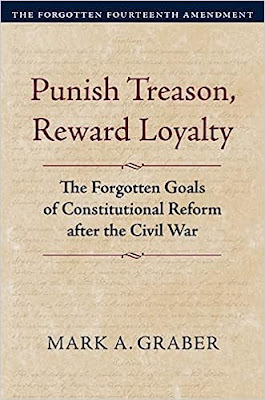
Mark A. Graber, Punish Treason, Reward Loyalty: The Forgotten Goals of Constitutional Reform after the Civil War (University of Kansas Press, 2023)
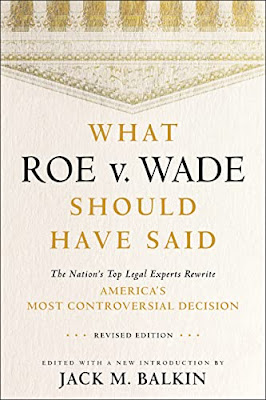
Jack M. Balkin, What Roe v. Wade Should Have Said: The Nation's Top Legal Experts Rewrite America's Most Controversial Decision - Revised Edition (NYU Press, 2023)

Andrew Koppelman, Burning Down the House: How Libertarian Philosophy Was Corrupted by Delusion and Greed (St. Martin’s Press, 2022)

Gerard N. Magliocca, Washington's Heir: The Life of Justice Bushrod Washington (Oxford University Press, 2022)
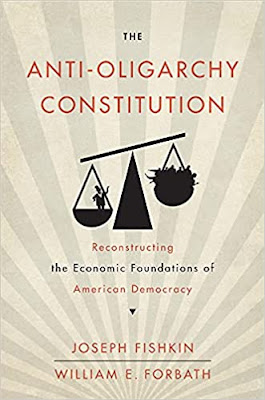
Joseph Fishkin and William E. Forbath, The Anti-Oligarchy Constitution: Reconstructing the Economic Foundations of American Democracy (Harvard University Press, 2022)
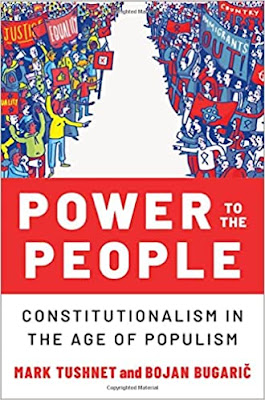
Mark Tushnet and Bojan Bugaric, Power to the People: Constitutionalism in the Age of Populism (Oxford University Press 2021).

Mark Philip Bradley and Mary L. Dudziak, eds., Making the Forever War: Marilyn B. Young on the Culture and Politics of American Militarism Culture and Politics in the Cold War and Beyond (University of Massachusetts Press, 2021).

Jack M. Balkin, What Obergefell v. Hodges Should Have Said: The Nation's Top Legal Experts Rewrite America's Same-Sex Marriage Decision (Yale University Press, 2020)

Frank Pasquale, New Laws of Robotics: Defending Human Expertise in the Age of AI (Belknap Press, 2020)

Jack M. Balkin, The Cycles of Constitutional Time (Oxford University Press, 2020)

Mark Tushnet, Taking Back the Constitution: Activist Judges and the Next Age of American Law (Yale University Press 2020).

Andrew Koppelman, Gay Rights vs. Religious Liberty?: The Unnecessary Conflict (Oxford University Press, 2020)

Ezekiel J Emanuel and Abbe R. Gluck, The Trillion Dollar Revolution: How the Affordable Care Act Transformed Politics, Law, and Health Care in America (PublicAffairs, 2020)

Linda C. McClain, Who's the Bigot?: Learning from Conflicts over Marriage and Civil Rights Law (Oxford University Press, 2020)
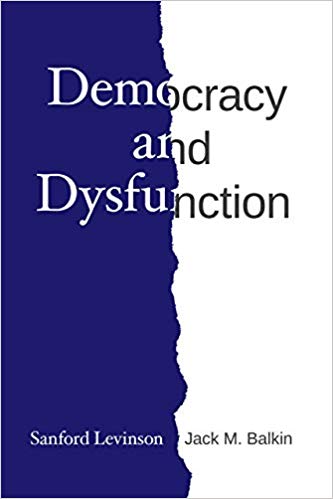
Sanford Levinson and Jack M. Balkin, Democracy and Dysfunction (University of Chicago Press, 2019)

Sanford Levinson, Written in Stone: Public Monuments in Changing Societies (Duke University Press 2018)

Mark A. Graber, Sanford Levinson, and Mark Tushnet, eds., Constitutional Democracy in Crisis? (Oxford University Press 2018)

Gerard Magliocca, The Heart of the Constitution: How the Bill of Rights became the Bill of Rights (Oxford University Press, 2018)

Cynthia Levinson and Sanford Levinson, Fault Lines in the Constitution: The Framers, Their Fights, and the Flaws that Affect Us Today (Peachtree Publishers, 2017)

Brian Z. Tamanaha, A Realistic Theory of Law (Cambridge University Press 2017)

Sanford Levinson, Nullification and Secession in Modern Constitutional Thought (University Press of Kansas 2016)

Sanford Levinson, An Argument Open to All: Reading The Federalist in the 21st Century (Yale University Press 2015)

Stephen M. Griffin, Broken Trust: Dysfunctional Government and Constitutional Reform (University Press of Kansas, 2015)

Frank Pasquale, The Black Box Society: The Secret Algorithms That Control Money and Information (Harvard University Press, 2015)

Bruce Ackerman, We the People, Volume 3: The Civil Rights Revolution (Harvard University Press, 2014)
Balkinization Symposium on We the People, Volume 3: The Civil Rights Revolution

Joseph Fishkin, Bottlenecks: A New Theory of Equal Opportunity (Oxford University Press, 2014)

Mark A. Graber, A New Introduction to American Constitutionalism (Oxford University Press, 2013)

John Mikhail, Elements of Moral Cognition: Rawls' Linguistic Analogy and the Cognitive Science of Moral and Legal Judgment (Cambridge University Press, 2013)

Gerard N. Magliocca, American Founding Son: John Bingham and the Invention of the Fourteenth Amendment (New York University Press, 2013)

Stephen M. Griffin, Long Wars and the Constitution (Harvard University Press, 2013)

Andrew Koppelman, The Tough Luck Constitution and the Assault on Health Care Reform (Oxford University Press, 2013)

James E. Fleming and Linda C. McClain, Ordered Liberty: Rights, Responsibilities, and Virtues (Harvard University Press, 2013)
Balkinization Symposium on Ordered Liberty: Rights, Responsibilities, and Virtues

Andrew Koppelman, Defending American Religious Neutrality (Harvard University Press, 2013)

Brian Z. Tamanaha, Failing Law Schools (University of Chicago Press, 2012)

Sanford Levinson, Framed: America's 51 Constitutions and the Crisis of Governance (Oxford University Press, 2012)

Linda C. McClain and Joanna L. Grossman, Gender Equality: Dimensions of Women's Equal Citizenship (Cambridge University Press, 2012)

Mary Dudziak, War Time: An Idea, Its History, Its Consequences (Oxford University Press, 2012)

Jack M. Balkin, Living Originalism (Harvard University Press, 2011)

Jason Mazzone, Copyfraud and Other Abuses of Intellectual Property Law (Stanford University Press, 2011)

Richard W. Garnett and Andrew Koppelman, First Amendment Stories, (Foundation Press 2011)

Jack M. Balkin, Constitutional Redemption: Political Faith in an Unjust World (Harvard University Press, 2011)

Gerard Magliocca, The Tragedy of William Jennings Bryan: Constitutional Law and the Politics of Backlash (Yale University Press, 2011)

Bernard Harcourt, The Illusion of Free Markets: Punishment and the Myth of Natural Order (Harvard University Press, 2010)

Bruce Ackerman, The Decline and Fall of the American Republic (Harvard University Press, 2010)
Balkinization Symposium on The Decline and Fall of the American Republic

Ian Ayres. Carrots and Sticks: Unlock the Power of Incentives to Get Things Done (Bantam Books, 2010)

Mark Tushnet, Why the Constitution Matters (Yale University Press 2010)

Ian Ayres and Barry Nalebuff: Lifecycle Investing: A New, Safe, and Audacious Way to Improve the Performance of Your Retirement Portfolio (Basic Books, 2010)
.jpg)
Jack M. Balkin, The Laws of Change: I Ching and the Philosophy of Life (2d Edition, Sybil Creek Press 2009)

Brian Z. Tamanaha, Beyond the Formalist-Realist Divide: The Role of Politics in Judging (Princeton University Press 2009)
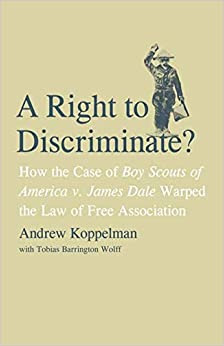
Andrew Koppelman and Tobias Barrington Wolff, A Right to Discriminate?: How the Case of Boy Scouts of America v. James Dale Warped the Law of Free Association (Yale University Press 2009)

Jack M. Balkin and Reva B. Siegel, The Constitution in 2020 (Oxford University Press 2009)

Heather K. Gerken, The Democracy Index: Why Our Election System Is Failing and How to Fix It (Princeton University Press 2009)

Mary Dudziak, Exporting American Dreams: Thurgood Marshall's African Journey (Oxford University Press 2008)

David Luban, Legal Ethics and Human Dignity (Cambridge Univ. Press 2007)

Ian Ayres, Super Crunchers: Why Thinking-By-Numbers is the New Way to be Smart (Bantam 2007)

Jack M. Balkin, James Grimmelmann, Eddan Katz, Nimrod Kozlovski, Shlomit Wagman and Tal Zarsky, eds., Cybercrime: Digital Cops in a Networked Environment (N.Y.U. Press 2007)
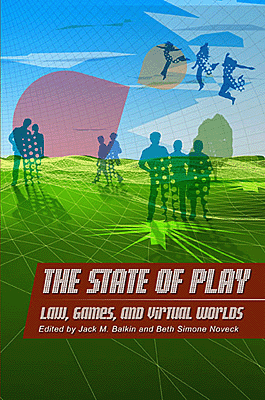
Jack M. Balkin and Beth Simone Noveck, The State of Play: Law, Games, and Virtual Worlds (N.Y.U. Press 2006)

Andrew Koppelman, Same Sex, Different States: When Same-Sex Marriages Cross State Lines (Yale University Press 2006)

Brian Tamanaha, Law as a Means to an End (Cambridge University Press 2006)

Sanford Levinson, Our Undemocratic Constitution (Oxford University Press 2006)

Mark Graber, Dred Scott and the Problem of Constitutional Evil (Cambridge University Press 2006)

Jack M. Balkin, ed., What Roe v. Wade Should Have Said (N.Y.U. Press 2005)

Sanford Levinson, ed., Torture: A Collection (Oxford University Press 2004)
Balkin.com homepage
Bibliography
Conlaw.net
Cultural Software
Writings
Opeds
The Information Society Project
BrownvBoard.com
Useful Links
Syllabi and Exams
