Balkinization
an unanticipated consequence of
Jack M. Balkin
Balkinization Symposiums: A Continuing List
E-mail:
Jack Balkin:
jackbalkin at yahoo.com
Bruce Ackerman
bruce.ackerman at yale.edu
Ian Ayres
ian.ayres at yale.edu
Corey Brettschneider
corey_brettschneider at brown.edu
Mary Dudziak
mary.l.dudziak at emory.edu
Joey Fishkin
joey.fishkin at gmail.com
Heather Gerken heather.gerken at yale.edu
Abbe Gluck abbe.gluck at yale.edu
Mark Graber
mgraber at law.umaryland.edu
Stephen Griffin
sgriffin at tulane.edu
Jonathan Hafetz
jonathan.hafetz at shu.edu
Jeremy Kessler
jkessler at law.columbia.edu
Andrew Koppelman
akoppelman at law.northwestern.edu
Marty Lederman
msl46 at law.georgetown.edu
Sanford Levinson
slevinson at law.utexas.edu
David Luban
david.luban at gmail.com
Gerard Magliocca
gmaglioc at iupui.edu
Jason Mazzone
mazzonej at illinois.edu
Linda McClain
lmcclain at bu.edu
John Mikhail
mikhail at law.georgetown.edu
Frank Pasquale
pasquale.frank at gmail.com
Nate Persily
npersily at gmail.com
Michael Stokes Paulsen
michaelstokespaulsen at gmail.com
Deborah Pearlstein
dpearlst at yu.edu
Rick Pildes
rick.pildes at nyu.edu
David Pozen
dpozen at law.columbia.edu
Richard Primus
raprimus at umich.edu
K. Sabeel Rahmansabeel.rahman at brooklaw.edu
Alice Ristroph
alice.ristroph at shu.edu
Neil Siegel
siegel at law.duke.edu
David Super
david.super at law.georgetown.edu
Brian Tamanaha
btamanaha at wulaw.wustl.edu
Nelson Tebbe
nelson.tebbe at brooklaw.edu
Mark Tushnet
mtushnet at law.harvard.edu
Adam Winkler
winkler at ucla.edu
Compendium of posts on Hobby Lobby and related cases
The Anti-Torture Memos: Balkinization Posts on Torture, Interrogation, Detention, War Powers, and OLC
The Anti-Torture Memos (arranged by topic)
Recent Posts
LevinsonFest on Civic Education - Collected Posts
Debt Limit Charade Redux: The Humiliation of the Moderates
Civic Education in Unhappy Times
Preparing to Address the Debt Limit without Legislation
Rethinking Civics Education at a Time of Civics Fragility
![[Powered by Blogger]](https://lh3.googleusercontent.com/blogger_img_proxy/AEn0k_vRgm4mhcoKD_9tOtvrnYLRiZyS1gjGybyZHlqJROXRf8yY1G56UTZXDBep8nevyLuGLnX2a7B65Q0csD0i5odY1TCej_1xLsrN5ahsEqtO=s0-d)
Just A Few Blogs
ACS Blog
Alas, a Blog
Althouse
Arts and Letters Daily
Atrios (Eschaton)
Bill of Health
Buzzflash.com
Buzz Machine
Cato at Liberty
Juan Cole (Informed Comment)
Concurring Opinions
The Constitution in 2020
Corrente
Crooked Timber
Daily Howler
Daily Kos
Dana Boyd
Brad DeLong
Digby (Hullabaloo)
Discriminations
Daniel Drezner
Kevin Drum (Mother Jones)
Electrolite
En Banc
Eunomia (Daniel Larison)
Fafblog
Michael Froomkin (Discourse.net)
GovLab (Beth Noveck)
Rick Hasen (Election Law)
History News Network
How Appealing
Ignatz (Sam Heldman)
The Importance of (Ernie Miller)
Infolaw
Instapundit
International Economic Law and Policy Blog
IntLawGrrls
Jacob Levy
Jesus' General
Jurisdynamics
The Kitchen Cabinet
Mark Kleiman
Law Blog Central
Larry Lessig
Lawyers, Guns and Money
Liberal Oasis
Brian Leiter's Law School Reports
The Leiter Reports
Marginal Revolution
Megan McArdle
Memeorandum
Metafilter
Mirror of Justice
The New Republic
Newseum
No More Mister Nice Blog
Brendan Nyhan
Opinio Juris
Orcinus
The Originalism Blog
Pandagon
Passport (Foreign Policy)
Overcoming Bias
Political Animal (Washington Monthly)
Political Theory Daily Review
Political Wire (Taegan Goddard)
The Poor Man
Virginia Postrel
Prawfsblawg
Public Reason
Jonathan Rauch
Raw Story
Redstate
ReligiousLeftLaw.com
Reporters Committee For Freedom of the Press
Reproductive Rights Blog
Rothman's Roadmap to the Right of Publicity
SCOTUS Blog
Seeing the Forest
Clay Shirky
The Shifted Librarian
The Situationist
Larry Solum (Legal Theory)
Andrew Sullivan
Talking Points Memo
Talk Left
Tapped
Tbogg
TechPresident
The Paper Chase (Jurist)
Tom Paine
Tom Tomorrow (This Modern World)
Eve Tushnet
Uggabugga
University of Chicago Law School Faculty Blog
Unqualified Offerings
The Volokh Conspiracy
War and Piece (Laura Rozen)
Wampum
Oliver Willis
Wonkette
Written Description
Matthew Yglesias
Yin
Your Choice of Feeds
1. XML
powered by

2. Atom Feed
3. RSS 2.0
LevinsonFest on Civic Education - Collected Posts
Guest Blogger
Below are collected posts on the LevinsonFest 2022 roundtable on civic education. 1. Ashley Moran, LevinsonFest on Civic
Education 2. Elizabeth Beaumont, Civic Education and Faultlines of Constitutional Democracy 3. Lief Carter, Getting Real about Civic Education 4.
Martha Minow, Rethinking Civics
Education at a Time of Civics Fragility 5. Sanford Levinson, Civic Education in
Unhappy Times
Posted
9:30 AM
by Guest Blogger [link]
Debt Limit Charade Redux: The Humiliation of the Moderates
David Super
As derisive as my post
of yesterday was about the courage of GOP moderates, events showed that I actually
gave them too much credit. The quick and
humiliating capitulation of the few Members posturing as GOP moderates confirms
that there is no path to a negotiated solution to the debt limit problem and
puts the ball squarely in President Biden’s court. After describing concessions
the Republican leadership made to the corn industry and its far-right, I
predicted that “[l]ikely more [tweaks] are to come.” I did so because House GOP moderates had been
circulating a (very) short list for over a week of changes they were insisting
that the leadership make in the bill to secure their votes. These changes
would have eliminated neither the unseriousness
of the bill nor its fundamental cruelty.
They would not have alleviated the recklessness of its repeal (with very
small transition provisions for the corn industry) of the Inflation Reduction
Act’s efforts to combat climate change.
And they would not have altered the provision that would gut Internal
Revenue Service funding for pursuing affluent tax cheats, a move the Congressional
Budget Office estimates
would increase the deficit by $120 billion over ten years. The moderates’
only demands were the removal of a (very) few of the most sensationally cruel sections
of the bill, sections that contributed very modestly to the bill’s estimated
deficit-reducing effects. Indeed, had
the leadership removed the sections to which the moderates objected and also
the reduction in IRS funding, the bill’s estimated bottom line would have been
essentially unchanged. I did not think
the moderates would get their full list, even as modest as it was, but I
assumed they would get something, even something merely cosmetic. I was wrong. The leadership ordered them to vote for a
final bill that was somewhat worse than the one to which they had objected on
the issues they were raising. And every single
one of the so-called moderates went along.
The four negative GOP votes were all
from the far-right Freedom Caucus: Matt
Gaetz, Andy Biggs, etc. The moderates
abased themselves completely. And
because they were widely known to be holding out for changes, the fact that they
got absolutely none shows everyone how complete the leadership’s contempt for
them is – and how wholly lacking in backbone they are. When moderate
Democrats have resisted legislation in the House or Senate of previous
Democratic-controlled Congresses, Democratic leaders almost invariably offered
them some concessions, albeit often less than the holdouts desired. Senate Republican Leader McConnell operates
similarly, as did former Republican House Speakers John Boehner and Paul
Ryan. This complete,
public humiliation of the so-called House Republican moderates demonstrates the
far-right’s utter domination of that caucus.
It also is a further humiliation of Speaker McCarthy, who presumably requested
but was denied permission to offer the moderates some fig-leaf. And the so-called moderates’ meek acceptance
of their humiliation confirms that they believe the threat of primaries from
the far right precludes any assertiveness whatsoever. Just as some kept
holding out hope in January that the moderates would band together with the
Democrats to elect one of their own as speaker, some now imagine that the House
Republican moderates will join with Democrats to sign a discharge petition to
bring a clean debt limit fix to the House floor and avert a fiscal high-noon. This episode demonstrates that the House
leadership does not regard that as a sufficiently plausible possibility to
afford those moderates even a modicum of respect. Whether or not the
U.S. defaults on its debt now depends entirely on whether Joe Biden is willing
to adopt either a technical solution (such as authorizing the minting of a platinum
coin with a high enough denomination to allow the Treasury to pay the country’s
bills under 31
U.S.C. 5112(k)) or to declare the debt limit unconstitutional under Section
4 of the Fourteenth Amendment. There
will be, and can be, no negotiated settlement with this House Republican
Party. By the way, for
those keeping score at home, we are now almost two weeks past the statutory
deadline for House and Senate concurrence on this year’s Congressional Budget
Resolution. If the House GOP was, as
Speaker McCarthy repeatedly insists, determined to bring our nation’s fiscal
house into order, one would expect at a minimum that it would introduce, report
out, and pass a budget resolution as required by law. It will not do so, of course, because that
would require it to add at least some specificity about where it would make the
one-third
reduction in appropriations for programs other than defense and veterans’
health care. And that would either anger
those who want a federal government that continues to function or expose the
GOP’s supposed budget cuts for the unserious fraud that they are. @DavidASuper1
Posted
9:41 AM
by David Super [link]
Civic Education in Unhappy Times
Guest Blogger
Posted
9:30 AM
by Guest Blogger [link]
Preparing to Address the Debt Limit without Legislation
David Super
Overnight, House
Republicans made a modest set of tweaks to their deeply unserious
debt limit legislation. Likely more are
to come. Last night’s changes do not
affect the basic core of the absurd and impractical design of the package: ludicrous caps that would force all programs funded
with annual appropriations outside of defense and veterans’ health care to be cut
59% within a decade. The overnight
changes included sops to special interests (specifically companies involved in
biofuels) and far right advocacy groups (speeding up the purge of millions of
extremely poor families from cash assistance and food assistance rolls).
The Republican
leadership, which can afford to lose only four votes to pass its package,
clearly does not have 218 votes yet: if it
did, it would race to the floor like a bat out of [the House Republican Caucus]
and call a vote before any more Members think up new demands. The haggling will therefore continue. It is moments like these that the leadership
is no doubt glad it kept Rep. George Santos around despite his spectacular dishonesty: if they only had three votes to lose,
settling on a bill would be even harder still.
At the end of the
day, the Republican leadership will almost certainly find a way to get 218
votes for a package. Those imagining
that “the moderates” will force the final package meaningfully back to reality
are due to be disappointed: what few actual
moderates remained in recent years were largely purged through primaries,
redistricting them into general election defeats, and forced retirements. And if any secret moderates remain, the fate
of those that voted to impeach Donald Trump will surely convince them to limit
their moderation to empty posturing. Assuming the House
Republicans finally pass their bill, what happens next? Nobody – not even Senate Republicans – will regard
this as an opening bid in a process leading to a deal. As I noted
yesterday, the House Republicans themselves would never attempt to move actual
appropriations bills with anything like this level of cuts, and everyone knows
it. So the question is
what kind of deal on the debt limit could pass.
And the answer, fairly plainly, is none at all. However this crisis is finally resolved, it
is highly unlikely to be through legislation preventing us from hitting the
debt limit. We therefore need to be
thinking through the other possibilities.
This prediction contradicts
the time-honored Washington truism that, in the end, the sober heads will
always come together on a deal. That assumption
has mostly been correct, although Bill Clinton’s bull-headedness prevented a
deal on major stimulus legislation in 1993 and health care reform in 1994
(despite some quite serious Republican proposals then on the table). My pessimistic
prediction also contradicts assumptions that Wall Street Republicans will talk some
sense into congressional Republicans, as they did
during the last debt limit faceoff in 2021.
I have no doubt that Wall Street will try, but I do not think they have enough
leverage in the current House Republican Caucus the way they did in the Senate
Republican Caucus that year. Theoretically, a budget
deal could pass the House on one of three possible paths: a bill relying on Democratic votes to offset
Republican defections, a more plausible bill passing with just Republican
votes, and the current ultra-maximalist Republican package. Closer examination, however, reveals that none
of these options is remotely plausible. A bill relying on
Democratic votes could never get to the floor for a vote. Apart from three
Freedom Caucus allies – who would never support such a bill – the Republican leadership
has ironclad control of the House Rules Committee (which has a 9-4 Republican majority). If Kevin McCarthy allowed the Committee to report
out a budget bill depending on Democratic votes, the Freedom Caucus would promptly
invoke the rule
change it won at the beginning of the year to declare the Speaker’s chair
vacant. Someone who abased himself to
become speaker as much as Kevin McCarthy did in January is not going to sacrifice
that office and end his political career in a likely-failed attempt to bring
debt limit legislation to the floor. And
the House Rules Committee routinely disallows floor amendments and other
vehicles that could lead to a vote on such a package during the consideration
of other legislation. A more substantively
realistic Republican-only bill is similarly impossible. A mere five Freedom Caucus Members could and
would block such a bill. Six
of them never voted for Kevin McCarthy for speaker. Someone who maintains that, in the end, the
House Republicans will vote for a plausible budget bill needs to identify which
two of Andy Biggs, Lauren Boebert, Eli Crane, Matt Gaetz, Bob Good, and Matt
Rosendale they are going to pick off (after, of course, securing the votes of
Chip Roy, Paul Gosar, Jim Jordan, Andy Ogles, Scott Perry, and the incomparable
Marjorie Taylor Greene). The House
Republican Caucus does not have anything approaching 218 Members who are
serious about governing or who can be swayed by even the most concerted Wall
Street Republican efforts. As Joe Biden correctly
points out, this is not your parents’ Republican Party. That leaves the
prospect of enacting something essentially like the current House Republican
bill: legislation fully acceptable to
the Freedom Caucus. Could Democrats
decide that the prospect of default is so horrific that they must capitulate
completely and pass the House Republicans’ bill? They would have no leverage to seek any but
the most cosmetic changes because, as noted above, neither a bipartisan bill nor
a more moderate Republican one could both reach and pass the House floor. This grim option
might look like the only path forward at the end of the day, but it, too, does
not work. That is because the House
Republicans’ legislation would force a rapid series of additional crises over
the next year and a half in which they could and would demand even more
disastrous concessions. First, the debt
limit increase in the House Republican bill would not even put off the next
debt limit crisis beyond the 2024 elections.
So Democrats would face another choice of fundamentally reshaping the country’s
governance or breaching the debt limit barely a year down the line. And there is no conceivable reason to concede
the first time if they are not also going to concede a second. They could try demanding a larger increase in
the debt limit to postpone the second crisis, but what is their leverage? Moreover, because
the House Republicans’ bill’s caps on annual appropriations are so grossly
unrealistic – requiring a one-third reduction in everything but defense and
veterans’ health care just in the first year – Democrats would have no
choice but to negotiate increases to those caps. And House Republicans would refuse to make
those modifications without offsetting deep cuts in entitlement programs – with
cuts of this magnitude effectively impossible without touching Social Security,
Medicare, or Medicaid. Paul Ryan
negotiated cap increases largely “funded” by budgetary gimmicks, but the
Freedom Caucus fought him then and is both stronger and more aggressive
now. President Biden
had a front-row seat to just this kind of sequential unraveling as vice
president in the Obama Administration and seems
to have learned the lesson that one capitulation inevitably leads to another
and another. More generally, Representative
Gaetz – who clearly has more influence than Speaker McCarthy – made clear
in January that he and his colleagues believe in not making a deal until they
run out of “stuff to ask for”. They
dominate the Caucus, and with primaries remaining an effective weapon to keep
Republicans from crossing party lines and the Speaker vulnerable to ejection at
any moment, nobody has leverage to force them to moderate. The distinctive
dynamic in this process is that House Republicans are trying to extort
Democrats to provide votes and political cover for a program that Republicans
could not and would not implement themselves:
transformational reductions in the role of government and deep cuts to
entitlement programs that would infuriate voters and destroy their party if passed
on a party-lines vote. Democrats have no
reason to think voters will understand that they were coerced if they vote for
legislation implementing such a deal. So no legislative
solution to the debt limit crisis is likely to appear: not now and not later. Given the disarray House Republicans have
shown over the past few weeks, they may very well prefer to relocate this fight
to the Fall so that it gets rolled in with negotiations over annual
appropriations bills (if the Gaetz-Boebert faction is willing). But neither dire warnings about threats to
the nation’s well-being nor Wall Street Republicans’ muscle will save us this
time. Given the hopelessness
of negotiating with this particular group of fiscal terrorists, and the
difficulty of explaining effectively to voters what the parties’ respective
positions are in the inevitable resulting impasse, President Biden is wise to
insist that raising the debt limit is non-negotiable. Democrats should continue to offer
Republicans only the clean debt limit increase they granted President Trump
after his 2017 tax cuts ballooned the deficit. The Administration
also needs to decide what it will do when – not if – House Republicans refuse
to pass a clean debt limit. Opinions
vary about the relative merits of one of the technical work-arounds (such as selling
a $1 trillion platinum coin to the Federal Reserve) or selling bonds at a
premium, declaring the debt limit unconstitutional under Section 4 of the Fourteenth
Amendment, or a managed default. But wishful
thinking based on an earlier version of the Republican Party that has clearly left
the scene serves little constructive purpose.
@DavidASuper1
Posted
12:37 PM
by David Super [link]
Rethinking Civics Education at a Time of Civics Fragility
Guest Blogger
This post
was prepared for a roundtable on
Civic Education, convened as part of LevinsonFest
2022—a year-long series gathering scholars from diverse
disciplines and viewpoints to reflect on Sandy Levinson’s influential work in
constitutional law. Martha Minow In tribute to Sanford Levinson and LevinsonFest While no task is more important to any society
than educating each next generation, this task is crucial for a democracy.
Self-government needs people equipped to govern—equipped with knowledge,
motivation, and ability to pursue their own interests while also recognizing
and caring about the rights and needs of others.
Under the best of circumstances, democracy demands hard work and lots of
time. It often produces poor bad policies. Playwright George Bernard Shaw was
not stretching the truth when he gave one of his characters these words: “Democracy substitutes election by the
incompetent many for appointment by the corrupt few.”[1] The
work of democracy produces conflicts and stalemates. It leaves us with few to
blame but ourselves.[2] That’s in good times.
Posted
9:30 AM
by Guest Blogger [link]
Books by Balkinization Bloggers

Gerard N. Magliocca, The Actual Art of Governing: Justice Robert H. Jackson's Concurring Opinion in the Steel Seizure Case (Oxford University Press, 2025)

Linda C. McClain and Aziza Ahmed, The Routledge Companion to Gender and COVID-19 (Routledge, 2024)

David Pozen, The Constitution of the War on Drugs (Oxford University Press, 2024)

Jack M. Balkin, Memory and Authority: The Uses of History in Constitutional Interpretation (Yale University Press, 2024)
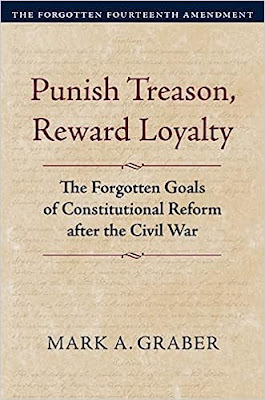
Mark A. Graber, Punish Treason, Reward Loyalty: The Forgotten Goals of Constitutional Reform after the Civil War (University of Kansas Press, 2023)
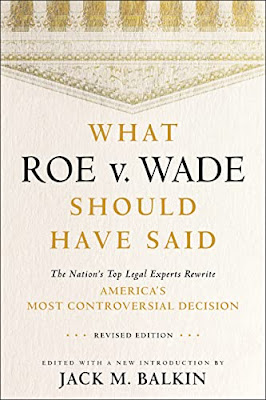
Jack M. Balkin, What Roe v. Wade Should Have Said: The Nation's Top Legal Experts Rewrite America's Most Controversial Decision - Revised Edition (NYU Press, 2023)

Andrew Koppelman, Burning Down the House: How Libertarian Philosophy Was Corrupted by Delusion and Greed (St. Martin’s Press, 2022)

Gerard N. Magliocca, Washington's Heir: The Life of Justice Bushrod Washington (Oxford University Press, 2022)
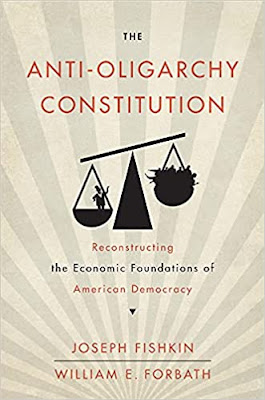
Joseph Fishkin and William E. Forbath, The Anti-Oligarchy Constitution: Reconstructing the Economic Foundations of American Democracy (Harvard University Press, 2022)
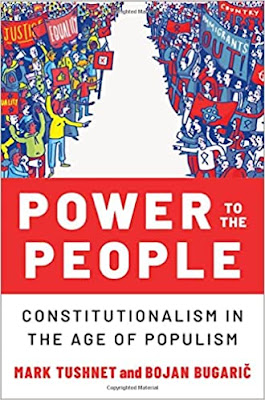
Mark Tushnet and Bojan Bugaric, Power to the People: Constitutionalism in the Age of Populism (Oxford University Press 2021).

Mark Philip Bradley and Mary L. Dudziak, eds., Making the Forever War: Marilyn B. Young on the Culture and Politics of American Militarism Culture and Politics in the Cold War and Beyond (University of Massachusetts Press, 2021).

Jack M. Balkin, What Obergefell v. Hodges Should Have Said: The Nation's Top Legal Experts Rewrite America's Same-Sex Marriage Decision (Yale University Press, 2020)

Frank Pasquale, New Laws of Robotics: Defending Human Expertise in the Age of AI (Belknap Press, 2020)

Jack M. Balkin, The Cycles of Constitutional Time (Oxford University Press, 2020)

Mark Tushnet, Taking Back the Constitution: Activist Judges and the Next Age of American Law (Yale University Press 2020).

Andrew Koppelman, Gay Rights vs. Religious Liberty?: The Unnecessary Conflict (Oxford University Press, 2020)

Ezekiel J Emanuel and Abbe R. Gluck, The Trillion Dollar Revolution: How the Affordable Care Act Transformed Politics, Law, and Health Care in America (PublicAffairs, 2020)

Linda C. McClain, Who's the Bigot?: Learning from Conflicts over Marriage and Civil Rights Law (Oxford University Press, 2020)
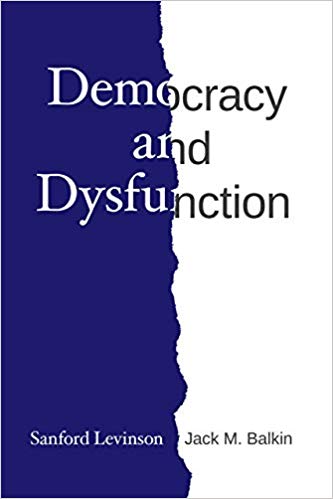
Sanford Levinson and Jack M. Balkin, Democracy and Dysfunction (University of Chicago Press, 2019)

Sanford Levinson, Written in Stone: Public Monuments in Changing Societies (Duke University Press 2018)

Mark A. Graber, Sanford Levinson, and Mark Tushnet, eds., Constitutional Democracy in Crisis? (Oxford University Press 2018)

Gerard Magliocca, The Heart of the Constitution: How the Bill of Rights became the Bill of Rights (Oxford University Press, 2018)

Cynthia Levinson and Sanford Levinson, Fault Lines in the Constitution: The Framers, Their Fights, and the Flaws that Affect Us Today (Peachtree Publishers, 2017)

Brian Z. Tamanaha, A Realistic Theory of Law (Cambridge University Press 2017)

Sanford Levinson, Nullification and Secession in Modern Constitutional Thought (University Press of Kansas 2016)

Sanford Levinson, An Argument Open to All: Reading The Federalist in the 21st Century (Yale University Press 2015)

Stephen M. Griffin, Broken Trust: Dysfunctional Government and Constitutional Reform (University Press of Kansas, 2015)

Frank Pasquale, The Black Box Society: The Secret Algorithms That Control Money and Information (Harvard University Press, 2015)

Bruce Ackerman, We the People, Volume 3: The Civil Rights Revolution (Harvard University Press, 2014)
Balkinization Symposium on We the People, Volume 3: The Civil Rights Revolution

Joseph Fishkin, Bottlenecks: A New Theory of Equal Opportunity (Oxford University Press, 2014)

Mark A. Graber, A New Introduction to American Constitutionalism (Oxford University Press, 2013)

John Mikhail, Elements of Moral Cognition: Rawls' Linguistic Analogy and the Cognitive Science of Moral and Legal Judgment (Cambridge University Press, 2013)

Gerard N. Magliocca, American Founding Son: John Bingham and the Invention of the Fourteenth Amendment (New York University Press, 2013)

Stephen M. Griffin, Long Wars and the Constitution (Harvard University Press, 2013)

Andrew Koppelman, The Tough Luck Constitution and the Assault on Health Care Reform (Oxford University Press, 2013)

James E. Fleming and Linda C. McClain, Ordered Liberty: Rights, Responsibilities, and Virtues (Harvard University Press, 2013)
Balkinization Symposium on Ordered Liberty: Rights, Responsibilities, and Virtues

Andrew Koppelman, Defending American Religious Neutrality (Harvard University Press, 2013)

Brian Z. Tamanaha, Failing Law Schools (University of Chicago Press, 2012)

Sanford Levinson, Framed: America's 51 Constitutions and the Crisis of Governance (Oxford University Press, 2012)

Linda C. McClain and Joanna L. Grossman, Gender Equality: Dimensions of Women's Equal Citizenship (Cambridge University Press, 2012)

Mary Dudziak, War Time: An Idea, Its History, Its Consequences (Oxford University Press, 2012)

Jack M. Balkin, Living Originalism (Harvard University Press, 2011)

Jason Mazzone, Copyfraud and Other Abuses of Intellectual Property Law (Stanford University Press, 2011)

Richard W. Garnett and Andrew Koppelman, First Amendment Stories, (Foundation Press 2011)

Jack M. Balkin, Constitutional Redemption: Political Faith in an Unjust World (Harvard University Press, 2011)

Gerard Magliocca, The Tragedy of William Jennings Bryan: Constitutional Law and the Politics of Backlash (Yale University Press, 2011)

Bernard Harcourt, The Illusion of Free Markets: Punishment and the Myth of Natural Order (Harvard University Press, 2010)

Bruce Ackerman, The Decline and Fall of the American Republic (Harvard University Press, 2010)
Balkinization Symposium on The Decline and Fall of the American Republic

Ian Ayres. Carrots and Sticks: Unlock the Power of Incentives to Get Things Done (Bantam Books, 2010)

Mark Tushnet, Why the Constitution Matters (Yale University Press 2010)

Ian Ayres and Barry Nalebuff: Lifecycle Investing: A New, Safe, and Audacious Way to Improve the Performance of Your Retirement Portfolio (Basic Books, 2010)
.jpg)
Jack M. Balkin, The Laws of Change: I Ching and the Philosophy of Life (2d Edition, Sybil Creek Press 2009)

Brian Z. Tamanaha, Beyond the Formalist-Realist Divide: The Role of Politics in Judging (Princeton University Press 2009)
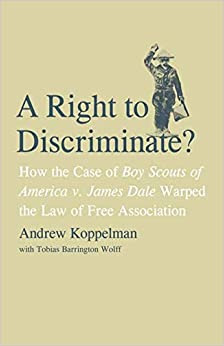
Andrew Koppelman and Tobias Barrington Wolff, A Right to Discriminate?: How the Case of Boy Scouts of America v. James Dale Warped the Law of Free Association (Yale University Press 2009)

Jack M. Balkin and Reva B. Siegel, The Constitution in 2020 (Oxford University Press 2009)

Heather K. Gerken, The Democracy Index: Why Our Election System Is Failing and How to Fix It (Princeton University Press 2009)

Mary Dudziak, Exporting American Dreams: Thurgood Marshall's African Journey (Oxford University Press 2008)

David Luban, Legal Ethics and Human Dignity (Cambridge Univ. Press 2007)

Ian Ayres, Super Crunchers: Why Thinking-By-Numbers is the New Way to be Smart (Bantam 2007)

Jack M. Balkin, James Grimmelmann, Eddan Katz, Nimrod Kozlovski, Shlomit Wagman and Tal Zarsky, eds., Cybercrime: Digital Cops in a Networked Environment (N.Y.U. Press 2007)

Jack M. Balkin and Beth Simone Noveck, The State of Play: Law, Games, and Virtual Worlds (N.Y.U. Press 2006)

Andrew Koppelman, Same Sex, Different States: When Same-Sex Marriages Cross State Lines (Yale University Press 2006)

Brian Tamanaha, Law as a Means to an End (Cambridge University Press 2006)

Sanford Levinson, Our Undemocratic Constitution (Oxford University Press 2006)

Mark Graber, Dred Scott and the Problem of Constitutional Evil (Cambridge University Press 2006)

Jack M. Balkin, ed., What Roe v. Wade Should Have Said (N.Y.U. Press 2005)

Sanford Levinson, ed., Torture: A Collection (Oxford University Press 2004)
Balkin.com homepage
Bibliography
Conlaw.net
Cultural Software
Writings
Opeds
The Information Society Project
BrownvBoard.com
Useful Links
Syllabi and Exams
