Balkinization
an unanticipated consequence of
Jack M. Balkin
Balkinization Symposiums: A Continuing List
E-mail:
Jack Balkin:
jackbalkin at yahoo.com
Bruce Ackerman
bruce.ackerman at yale.edu
Ian Ayres
ian.ayres at yale.edu
Corey Brettschneider
corey_brettschneider at brown.edu
Mary Dudziak
mary.l.dudziak at emory.edu
Joey Fishkin
joey.fishkin at gmail.com
Heather Gerken heather.gerken at yale.edu
Abbe Gluck abbe.gluck at yale.edu
Mark Graber
mgraber at law.umaryland.edu
Stephen Griffin
sgriffin at tulane.edu
Jonathan Hafetz
jonathan.hafetz at shu.edu
Jeremy Kessler
jkessler at law.columbia.edu
Andrew Koppelman
akoppelman at law.northwestern.edu
Marty Lederman
msl46 at law.georgetown.edu
Sanford Levinson
slevinson at law.utexas.edu
David Luban
david.luban at gmail.com
Gerard Magliocca
gmaglioc at iupui.edu
Jason Mazzone
mazzonej at illinois.edu
Linda McClain
lmcclain at bu.edu
John Mikhail
mikhail at law.georgetown.edu
Frank Pasquale
pasquale.frank at gmail.com
Nate Persily
npersily at gmail.com
Michael Stokes Paulsen
michaelstokespaulsen at gmail.com
Deborah Pearlstein
dpearlst at yu.edu
Rick Pildes
rick.pildes at nyu.edu
David Pozen
dpozen at law.columbia.edu
Richard Primus
raprimus at umich.edu
K. Sabeel Rahmansabeel.rahman at brooklaw.edu
Alice Ristroph
alice.ristroph at shu.edu
Neil Siegel
siegel at law.duke.edu
David Super
david.super at law.georgetown.edu
Brian Tamanaha
btamanaha at wulaw.wustl.edu
Nelson Tebbe
nelson.tebbe at brooklaw.edu
Mark Tushnet
mtushnet at law.harvard.edu
Adam Winkler
winkler at ucla.edu
Compendium of posts on Hobby Lobby and related cases
The Anti-Torture Memos: Balkinization Posts on Torture, Interrogation, Detention, War Powers, and OLC
The Anti-Torture Memos (arranged by topic)
Recent Posts
Is Tom DeLay's Criminal Conviction Unconstitutional?
Models for the Internet’s Future: Obama-Open or Julius-Closed
Parliamentary Parties in a Presidential System
The Program's Progress
Tom Friedman is simply incapable of connecting the dots, alas
Here Is Your Mother
How to Really Add Diversity to the Supreme Court
Closed-Circuit Economics
Criminal Trials for Terrorists Make Legal and Political Sense
Health Reform and Accountable Care Organizations
Ben Nelson, John Kyl, Barack Obama, and corruption
United States v. Ghailani (S.D.N.Y.)
Super Sad Super Crunching
Self-Reinforcing Inequality
Recanting a Small Part of Lifecycle Investing
Martial Finance: The Case of High Frequency Trading
My "Dean's Vision" Speech
Don't Ask, Don't Tell: The Ninth Circuit as Court of Last Resort
The Tea Party, Once Again, Has History All Wrong: The True Story of the Seventeenth Amendment and Federalism
What Do the Lame-Duck Congress and the White House Counsel Have in Common?
The Voting Rights Act and Partisan Gerrymandering
The Impossibility of Constitutional Theory
The Return of Judicial Recall Fever Following a Century in Remission
The Next Phase in our Decline and Fall?
Foreclosures and the Rule of Law
How to Get Congress to End Don’t Ask, Don’t Tell
Oh, please beat me hard
Constitutional Dictator (and Maximum Leader) Ben Bernanke Issues New Stimulus Plan Without Congressional Approval
Justices Scalia, Alito Square Off on Originalism
Political Polarization and the Nationalization of Congressional Elections
At Guantánamo, Blackstone Has Left the Building
The Impact of the 2010 Elections on the Impending Redistricting Process
The Morning After
Political Attitudes of Tea Party Supporters
![[Powered by Blogger]](https://lh3.googleusercontent.com/blogger_img_proxy/AEn0k_t7__VV9m78Ahk2g5k4_XoIMQbd7sg2urZPKcSCTkPzHVPVfLMoQk8RbSBSoaGocHZcSWkQhjVHuKpKNpdcmZRYKy79SN0rFjdpkbn9Wug_=s0-d)
Just A Few Blogs
ACS Blog
Alas, a Blog
Althouse
Arts and Letters Daily
Atrios (Eschaton)
Bill of Health
Buzzflash.com
Buzz Machine
Cato at Liberty
Juan Cole (Informed Comment)
Concurring Opinions
The Constitution in 2020
Corrente
Crooked Timber
Daily Howler
Daily Kos
Dana Boyd
Brad DeLong
Digby (Hullabaloo)
Discriminations
Daniel Drezner
Kevin Drum (Mother Jones)
Electrolite
En Banc
Eunomia (Daniel Larison)
Fafblog
Michael Froomkin (Discourse.net)
GovLab (Beth Noveck)
Rick Hasen (Election Law)
History News Network
How Appealing
Ignatz (Sam Heldman)
The Importance of (Ernie Miller)
Infolaw
Instapundit
International Economic Law and Policy Blog
IntLawGrrls
Jacob Levy
Jesus' General
Jurisdynamics
The Kitchen Cabinet
Mark Kleiman
Law Blog Central
Larry Lessig
Lawyers, Guns and Money
Liberal Oasis
Brian Leiter's Law School Reports
The Leiter Reports
Marginal Revolution
Megan McArdle
Memeorandum
Metafilter
Mirror of Justice
The New Republic
Newseum
No More Mister Nice Blog
Brendan Nyhan
Opinio Juris
Orcinus
The Originalism Blog
Pandagon
Passport (Foreign Policy)
Overcoming Bias
Political Animal (Washington Monthly)
Political Theory Daily Review
Political Wire (Taegan Goddard)
The Poor Man
Virginia Postrel
Prawfsblawg
Public Reason
Jonathan Rauch
Raw Story
Redstate
ReligiousLeftLaw.com
Reporters Committee For Freedom of the Press
Reproductive Rights Blog
Rothman's Roadmap to the Right of Publicity
SCOTUS Blog
Seeing the Forest
Clay Shirky
The Shifted Librarian
The Situationist
Larry Solum (Legal Theory)
Andrew Sullivan
Talking Points Memo
Talk Left
Tapped
Tbogg
TechPresident
The Paper Chase (Jurist)
Tom Paine
Tom Tomorrow (This Modern World)
Eve Tushnet
Uggabugga
University of Chicago Law School Faculty Blog
Unqualified Offerings
The Volokh Conspiracy
War and Piece (Laura Rozen)
Wampum
Oliver Willis
Wonkette
Written Description
Matthew Yglesias
Yin
Your Choice of Feeds
1. XML
powered by

2. Atom Feed
3. RSS 2.0
Is Tom DeLay's Criminal Conviction Unconstitutional?
Jason Mazzone
Last week, a Texas jury convicted former House majority leader Tom DeLay of money laundering and conspiracy to commit money laundering. The money laundering at issue wasn’t what one normally thinks of as money laundering. It was based on DeLay’s evasion of a Texas statute prohibiting direct corporate contributions to political campaigns and candidates. At trial, the government proved that through his political action committee, DeLay collected $190,000 for a group affiliated with the Republican National Committee. That group subsequently distributed the funds to legislative candidates in Texas. DeLay now faces a possible sentence of five years to life imprisonment.
As in Texas, federal law also prohibits direct corporate contributions to campaigns and candidates. After Citizens United v. FEC (2010), there is a serious question as to whether such laws are constitutional.
Read more »
Posted
4:57 PM
by Jason Mazzone [link]
Models for the Internet’s Future: Obama-Open or Julius-Closed
Marvin Ammori
Apparently before the year is out, on Dec. 21, the Federal Communications Commission will issue rules to help shape the future of the Internet. In fact, the FCC Chairman may be circulating those rules to fellow commissioners on Wednesday, tomorrow. These rules will decide how much control AT&T, Verizon, and Comcast will have over the websites you can visit and the online software you can use. This rule will impact the future of businesses, political actors, and people who now rely on an uncontrolled, open Internet.
There are at least two competing regulatory models for the FCC to adopt.
Read more »
Posted
11:22 AM
by Marvin Ammori [link]
Parliamentary Parties in a Presidential System
JB
Many commentators have noted and bemoaned the obstructionist tactics of the Republicans during Obama's first two years in office, and the likely gridlock that will emerge once the Republican Party takes control of the House of Representatives. To be sure, in today's Washington Post, John Boehner and Mitch McConnell state that they are ready and even eager to work with the Democrats. Despite these assertions of good fellowship, however, it seems clear by now that the Republicans are willing to work with the Democrats only if the Democrats put aside all of their preferred policy goals and more or less adopt the policy goals of the Republican Party. President Obama's recent decision to unilaterally freeze the salaries of federal workers is unlikely to soften the hearts of the Republican faithful and get them to accept a second stimulus package or anything else on the Democrats' wish list. Quite the contrary, this unbargained for concession is likely to make the Republican leadership increase the pressure on President Obama to negotiate with himself.
Read more »
Posted
6:42 AM
by JB [link]
The Program's Progress
Frank Pasquale
I've done a series of posts at the Health Care Blog on the unexpected consequences of data analysis in clinical settings. Not enough policymakers have recognized how pervasively predictive analytics can utilize data from one setting in another, unexpected one. As Scott Peppet argues, once you've "quantified yourself," it may not be easy to opt out of invasive uses of your digital doppelganger. We all too often have "delusions of control" about technology once it is introduced. But sooner or later, many key technologies end up disciplining us.
Situating these controversies in a broader analysis of social trends, Ira Basen's article in the weekend's Toronto Globe and Mail is an excellent survey of the many ways that we end up "programming our lives away:"*
Read more »
Posted
10:59 AM
by Frank Pasquale [link]
Tom Friedman is simply incapable of connecting the dots, alas
Sandy Levinson
Tom Friedman's column in yesterday's Times once more (and altogether accurately) expresses dismay about the present state of American politics, noting that most Americans believe the country is going in the wrong direction--I can only wonder why anyone would believe the opposite--and calling for a national commitmentn to domestic "nation-building." This is obviously not a new theme for Friedman, who has been making such arguments for at least the past year or two. but, of course, he seems incapable of even suggesting, in the mildest possible way, that one prerequisite for building a new nation is to ask serious questions about the adequacy of our 1787 Constitution--designed for a world without political parties--in 2010. Friedman, like almost all other pundits, calls for an almost literally fantastic burst of Roman republican virtue on the part of leaders who have been completely socialized in the reality of partisan politics, including the incentives generated by our particular system--think only of the "winner-take-all" aspect of presidential elections--to reject Roman civic republicanism. This is a form of "politics of nostalgia" that serves only to discourage serious discussion about the actual politics that confronts us. (One also sees this, incidentally, in the nostrums of the Washington Post's David Broder.)
I am allowing comments only because I am generally committed to doing that. But I presume that there is relatively little new to say. I am criticizing Friedman for repeating his own inadequate diagnosis, and I am, of course, equally repeating what I have said all too often. Still, if anyone does have something genuinely new to say, I look forward to reading it.
Posted
12:19 AM
by Sandy Levinson [link]
(57) comments
Here Is Your Mother
Ian Ayres
Crosspost from Freakonomics: In a previous post, I asked why the writers of the TV show House chose for last week’s episode (“A Pox on our House”) to have a sick family composed of a recently married husband and wife who each bring to the marriage a child from a previous relationship. I think the writers were setting up a parallel with the episode’s opening. In the opening, which is set in the past on a slave ship, some African captives who have contracted an infectious disease are about to be thrown overboard. A sick father, who is about to be killed, turns to his healthy son, and says, pointing to another adult: “Naola is now your father.” This heart-rending ship scene foreshadows what happens later in the episode (and 200 years later in the narrative’s chronology), when a dying father tells his biological son that the son’s new stepmother will take care of him. Metaphorically, the father is also saying to his boy that another adult is now your parent. I imagine that both events are supposed to remind us of John 19:26-27, where Jesus from the cross says to his mother: “Woman, here is your son,” and to the disciple, “Here is your mother.”
Posted
3:21 PM
by Ian Ayres [link]
How to Really Add Diversity to the Supreme Court
Jason Mazzone
Whenever there is a vacancy on the Supreme Court, there is talk of appointing a justice who will bring diversity to the Court. Different people have different ideas about what sorts of diversity would be desirable. Some people focus on demographic characteristics. Others believe the Court would benefit from more varied educational or professional backgrounds among the justices. Along with a co-author, I have contributed to these debates by calling for a return of politicians to the Supreme Court.
In thinking about diversity on the Supreme Court, it turns out we haven’t thought broadly enough. We could really diversify the Court by adding one kind of justice who has never served: a foreigner.
Read more »
Posted
1:13 PM
by Jason Mazzone [link]
Closed-Circuit Economics
Frank Pasquale
The economy has now reached a "new normal" of soaring profits and stalled employment. Why aren't stock market gains, bank bonuses, and rising CEO pay translating into more jobs for American workers?
Read more »
Posted
11:27 AM
by Frank Pasquale [link]
Criminal Trials for Terrorists Make Legal and Political Sense
Jonathan Hafetz
The recent verdict in the Ghailani trial has reignited the long-running debate over whether terrorism suspects should be tried in federal court or military commissions. (See Eugene Fidell’s excellent summary of why coercive interrogations—and not any flaws in criminal justice system—are the root cause of any dissatisfaction with the Ghailani verdict). Ghailani however, has also prompted a defense of indefinite and prolonged detention without trial, thus far the fate of all except a handful of Guantánamo detainees.
In a Washington Post op-ed, Benjamin Wittes and Jack Goldsmith argue that Ghailani illustrates the risks of bringing terrorism suspects to trial—the main risk being that the government cannot guarantee the outcome. (Given that Ghailani still faces a mandatory minimum of 20 years in prison, despite the manifest problems with the government’s case, the verdict hardly provides a compelling example for their argument). Wittes and Goldsmith argue that the better option—at least for Guantánamo detainees—is to hold them without trial. For some, such as Khaled Sheikh Mohammed (KSM) and others accused of involvement in the 9/11 attacks, that surely means permanently.
Wittes and Goldsmith seek to claim the “middle” ground. But, as Stephen Vladeck suggests, their argument is anything but moderate.
I have written elsewhere about the legal flaws in the type of sweeping detention authority advocated by Wittes and Goldsmith and argued against it on behalf of various clients held as “enemy combatants,” including Ali al-Marri, whose case was mooted by the Obama administration to avoid a Supreme Court ruling precisely because the detention there was not “tradition-sanctioned, congressionally authorized, and court-blessed,” as Wittes-Goldsmith posit. While recent D.C. Circuit decisions in the Guantánamo habeas cases have largely sided with the government on its legal authority to detain under the 2001 Authorization for Use of Military Force, the most relevant Supreme Court case—Hamdi v. Rumsfeld—cautions against the type of detention Wittes-Goldsmith advocate.
Wittes and Goldsmith’s real pitch, however, is not legal but political. They package indefinite detention as the best option for an administration seemingly caught between the Scylla of right-wing fury against civilian trials and Charybdis of liberal and international opposition to military commissions.
But adopting the Wittes-Goldsmith approach would be short-sighted. Federal criminal trials can help repair some of the damage to U.S. credibility caused by torture and other post-9/11 practices. They also offer Obama a unique teaching moment. Criminal trials are not merely about a “defendant’s rights”; they also embody a collective yearning to see justice done. Paradoxically, the trial of alleged 9/11 mastermind KSM—viewed as the most politically sensitive—is in many ways the easiest choice since the government’s evidence for conviction there is so strong.
Principle should guide the administration’s decision on Guantánamo’s future. But the administration might consider the political gain in saying that it put those responsible for the worst terrorist attacks in the country’s history on trial in a process that secure from challenges to its legitimacy and convicted them. Surely that is not “more trouble than it’s worth.”
Posted
5:09 PM
by Jonathan Hafetz [link]
Health Reform and Accountable Care Organizations
Frank Pasquale
Critics of the ACA have frequently complained that the legislation does not do enough to improve quality or to cut costs. However, the Act did create incentives for new alliances of hospitals and doctors, known as "Accountable Care Organizations." Now provider lobbies are demanding some pretty dramatic changes to health care regulation in order to implement ACOs. In this post, I want to explain what ACOs are, and why they challenge traditional health care regulatory models.
Read more »
Posted
12:42 PM
by Frank Pasquale [link]
Ben Nelson, John Kyl, Barack Obama, and corruption
Sandy Levinson
If any single event contributed to the electoral fiasco for the Democrats, it was the shameful (and shameless) "bargaining" with Nebraska Democrat Ben Nelson, in which he, in effect, sold his vote for an indefensible preference for his home state. (It was, of course, stripped from the final bill, but the damage was done in terms of the cost to the "integrity" of the bill.) The deal was widely condemned at the time, by people from all sides of the political spectrum, as exemplifying the corruption within the modern sausage-process of legislation, particularly within the ever-egregious and indefensible(in terms of 21st century democratic theory) United States Senate.
Why, then, is there no expression of outrage at the equal corruption (indeed, probably more costly, in monetary terms) by which the Administration is trying to buy the vote of John Kyl for the New Start treaty (which, thanks to the Constitution, needs the support of 2/3 of the Senate, which means that a substantial number of Republicans have to break with the "deny him any and all accomplishments" strategy of Mitch McConnell)? If it is in fact necessary to spend such money to safeguard American national security, then President Obama should be harshly criticized for not adopting the policy independently of Kyl's vote. If, on the other hand, he believes (and is correct in believing) that it is unnecessary, then he is engaging in sheer bribery, using our tax dollars to purchase Kyl's vote. In any event, this episode should dishearten us at least as much as the disgraceful bargain with Ben Nelson. How many unemployed people are being asked to sacrifice benefits so that We the People can purchase Kyl's (and other Republicans') votes? Why aren't Tea Party people at least as angry at this as at earmarks, which are relatively small beer in comparison to the billions wasted on unnecessary military expenses?
Note to discussants: I'm really not interested in a debate as to whether it is a good idea to spend the money. I doubt that any of us (including myself) have the necessary expertise to come to a genuinely informed decision. My point is that if we stipulate it is necessary, then President Obama should be supporting it, period. If not, then it is indefensible to bloat the budget in order to purchase Kyl's vote.
Posted
11:56 PM
by Sandy Levinson [link]
(23) comments
United States v. Ghailani (S.D.N.Y.)
Eugene R. Fidell
Labels: Ghailani Unsurprisingly, the verdict in the Ghailani case has provoked a good deal of discussion and, equally unsurprisingly, commentators on all sides of the long-running where-should-we-try-terrorists debate have found in it confirmation of policy positions they have previously espoused. Because this ground is being plowed so thoroughly, I don't want to revisit it here. I would, however, like to offer a very short take on an important aspect of the case that ought not to be overlooked. Recall that Judge Kaplan suppressed the testimony of Hussein Abebe, a government witness whose identity only came to light as a result of abusive interrogation of Mr. Ghailani. The government (1) perhaps unwisely, stressed how important Mr. Abebe's testimony was; (2) assumed for purposes of the defense's motion to suppress that Mr. Ghailani's statements were coerced; (3) did not exercise its right to appeal the suppression ruling; and (4) did not abandon any counts in the indictment in light of that ruling. As readers who have not already made up their mind ponder what the verdict means for where (if anywhere, as that too is an option to some) the so-called "high value detainees" such as Khalid Sheikh Mohammed should be tried and who bears responsibility for what many view as an unsatisfying outcome despite the 20-years-to-life sentence Mr. Ghailani will receive, it is important not to lose sight of the root cause of the outcome: he was subjected to coercion during his interrogation. There's the problem.
Posted
10:58 AM
by Eugene R. Fidell [link]
Super Sad Super Crunching
Ian Ayres
Crosspost from Freakonomics: Gary Shteyngart’s new novel, Super Sad True Love Story (more here), paints a compelling but amazingly bleak picture of a future ravaged by the twin evils of predictive analytics and texting. Following the truly prescient Snow Crash, his characters are obsessively plugged into their “äppäräts,” souped-up versions of today’s app phones. (One of the funnier lines occurs when one character makes a disparaging reference to another character’s outmoded hand device, saying: “What is this, an iPhone?” (Kindle 1244).) Here is a world where credit scores, eHarmony-compatibility predictions and rankings are ubiquitously at hand. Characters routinely choose the reality of the shadows on their screen over the real world. One result of the technological transformation is the decline of the ability to read sustained pages of text. Our future selves can only be bothered to absorb tweet-length narratives dominantly geared toward consumerism and sex. This very newspaper has morphed into “The New York Lifestyle Times,” which is “no longer the fabled paper of yore, [but] it’s still more text-heavy than other sites, the half screen-length essays on certain products sometimes offering subtle analysis of the greater world.” (Kindle 1847). The protagonist is a social outcast in part because he is one of the last humans to read printed words. His girlfriend’s friend is not impressed: “So he REALLY, REALLY READS instead of scans. Big whoop.” (Kindle 2612). Here is an impoverished newspeak that is not dictated from above but evolves from text speak. (“Ha ha. This is what her generation liked to add to the end of sentences, like a nervous tic.” (Kindle 1813).) What makes the novel’s accomplishment more impressive is that it is written not from the omniscient third-person perspective, but is a concatenation of the characters’ own texts, emails and diary entries –indirectly disproving by its own example that the text speak is unable to richly convey the characters’ depth of emotion. Snow Crash dazzled by imaginatively forecasting the distant future. In contrast, what I find so chilling about Super Sad is how near at hand our society might be to certain features of its imagined future. I’m not so concerned about the move from paper to ebooks, but as I write this short blog post, I am somewhat frightened by our increasing preference for brevity. If, like me, you are a fan of predictive analytics, this novel provides useful food for thought. (HT: Frank Pasquale)
Posted
10:26 AM
by Ian Ayres [link]
Self-Reinforcing Inequality
Frank Pasquale
Equilibria are a commonplace of economic thought. For example, if there is a glut of grain, prices will go down, some producers will go out of business, and there will be less chance of a glut in the future. If an employer pays too little, employees will leave until wages hit a market equilibrium. Trends are self-limiting; winners eventually lose; a coin can't keep coming up heads forever.
Positive feedback loops pose a challenge to our usual, equilibrium-based thinking. There may be patterns of change that just keep intensifying. "Network effects" are a famous example, entrenching the dominance of a given company because it is already dominant. Income and wealth inequality may be another.
US inequality has increased markedly over the past few decades. Whereas "Latin America has matured and become more equal in recent decades, . . . the distribution in the United States has become steadily more unequal." Despite the extraordinary economic pain suffered by those at the bottom of the US economic ladder, the 112th House of Representatives wants to "give the richest 0.1 percent of Americans an average tax cut of $370,000" while slashing spending for social programs.
Channeling Resentments
There are many in that richest 0.1% who can employ current members of Congress (or their family members) once they leave office, and they probably donate far more to political campaigns than the bottom half of taxpayers. (Given loopholes in the campaign finance laws, it may take very intensive research to determine exactly what their impact is.) Some "patriotic millionaires" work the other side of the aisle. But, as Thomas Pogge has stated,
Read more »
Posted
9:00 PM
by Frank Pasquale [link]
Recanting a Small Part of Lifecycle Investing
Ian Ayres
Crosspost from Freakonomics: On page 9 of Lifecycle Investing, Barry Nalebuff and I write: “[B]efore you invest in stocks, first pay off all your student loans and credit card debts.” On reflection, we were only half right. You should pay off your high-interest-rate credit card loans before investing in stock. But in this post from our Forbes blog, Barry and I show why young investors need not pay off their student loans before investing in stock. Our new result that you shouldn’t wait to pay off your student loans substantially expands the number of young investors who should start buying stock on margin. Most young college and professional school graduates have amassed significant student loans, and many more take on home mortgages. But Barry and I now believe that many of these savers would be wise to expose themselves to leveraged stock risk rather than merely use any savings to pay down existing debt. Our mistake was in thinking that the cost of investing in stock was the added interest that must be paid on the student loan. That is, the cost of investing in stock on an unlevered basis. But our Forbes post shows that the cost of investing on a leveraged basis can be much cheaper: Imagine you are 26 years old and you owe $40,000 on student loans. You’ve managed to save $10,000. Should you use that money to pay off part of the loan balance or should you invest the money in the market? If the student loan carries a 5.5% interest rate and you expect the stock market return to be 5%, this question seems like a no-brainer. You should use your savings to pay off the student loan and implicitly earn 5.5% on your money (by saving that amount in accrued interest) rather than invest the money in stock and just earn 5%. Indeed, by paying off part of your student loan, you areguaranteed a 5.5% return, whereas with a stock investment you’re taking the risk that your return might be much smaller. But it turns out that there is a third option, another way to invest in stock that may be more attractive that either of the foregoing alternatives. You can use the $10,000 as collateral and invest $20,000 in stock by buying on margin at 2:1 leverage. Today, it is possible borrow (directly atInteractive Brokers or indirectly through ProShares UltaS&P500 or Barclay’s leveraged ETNs) at less than 1.7% interest. The market return only needs to exceed 3.6% [= (1.7 + 5.5)/2] in order to produce a better result than paying off your student loan. When you buy stock on margin, you incur two different kinds of cost. The opportunity cost of not paying down your student loan is 5.5% on first 10k and the margin interest cost on the 10k that you borrow is 1.7% (or less!) – so that the average or blended cost of investing on margin is 3.6%. This is a case where the pushback we received from readers (for example, here and here and here) led us back to the drawing board. Thank you, Freakonomics nation, for pushing us to this new idea.
Posted
10:29 AM
by Ian Ayres [link]
Martial Finance: The Case of High Frequency Trading
Frank Pasquale
Is high finance becoming a game of battle-bots? We are all familiar with financial markets' intense reliance on technology. But in the case of high-frequency trading, technology appears to be driving, rather than serving, trading strategies. The resulting uncertainty and instability has alarmed many leading thinkers and policymakers. Ordinary regulation does not appear capable of deterring (or even detecting) dangerous activity here. Therefore, after briefly describing some recent developments, I want to discuss how the recent fusion of law enforcement and national security forces in the anti-terror context might need to spread to the financial realm.
In the article "When The Speed Of Light Is Too Slow: Trading at the Edge," Thomas McCabe discusses the kinds of price differences HFT'ers spot and profit from: Computers were originally introduced in trading because they are faster than us in responding to market signals. A human trader might buy up a million shares of Microsoft for $20 a share, and sell them the next day for $21, making a million dollars in profit. However, if the price of a stock is $15.67 in New York and $15.68 in London one moment, but jumps to $15.70 and then $15.69 a tenth of a second later, no human could react quickly enough to buy the stock in New York and sell it in London before the prices reversed. To solve this problem, traders over the last few years have been building automated high-frequency trading (HFT) systems that compete by making thousands of trades a minute to maximize profit.
Lately, as McCabe notes, the limiting factor in fast trading is not computing power, but communication power. Thus firms are paying to construct ultra-fast cables (not for use by the public) between financial centers. For example, a "Chicago-New York cable will shave about 3 milliseconds off . . . communication time."
Recently, modelers have devised more extreme solutions to the time delay problem. McCabe describes the proposals of Wisner-Gross & Freer to locate computers at "optimal locations from which to coordinate the statistical arbitrage." An "optimal scheme” would "push trading firms to build new computers [at] the exact, optimal points in between markets"---even if that happened to be in the middle of an ocean.
Many commentators have blamed automated trading for the flash crash of May (and the several "mini-flash crashes" that have followed this year). These are valuable inquiries, and I hope SEC investigations in the area result in monitoring of both automated and high-frequency trading (HFT).
But before the agency gets too deep into the technical details of the trades, perhaps we should think a bit about the ultimate social purpose of HFT. If it's good for traders to reduce inter-regional differences in prices in an hour, is it better to do so in 30 minutes? One minute? One millisecond? Are there diminishing returns for the strategy? And might the effort to encourage rapid arbitrage ultimately encourage the very distortions it was meant to reduce (just as tranched CDOs, advertised as a new risk management technology, ended up exacerbating and spreading the very risks they were supposed to ameliorate and contain)?
Read more »
Posted
9:06 PM
by Frank Pasquale [link]
My "Dean's Vision" Speech
Brian Tamanaha
The average length of a deanship is around 3-4 years (it’s a tough job!), so every year a sizable number of law schools are engaged in a dean search. I am regularly reminded of this when head-hunters contact me to ask if I might be interested in an opening. (I am on a list of potential candidates, I suppose, because I survived an interim deanship a dozen years ago.) To help interested schools determine whether I am suitable, I thought I would post my “Dean’s Vision” speech: Faculty Members, If I am given the privilege to be your dean, I assure you that our law school has a bright future ahead. But the path to that future will not be an easy one. In the past decade, dean candidates typically have promised to build a law school by increasing the size and quality of the faculty, which would lead to more scholarship, and by increasing the credentials of the incoming students. Candidates have promised to raise more money from alumni, who would give generously to enhance the prestige of their alma mater; candidates have acknowledged that tuition increases, keeping pace with competitor institutions, would be necessary to fund this ascent to excellence. My pitch to you is different. I promise to hold down the size of the faculty while maintaining, and perhaps improving, student credentials. I will hold the line on tuition increases. My pitch to the alumni will be that, with their help and with the help of the faculty, we can solidify our position, while other law schools, those that continue to follow the old model, find themselves squeezed in a vise of their own making. One jaw of the vise is the relentless upward march of tuition. From 1988 to 1998, median tuition at private law schools increased by $10,000; from 1998 to 2008, tuition went up another $15,000—that’s an average increase of $25,000 in just 20 years. Median annual tuition at private law schools now exceeds $35,000. A number of schools have already hit $50,000. This rate of increase cannot continue. Three major factors have fueled this spectacular rise. From 1998 to 2008 alone (as reported in National Jurist): 1) law faculties expanded in size by 40%; 2) pay for full professors increased by an average 45%, and benefits by 25%; and 3) scholarships increased by 300%.
Posted
11:43 AM
by Brian Tamanaha [link]
(16) comments
Don't Ask, Don't Tell: The Ninth Circuit as Court of Last Resort
Jason Mazzone
It comes as no surprise that the Supreme Court has refused to lift the Ninth Circuit's stay of Judge Virginia Phillips' injunction (which barred enforcement of Don't Ask, Don't Tell) in Log Cabin Republicans v. United States. But one question is now answered: Justice Elena Kagan has recused herself from the case. This represents some very good news for the Ninth Circuit: its decision on the merits will almost certainly be the last word in the case. This is because if the Supreme Court reviews the Ninth Circuit, it will likely split 4-4, thus automatically affirming the Ninth Circuit's decision. The Ninth Circuit has something of a reputation for zany decisions that end up being overturned. Let's see what it does now that it knows it isn't going to be reversed.
Posted
5:08 PM
by Jason Mazzone [link]
The Tea Party, Once Again, Has History All Wrong: The True Story of the Seventeenth Amendment and Federalism
David Gans
Tea Partiers love the Constitution, except for the parts they want to jettison. In fact, time and again, when they claim they want to restore our Founders’ Constitution, this means repealing Amendments that “We the People” have added to the Constitution over the last two centuries. For example, even as many Tea Party candidates have run for election to the U.S. Senate, members of the Tea Party movement regularly argue for the repeal of the Seventeenth Amendment, which provides for the direct election of Senators, giving Americans the right to vote for the Senators who represent them in Congress. To these Tea Partiers, we’d be better off if state legislatures had the power to choose our Senators, the manner in which Senators were chosen before the Seventeenth Amendment.
Read more »
Posted
11:14 AM
by David Gans [link]
(48) comments
What Do the Lame-Duck Congress and the White House Counsel Have in Common?
Bruce Ackerman
Sandy Levinson has supplied an energetic critique of the features of our government that are “hard-wired” into the Constitution. I have been targeting smaller game – pathological institutions that can be eliminated without profound constitutional transformations. Take the White House Counsel, for example: Congress could defund it or the President could choose to eliminate it on his own.
But before anything like this can happen, legal scholarship must expose the dangers of relying on such a politicized institution to provide the president with legal advice. Beltway news media and power-brokers endow the status quo with tremendous normative authority: the Counsel’s office exists, therefore it must be OK. But the truth is that it’s a newcomer on the scene -- before John Dean hired a small legal staff in the White House Counsel’s office during the Watergate era, Presidents relied on the less politicized advice of the Office of Legal Counsel in the Justice Department. It’s the job of legal scholars to emphasize the contingency of the current arrangement, and prepare the way for constructive reform efforts.
My recent work has focused on the presidency, but an op-ed of mine in today’s Washington Post applies the same approach to Congress. Both the media and the Beltway are busy talking about the upcoming agenda for the lameduck Congress without asking whether lameduck Congresses are constitutionally legitimate. But Progressives of an earlier generation said No, and fought a decade-long struggle to abolish regular lameduck sessions by enacting the twentieth amendment in 1933. Indeed, it is only since 1994 that Congresses have routinely convened lameduck sessions after the election. Curiously, the break with earlier Progressive understandings began in the 1970's – just at the time when John Dean was breaking new ground as Nixon’s White House Counsel.
Perhaps we have been underestimating the pathological consequences of Watergate?
Posted
9:49 AM
by Bruce Ackerman [link]
The Voting Rights Act and Partisan Gerrymandering
Heather K. Gerken
A good deal has already been said about how much the GOP's successes last Tuesday will matter for the 2010 redistricting cycle. For those interested, I have a piece on Slate about the ways in which the Voting Rights Act will limit and shape partisan gerrymandering during this cycle. As I note in the piece, it might seem surprising to think of the Act -- one of the crown jewels of the Civil Rights Movement -- as having anything to do with partisan gerrymandering. But because the VRA tells a state what it must do for racial minorities, it necessarily limits what politicians can do for themselves. It has thus played a major role in the partisan warfare that took place during the 1990 and 2000 redistricting cycles. The question I discuss is whether this will hold true of the 2010 round as well.
Posted
5:07 PM
by Heather K. Gerken [link]
The Impossibility of Constitutional Theory
Gerard N. Magliocca
One day I will write an article with this title. What I mean by impossibility is that there is no normative theory that can reconcile all of the inconsistent demands that people put on the text and on the doctrine. Let me give you two simple illustrations.
Posted
8:07 AM
by Gerard N. Magliocca [link]
The Return of Judicial Recall Fever Following a Century in Remission
Brian Tamanaha
A century ago, judicial recall fever swept the United States. California, Oregon, and Arizona enacted provisions that allowed the electorate to recall judges who had rendered unpopular decisions; other states across the country considered similar provisions, and a bill to allow the recall of federal judges was proposed as well. These bills were promoted mainly by organized labor as a means to unseat judges corrupted by corporate influence. Judicial recall provisions were hotly debated in bar journals and law reviews in the first decade of the twentieth century. The bar actively fought these bills as a grave threat to the independence of judges. After a decade of agitation, the judicial recall movement died out and the issue went away. Judicial recall was a front page issue at the time. In 1911, President William Howard Taft refused to sign Arizona’s statehood bill owing to the judicial recall provision in its Constitution. The recall provision was removed to eliminate his objection, whereupon, in 1912, Taft signed the bill admitting Arizona as a state (the citizens of the new state of Arizona then quickly reenacted the recall provision). Explaining his decision, Taft declared that judges are “not popular representatives.” “On the contrary, to fill their office properly, they must be independent. They must decide every question which comes before them according to law and justice.” Taft argued that judicial recall provisions will discourage people with legal integrity from serving as judges and will intimidate judges, thereby influencing their decisions:Would not self-respecting men well hesitate to accept judicial office with such a sword of Damocles hanging over them? What kind of judgments might those on the unpopular side expect from courts whose judges must make their decisions under such legalized terrorism? The character of judges would deteriorate to that of trimmers and time-servers, and independent judicial action would be a thing of the past.
Read more »
Posted
6:04 PM
by Brian Tamanaha [link]
(43) comments
The Next Phase in our Decline and Fall?
Bruce Ackerman
Now that the Republicans have swept into power in the House of Representatives, it might be imagined that America’s system of checks-and-balances guarantees a period of impasse -- with lots of passionate talk generating very little action. But this bit of wisdom from Montesquieu is out of date. Divided government now sets the stage for a crisis in governability, leading to desperate efforts by Congress and the President to prevail through unilateral measures.
As I argue in Decline and Fall, the presidency has a decisive advantage in this competition. Congress can threaten to shut down the government, but as Gingrich has taught us, the use of the ultimate weapon can generate lots of collateral damage. In contrast, the White House has developed the capacity to transform domestic policy through top-down regulatory initiatives. These unilateral actions may be legally problematic, or worse.
Read more »
Posted
11:57 AM
by Bruce Ackerman [link]
Foreclosures and the Rule of Law
Frank Pasquale
Is the US becoming a third world nation? Arianna Huffington's recent book makes the case, arguing that crumbling infrastructure and vast inequality herald a new era of unaccountable elites. She argues that "our financial system [has] become a bad carnival game where the rich always get the grand prize and the average American walks away empty-handed."
Matt Taibbi directly connects financialization with the decline of common infrastructure in his new book, Griftopia. He describes a litany of roads and bridges "already leased or set to be leased for fifty or seventy-five years or more in exchange for one-off lump sum payments of a few billion bucks at best, usually just to help patch a hole or two in a single budget year." Taibbi says the process is "stripping wealth out of the heart of the country," reminiscent of the extractive industries of Nigeria or Equatorial Guinea. Even the New York Times's moderates are finding the US uncomfortably close to a "banana republic," with Nicholas Kristof concluding that "You no longer need to travel to distant and dangerous countries to observe . . . rapacious inequality. We now have it right here at home."
Attorneys have a difficult time coming to grips with this new political economy. Many wholeheartedly believe that today's chief executives deserve to make four or five hundred times the average worker's wages (rather than the roughly fifty-fold multiple prevalent in 1980 America, and elsewhere in the world today). Perhaps the nation's richest 1 percent in some sense deserves to have captured 80% of the increase in income from 1980 to 2005. These are moral claims that cannot be conclusively proven or disproven.
But we as attorneys can at least insist on a common rule of law for all. And that's what our legal system has grievously failed to provide during the foreclosure crisis. As the indisputably pro-market Jonathan Macey notes, "the banks have created significant legal exposure for themselves 'by committing fraud upon the courts.'" And yet the first thing our Congress could think to do was to endorse legal cover for them, as eagerly as it retroactively immunized warrantless wiretapping.
Read more »
Posted
9:05 PM
by Frank Pasquale [link]
How to Get Congress to End Don’t Ask, Don’t Tell
Jason Mazzone
President Obama opposes Don’t Ask, Don’t Tell and he has asked Congress to repeal the law. Repeal, however, is now stalled. Despite the continued urgings from the White House, there is little likelihood that Congress will pass a repeal measure before the 112th Congress convenes on January 3, 2011.
The President has a way around the problem, one that can result in the end of DADT with congressional acquiescence.
Here is what the President should tell Congress:
Read more »
Posted
3:49 PM
by Jason Mazzone [link]
Oh, please beat me hard
Andrew Koppelman
Today’s New York Times reports: “Republicans are standing by their campaign vows to slash spending for domestic programs immediately by at least one-fifth — $100 billion in a single year — even as many mainstream economists say such deep cuts could further strain the economy and should await its full recovery.”
The story highlights the peculiar situation the Republicans now face. From the standpoint of electoral accountability, it is likely that the voters will reward them precisely for further straining the economy and prolonging the recession.
Read more »
Posted
2:12 PM
by Andrew Koppelman [link]
Constitutional Dictator (and Maximum Leader) Ben Bernanke Issues New Stimulus Plan Without Congressional Approval
JB
So here's what happened. On Tuesday the voters gave the Republicans control of the House of Representatives and several Senate seats because they opposed bank bailouts and Obama's stimulus plan. As a result, Barack Obama understands that he won't be able to pass a new stimulus bill to improve the economy. The newly elected Republicans simply won't stand for it, and many Democrats are just too scared of what the public would say.
Indeed, if President Obama had showed up at the press conference immediately following the elections and announced that regardless of the results of the elections, he was proposing a new 600 billion dollar stimulus plan, and that he expected Congress to pass it immediately, reporters would have thought he was delusional.
Read more »
Posted
6:05 AM
by JB [link]
Justices Scalia, Alito Square Off on Originalism
David Gans
Supreme Court Justice Antonin Scalia is the nation’s most important conservative originalist, a long time champion of the view that the original intent of the framers binds the Justices, and it often falls to progressives to point out the pitfalls of a version of originalism that seeks to divine what James Madison would have done if faced with today’s unique technical challenges and constitutional questions. So, it’s a pleasure to see Justice Samuel Alito take Justice Scalia to task for his faulty originalism.
The Scalia-Alito debate took place Tuesday during the Court’s oral argument in the case of Schwarzenegger v. Entertainment Merchants Ass’n, a First Amendment challenge to a California law regulating violent video games. Over the course of the argument, Justices Scalia and Alito went toe-to-toe, debating whether the original intent of the 18th Century framers of the First Amendment should dictate the constitutionality of governmental efforts in the 21st Century to limit children’s access to violent video games.
It’s usually conventional wisdom that the Constitution’s text matters most, and the framer’s original intent matters least, in cases involving modern technologies, like wiretaps or the internet, which the framers could never have imagined, a point Justice Scalia himself recognized in a 2001 ruling that the Fourth Amendment limits government use of thermal-imaging devices. But, during Tuesday's argument, Scalia took a different tack, repeatedly arguing that the California law regulating video games was contrary to the original intent of the men who framed and ratified the First Amendment. California’s regulation of violent expression in video games, Scalia urged, was a “prohibition which the American people never . . . ratified when they ratified the First Amendment.” Portrayals of violence, Scalia said, were understood by the framers to be part of the freedom of speech the First Amendment protected. For Scalia, that was the end of the matter.
Mocking Justice Scalia’s approach, Justice Alito shot back, telling California’s Deputy Attorney General that “what Justice Scalia wants to know is what James Madison thought about video games” and if “he enjoyed them.” Alito pointed out that video games are a “new medium that cannot possibly have been envisioned when the First Amendment was ratified” and that it was “entirely artificial” to say that the framers meant to protect violent video games in which children act out violence because the framers would have accepted violent portrayals in books. Justice Scalia had no convincing reply.
Justice Scalia may well be correct that the California’s limit on violent video games is contrary to the best interpretation of the First Amendment’s broad text, but he hardly helps his cause by defending a wooden form of originalism that pretends the framers resolved constitutional questions they could never have imagined. If this is what passes as originalism from the nation’s most prominent originalist, count me out.
David Gans is the Director of the Human Rights, Civil Rights & Citizenship Program at the Constitutional Accountability Center. This post is cross-posted at Text and History.
Posted
3:43 PM
by David Gans [link]
(54) comments
Political Polarization and the Nationalization of Congressional Elections
Rick Pildes
Cross-posted from Election Law Blog
As demonstrated again in the 2010 elections, the single most significant fact about American politics over the last generation is the emergence of hyperpolarized political parties. The parties are both internally more unified than in prior decades and more sharply differentiated from each other. This is not a transient fact. This polarization has began roughly in the 1980s and has been increasing constantly ever since. Indeed, the 2010 election cycle saw an even further purification of the parties, as a number of more centrist or moderate figures were eliminated during the primary process. As I have written about, this hyperpolarization will have numerous consequences for both elections and governance, one of which was played out yesterday: congressional elections are likely to be more nationalized. They will be much more referenda on the political parties and their leaders than individualized judgments about particular House and Senate candidates. Candidates will rise and fall with the fate of their political parties more than in the past. And the fate of the parties will be heavily determined by public judgments about the party's leaders, particularly, for the party in power, the President. That is the best explanation, I believe, of why we have now experienced three cycles in a row of "wave" elections, with yesterday's being the most dramatic example.
Read more »
Posted
7:51 AM
by Rick Pildes [link]
(9) comments
At Guantánamo, Blackstone Has Left the Building
Guest Blogger
Liza Goitein
An article in last week’s Wall Street Journal notes that Republicans in Congress are questioning the Obama administration’s decision to transfer some Guantánamo detainees to Europe. Fresh off their success in preventing any further transfers to Yemen, these members are now trying to "Yemenize" countries like Spain, Germany, and France, raising the specter that these countries—all of which are targets of Al Qaeda themselves—somehow lack the will or the ability to keep tabs on former detainees. According to the article, "Republicans cite an estimate from the Pentagon that some 20% of the detainees released under President Bush have returned to the fight. They say Mr. Obama should abandon the release policy in light of that figure."
Leave aside, for the moment, the flaws in the reporting of the Defense Department’s numbers (when the DoD’s numbers are read accurately, it appears that a much smaller percentage of released detainees—perhaps only 4%—have returned to terrorism). And leave aside the fact that these same members of Congress never uttered a peep when President Bush released hundreds of detainees from Guantánamo. The real story here is the lawmakers’ comfort with continuing to imprison a group of men indefinitely when prior experience suggests that most of them—historically, 80% or more—would pose no danger if released.
Remember that these detainees are not convicted criminals, whose sentences serve, in part, as punishment and deterrence to others. Under the law of war, the sole justification for holding the Guantánamo detainees is to prevent their return to battle. In traditional wars between nations—as I’ve written previously—such return is a near certainty, as soldiers are bound by the laws of their countries to fight. The low 20% figure reported by DoD should thus cause Republican (and Democratic) lawmakers to question whether the law of war detention framework applies at all to the non-traditional war we’re now fighting—not to seek greater use of that framework.
There’s also the little matter of whether the detainees were ever combatants in the first place. There can no longer be any serious dispute that some of the individuals held at Guantánamo were erroneously detained. Indeed, it would be surprising if that were not the case, given the manner in which many detainees were apprehended: they were sold to allied forces for a bounty after the U.S. air-dropped leaflets over Afghanistan promising thousands of dollars to anyone who turned in a member of the Taliban or al-Qaeda. The courts have now granted more than two thirds of the Guantánamo habeas petitions that have come before them.
But Republican lawmakers are apparently uninterested in this detail. If 20% of released detainees supposedly returned to terrorism, then "Mr. Obama should abandon the release policy," period—regardless of whether that means continuing to detain some people who are not terrorists and never were. It is a stark reversal of the maxim, first penned by English jurist William Blackstone, that has characterized this country’s approach to justice for two and a half centuries: "Better that ten guilty persons escape than that one innocent suffer."
Of course, this principle generally finds expression in the context of the criminal justice system, not wartime detention (and some lawmakers’ commitment to this principle was thin to begin with). But here’s a thought experiment: suppose that Guantánamo’s innocent included American Christians hailing from places like Bismarck or Colorado Springs—victims of mistaken identity or bureaucratic error. (It’s far-fetched but not impossible, given the government’s claim that it can hold U.S. citizens apprehended in the U.S. as enemy combatants.) Would these same Republican lawmakers insist that the innocent be held along with the guilty, in order to protect the rest of us? Or is detaining the innocent an acceptable price to pay only when the innocent are comprised of grim-faced, bearded Muslims hailing from places like Afghanistan, Pakistan, or Yemen?
Liza Goitein is Senior Counsel, Liberty and National Security Project, The Brennan Center for Justice. You can reach her by e-mail at goiteine at exchange.law.nyu.edu
Posted
6:05 AM
by Guest Blogger [link]
The Impact of the 2010 Elections on the Impending Redistricting Process
Nate Persily
Much will soon be written about the effect of yesterday's elections on the 2010 redistricting process. Here are just a few random tidbits (of relevance both to law and politics) gleaned from the results.
1. Republicans have more state legislative seats than at any point since 1928.
2. The Alabama House and Senate, Indiana House, Iowa House, Maine House and Senate, Michigan House, Minnesota House and Senate, Montana House, New Hampshire House and Senate, North Carolina House and Senate, Ohio House, the Pennsylvania House, and the Wisconsin Assembly and Senate all have flipped from Democrat to Republican. See results and a map from the National Conference of State legislatures.
3. Although a few House races remain too close to call, it appears that since 2002 about 105 congressional seats (24% of total) have had a Republican and a Democrat representative at some point in the redistricting cycle. I don't know how this compares to previous cycles, but the number of "switches" over the course of the decade gives a sense as to how successful the 2002 gerrymanders were. As far as I can tell, one cannot say that incumbents in states with bipartisan or incumbent-protecting gerrymanders were safer than those in partisan gerrymandered states. I think this is true even accounting for the fact that "in-party" members might have been placed a greater risk than "out party" members in partisan gerrymandered states. In other words, although in some states partisans spread their supporters to thinly and therefore lost seats as a result, that was not uniformly true (compare Pennsylvania with Florida). Nor was it consistently the case that incumbent-protecting gerrymanders were equally successful (compare California with New York).
4. My best guess, however, from the lessons learned this redistricting cycle is that we should expect even greater incumbent protection in the upcoming redistricting as Republicans cement their gains, particularly in the Midwest where they will control the process, rather than seek out new opportunities. (As many have written, bipartisan gerrymanders are sometimes the most rational and successful form of partisan gerrymandering.) New opportunities will come their way, in any event, when the census reveals reapportionment totals that transfer seats from the Northeast and Midwest to the South and Southwest. Texas, for example, may gain four new congressional seats. (Note, however, Florida passed a redistricting initiative that, by its terms, attempts to constrain the use of partisanship or incumbency in the linedrawing process.)
5. Speaking of Texas, it is interesting to note that the Latino-majority district (Texas 23) that was redrawn following the Supreme Court's decision in LULAC v Perry has now switched back into Republican hands. I will be interested to see whether exit polls reveal that Latinos split their vote between Ciro Rodriguez (the incumbent) and Quico Canseco. Also, Solomon Ortiz appears to be losing the 27th Texas congressional district, of which Latinos comprise over 70% of the district's population.
6. William Jefferson's old district in New Orleans has returned to the Democrats, with Joseph Cao losing to Cedric Richmond. After the 2000 Census, this was a 64% African American population district (with 638,000 people in it). According to recent estimates from the 2006-2008 American Community Survey, only 431,000 people remain in the district (post-Katrina) and it is down to 57.6% African American. Without getting too far into the legal issues, Louisiana will prove to be one of the more interesting states when it comes to enforcement of the Voting Rights Act in the upcoming redistricting.
There is a lot more to say about the effect of these elections on redistricting -- for example, how the governors' races in certain states have now made partisan gerrymanders or impasses more likely. For now, the next relevant shoe to drop will be the apportionment estimates the census will deliver in about two months.
UPDATE: In the few minutes since I posted this, I have noticed Justin Levitt's very useful post, which breaks down the data even further.
Posted
10:48 AM
by Nate Persily [link]
The Morning After
Gerard N. Magliocca
A young politician from the Midwest bursts on to the national scene with a stemwinder at the Democratic Convention. Despite serving only four years in Congress, he is nominated for President and becomes the leader of a popular movement that seeks to transform the role of government. He is denounced by Republicans as a dangerous socialist, and a backlash against his policies leads to a realignment against the Democrats that lasts for a generation.
Posted
10:12 AM
by Gerard N. Magliocca [link]
Political Attitudes of Tea Party Supporters
Nate Persily
In anticipation of the reports tomorrow of the influence of Tea Party supporters on the election, I am placing up on the web results from a survey conducted by Steve Ansolabehere, Jamal Greene, and me over the past year. The survey, which is available here, included two waves, one in June-July 2009 (of about 1600 respondents) and another in June 2010, in which 1000 from the original sample were reinterviewed. The 2010 survey asked if the respondent supported the Tea Party. Given the length of the survey, the results are too difficult to summarize in a blog post. However, the break down of Tea Party supporters and non-supporters is available here. In the back-of-the-envelope regressions I have performed, it seems to me that the defining characteristic of Tea Party supporters is their disapproval of Obama. Although partisanship, fear of "big government", and concern about immigration are statistically significant variables predicting Tea Party support, disapproval of Obama remains a powerful factor even once all such variables (plus other demographic and ideological variables) are added.
Posted
11:32 AM
by Nate Persily [link]
Books by Balkinization Bloggers

Gerard N. Magliocca, The Actual Art of Governing: Justice Robert H. Jackson's Concurring Opinion in the Steel Seizure Case (Oxford University Press, 2025)

Linda C. McClain and Aziza Ahmed, The Routledge Companion to Gender and COVID-19 (Routledge, 2024)

David Pozen, The Constitution of the War on Drugs (Oxford University Press, 2024)

Jack M. Balkin, Memory and Authority: The Uses of History in Constitutional Interpretation (Yale University Press, 2024)
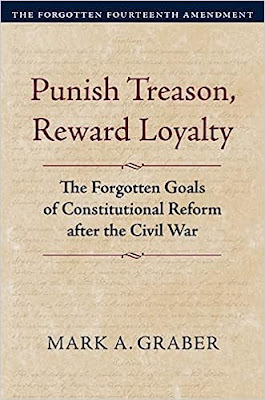
Mark A. Graber, Punish Treason, Reward Loyalty: The Forgotten Goals of Constitutional Reform after the Civil War (University of Kansas Press, 2023)
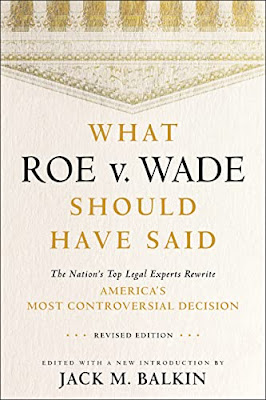
Jack M. Balkin, What Roe v. Wade Should Have Said: The Nation's Top Legal Experts Rewrite America's Most Controversial Decision - Revised Edition (NYU Press, 2023)

Andrew Koppelman, Burning Down the House: How Libertarian Philosophy Was Corrupted by Delusion and Greed (St. Martin’s Press, 2022)

Gerard N. Magliocca, Washington's Heir: The Life of Justice Bushrod Washington (Oxford University Press, 2022)
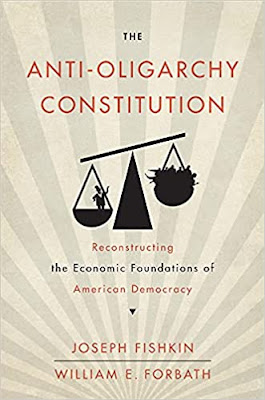
Joseph Fishkin and William E. Forbath, The Anti-Oligarchy Constitution: Reconstructing the Economic Foundations of American Democracy (Harvard University Press, 2022)
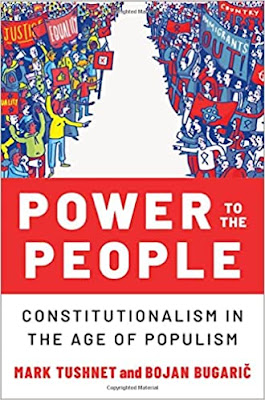
Mark Tushnet and Bojan Bugaric, Power to the People: Constitutionalism in the Age of Populism (Oxford University Press 2021).

Mark Philip Bradley and Mary L. Dudziak, eds., Making the Forever War: Marilyn B. Young on the Culture and Politics of American Militarism Culture and Politics in the Cold War and Beyond (University of Massachusetts Press, 2021).

Jack M. Balkin, What Obergefell v. Hodges Should Have Said: The Nation's Top Legal Experts Rewrite America's Same-Sex Marriage Decision (Yale University Press, 2020)

Frank Pasquale, New Laws of Robotics: Defending Human Expertise in the Age of AI (Belknap Press, 2020)

Jack M. Balkin, The Cycles of Constitutional Time (Oxford University Press, 2020)

Mark Tushnet, Taking Back the Constitution: Activist Judges and the Next Age of American Law (Yale University Press 2020).

Andrew Koppelman, Gay Rights vs. Religious Liberty?: The Unnecessary Conflict (Oxford University Press, 2020)

Ezekiel J Emanuel and Abbe R. Gluck, The Trillion Dollar Revolution: How the Affordable Care Act Transformed Politics, Law, and Health Care in America (PublicAffairs, 2020)

Linda C. McClain, Who's the Bigot?: Learning from Conflicts over Marriage and Civil Rights Law (Oxford University Press, 2020)
Sanford Levinson and Jack M. Balkin, Democracy and Dysfunction (University of Chicago Press, 2019)

Sanford Levinson, Written in Stone: Public Monuments in Changing Societies (Duke University Press 2018)

Mark A. Graber, Sanford Levinson, and Mark Tushnet, eds., Constitutional Democracy in Crisis? (Oxford University Press 2018)

Gerard Magliocca, The Heart of the Constitution: How the Bill of Rights became the Bill of Rights (Oxford University Press, 2018)

Cynthia Levinson and Sanford Levinson, Fault Lines in the Constitution: The Framers, Their Fights, and the Flaws that Affect Us Today (Peachtree Publishers, 2017)

Brian Z. Tamanaha, A Realistic Theory of Law (Cambridge University Press 2017)

Sanford Levinson, Nullification and Secession in Modern Constitutional Thought (University Press of Kansas 2016)

Sanford Levinson, An Argument Open to All: Reading The Federalist in the 21st Century (Yale University Press 2015)

Stephen M. Griffin, Broken Trust: Dysfunctional Government and Constitutional Reform (University Press of Kansas, 2015)

Frank Pasquale, The Black Box Society: The Secret Algorithms That Control Money and Information (Harvard University Press, 2015)

Bruce Ackerman, We the People, Volume 3: The Civil Rights Revolution (Harvard University Press, 2014)
Balkinization Symposium on We the People, Volume 3: The Civil Rights Revolution

Joseph Fishkin, Bottlenecks: A New Theory of Equal Opportunity (Oxford University Press, 2014)

Mark A. Graber, A New Introduction to American Constitutionalism (Oxford University Press, 2013)

John Mikhail, Elements of Moral Cognition: Rawls' Linguistic Analogy and the Cognitive Science of Moral and Legal Judgment (Cambridge University Press, 2013)

Gerard N. Magliocca, American Founding Son: John Bingham and the Invention of the Fourteenth Amendment (New York University Press, 2013)

Stephen M. Griffin, Long Wars and the Constitution (Harvard University Press, 2013)

Andrew Koppelman, The Tough Luck Constitution and the Assault on Health Care Reform (Oxford University Press, 2013)

James E. Fleming and Linda C. McClain, Ordered Liberty: Rights, Responsibilities, and Virtues (Harvard University Press, 2013)
Balkinization Symposium on Ordered Liberty: Rights, Responsibilities, and Virtues

Andrew Koppelman, Defending American Religious Neutrality (Harvard University Press, 2013)

Brian Z. Tamanaha, Failing Law Schools (University of Chicago Press, 2012)

Sanford Levinson, Framed: America's 51 Constitutions and the Crisis of Governance (Oxford University Press, 2012)

Linda C. McClain and Joanna L. Grossman, Gender Equality: Dimensions of Women's Equal Citizenship (Cambridge University Press, 2012)

Mary Dudziak, War Time: An Idea, Its History, Its Consequences (Oxford University Press, 2012)

Jack M. Balkin, Living Originalism (Harvard University Press, 2011)

Jason Mazzone, Copyfraud and Other Abuses of Intellectual Property Law (Stanford University Press, 2011)

Richard W. Garnett and Andrew Koppelman, First Amendment Stories, (Foundation Press 2011)

Jack M. Balkin, Constitutional Redemption: Political Faith in an Unjust World (Harvard University Press, 2011)

Gerard Magliocca, The Tragedy of William Jennings Bryan: Constitutional Law and the Politics of Backlash (Yale University Press, 2011)

Bernard Harcourt, The Illusion of Free Markets: Punishment and the Myth of Natural Order (Harvard University Press, 2010)

Bruce Ackerman, The Decline and Fall of the American Republic (Harvard University Press, 2010)
Balkinization Symposium on The Decline and Fall of the American Republic

Ian Ayres. Carrots and Sticks: Unlock the Power of Incentives to Get Things Done (Bantam Books, 2010)

Mark Tushnet, Why the Constitution Matters (Yale University Press 2010)

Ian Ayres and Barry Nalebuff: Lifecycle Investing: A New, Safe, and Audacious Way to Improve the Performance of Your Retirement Portfolio (Basic Books, 2010)
.jpg)
Jack M. Balkin, The Laws of Change: I Ching and the Philosophy of Life (2d Edition, Sybil Creek Press 2009)

Brian Z. Tamanaha, Beyond the Formalist-Realist Divide: The Role of Politics in Judging (Princeton University Press 2009)
Andrew Koppelman and Tobias Barrington Wolff, A Right to Discriminate?: How the Case of Boy Scouts of America v. James Dale Warped the Law of Free Association (Yale University Press 2009)

Jack M. Balkin and Reva B. Siegel, The Constitution in 2020 (Oxford University Press 2009)

Heather K. Gerken, The Democracy Index: Why Our Election System Is Failing and How to Fix It (Princeton University Press 2009)

Mary Dudziak, Exporting American Dreams: Thurgood Marshall's African Journey (Oxford University Press 2008)

David Luban, Legal Ethics and Human Dignity (Cambridge Univ. Press 2007)

Ian Ayres, Super Crunchers: Why Thinking-By-Numbers is the New Way to be Smart (Bantam 2007)

Jack M. Balkin, James Grimmelmann, Eddan Katz, Nimrod Kozlovski, Shlomit Wagman and Tal Zarsky, eds., Cybercrime: Digital Cops in a Networked Environment (N.Y.U. Press 2007)

Jack M. Balkin and Beth Simone Noveck, The State of Play: Law, Games, and Virtual Worlds (N.Y.U. Press 2006)

Andrew Koppelman, Same Sex, Different States: When Same-Sex Marriages Cross State Lines (Yale University Press 2006)

Brian Tamanaha, Law as a Means to an End (Cambridge University Press 2006)

Sanford Levinson, Our Undemocratic Constitution (Oxford University Press 2006)

Mark Graber, Dred Scott and the Problem of Constitutional Evil (Cambridge University Press 2006)

Jack M. Balkin, ed., What Roe v. Wade Should Have Said (N.Y.U. Press 2005)

Sanford Levinson, ed., Torture: A Collection (Oxford University Press 2004)
Balkin.com homepage
Bibliography
Conlaw.net
Cultural Software
Writings
Opeds
The Information Society Project
BrownvBoard.com
Useful Links
Syllabi and Exams

