E-mail:
Jack Balkin: jackbalkin at yahoo.com
Bruce Ackerman bruce.ackerman at yale.edu
Ian Ayres ian.ayres at yale.edu
Corey Brettschneider corey_brettschneider at brown.edu
Mary Dudziak mary.l.dudziak at emory.edu
Joey Fishkin joey.fishkin at gmail.com
Heather Gerken heather.gerken at yale.edu
Abbe Gluck abbe.gluck at yale.edu
Mark Graber mgraber at law.umaryland.edu
Stephen Griffin sgriffin at tulane.edu
Jonathan Hafetz jonathan.hafetz at shu.edu
Jeremy Kessler jkessler at law.columbia.edu
Andrew Koppelman akoppelman at law.northwestern.edu
Marty Lederman msl46 at law.georgetown.edu
Sanford Levinson slevinson at law.utexas.edu
David Luban david.luban at gmail.com
Gerard Magliocca gmaglioc at iupui.edu
Jason Mazzone mazzonej at illinois.edu
Linda McClain lmcclain at bu.edu
John Mikhail mikhail at law.georgetown.edu
Frank Pasquale pasquale.frank at gmail.com
Nate Persily npersily at gmail.com
Michael Stokes Paulsen michaelstokespaulsen at gmail.com
Deborah Pearlstein dpearlst at yu.edu
Rick Pildes rick.pildes at nyu.edu
David Pozen dpozen at law.columbia.edu
Richard Primus raprimus at umich.edu
K. Sabeel Rahmansabeel.rahman at brooklaw.edu
Alice Ristroph alice.ristroph at shu.edu
Neil Siegel siegel at law.duke.edu
David Super david.super at law.georgetown.edu
Brian Tamanaha btamanaha at wulaw.wustl.edu
Nelson Tebbe nelson.tebbe at brooklaw.edu
Mark Tushnet mtushnet at law.harvard.edu
Adam Winkler winkler at ucla.edu
You can find a letter from me in today's NYTimes responding to an earlier article in the Times on how financially strapped states are looking for ways to cut their budgets. My suggestion is that (at least) the 27 other states (besides Nebraska) with under-5 million population (i.e., roughly the size of New Zealand) emulate Nebraska by abolishing its almost totally useless (and necessarily costly) "upper house." I note that NY Republican gubernatorial candidate Rick Lazio has proposed doing away with the New York Senate. Although I share his belief (and that of the editorial page of the New York Times) that New York would be well rid of every single current New York senator, I'm genuinely uncertain about whether the largest states are helped or hurt by a second house (just as, for all of my loathing of the current US Senate, I am not opposed to national-level bicameralism per se, though even with a reformed Senate, I'd probably support an end to the "death-veto" that the Senate has over House legislation and allow the House to pass legislation that, say, gets at least 40 votes in the Senate with, say, 60% of the vote in the House (plus, obviously, presidential approval). I do hope that Lazio gets the Republican nomination--his principal opponent, turncoat former-Democrat Steve Levy, seems mainly to be rabidly anti-immigrationist--and I hope that he will try to educate New York voters about the deficiencies of their own constitutional system (and perhaps suggest a new state constitutional convention to do something about it. It would be interesting to see if Andrew Cuoma would actually be willing to defend the New York Senate in its current instantiation.
While I'm at it in promoting budget cuts, I note that my colleague Jordan Steiker, at the UT Law School, is currently working on a terrific article focusing on the increasing budget-based opposition to the death penalty. It costs an enormous amount to try somebody for capital murder (and to finance the inevitable multi-year appeals), and a number of conservatives are increasingly asking why counties should be risking bankruptcy for the possibility of a (long-delayed) pound of flesh. Indeed, there's an article in yesterday's (Sunday's) Austin American-Statesman, "Prisons among cost cuts?" noting that even Texas, which built a staggering number of prisons over the past two decades, is considering closing some prisons (as I think is the case in prison-happy California as well." Of course, this would require taking on the one union that conservatives seem to pay deference to, prison guards. Would they really rather cut unemployment benefits and similar safety-net programs in order to provide work for prison guards (who are guarding literally thousands of persons who are in prison for non-violent druguu-related offenses)? What would Rand Paul say about this (which is not meant as a snarky question)? Posted
1:33 PM
by Sandy Levinson [link]
(44) comments
Saturday, May 29, 2010
More on al Maqaleh: The Discomfiting Analogy Between Boumediene and Lawrence
Guest Blogger
Steve Vladeck
Much has been written about Justice Kennedy’s 2003 opinion for the majority in Lawrence v. Texas, and what it actually held in striking down a Texas law that banned homosexual sodomy. The prevailing wisdom seems to be that Kennedy went further than Romer-like “rational basis-plus” equal protection analysis (since that was the gist of Justice O’Connor’s narrower concurrence), but that he did not go so far as to hold either that (1) the Texas law violated a previously unrecognized fundamental right; or (2) discrimination on the basis of sexual orientation warranted heightened scrutiny under the Equal Protection Clause. All we can safely say (and all I tell my Constitutional Law students) is that “somewhere in between” Romer and these two possibilities is where the Court must have ended up. Indeed, the uncertainty over Lawrence has been reflected in some of the key lower-court decisions in the seven years since; two circuits split on whether state laws banning the sale of sex toys were unconstitutional after Lawrence, with the split turning entirely on disagreement over how far Lawrence went; the Kansas Supreme Court struck down the state’s “Romeo and Juliet” law for discriminating against homosexual liaisons; and the Eleventh Circuit, in one of the most controversial post-Lawrence decisions, upheld Florida’s ban on adoption by homosexual parents (which a state court subsequently invalidated). Suffice it to say that the question of Lawrence’s true legacy looms large still today.
The more that time has elapsed since last Friday’s D.C. Circuit decision in al Maqaleh v. Gates, holding that the Suspension Clause does not protect non-citizens detained at Bagram Air Base in Afghanistan, the more I’ve come to think that Maqaleh is the manifestation of comparable uncertainty in Justice Kennedy’s opinion for the Court in Boumediene. Put another way, although I continue to think (as I wrote last week) that Maqaleh is wrongly decided (and is, in any event, distressingly naïve), I also think it is not inconsistent with at least some of Boumediene—and that its wrongness is, in all fairness, Justice Kennedy’s fault.
In one sense, Maqaleh is, quite self-consciously, a careful application of the “test” Justice Kennedy articulated in Boumediene. As the Court of Appeals explained, Boumediene suggested three factors that must be balanced in determining whether the Suspension Clause “applies”:
(1) the citizenship and status of the detainee and the adequacy of the process through which that status determination was made; (2) the nature of the sites where apprehension and then detention took place; and (3) the practical obstacles inherent in resolving the prisoner's entitlement to the writ.
Applying these factors, the D.C. Circuit concluded that (1) and (2) counseled in favor of habeas (indeed, (1) was even stronger here than in Guantánamo), but that (3) weighed strongly to the contrary, given the proximity of the Bagram detention facility to the “battlefield,” and to ongoing active combat operations. Thus, the Court of Appeals concluded, the balancing test that supported habeas in the Guantánamo context cut against it vis-à-vis Bagram, never mind that Judge Bates had applied the exact same standard and come to the opposite result in the district court.
Although Chief Judge Sentelle’s opinion doesn’t acknowledge it, there’s another aspect to Justice Kennedy’s opinion for the Boumediene Court, in which he devoted pages and pages to the structural significance of the Suspension Clause, and to the critical role it plays in protecting the separation of powers. I’ve written about the separation-of-powers analysis and its underpinnings at some length, but I think it’s typified by the following passage in Boumediene:
The [Suspension] Clause protects the rights of the detained by a means consistent with the essential design of the Constitution. It ensures that, except during periods of formal suspension, the Judiciary will have a time-tested device, the writ, to maintain the “delicate balance of governance” that is itself the surest safeguard of liberty. The Clause protects the rights of the detained by affirming the duty and authority of the Judiciary to call the jailer to account. The separation-of-powers doctrine, and the history that influenced its design, therefore must inform the reach and purpose of the Suspension Clause. [emphasis added]
In other words, although courts should weigh the three identified factors, they should also understand that the separation of powers places a fairly powerful thumb on the side of judicial review. And it does so not to protect the rights of the detainees as such, but to preserve the role of the courts. Indeed, in no fewer than eleven distinct passages, the Boumediene majority expressly linked habeas to the separation of powers, suggesting that the unique characteristics of the United States’ control over Guantánamo may have been important, but were not dispositive—and that the structural features of the writ had a lot to say about its extraterritorial availability. The Court didn’t go so far as to suggest that, because the Suspension Clause is a structural constraint on governmental conduct, it applies everywhere. Nor, though, did it suggest that those structural concerns were irrelevant. As I’ve argued before, there’s just no way to understand Justice Kennedy’s response to the Chief Justice’s dissent, in particular, without accounting for the separation of powers implications separate from the due process rights of the detainees.
Just like Lawrence, then, Boumediene’s actual holding seems to fit uncomfortably between two available—but clearly rejected—alternatives: (1) that the Suspension Clause extends no further than Guantánamo; or (2) that the Suspension Clause, as a structural constraint on federal power, protects anyone in U.S. custody, regardless of where they are held. And just like Lawrence, it is the subsequent cases more than the decision itself that will provide the truest testament to the scope of the original holding. That’s why Maqaleh is going to matter so much. And, unlike Lawrence, it isn’t likely that there will be a host of additional cases testing Boumediene’s application in other corners of the world. For one, we just don’t have that many overseas detention facilities (that we know of, anyway). Second, and perhaps more perniciously, Maqlaeh creates perverse incentives for the government to hold anyone picked up outside the United States in Afghanistan, at least for the time being.
In short, then, to whatever extent the series of conflicting post-Lawrence cases have usefully tested the scope and limits of the principle Justice Kennedy meant to articulate in his opinion for the Court, Maqaleh may well be it for Boumediene. With no chance of certiorari and even longer odds for rehearing en banc, it seems that we’ve ended up with one of the narrower possible readings of Justice Kennedy’s opinion, whether he meant it or not.
Steve Vladeck is Professor of Law at American University Washington College of Law. You can reach him by e-mail address at svladeck at wcl.american.edu
Buried in the depths of the National Defense Authorization Act for FY2011 (H.R. 5136) is the latest salvo in the war on lawyers. In particular, section 1037 of the Act [page 403 of the PDF], titled "Inspector General Investigation of the Conduct and Practices of Lawyers Representing Individuals Detained at Naval Station, Guantanamo Bay, Cuba," instructs the Department of Defense IG to "conduct an investigation of the conduct and practices of lawyers" who represent clients at Guantánamo and report back to the House and Senate Armed Services Committees within 90 days.
As set forth in the bill, the lawyers subject to such an investigation are military or civilian lawyers for whom there is “reasonable suspicion” to believe that they have:
(A) interfered with the operations of the Department of Defense at Naval Station, Guantanamo Bay, Cuba, relating to [non-citizens detained at Guantánamo];
(B) violated any applicable policy of the Department;
(C) violated any law within the exclusive investigative jurisdiction of the Inspector General of the Department of Defense; or
(D) generated any material risk to a member of the Armed Forces of the United States
Under the provision, the IG is required both to report on such conduct and to "identify any actions taken by the Department to address any [such] conduct or practice.”
Before turning to the disturbing practical and legal implications of this provision, let me make two quick observations about its scope: First,virtually every lawyer that has represented a detainee at Guantánamo has “interfered with the operations of the Department of Defense” at Guantánamo. After all, from the government’s perspective, the representation itself has caused substantial interference, since lawyers have, among other things, informed the detainees of their rights; petitioned the federal courts for the detainees’ release; obstructed the government’s ability to interrogate the detainees; and so on. Perhaps Congress means something different from “interfered with,” but such sweeping language is difficult to construe narrowly. To be sure, I don’t mean either to condone or criticize such “interference” in general, but merely to point out that this language would basically require the DoD IG to report to Congress on every lawyer who has represented a Guantánamo detainee at any time in the past eight years, including me.
Second, although I think we can all agree that lawyers who violate the law should be subject to investigation and potential punishment (or, perhaps we can’t even agree on that much), it should be obvious just how far past that scenario this provision sweeps. This statute would raise a different issue altogether if the investigation-triggering conduct were limited to subsection “(C)” quoted above. But in addition to the vague and sweeping language of subsection (A), subsections (B) and (D) also sweep well past the kinds of conduct for which lawyers have traditionally been subject to investigation and congressional oversight.
With these observations in mind, the potential practical effect of this provision is deeply disturbing. One can only imagine the kind of chilling effect it might have on lawyers to know that their efforts to provide the Guantánamo detainees with the meaningful access to the courts required by the Supreme Court in Boumediene will nevertheless subject them to the scrutiny of the House and Senate Armed Services Committees. Moreover, the “reasonable suspicion” standard could itself force counsel to think twice before challenging extant DoD policies governing their interactions with their clients, thereby interfering with counsel’s ability zealously to represent their clients. The mere threat of investigation could easily force compliance with troubling policies limiting lawyer-client interaction that counsel might otherwise seek to challenge. Say what you will about the merits of these cases, but I had thought we’d long-since settled the appropriateness of allowing lawyers in these cases vigorously to represent their clients in court, consistent with the highest traditions of the profession.
The hard question, it seems to me, is whether these provisions would survive constitutional challenge. To be sure, these are not direct constraints on attorney speech, like the spending restrictions invalidated by the Supreme Court in 2001 in Legal Services Corp. v. Velazquez. But what Justice Kennedy wrote there is telling: “The attempted restriction is designed to insulate the Government’s interpretation of the Constitution from judicial challenge. The Constitution does not permit the Government to confine litigants and their attorneys in this manner. We must be vigilant when Congress imposes rules and conditions which in effect insulate its own laws from legitimate judicial challenge.” Even if this provision doesn’t directly constrain the ability of Guantánamo lawyers to advocate on behalf of their clients, the serious chilling effect that it will likely have, especially at the margins, seems to raise the same concerns identified by the Velazquez Court. Moreover, what is at stake is not merely the First Amendment rights of the lawyers, or the habeas corpus rights of the detainees. As Velazquez suggested, it is the separation of powers itself that is implicated when Congress so directly interferes with constitutionally-protected legal representation. This is not to say that such language wouldn’t survive constitutional challenge, but that, at the very least, it is deeply troubling legally, as well as practically.
I had hoped (perhaps naively) that the dust-up earlier this year over the “al Qaeda 7” (and the emphatic response thereto) had finally put to bed the repeated attacks on lawyers that have arisen since Cully Stimson’s spurious critique of the role of D.C. law firms in Guantánamo litigation in January 2007. But so long as Congress is seriously considering language like this, it seems that such lawyers will continue to have to defend themselves as much as they (and in order to) defend the rights of their clients.
Steve Vladeck is Professor of Law at American University Washington College of Law. You can reach him by e-mail address at svladeck at wcl.american.edu
I finally got around to reading Graham v. Florida, the juvenile life-without-parole case, and had these "inside baseball" thoughts. (1) At one point in Chief Justice Roberts's opinion concurring in the result, the "royal we" appears: "Justice Thomas disagrees with even our limited reliance on Roper...." I wonder whether this indicates that the Chief Justice tried to float his opinion as an opinion for the Court, and wasn't able to persuade the majority to go along. Parts I and II of his opinion do have some structural similarities to what Justice Kennedy wrote for the majority, and Part III is clearly a free-standing one. On the other hand, Justice Kennedy's opinion is pretty long, and reads as if it was written from the get-go.
(2) The majority opinion refers to non-U.S. law as "support[ing] ... its independent conclusion" (a slightly stronger formulation, in my view, than earlier references to non-U.S. law as "confirming" an independent conclusion). The fuss ginned up over such references appears not to have scared the majority away from "continu[ing a] longstanding practice," and Justice Sotomayor, given her first opportunity to participate in a decision referring to non-U.S. law, went along without comment. I look forward to hearing how nominee Kagan deals with the inevitable questions on this that she'll get.
(3) More substantively, the Court holds that life-without-parole for juvenile nonhomicide offenders is unconstitutional, and says that if a state wants to impose life sentences, it must give the offenders a chance to show at some later point that they deserve release. What, though, of very long determinate sentences (50 years without opportunity for parole)? Put another way, is there some threshold length-of-sentence above which states must operate parole systems for juvenile offenders? Here I look forward to the inevitable litigation. (If I were structuring it, I'd look for a juvenile offender who received a determinate sentence that extends beyond his expected lifetime.) Posted
9:26 AM
by Mark Tushnet [link]
Monday, May 24, 2010
Elena Kagan and Anti-Distortion of the Speech Market
Marvin Ammori
A few weeks back, I posted a long blog post about Elena Kagan's scholarship and what it suggests about her views on Citizens United and the constitutionality of standard media regulation. Because I spent the next week talking to people about the post, I reviewed her scholarship again and had some more thoughts. I figured I would post these thoughts, more for discussion than anything else.
So here is another long, geeky post (almost embarrassingly long) about scholarship and legal doctrine. Scholars write such things about Justicessometimes, so why not about nominees?
I think her scholarship (albeit from last decade) raises interesting questions about her support for some of the positions held by Justice Stevens and President Obama.
This post is not about any particular decision but about a group of "rationales" often advanced by government to defend the constitutionality of adopted laws. Specifically, the post is about “anti-distortion” rationales—that is, government rationales used to justify speech rules bases on the existing (or potential) speech environment being “distorted” by certain factors (like wealth inequality). Both Obama and Stevens appear sympathetic to anti-distortion rationales, for example, regarding corporate campaign expenditures to un-distort a speech environment that drowns out the voice of ordinary citizens.
It appears that Obama and Stevens are fans of anti-distortion rationales while Dean Kagan likely is not. In Citizens United, Dean Kagan famously downplayed, if not abandoned, these rationales. She refers to them in one academic article as even “dangerous.” Sometimes, she even seems to caricature these arguments—which is unusual for her, as her scholarship is generally remarkably nuanced (and brilliant).
In terms of sources, I will discuss primarily a short passage in Kagan’s first article and Kagan’s argument in Citizens United, as well as their relation to the longer passage in Kagan’s scholarship that I discussed in my previous post. Like my last post, this one will be long (for a post) and will discuss legal scholarship and Supreme Court cases. Again, I’ll name the articles and even the pages (or “find”-able quotes) so others can look to the sources and reach perhaps other conclusions, if they're interested. And, again, there are important caveats, so it’s not a slam-dunk case.
So before the fold, I'll present the argument in brief.
Argument in Brief
There are at least two relevant anti-distortion rationales that government can assert to defend speech rules, a broad rationale based on massive wealth inequality distorting speech and a narrow rationale based on the existence of corporate legal rules. Obama and Stevens have voiced support for even the broad rationale, while the Austin majority rested only on the narrow one. Thus, while it is unsurprising Kagan’s argument in Citizens rejected the broad rationale, it is perhaps telling that she did not advance even the narrow rationale in the briefs. In addition, her two major First Amendment articles in the 1990s depicted the broad and narrow anti-distortion rationales by turns as indistinguishable from one another, as conflicting with the First Amendment itself, and even as "dangerous."
Of course, many caveats must be considered in this somewhat academic exercise. Argument
Let’s begin with considering “anti-distortion.” Anti-distortion is merely a rationale. If someone challenges a rule as unconstitutional, courts will often look at the rationale underlying the rule and determine whether the rule “fits” tightly with that rationale. The government rationale for a challenged rule could be anything from “government’s concern for an unborn child,” “government’s concern for the health of workers,” or “government’s interest in increasing private-sector employment.” (I’m going to ignore fit here.)
A Justice could vote to uphold a government law (i.e. decide it is not unconstitutional) based on one rationale, but reject other possible rationales. For example, in arguing Citizens United, Kagan advanced two rationales: that limiting corporate expenditures from the corporate treasury right before an election (1) limits corruption of elected officials, who might otherwise become beholden to corporations, and (2) protects shareholders who disagree with their corporation’s campaign expenditures. Kagan didn’t really advance any anti-distortion rationale.
Several different rationales could be described as “anti-distortion.” Consider these different kinds of distortions that government may want to combat: (a) “all corporate money naturally drowns out the voices of ordinary people, distorting the speech environment,” (b) “foreign corporate money is drowning out the voices of American people, distorting the speech environment,” or (c) “an economic or technological market failure is now enabling one speaker to silence many speakers, distorting the speech environment.”
In considering Kagan’s work, it’s helpful to think specifically of two versions of the anti-distortion rationale implicated in cases like Citizens United and Austin--one broad, and one narrow.
Broad Anti-Distortion (Equalization of Speech in Light of Unequal Wealth). Under this view, the speech environment is distorted by our society’s wealth and resource inequality. Wealth can affect constitutional rights in different ways. Everyone can cast an equal vote at the polls, despite wealth inequality. This is not so with speech; Bill Gates and AT&T both have far more resources than Average Joe has, and (if spending money is speech) Bill Gates can speak far louder than him. Perhaps the opportunity to participate in our democracy’s discourse should be—if not equal, like voting—at least more equal, despite our society’s vast discrepancies in wealth. This is the anti-distortion of Obama and, apparently, Justice Stevens.
Obama said he would nominate someone “who, like Justice Stevens, knows that in a democracy, powerful interests must not be allowed to drown out the voices of ordinary citizens.” This is simply a wealth distortion argument about "powerful interests" and "ordinary citizens."
I believe the Government has an important interest in leveling the electoral playing field by constraining the cost of federal campaigns. . . . It is quite wrong to assume that the net effect of limits on contributions and expenditures—which tend to protect equal access to the political arena . . .—will be adverse to the interest in informed debate protected by the First Amendment.
I don't mean to overstate Stevens' sympathy for the anti-distortion rationale, but this strikes me as support for the broad version of the rationale.
Narrow Anti-Distortion (Corporate Law). The narrower version focuses on corporate law not wealth. Under this rationale, it is corporate law distorts the speech environment. Through laws structuring and enabling corporations, government confers benefits on corporations through corporate law, primarily so corporations can aggregate and create wealth for their shareholders and the public. These benefits include limited liability and perpetual life. When corporations spend unlimited sums on campaigns, they take advantage of these legal/economic benefits to flood the speech market with their corporate views. As a result, apparent support for particular messages is exaggerated far beyond their actual support among real people. Pro-BP and pro-Exxon messages might overwhelm the airwaves and newspapers while the actual support for BP's and Exxon's messages is low. Government can “un-distort” this corporate-law-induced speech-distortion, such as through campaign finance limits, including corporate spending limits in the last weeks of an election.
Austin Rested on the Narrow Rationale
According to Justice Stevens, the majority opinion in Austin (the case overruled by Citizens United) rested on the narrow, not broad, anti-distortion rationale. He wrote, in dissent in Citizens United:
The majority suggests that Austin rests on the foreign concept of speech equalization, but ... we expressly ruled that the compelling interest supporting Michigan’s statute [in Austin] was not one of “ ‘equaliz[ing] the relative influence of speakers on elections,’ ” but rather the need to confront the distinctive corrupting potential of corporate electoral advocacy financed by general treasury dollars.
That is, while Stevens seems to support the broad anti-distortion rationale, himself, the majority of five Justices in Austin appeared to have accepted only the narrow, corporate, anti-distortion rationale.
Three Sources for Kagan's Thoughts
I look at two of Kagan's academic articles and her argument in Citizens United, though not in that order.
(A) Kagan and Distortion in Private Speech, Public Purpose
In Kagan's most-cited law review article on free speech, published in 1996 and entitled Private Speech, Public Purpose (which I also discussed last post), Kagan argues that there is no real difference between the broad and narrow anti-distortion rationales.
The New York Times quotes the key language from her article. In her article, Kagan responded to the argument that campaign finance regulation is constitutionally permissible “on the ground that corporate wealth derives from privileges bestowed on corporations by the government.”
“This argument fails,” Ms. Kagan wrote, “because individual wealth also derives from governmental action.”
It is for this reason, actually, that she suggested Austin could not be distinguished from other cases, enabling individuals to spend unlimited sums.
So, first, the narrow anti-distortion rationale cannot be distinguished from the broad.
Next, Kagan describes the broad anti-distortion rationale as possibly at odds with the First Amendment itself, at least as a descriptive matter: "The Court said not that this interest was insufficient, but that its very assertion conflicted with fundamental premises of the First Amendment."
If the broad anti-distortion is an impermissible rationale (like the "rationale" to silence dissent), descriptively, laws resting on broad distortion should trigger at least strict scrutiny.
As a result, this article suggests that Austin rests on a rationale indistinguishable from the broad rationale--a broad rationale she describes as impermissible under the First Amendment.
(B) Kagan and Distortion in Citizens United
Years later, when serving in the much different capacity of Solicitor General arguing arguing Citizens United, Kagan did distinguish practically between these two rationales. In Citizens, she was representing a client (the Obama administration) before a hostile court, so her argument may say little about her own views. The President has suggested the opposite about Kagan arguing Citizens as her first case: "I think it says a great deal about her commitment to protect our fundamental rights." Whether her argument says very little or a great deal, her argument clearly did not rest on either anti-distortion rationale.
At oral argument, she endorsed the narrow form of anti-distortion in passing, and clearly repudiated the broad form. In briefing, she referenced neither. (Justice Roberts emphasized this omission "most importantly" in his concurrence.)
Here is the Kagan-Roberts discussion at oral argument where she distinguishes between the broad and the narrow anti-distortion rationales. I bold and label the references to broad and narrow anti-distortion.
CHIEF JUSTICE ROBERTS: Counsel, what do you -- what do you understand to be the compelling interest that the Court articulated in Austin? GENERAL KAGAN: I think that what the Court articulated in Austin -- and, of course, in the government briefs we have suggested that Austin did not articulate what we believe to be the strongest compelling interest, which is the anticorruption interest.
...
CHIEF JUSTICE ROBERTS: So -- so am I right then in saying that in the supplemental briefing you do not rely at all on the market distortion rationale on which Austin relied? Not the shareholder rationale, not the quid pro quo rationale, [but rather] the market distortion issue. These corporations have a lot of money.
GENERAL KAGAN: [Broad anti-distortion rejected:] We do not rely at all on Austin to the extent that anybody takes Austin to be suggesting anything about the equalization of a speech market. So I know that that's the way that many people understand the distortion rationale of Austin, and if that's the way the Court understands it, we do not rely at all on that.
CHIEF JUSTICE ROBERTS: So if we have to preserve -- if we are going to preserve Austin we have to accept your invitation that the quid pro quo interest supports the holding there or the shareholder protection interest.
GENERAL KAGAN: I would say either the quid pro quo interest, the corruption interest or the shareholder interest, or what I would say is a -- is something related to the shareholder interest that is in truth my view of Austin, [narrow anti-distortion offered] which is a view that when corporations use other people's money to electioneer, that is a harm not just to the shareholders themselves but a sort of a broader harm to the public that comes from distortion of the electioneering that is done by corporations.
A lot of people have criticized Kagan for discarding the anti-distortion rationale(s) in urging the Court not to overrule Austin, especially since Austin itself rested on an anti-distortion rationale. In her defense, at argument, Kagan only discarded the broader anti-distortion rationale that, according to Justice Stevens, Austin did not even rest on. Therefore, Kagan was probably arguing based on the same conclusion that Austin did not rest on a broad anti-distortion rationale. So her argument on the broad rationale makes perfect sense, if Kagan did not want to advance a new, broader, rationale for Austin.
As for the narrower rationale, it seems odd that she didn't push this argument harder, as Austindid rest on this rationale. Rather, she argues in the briefs that the government thinks another rationale, anti-corruption, which was not accepted in Austin, is the stronger rationale.
You get the feeling that Kagan just does not find the anti-distortion rationale very persuasive. She said the government thinks Austin didn't pick the best rationale, and then she hardly advances Austin's actual rationale.
Nonetheless, I have grown more sympathetic to how she argued CitizensUnited--just as she implied in her article many years earlier, it would be hard to limit the anti-distortion rationale to corporations. If government can regulate corporate aggregations of wealth because these aggregations can over-represent public support for a point of view (distorting the speech environment), why not regulate individual aggregations for the same reason? Billionaires, not just corporations, can speak more loudly than Average Joes, and distort the speech environment no less. Therefore, some would conclude that government should be allowed to limit expenditures from both individuals and corporations--but this Court would have never accepted that argument, and individual speech wasn't at issue in Citizens anyway. Also, another court might have agreed that government can structure and limit corporations--which are creatures purely of law--broadly for public ends and in ways government cannot structure and limit individuals. But, again, it's unlikely this Court would have been receptive to the argument.
That doesn't change the inference you get from both Private Speech, Public Purpose and her Citizens United strategy, where she argues Austin, resting on narrow anti-distortion, did not rest on the most compelling rationale. It seems she doesn't find the broad or the narrow anti-distortion rationale very persuasive.
In addition, her first article also sheds some more light.
(C) Anti-Distortion in The Changing Face of First Amendment Neutrality
Elena Kagan's first major First Amendment article, The Changing Face of First Amendment Neutrality, was published in 1992 in the Supreme Court Review. The article, taken as a whole, strikes me as a pretty brilliant discussion of government attempts to promote speech where the speech at issue is neither constitutionally protected (such as threats) nor constitutionally compelled (like speech funded by government). That is, if government doesn’t have to protect or promote certain speech at all, which kinds of selective laws affecting that speech will still violate the First Amendment? (These thoughts strongly influenced an article I published last year, where I also argued that the distinction between subject-matter discrimination and viewpoint discrimination was overlooked and important across several similar doctrinal areas, and properly so.)
In addition to its brilliance, Kagan's article includes an interesting, suggestive passage about anti-distortion rationales. The passage is a substantive footnote (common in law review articles) explaining why Kagan focuses on government’s deliberate attempts to distort the speech market, rather than government attempts to counter private speech distortion (by the wealthy or by private corporations). She writes, in note 89:
The notion of a skewing effect, as set forth in the text, of course assumes that distortion arises from government, rather than from private, action. That assumption may be misplaced. If there is "too much" expression of a particular idea in an unregulated world, then government action specially disfavoring that idea might "un-skew," rather than skew, public discourse. [Two citations] ... [A side point about speech without constitutional protection.] Nonetheless, I think the assumption used here to measure distortion is generally, although not invariably, proper. Any other would allow the government too great-and too dangerous-an authority to decide what ideas are overrepresented or underrepresented in the market.
So two things to note.
First, she considers the anti-distortion rationale to be potentially dangerous. Notably, this passage does not purport to be descriptive. She is stating a normative preference—anti-distortion rationales are dangerous.
On some rules, Kagan is evidently right. Based on the type of rule justified by the rationale, the rationale could be dangerous; for example, I think the conservative bete noire, the fairness doctrine, is potentially dangerous, even if some might justify it based on anti-distortion. But other rules inspired by the anti-distortion rationale are not necessarily or particularly dangerous, including campaign expenditure limits and media ownership limits that would keep cable or broadcast companies from consolidating into giant "media monopolies." (Some believe media ownership limits are inspired only by anti-distortion, whereas I believe they rest on broaderstructural considerations). But, unlike Justice Stevens and President Obama, Dean Kagan’s default position on anti-distortion rationales is that they are dangerous, not that they benefit ordinary Americans.
Second, in her 1992 article, Kagan very oddly caricatures the anti-distortion position. While Kagan is usually a remarkably careful and nuanced scholar, she mischaracterizes both the anti-distortion position and the articles she cites for the position. (I realize no scholar can defend every footnote they've ever written, but caricaturing the anti-distortion argument seems telling of Kagan's views at the time, or maybe of academic interest.)
She cites two articles, one by Yale professor Owen Fiss (100 Harv L Rev at 786-87), one by Cass Sunstein (59 U Chi L Rev at 295-97).
Kagan seems to mischaracterize the anti-distortion rationales. She posits a premise where government action would "specially" disfavor an idea if "there is 'too much' expression of a particular idea in an unregulated world." That is neither what Fiss nor Sunstein (nor anyone else) argue. Yet Kagan seems to attribute this argument to them, in citing them for the argument. Rather, the idea isn't to disfavor a particular idea; it's to limit how much money a corporation can spend from its general coffers in the last days of an election or how many broadcast or cable systems any one company can own. These are rules of the road for speech based on many rationales: from anti-corruption to the distorting effects of corporate expenditures. Neither Fiss nor Sunstein suggests picking and targeting particular ideas that are "expressed" "too much." Sunstein, in the pages Kagan cites, argues: "Instead of allowing restrictions, we should encourage efforts to promote a better status quo." Fiss argues, in the cited pages, merely that we should be skeptical of government action, but that government can sometimes promote public debate, and we should not presume other powerful institutions (like CBS at the time) can never inhibit public debate. This strikes me is a far cry from specially disfavoring certain "ideas" expressed "too much." Anyone would consider such a proposition to be "dangerous," including Sunstein and Fiss, I assume.
On a finer point--neither of them would characterize the world as "unregulated." The myriad intricate corporate, tax, property, and contract rules regulate our world and shape even the speech environment. As Sunstein says in the article she cites: "The problem is not that private power is an obstacle to speech . . . The real problem is that public authority creates legal structures that restrict speech."
Caveats
My main caveat for this passage is that, in the mid-1990s, some liberals (like Sunstein and Fiss) were making a range of First Amendment arguments generally rejected by other liberals (like Kagan). Fiss and Sunstein generally defended a range of regulations imposed on broadcasters, which were upheld in cases like NBC v. US (upholding broadcast network and station ownership limits), NCCB v. FCC (upholding limit on newspaper owners owning broadcast stations in the same town), CBS v. FCC (upholding reasonable access to broadcasting by electoral candidates), and Red Lion v. FCC (upholding the fairness doctrine, in 1969).
Red Lion was not a popular case then among liberal scholars (or any scholars), and liberal scholars seemed critical of all broadcast decisions based on Red Lion alone. To the extent Fiss and Sunstein showed some support for broadcast cases and broadcast doctrine, more centrist liberals like Kagan would distance themselves from Fiss and Sunstein.
Kagan’s willingness to distinguish herself from Fiss and Sunstein strike me as expected in the early 1990s. It says little about her views now. Indeed, since 1992, the debate on media policy issues has shifted considerably because of new technologies like the Internet and the writing of scholars like Larry Lessig, Yochai Benkler, and C. Edwin Baker.
Beyond that, I include the usual caveats on this passage—Kagan wrote it years ago and it’s a pretty general point, so it may not predict her stance on particular cases. Plus, she's only disagreeing with a weak (if straw-man-like) argument.
Upshot
Based on these thoughts, for what they are worth, I think it makes sense for Senators to ask Dean Kagan not just about her views on Austin, Turner, and Citizens United, but also on particular rationales, like the broad and narrow anti-distortion rationales, and to ask about them particularly in relation to specific rules that have been litigated.
Kagan’s views on the constitutionality of rules limiting corporate campaign expenditures or limiting excessive consolidation of media power are highly important—as the President himself has acknowledged repeatedly.
Between questions about social issues and photos of softball, I hope she gets the opportunity to discuss these as well.
Final Note: I’m already on record as generally supportive of the Kagan nomination. I don’t think you try to sink a nomination based on inferences from law review articles on anti-distortion rationales justifying speech rules—but the President has placed these rationales front-and-center in nominating the candidate, and what better time to discuss them? Posted
2:11 PM
by Marvin Ammori [link]
Sunday, May 23, 2010
Summer reading: new books on prohibition, the Founders, and more
Mary L. Dudziak
Note: theLegal History Bloghas a round-up of book reviews of interest in major papers every Sunday. I don't usually cross-post such things here, but if you are looking for summer reading, these books may be of interest:
The 18th Amendment gets a new history in LAST CALL: The Rise and Fall of Prohibition by Daniel Okrent, reviewed today in the New York Times. "On Jan. 17, 1920, America went dry," David Oshinsky writes. "The 18th Amendment had been ratified a year earlier, banning 'the manufacture, sale, or transportation of intoxicating liquors' within the United States and its territories. Thus began the era of Prohibition, a nearly 14-year orgy of lawbreaking unparalleled in our history." Okrent
views Prohibition as one skirmish in a larger war waged by small-town white Protestants who felt besieged by the forces of change then sweeping their nation - a theory first proposed by the historian Richard Hofstadter more than five decades ago. Though much has been written about Prohibition since then, Okrent offers a remarkably original account, showing how its proponents combined the nativist fears of many Americans with legitimate concerns about the evils of alcohol to mold a movement powerful enough to amend the United States Constitution.
"Refreshingly accessible and deeply informed," Revolutionaries: A New History of the Invention of America by Jack Rakove "is just what you need when someone on the Internet or cable TV offers to give you the ideas about history now being offered by the Tea Party movement in exchange for those you got from well-trained teachers," David Hollinger writes in the San Francisco Chronicle. (The internet and well-trained teachers are, of course, not in separate worlds.) Hollinger continues:
The Federalist Papers an argument against a strong federal government that undercuts the policies of the Obama administration? Tea Party leader Dick Armey of Texas made this claim recently. When a skeptical reporter asked him about Alexander Hamilton, the chief author of the Federalist Papers, Armey declared that only "ill-informed professors" thought Hamilton was an advocate of a powerful national state. Ah, yes, professors.
"Revolutionaries" is written by a distinguished professor at Stanford who, unlike Dick Armey, knows the difference between a federalist and an anti-federalist....
But "Revolutionaries" is much more than a convenient inventory of truths by which the Tea Party version of the founding can be refuted. While Rakove does provide us with a cogent summary of what scholars know about the political history of the late 18th century, what gives his book real distinction is the skill with which he delivers this knowledge through a series of interlocking biographical narratives.
For law & war scholars: "How authentic can a war be when things don't blow up?" asks Jeff Stein in a Washington Post review of CYBER WAR: The Next Threat to National Security and What to Do About It by Richard A. Clarke and Robert K. Knake. "But the utility of cyber-tools in service of old-fashioned firepower ha[s] already been made clear." Nevertheless, "U.S. presidents have treated cyber-defense like spinach, picking it up and then putting it down....It will probably take 'an electronic Pearl Harbor' to wake us up, Clarke says."
Following my co-blogger Ken Anderson’s lead, I wanted to add a few additional notes on the D.C. Circuit’s holding today that a group of detainees held at the U.S. military base at Bagram, Afghanistan, do not have a constitutional right to seek a writ of habeas corpus in U.S. federal court. While acknowledging that at least two of the detainee-petitioners had been picked up far outside the Afghan borders (one, most notably, in Thailand) and only came to be in the Afghan theater because the U.S. government brought them there, the court concluded that the “practical obstacles inherent in resolving the prisoner’s entitlement to the writ” while petitioners were detained in an active theater of war weighed against recognizing an extraterritorial constitutional right to habeas.
Many things to say on the decision’s import and meaning, but here I’ll just start with two unrelated points. First, on the import. Whatever one thinks of the opinion on the merits, it may be easy to overstate its practical significance. The Obama Administration’s litigation strategy in all of its highest profile detention cases has been to moot key cases on their facts before they can be finally resolved by the Supreme Court. Such was the case with, for example, the weighty claim by a group of Gitmo detainees that winning their habeas cases entitled them to release in the United States. So too here, all indications are the Administration is scurrying not only to hand over its detention operations in Afghanistan to the Afghans generally (a move key human rights organizations endorse as a matter of international law), but also reportedly to transfer remaining non-Afghan detainees to their home countries for continued detention and/or trial. It’s possible the Administration may not succeed in its mooting strategy this time. But given the months they now have between petitions for rehearing en banc in the D.C. Circuit and (failing that) for cert sure to follow, I wouldn’t necessarily bet against them. If the U.S. cedes control of Bagram before the case reaches the Supreme Court, what will remain on the books is the ruling of an appeals court, in a decision, as Ken also seems to see it, highly and self-consciously limited to its particular facts.
Second, on the content. It seems fair to say the reasoning in the opinion was slight. And not just because out of the 26 pages of published writing, one doesn’t reach the meet of the analysis until the bottom of page 19 (after which follows about a page’s worth of block quotes, and another nearly full page of conclusion restating the decision in summary). What reasoning there is doesn’t especially engage the particular facts of the case. Consider, for example, how heavily today’s decision rested on the analysis in the Supreme Court’s 1950 decision in Johnson v. Eisentrager, in which the Court declined to allow U.S. military detainees held in Germany (following their war crimes convictions in China) to seek habeas in U.S. courts. In particular, the Maqaleh court quoted in block the following passage from Eisentrager in support of its conclusion that habeas for the 3 Bagram detainees here would be unwise to pursue:
“Such trials would hamper the war effort and bring aid and comfort to the enemy. They would diminish the prestige of our commanders, not only with enemies but with wavering neutrals. It would be difficult to devise more effective fettering of a field commander than to allow the very enemies he is ordered to reduce to submission to call him to account in his own civil courts and divert his efforts and attention from the military offensive abroad to the legal defensive at home. Nor is it unlikely that the result of such enemy litigiousness would be a conflict between judicial and military opinion highly comforting to enemies of the United States.”
To be clear, in suggesting that habeas for Bagram would “bring aid and comfort to the enemy” and “diminish the prestige of our commanders” in Afghanistan, the appeals court here did not expressly (or even impliedly) cite to some particular claim in the record before it. Neither was it discernably deferring to some perceived superiority of the Executive’s assessment of the strategic or practical import of allowing the Bagram detainees captured outside Afghanistan to seek a writ of habeas corpus. Rather, the D.C. Circuit seemed to be doing exactly what the Eisentrager Court did – asserting, based on the court’s own impression, that greater legal process would only hamper the strategic cause for which the United States is fighting in (on this occasion) Afghanistan.
Yet particularly in the counterinsurgency context in which the U.S. is now fighting, Eisentrager seems odd support for the court to cite. Indeed, as the Commander of NATO forces in Afghanistan, U.S. General McChrystal, explained in his pivotal strategy report last year, “the Afghan people see U.S. detention operations as secretive and lacking in due process.” Because detention operations could thus become “a strategic liability,” the United States faces a “critical” need “to conduct all detention operations in this country in accordance with international and national law.” McChrystal went on to recommend the turnover of detention operations to the Afghans, once they developed the capacity to sustain such operations lawfully and effectively. There is nothing in his report that would support the conclusion the Maqaleh court reached about the impact of judicial review on “the enemy,” and much in it that might support the view that habeas in the limited context presented here – where detainees have been shipped from a country at peace with the United States into a country where the United States is at war – might be of some strategic benefit with “wavering neutrals” pending handover to the Afghan government.
I don’t mean to overstate the point. The government here, after all, opposed extending habeas to Bagram. Nonetheless, especially given the stakes, it seems insufficient for the court to rely centrally on an assertion that seems at least somewhat in tension with positions the government has itself elsewhere taken on this particular issue. In Hamdan, the government had argued that it was impracticable to pursue war crimes trials under existing court martial rules on the bare grounds that the demands of counterterrorism were great. Writing for a majority of the Supreme Court, Justice Stevens rejected this claim as, among other things, lacking basis in the record. Hard to demonstrate the D.C. Circuit crossed that threshhold here. Posted
8:38 AM
by Deborah Pearlstein [link]
Scott Adams, the author/creator of the Dilbert comic strip, has some very sensible things to say about asset diversification in this great blog post, World’s Simplest Portfolio:
First, let’s assume the hypothetical money is invested entirely for retirement, so we don’t need to worry about keeping any of it liquid for college or buying a house. That assumption is just to keep things simple.
Second, we’re only talking about investments up to 10 years prior to your planned retirement…
I suggest, as a starting point for our discussion, that a perfectly adequate simple portfolio for young(ish) people might involve putting 50% of your money in an ETF from Vanguard (VTI), which captures the entire Wilshire 5000 … The fees for the ETF are a low .015% per year, and because ETF managers don’t do much buying and selling within the portfolio, it doesn’t generate much taxable income to pass along to investors…
For the remaining 50% your investments, let’s say you buy the Vanguard Emerging Market ETF (VWO) with a .27% expense ratio. That gives you a play on the best companies in emerging markets around the world, at low cost, with excellent diversity, and low taxes.
Asset diversification really can be just this easy. Adams’s advice underscores how bizarre the diversification message is in E*Trade’s “Wolf Call” commercial:
What does it mean to diversify like a wolf? In a world with low-cost stock indexes, asset diversification is downright boring. Hardly something to brag about to your girlfriend.
Adams’s post, however, makes a claim with which I take issue. He says:
I picked 50% to allocate to this investment because I contend that no expert has a good reason for picking a different figure. Some experts might tell you 25% is the right allocation for U.S. stocks, and some might say 75%. I contend that most allocation recommendations of that sort are no more defensible than horoscopes.
Adams is right when it comes to traditional allocation advice. In Lifecycle Investing, we similarly criticize the “birthday rule,” which arbitrarily advises investors to allocate “110 minus your age” in stock. The birthday rule counsels 20-year-olds to invest 90 percent of their portfolio in stock, and 60-year-olds to allocate 50 percent to stock. Adams is right that such advice has become the industry consensus without the benefit of good theory or empiricism.
But Barry Nalebuff and I derive an optimal allocation rule that maximizes expected utility for an investor with constant relative risk aversion:
Samuelson share = Return/(Risk2 * Risk Aversion).
In a recent post, I showed how this allocation equation can be updated to take into account changed expectations about risk and return. Lifecycle Investing shows that this allocation equation (when properly applied to the present value of current and future savings contributions) will often lead young people to invest 200 percent of their current portfolio in stocks.
Adams’s approach still wins hands down in a simplicity contest (and in fact, before I wrote this book my portfolio emulated his advice). But we show that there are substantial gains from doing some extra work to better spread market risk across time. Historically, the Leverage Lifecycle approach can reduce risk by more than 20 percent. Or, the benefits of this new diversification technology can be channeled to safely increase your expected return by 60 percent. Until a mutual fund has the good sense to automate our system (we’re working on it), time diversification will require some additional work. But doing a better job diversifying risk across time can be worth the effort.
Upon his successful nomination to be Republican Senate candidate from Kentucky on Tuesday, Rand Paul announced: “I have a message. A message from the Tea Party....We’ve come to take our government back.” Just where he hopes to take it has become clearer in a round of post-election interviews. The topic of the day is Paul’s position on the Civil Rights Act of 1964. Paul said that he supports most of the act, and he supports non-discrimination by the government and government-funded programs. But in an interview with Rachel Maddow, he raised questions about Title II of the Civil Rights Act, which prohibits discrimination by “public accommodations”: private businesses like restaurants, movie theaters and hotels. (A video of the interview is below.)
When pressed by Maddow on his views about the Civil Rights Act, Paul confused the issue by suggesting that if the federal government could prohibit actions by private businesses, it would lead to private businesses being unable to block customers from bringing firearms into their businesses. When asked whether he supported the public accommodations provisions of the Act, Paul said: “Right now many states and many gun organizations are saying they have a right to carry a gun in a public restaurant, because a public restaurant is not a private restaurant, therefore they have a right to carry a gun in there, and that the restaurant has no right to have rules in their restaurant....So you see when you blur the distinction between public and private, there are problems.”
Paul’s logic suggests that government protection of civil rights in private businesses essentially turns the businesses into “state actors,” and as state actors, they would be bound to protect all constitutional rights, including the right to bear arms.
(What follows will be obvious to Con Law scholars, but I am spelling it out for other readers.) “State action” might have been the basis for the Civil Rights Act to reach private restaurants, but this basis for such antidiscrimination laws was rejected by the Supreme Court in the Civil Rights Cases in 1883. For that reason, the Kennedy and Johnson Administrations turned principally to the Commerce Power as a basis for the 1964 Act. The Commerce Power enables Congress to regulate private businesses that are part of interstate commerce or that substantially impact interstate commerce. Congress regulates a whole host of actions by private businesses that affect interstate commerce—pollution, employment, occupational health and safety, production of safe and effective food and drugs, etc. The Supreme Court upheld the public accommodations provisions of the Civil Rights Act as proper under the Commerce Power in Heart of Atlanta Motel v. United States and Katzenbach v. McClung in 1964.
The Act itself mentions both Commerce and State Action. It applies to businesses that “affect commerce, or if discrimination or segregation by it is supported by State action.” The state action language triggers a different constitutional power: the enabling clause of the 14th Amendment, which gives Congress the power to pass laws to enforce the Amendment. This clause was narrowed in the 1883 Civil Rights Cases. But neither power turns private restaurants into agents of the state, required to uphold all constitutional rights. The Commerce Power simply provides Congress with power to pass a law regulating them.
Here’s where Paul has confused things: It is one thing to say that Congress at least arguably has power to require a restaurant to admit gun toters, and it is another to suggest that, without any action on the part of Congress, the Civil Rights Act and the cases upholding it have made restaurants state agents, required to uphold all rights, including the right to bear arms.
A law prohibiting private businesses from having rules against bringing in guns would be a pretty awful law. But nothing in the history of the Civil Rights Act supports such a prohibition. Congress has power to pass many unwise statutes. The principal check on all of Congress’s broad power is the judgment of members of Congress, and of the people who elect them.
In my posting of May 11, I rather snarkily noted that Virginia was "reputed" to have a fine law school. I am glad publicly to testify that its reputation is well merited: Most of the faculty has signed a superb letter, noting the decision by the University indeed to fight the outrageous witchhunt by Virginia's Attorney General and going on to provide a number of fine arguments supporting that decision. A desire to vindicate academic freedom does indeed seem to be alive and well at Mr. Jefferson's University! Kudos to all involved in writing the letter and then seeking out the impressive array of signatories.
NOTE: I am allowing comments, but I really do hope that no one returns to the substantive arguments about global warming. Not only are they really quite beside the point of this particular controversy--i.e., the power of the Virginia Attorney General--but also, as I have written earlier, there is absolutely no reason to believe that any of the potential discussants on this particular blog site possess sufficient expertise to say anything independently illuminating about that issue. (And, for the record, I agree with "jpk" that there really is no longer a serious debate about the phenomenon of "global warming," though there is certainly a justified debate about the best responses to that really undoubtable reality. Even if you think I'm wrong on this, please don't bother chastising me, because I, too, have no expertise, and I am in fact only reflecting what appears, to my lay mind, the quite overwhelming consensus of competent scientists on the matter.) I do intend to write a far more extensive posting on the general subject of "expertise" and "authority" and the frightening disdain for the "reality-based" community expressed by such denizens of the contemporary polity as former Gov. Palin. Again, please forego your desire to comment about that until the post. Posted
3:44 PM
by Sandy Levinson [link]
(43) comments
Tuesday, May 18, 2010
Toilet Paper Trails, or the Supreme Court Appointment as Scandal
JB
This Politico article on the mad rush to locate copies of Elena Kagan's senior thesis at Princeton supports a point I made earlier. The quest for a "paper trail" for judicial nominees is often not a serious attempt to understand a candidate's thinking. It is rather a way of uncovering information that can be used against a candidate or a means of criticizing or embarrassing the nominating Administration. Proactively, it is a method of preventing many talented individuals even from being considered for judicial appointments because they have written provocative or controversial things in the past. In so doing, it greatly narrows the field of talent for federal judgeships and creates a host of perverse incentives.
Both media and political operatives, who exist in a co-dependent relationship, now treat all Supreme Court appointments in the same way they do scandals. I do not mean that appointments are scandalous. What I mean is that media and political operatives use the same set of techniques of obsessive reporting and commentary for Supreme Court appointments that are characteristic of the coverage of political scandals and disaster stories. It is no accident that coverage of a modern Supreme Court appointment is eerily similar to the coverage of a political scandal (or, for that matter, a child trapped in a well). Newspapers obsessively look for different angles to report the story in ever new ways; commentators and political operatives seek dominant, easy to understand narratives that can be used to frame the situation for public consumption; everyone who knows or claims to ever have known the candidate is dredged up for interviews, while every scrap of paper directly or indirectly connected with the candidate is sorted through, dissected, and analyzed for its larger meaning. It is like reading the entrails of a goose, and just about as valuable.
The coverage of Supreme Court appointments as scandals inevitably leads presidents to choose candidates who have said and written nothing important or controversial, but this does little to ameliorate the situation. To the contrary, it merely exacerbates the problem. Media commentators then naturally ask: What exactly does the candidate or the Administration have to hide? What is behind the candidate's reticence to express his or her own views? It is a bit like Michel Foucault's famous point about sexuality in Victorian times: the suppression of sexuality had the effect of promoting ever more discussion about sex. So too a modern Administration's desire to appoint candidates who have written or said nothing controversial merely confirms the idea that every appointment is a scandal-in-waiting and therefore should be covered like a scandal.
Lest I be misunderstood, I do not think that simply nominating candidates who have openly addressed controversial subjects will solve the problem by itself. The causes of the problem are multiple: the polarization of the parties, the importance of Supreme Court appointments to the most ideological elements of each party's base, the deep interconnections between media and politicians and political operatives, the success of previous scandals in bringing down opponents, and the pathological development of contemporary media coverage, which assimilates all important events to the model of scandals and disasters. Yet even if there is no easy solution, it is worth pointing out the ridiculousness of the situation we have created.
United States v. Comstock, which came down today, is a really interesting opinion for con law professors because it relates to things we teach in the introductory course, namely, the scope of implied federal powers and the meaning of the Necessary and Proper Clause. I'll get to that point in a bit.
In the meantime, you might wonder whether the decision will have any effect on the constitutionality of the individual mandate for health care. The answer is, probably not.
Seven Justices agree on the result in Comstock. Federal law allows courts to order civil commitment of mentally ill and sexually dangerous federal prisoners after their federal sentence has expired if no state is willing to accept custody. In Comstock, the Court holds that the Necessary and Proper Clause gives Congress power to create a civil commitment scheme. In particular, doing so is necessary and proper to effectively run a federal corrections system that imprisons people for violating federal crimes that, in turn, further the federal government's enumerated powers.
Five Justices (the four liberals and Chief Justice Roberts) form the majority, and two Justices (Kennedy and Alito) concur in the result. The debate between them concerns what standard of review should apply to the Necessary and Proper Clause. Justice Breyer's majority opinion says that the test is whether Congress could reasonably have concluded that the regulation was necessary and proper. He uses the term "rational basis." Kennedy doesn't want to use the super deferential standard of Williamson v. Lee Optical (used in economic due process cases); rather, he wants to make sure there is an actual and reasonable factual connection between means chosen and constitutionally legitimate ends. Justice Alito also doesn't want to adopt so deferential a standard. This is the part of the opinion that will be grist for the mill in first year con law classes.
Nevertheless, under either standard of review, the health care bill is perfectly constitutional. Few people doubt that the individual mandate directly furthers Congress's goal of regulating the insurance industry to prevent denial of coverage for preexisting conditions and lifetime caps on insurance. Without the individual mandate, people would wait until they got sick to buy insurance, driving up premiums and making insurance reform impossible. So there is a clear means-ends fit between the individual mandate and regulation of interstate markets for insurance. Nobody on the Court is going to deny this connection.
Even Justice Scalia, who joins Justice Thomas in dissent, does not join one part of the dissent, (Part III A 1 b) and the part he doesn't join is pretty telling: This part of the dissent, in essence, denies that Congress has the power to pass laws that make other laws it passes effective. Scalia would beg to differ: he argued for precisely that proposition in his concurrence in Gonzales v. Raich, the medical marijuana case.
So the bottom line is that Comstock is an interesting opinion for constitutional law professors, but does not really change the law that will apply to the health care bill. Indeed, since the health care bill is constitutional if it is either within the Commerce Power or the power to tax and spend for the general welfare, its constitutionality remains a very easy case under current law.
Another interesting thing about Comstock, however, is that it shows the connection between Congress's Article I, section 8 powers and the basic structural principle that underlies these powers. That principle was stated in Resolution VI at the Philadelphia Convention: “That the national Legislature ought to possess the legislative rights vested in Congress by the confederation;” “and moreover to legislate in all cases for the general interests of the Union, and also in those to which the States are separately incompetent, or in which the harmony of the United States may be interrupted by the exercise of individual legislation.” Congress's list of enumerated powers, including the Necessary and Proper Clause, was designed to put these principles into action.
Among other things, Resolution VI suggests that Congress should have the power to regulate in cases where the states face a collective action problem that the federal government can solve more effectively. I've made this point in my forthcoming Michigan article on the Commerce Clause, and it is a central claim of Neil Siegel and Robert Cooter's forthcoming Stanford article "Collective Action Federalism: A General Theory of Article I, Section 8" [which, unfortunately, does not seem to be currently posted on SSRN]
Put differently, when a federal statute solves a genuine collective action problem, courts should give Congress the benefit of the doubt in interpreting the scope of its enumerated powers, including Congress's powers under the Necessary and Proper Clause. The majority in Comstock seems to adopt this approach.
Why is Comstock a collective action issue? Simply put, it is a NIMBY case. After a mentally dangerous sexual predator finishes his federal sentence, the federal government wants to send him back to a state, either the state where he committed the crime, the state where he resided before his conviction, or some other state that might arguably have a connection to him. The difficulty is that taking custody will cost a state money. Once a known mentally ill sexual predator is released into a state's custody, the state is under enormous pressure to institute its own civil commitment proceedings, at which point the state will be stuck with the costs of taking care of the former prisoner, possibly indefinitely. Therefore no state has an incentive to ask for custody; each hopes that some other state will foot the bill. As Justice Alito puts it, "The statute recognizes that, in many cases, no State will assume the heavy financial burden of civilly committing a dangerous federal prisoner who, as a result of lengthy federal incarceration, no longer has any substantial ties to any State." Thus, the collective action problem. Most states would be happier if the federal government simply solved this problem for them, and that is why 29 States as amicus curiae argued for the constitutionality of the statute.
Justice Thomas' dissent handles this inconvenient fact by arguing that even if states want the federal government to solve a problem for them, that's their tough luck. Respecting the abstract principle of state sovereignty is far more important than respecting what actual states actually want:
Nevertheless, 29 States appear as amici and argue that §4248 is constitutional. They tell us that they do not object to Congress retaining custody of “sexually dangerous persons” after their criminal sentences expire because the cost of detaining such persons is “expensive”—approximately $64,000 per year—and these States would rather the Federal Government bear this expense. Brief for Kansas et al. 2; ibid. (“[S]ex offender civil commitment programs are expensive to operate”); id., at 4 (“these programs are expensive”); id., at 8 (“[T]here are very practical reasons to prefer a system that includes a federal sex offender civil commitment program . . . . One such reason is the significant cost”).
Congress’ power, however, is fixed by the Constitution; it does not expand merely to suit the States’ policy preferences, or to allow State officials to avoid difficult choices regarding the allocation of state funds. By assigning the Federal Government power over “certain enumerated objects only,” the Constitution “leaves to the several States a residuary and inviolable sovereignty over all other objects.” The Federalist No. 39, at 285 (J. Madison). The purpose of this design is to preserve the “balance of power between the States and the Federal Government . . . [that] protect[s] our fundamental liberties.” Garcia v. San Antonio Metropolitan Transit Authority, 469 U. S. 528, 572 (1985) (Powell, J., dissenting); New York v. United States, 505 U. S., at 181. It is the States’ duty to act as the “immediate and visible guardian” of those liberties because federal powers extend no further than those enumerated in the Constitution. The Federalist No. 17, at 169 (A. Hamilton). The Constitution gives States no more power to decline this responsibility than it gives them to infringe upon those liberties in the first instance. FTC v. Ticor Title Ins. Co., 504 U. S. 621, 636 (1992) (“Federalism serves to assign political responsibility, not to obscure it”).
I understand the argument, but don't find it particularly plausible in this context. "Fundamental libert[y]" does not seem to be increased by denying the federal government the power to civilly commit mentally ill sexual predators, because, as Justice Thomas points out, states will have to commit them if the federal government does not. Thomas does not argue, in other words, that forcing states to take custody promotes liberty because states are more likely to respect the liberty of these mentally ill individuals. Quite the contrary, he notes "the plethora of state laws enacted in recent decades to protect communities from sex offenders." (Nor is he arguing that if states were to refuse to civilly commit sexual predators, this would increase the liberty of families in the areas where these persons live.) So the connection to liberty is left largely unexplained. Moreover, forcing states to commit sexually dangerous persons themselves drains money from state coffers, preventing states from performing other valuable services for their citizens. In short, Justice Thomas clearly loves the states, but apparently not enough to promote either their actual sovereignty or their actual interests.
Jessica Schumer, Yale Class of 2010, just posted a nifty idea for campaign finance reform on the ACS website. In the wake of Citizens United's ruling on independent corporate spending during elections, reformers have become increasingly interested in the use of disclosure and disclaimer rules that would help voters identify the funders behind a campaign ad. As I noted in testifying before Congress, Justice Kennedy's opinion offered a robust endorsement of such a strategy. Disclaimer rules, in particular, may prove especially helpful in solving what David Schleicher terms the "mismatch problem." As any political scientist will tell you, many voters lack detailed knowledge about policy debates. They nonetheless make pretty sensible decisions in casting a vote because they rely on shortcuts or heuristics (like party ID). A "mismatch" occurs, however, when we don't give voters the tools they need to cast a sensible vote. For instance, if the oil industry can fund an advertisement for off-shore drilling through a shell-organization called "Americans for Clean Energy," voters are likely to evaluate the message differently than they would if the advertisement indicates that its main funders are British Petroleum and Exxon Mobile.
As far as I'm aware, all of the proposals pending in Congress use disclaimer rules as a stick to prevent corporations from hiding behind shell organizations when funding independent ads. Schumer's proposal, in contrast, would offer organizations a carrot. In keeping with the "small donor" approach that that the Obama campaign used so effectively, she suggests that organizations that voluntarily limit their contributions should be able to run advertisements indicating that "this ad was paid for with democratic dollars."
There are lots of practical and legal details to work out here (for instance, you might prefer a different regime for identifying small donors, and the idea obviously raises some constitutional questions). But you can see the basic point. If an organization really is funded by small donors, why not let voters know? As Justice Kennedy observed in Citziens United, "the public has an interest in knowing who is speaking about a candidate shortly before an election." The fact that an advertisement has been funded by small donors is likely to be just as salient to voters as an ad's connection to the oil industry.
Better yet, Schumer's proposal is in keeping with what I think is the only sensible strategy for reforming campaign finance in the short term: It "harnesses politics to fix politics" by creating incentives for organizations to reach out to small donors and pull them into the system. As I have written elsewhere, campaign finance advocates have typically tried to take money out of politics, to shield democracy from the corrupting influence of money. In a system like ours however -- where reform is piecemeal and public financing is not yet a politically viable option -- the results have been underwhelming. Money hasn't been taken out of politics; donors simply find new, less transparent ways of influencing the process. Schumer's proposal moves in a different direction. Rather than trying to limit the power of money in politics, it seeks to harness moneys power to fix politics, giving politicians a reason to care about what everyday voters think. Posted
11:01 AM
by Heather K. Gerken [link]
Sunday, May 16, 2010
Pitch Me Your Day
Ian Ayres
There’s a story of a movie pitch meeting where a producer goes into a meeting with the studio head, just says “Eddie Murphy in a dress,” and on the basis of those seven syllables is given millions to make a movie. This YouTube clip spoofs what would happen if pitching came to the family dinner table:
My teenage kids love this clip in part because a mild version of it happens on an almost nightly basis at our own house – with me playing the role of the movie executive dad.
One of the endemic problems of having teenagers is getting them to talk about their school day. Many parents have had verbatim versions of this non-conversation:
Parent: How was you day?
Child: Fine.
Parent: What happened?
Child: Not Much.
I’ve never asked my kids to pitch me their day. But many a time I have asked them to tell me a story. A story is more than “I got a B+ on my math quiz.” My kids know there has to be two or more people in dialogue and probably a bit of action. Like movie producer dad, I have sometimes rejected my kids’ stories as insufficient. The “tell me a story” trick isn’t quite as good as just chauffeuring my kids around with their friends and listening to what they say to each other, but it beats the heck out of “How was your day?”
By the way, here’s a wonderful clip from Ira Glass, which teaches the art of story telling:
I find myself using Glass’s basic building blocks – the anecdote, the bait, the moment of reflection – all the time.
I'm participating in a Federalist Society online discussion about the nomination. I thought readers here might be interested enough to justify crossposting my comments here:
No one Justice can embody all the diverse legal experiences relevant to the Court's work. Ideally, some Justices would have trial experience, including criminal trials. Some Justices would have legal experience in the states. Other Justices, from private practice, would have legal experience with the private sector. Still other Justices would bring the perspective and knowledge of legal and policy issues that particularly affect distinct regions of the country, such as a Justice from the western United States who might understand issues involving management of the federal public lands, or Indian law, or water law, that play a more central role in the west. Yet other Justices would have had legal experience understanding the workings of the federal government. And others would have had prior experience with the craft of judging itself.
Seen in this broad perspective, Elena Kagan would bring two bodies of important legal experience to the Court. Neither has been sufficiently appreciated in the initial reception to her nomination, I think, though both are central to the Court's work. First, she spent about four years as a lawyer in the White House, at precisely the point at which the relationship between Congress and the executive branch comes to a head. Often, she had the role of navigating, with others, between Congress and the White House over legislation. Not only does she have an intimate understanding of how the White House functions internally, she should have a sophisticated knowledge of the "dance of legislation," and of all the messy negotiation, compromising, and dealmaking that goes on between the executive and legislative branches. This experience also includes understanding the relationship of the White House to the administrative agencies. All this legal experience is tremendously important to the Court's work. A good deal of the Court's work deals with exactly these kind of issues (rather than the cultural issues that attract so much more attention): the relationship between Congress and the executive branch; the interpretation of statutes that have emerged from the joint legislative-executive process of putting laws together; the role of agencies in implementing legislation. I can think of few positions in the government that would provide better understanding, not just of the law, but of the actual dynamics of power and institutional relationships that inform the lawmaking and law implementation process, than the position in which she served. When I clerked at the Court for Justice Marshall, from 1984-85, I recall that other Justices would frequently turn to him for insight concerning issues involving the trial process, since he had more trial experience than anyone else on the Court. Justices similarly turned to Justice Powell for perspective on issues concerning business, given his experience with those issues.
Some of the current Justices have also had experience in government. But for the most part, they saw different institutions and served in different roles than Kagan. The only one who served in the White House, like Kagan, is Chief Justice Roberts. Whether or not Justices would turn to Elena Kagan for insight concerning how parts of the government actually function (or fail to function) on various issues – and I imagine that some would – she would bring that experience to bear on how she applies the law to these critical areas of the Court's work.
The second area of her legal experience that would benefit the Court, and that has also been underappreciated thus far, is the 15 or so years she spent as a legal academic. I do not mean her administrative work as Dean of the Harvard Law School, but the 15 or so years of teaching, reading, thinking, and reflecting on the law with others, that has been central to her professional life (she continued to teach while serving as Dean). She has spent much of her career studying bodies of law that are also central to the Court's work: administrative law, constitutional law, civil procedure and, to a lesser extent, labor law. Good academics have certain unique contributions they can make to the judicial process, as well as certain potential limitations.
Those who spend years in practice, or even as judges, can develop a grasp of the intricacies of bodies of law they work with, but they often lack the time (and sometimes the inclination) to understand areas of law in a more comprehensive, or deeper, way. Academics are in a position to be able to see the broader architecture of bodies of law; to understand the deep historical development of that law, to recognize tensions and deep inconsistencies in a body of law that create problems for applying it; or to recognize how problems in one area of law connect to issues in other areas. Anyone who has read Elena Kagan's writing on administrative agencies or the First Amendment knows that exactly these qualities are abundantly on display in her writing. Justice Scalia was not a particularly prolific writer as an academic when he joined the bench. But he obviously had deeply thought through his views on a whole range of issues, like how to approach the interpretation of a statute or the Constitution, or the role of crisp, bright-line rules in developing doctrine, or the substance of what doctrine ought to be in areas like administrative law, in a way that has given him a powerful intellectual presence on the Court. Similarly, Justice Breyer's years of teaching and studying administrative law have helped him become a central force in shaping doctrine in that area. Being steeped in legal thought in the way good academics can be is not necessary, of course, to being a good or significant Justice. But the Court benefits greatly from someone who can bring this depth of learning to important bodies of law, to be combined with the different insights Justices from other backgrounds will have.
To be sure, there is a risk that academics can be too pie-in-the-sky to be good judges – too invested in fancy theories for their own sake, with little appreciation for how those ideas would play out in the actual contexts to which they will be applied. But no one, as far as I'm aware, has suggested there's any risk of that with Elena Kagan. And indeed, this is where the marriage between her years of practical experience at the center of government and her academic immersion in the law, including the law that regulates actions of the government, is very strong: the concrete experience and the deep learning should re-enforce and temper each other.
Thus, most of the discussion about the fact that she does not have the experience of having been a judge seems misplaced (the prior judicial experience of some of the current Justices shouldn't be overstated, either: Justice Thomas had been a judge for one year, Chief Justice Roberts for two, when they were nominated, which is more or less comparable to Elena Kagan's one year as Solicitor General). As I began, not everyone on the Court can embody all the legal experiences the Court ideally ought to have. But in many areas of the law central to the Court, Elena Kagan can draw on two powerful bodies of legal experience, as a lawyer at the intersection of the executive and legislative branches, and as a teacher, analyst, and student of the law, that would be of undoubted benefit to the Court as an institution and to the development of the law. Posted
2:37 PM
by Rick Pildes [link]
![[Powered by Blogger]](https://lh3.googleusercontent.com/blogger_img_proxy/AEn0k_t7__VV9m78Ahk2g5k4_XoIMQbd7sg2urZPKcSCTkPzHVPVfLMoQk8RbSBSoaGocHZcSWkQhjVHuKpKNpdcmZRYKy79SN0rFjdpkbn9Wug_=s0-d)


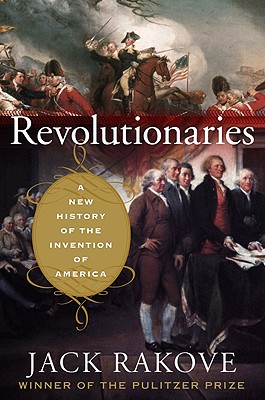








.jpg)