Balkinization
an unanticipated consequence of
Jack M. Balkin
Balkinization Symposiums: A Continuing List
E-mail:
Jack Balkin:
jackbalkin at yahoo.com
Bruce Ackerman
bruce.ackerman at yale.edu
Ian Ayres
ian.ayres at yale.edu
Corey Brettschneider
corey_brettschneider at brown.edu
Mary Dudziak
mary.l.dudziak at emory.edu
Joey Fishkin
joey.fishkin at gmail.com
Heather Gerken heather.gerken at yale.edu
Abbe Gluck abbe.gluck at yale.edu
Mark Graber
mgraber at law.umaryland.edu
Stephen Griffin
sgriffin at tulane.edu
Jonathan Hafetz
jonathan.hafetz at shu.edu
Jeremy Kessler
jkessler at law.columbia.edu
Andrew Koppelman
akoppelman at law.northwestern.edu
Marty Lederman
msl46 at law.georgetown.edu
Sanford Levinson
slevinson at law.utexas.edu
David Luban
david.luban at gmail.com
Gerard Magliocca
gmaglioc at iupui.edu
Jason Mazzone
mazzonej at illinois.edu
Linda McClain
lmcclain at bu.edu
John Mikhail
mikhail at law.georgetown.edu
Frank Pasquale
pasquale.frank at gmail.com
Nate Persily
npersily at gmail.com
Michael Stokes Paulsen
michaelstokespaulsen at gmail.com
Deborah Pearlstein
dpearlst at yu.edu
Rick Pildes
rick.pildes at nyu.edu
David Pozen
dpozen at law.columbia.edu
Richard Primus
raprimus at umich.edu
K. Sabeel Rahmansabeel.rahman at brooklaw.edu
Alice Ristroph
alice.ristroph at shu.edu
Neil Siegel
siegel at law.duke.edu
David Super
david.super at law.georgetown.edu
Brian Tamanaha
btamanaha at wulaw.wustl.edu
Nelson Tebbe
nelson.tebbe at brooklaw.edu
Mark Tushnet
mtushnet at law.harvard.edu
Adam Winkler
winkler at ucla.edu
Compendium of posts on Hobby Lobby and related cases
The Anti-Torture Memos: Balkinization Posts on Torture, Interrogation, Detention, War Powers, and OLC
The Anti-Torture Memos (arranged by topic)
Recent Posts
Rice: Bush Ordered It, And Therefore It Isn't Torture
Akhil Amar Got There First
An Initial Take on the Voting Rights Act Argument -- Trouble for the VRA?
Does Obama Change Everything?
Why a Criminal Investigation does not mean the OLC Lawyers are Scapegoats on Torture
Yes, Part II
What Teles Can Tell Us About Constitutional Change
A Financial Engine Shut-off Switch
The Unvarnished Truth about Torture
Will California lead the way? And will Tom Brokaw connect more dots?
Why Information about the Combination of Techniques is Essential--Death Can Result!
Real Commitment at the OMB
Bernard Harcourt on the bureaucratization of torture
Reasons to Infer that the OLC Torture Memos were Not Issued in "Good Faith"
strip searches and torture
Cheney Supports Truth Commission
Merit and Intent: Two Pitfalls of Equal Protection Doctrine
The CIA and Torture
Supreme Court's Plenary Docket--Part One
Is Obama really serious about "upholding our values"?
Teenage Virgins II
The Empty Circularity of the Lastest Batch of OLC Torture Memos
![[Powered by Blogger]](https://lh3.googleusercontent.com/blogger_img_proxy/AEn0k_t7__VV9m78Ahk2g5k4_XoIMQbd7sg2urZPKcSCTkPzHVPVfLMoQk8RbSBSoaGocHZcSWkQhjVHuKpKNpdcmZRYKy79SN0rFjdpkbn9Wug_=s0-d)
Just A Few Blogs
ACS Blog
Alas, a Blog
Althouse
Arts and Letters Daily
Atrios (Eschaton)
Bill of Health
Buzzflash.com
Buzz Machine
Cato at Liberty
Juan Cole (Informed Comment)
Concurring Opinions
The Constitution in 2020
Corrente
Crooked Timber
Daily Howler
Daily Kos
Dana Boyd
Brad DeLong
Digby (Hullabaloo)
Discriminations
Daniel Drezner
Kevin Drum (Mother Jones)
Electrolite
En Banc
Eunomia (Daniel Larison)
Fafblog
Michael Froomkin (Discourse.net)
GovLab (Beth Noveck)
Rick Hasen (Election Law)
History News Network
How Appealing
Ignatz (Sam Heldman)
The Importance of (Ernie Miller)
Infolaw
Instapundit
International Economic Law and Policy Blog
IntLawGrrls
Jacob Levy
Jesus' General
Jurisdynamics
The Kitchen Cabinet
Mark Kleiman
Law Blog Central
Larry Lessig
Lawyers, Guns and Money
Liberal Oasis
Brian Leiter's Law School Reports
The Leiter Reports
Marginal Revolution
Megan McArdle
Memeorandum
Metafilter
Mirror of Justice
The New Republic
Newseum
No More Mister Nice Blog
Brendan Nyhan
Opinio Juris
Orcinus
The Originalism Blog
Pandagon
Passport (Foreign Policy)
Overcoming Bias
Political Animal (Washington Monthly)
Political Theory Daily Review
Political Wire (Taegan Goddard)
The Poor Man
Virginia Postrel
Prawfsblawg
Public Reason
Jonathan Rauch
Raw Story
Redstate
ReligiousLeftLaw.com
Reporters Committee For Freedom of the Press
Reproductive Rights Blog
Rothman's Roadmap to the Right of Publicity
SCOTUS Blog
Seeing the Forest
Clay Shirky
The Shifted Librarian
The Situationist
Larry Solum (Legal Theory)
Andrew Sullivan
Talking Points Memo
Talk Left
Tapped
Tbogg
TechPresident
The Paper Chase (Jurist)
Tom Paine
Tom Tomorrow (This Modern World)
Eve Tushnet
Uggabugga
University of Chicago Law School Faculty Blog
Unqualified Offerings
The Volokh Conspiracy
War and Piece (Laura Rozen)
Wampum
Oliver Willis
Wonkette
Written Description
Matthew Yglesias
Yin
Your Choice of Feeds
1. XML
powered by

2. Atom Feed
3. RSS 2.0
Rice: Bush Ordered It, And Therefore It Isn't Torture
JB
Former Secretary of State Condoleezza Rice defending the U.S. interrogation policy at a Stanford dormitory. (Hat Tip: FP Passport)
In this excerpt, she seems to suggest that (1) President Bush directly ordered enhanced interrogation practices, (2) that she did not authorize these practices, but merely conveyed the authorization to others, and finally, (3) that because the President authorized them, these practices did not violate the Convention Against Torture. Rice did not, however, explain why they did not violate the Anti-Torture Statute or the War Crimes Act, both passed by Congress.
Several people have noticed the eerie resemblance of these remarks to Richard Nixon's statement to David Frost that "when the President does it, that means that it is not illegal." It's worth noting, however, that Rice says nothing about domestic law. (Unless, of course, she is suggesting that if techniques do not violate the Convention Against Torture, they cannot violate domestic law.)
Moreover, by trying to excuse herself on the ground that she was only following Bush's authorization, she is implicitly suggesting that the responsibility for torture (which, she insists, could not occur "by definition"), must rest with the President himself.
Here are some of the key excerpts:
How are we supposed to continue promoting America as this guiding light of democracy and how are we supposed to win hearts and minds in the world as long as we continue with these actions?
Well, first of all, you do what's right. That's the most important thing -- that you make a judgment of what's right. And in terms of enhanced interrogation, and rendition, and all the issues around the detainees. Abu Ghraib is, and everyone said, Abu Ghraib was not policy. Abu Ghraib was wrong and nobody would argue with...
Except that information that's come out since then speaks against that.
No, no, no -- the information that's come out since then continues to say that Abu Ghraib was wrong. Abu Ghraib was. But in terms of the enhanced interrogation and so forth, anything that was legal and was going to make this country safer, the president wanted to do. Nothing that was illegal. And nothing that was going to make the country less safe.
And I'll tell you something. Unless you were there in a position of responsibility after September 11th, you cannot possibly imagine the dilemmas that you faced in trying to protect Americans. And I know a lot of people are second-guessing now, but let me tell you what the second-guessing that would really have hurt me -- if the second-guessing had been about 3,000 more Americans dying because we didn't do everything we could to protect them.
If you were there in a position of authority, and watched Americans jump out of 80-story buildings because these murderous tyrants went after innocent people, then you were determined to do anything that you could that was legal to prevent that from happening again. And so I think people do understand that.
Now, as to Saudi Arabia and Kuwait and so forth -- I agree with you. We have tried to use the trafficking in persons and all of those measures, human rights reports and so forth, to put a spotlight on the kinds of problems that you have in places like Saudi Arabia or Kuwait or Oman or other places. But you can't -- you don't have the luxury in foreign policy of saying, alright, I won't deal with that country because I don't like its human rights record. You don't have that luxury. So if you need Saudi Arabia to fight al Qaeda internally -- which is by the way where al Qaeda came from -- or if you need Saudi Arabia to be part of a coalition that's going to help bring a Palestinian state, you can't decide not to deal with Saudi Arabia because of its problems with human rights. Or, if you need to make sure that the Gulf is safe from Iranian influence -- you want to talk about human rights abusers? -- Iran.
. . . .
So, foreign policy is full of tough choices. Very tough choices. The world is not a bunch of easy choices in which you get to make ones that always feel good.
Even in World War II, as we faced Nazi Germany -- probably the greatest threat that America has ever faced -- even then...
With all due respect, Nazi Germany never attacked the homeland of the United States.
No, but they bombed our allies...
No. Just a second. Three thousand Americans died in the Twin Towers and the Pentagon.
500,000 died in World War II, and yet we did not torture the prisoners of war.
And we didn't torture anybody here either. Alright?
We tortured them in Guantanamo Bay.
No, no dear, you're wrong. Alright. You're wrong. We did not torture anyone. And Guantanamo Bay, by the way, was considered a model "medium security prison" by representatives of the Organization of Security and Cooperation in Europe who went there to see it. Did you know that?
. . . .
I read a recent report, recently, that said that you did a memo, you were the one who authorized torture to the -- I'm sorry, not torture, waterboarding. Is waterboarding torture?
The president instructed us that nothing we would do would be outside of our obligations, legal obligations, under the Convention Against torture. So that's -- and by the way, I didn't authorize anything. I conveyed the authorization of the administration to the agency. That they had policy authorization subject to the Justice Department's clearance. That's what I did.
Okay. Is waterboarding torture?
I just said -- the United States was told, we were told, nothing that violates our obligations under the Convention Against Torture. And so, by definition, if it was authorized by the president, it did not violate our obligations under the Conventions Against Torture.
Thank you.
Alright.
UPDATE: John Barrett notes that we can read Rice more charitably as simply deferring to the lawyers at the Justice Department:I think your post on Condoleeza Rice's remarks at Stanford is based on a misreading of her remarks (which admittedly are a little hard to parse, but of course they were impromptu). She did not make the Nixon-to-Frost claim that presidential command means legality. Instead, she made these points:
1. President Bush instructed everyone in the administration to obey all of our legal obligations.
2. The Justice Dept. lawyers authorized the proposed interrogation program, telling us it was not "torture."
3. Based on that legal advice, the President authorized the program.
4. All I did was communicate that presidential authorization, of what DOJ said was legal, to the CIA.
In other words, it was, she is saying, the lawyers' fault, not the President's or mine.
Posted
2:37 PM
by JB [link]
Akhil Amar Got There First
Ian Ayres
Crosspost from Freakonomics: Once again, Catherine Rampell has an interesting Economix post (“Minority Rules: Sex Ratios and Suffrage”) describing a new empirical analysis arguing that “jurisdictions that granted women the right to vote earlier generally had lower concentrations of women.” Why? These seem to me to be powerful arguments — but I learned them first in 2005 when I was reading Akhil Amar’s monumental biography of … our Constitution. Akhil wrote: Much as the Founding Fathers had structured a Constitution whose promises of freedom and democracy sought to pull skilled European immigrants across the ocean, so their pioneer grandsons in the West evidently aimed to draw American women through the plains and over the mountains. Data from the 1890 census provide some support for this admittedly crude theory. For every hundred native-born Wyoming males, there were only 58 native-born females. No other state had so pronounced a gender imbalance. Colorado and Idaho were the fifth and sixth most imbalanced states overall in 1890. The other early woman-suffrage state, Utah, had a somewhat higher percentage of women (thanks to its early experience with polygamy), but even Utah had only 88 native-born females for every hundred native-born males, ranking it 11th among the 45 states in the mid-1890’s. Also, the second, third, fourth, and seventh most imbalanced states — Montana, Washington, Nevada, and Oregon — would all embrace woman suffrage in the early 1910’s, several years ahead of most sister states. In all these places, men voting to extend the suffrage to women had little reason to fear that males might anytime soon be outvoted en masse by females (Amar, America’s Constitution, pp. 419-25). You can read his entire narrative on the evolution of women’s suffrage here. Interestingly, Amar — who is not an empirical economist — was able to see a couple of additional legal/political wrinkles that others might miss: Above and beyond any individualistic desire to woo women that may have motivated the men of Wyoming and other Western regions, federal territorial policy provided a modest if unintended spur to woman suffrage. In general, Congress in the 19th century waited for each territory to achieve a certain critical population mass before admitting that territory to statehood. Although Congress followed no single formula applicable to all places and all times, each western territory understood that rapid population growth would enhance its prospects for early statehood. Each new woman in the West would not only bring to a territory her own person but might also help produce future growth through childbearing. And if Congress ever decided to focus not on a given territory’s total number of inhabitants but rather on the size of its voting base, then woman suffrage would almost double the key number. … Another aspect of the endgame: If and when women did get the vote, woe unto the diehard anti-suffrage politician who had held out until the bitter end! Each state legislator or Congressman from a non-suffrage state had to heed not just the men who had elected him, but also the men and women who could refuse to reelect him once the franchise was extended. (After ratification of the Direct Senate Election Amendment, every U.S. senator had to focus on the statewide voters rather than a tiny clump of political chums in the state capital.) The experience in Ohio, where male voters had refused to enfranchise women in 1912 and again in 1914, nicely illustrated the underlying electoral math. Senator Warren Harding voted for the Woman Suffrage Amendment and went on to capture the White House in 1920. Conversely, Senator Atlee Pomerene opposed the amendment and was voted out of office in 1922. But the bigger picture is one of consilience: Two very different methodologies came to similar conclusions on a central question of how men democratically agreed to dilute their franchise.
[M]en had much to lose by enfranchising women. … The relative scarcity of women in the West may have “reduced the political costs and risks to male electorates and legislators of extending the franchise,” the authors wrote. In other words, Western men sacrificed less power by enfranchising women, since there were fewer women around to dilute male voting interests. … Granting women the right to vote [also] may have appealed to Western legislators who wanted to attract more women to their regions. More women probably meant happier male constituents. If the jurisdiction granting suffrage were still a territory, more women (and potential mothers) also enabled the population growth that could help make the case for official statehood.
Posted
2:18 PM
by Ian Ayres [link]

An Initial Take on the Voting Rights Act Argument -- Trouble for the VRA?
Heather K. Gerken
Having just listened to the rebroadcast of the Supreme Court argument on the constitutionality of Section 5 of the Voting Rights Act (VRA), I think that supporters of the VRA have few reasons to be cheerful. It is always dangerous to make prognostications based on the argument. But if one were reading tea leaves, two things should worry VRA supporters. First, Justice Kennedy asked about whether there are any real differences between the covered and non-covered jurisdictions four times, and it's not clear to me that he ever received an answer that satisfied him from the attorneys (that's not to cast aspersions on the attorneys defending the Act -- I thought they were excellent). As anyone familiar with Kennedy's federalism jurisprudence will tell you, his reference to the "sovereign dignity" of the covered jurisdictions should make VRA supporters nervous. Second, Justices Souter and Ginsburg worked very hard at the beginning of Greg Coleman's argument to suggest that the case could be dismissed on narrow grounds -- a statutory construction argument or standing. If one thinks that those Justices would be natural proponents of upholding Section 5, this, too, should make one a bit nervous. That being said, Justice Kennedy did soften his stance at the very end of the argument, while still returning to the question whether Congress had enough evidence about the differences between non-covered v. covered jurisdictions to justify maintaining the existing coverage formula. Supporters of the VRA better hope that someone comes up with an answer that he'll accept on that issue before the end of June.
Posted
12:58 PM
by Heather K. Gerken [link]
Does Obama Change Everything?
Heather K. Gerken
Tomorrow the Supreme Court will hear argument on NAMUDNO, a challenge to the constitutionality of Section 5 of the Voting Rights Act. What has been frustrating about the commentary leading up to the argument is that it often misses the key question here. This fight largely turns on a concrete legal question, not on atmospheric debates about whether Barack Obama's election changed everything. I realize that it may be unfashionable to suggest that a Supreme Court case might actually turn on a question of law, but there it is.
By way of background, Section 5 requires certain jurisdictions -- mostly states in the Deep South -- to ask the federal government’s permission before making any change, no matter how small, in the way they run elections. This unusual provision solved the central problem of voting rights enforcement during the Civil Rights era -- keeping up with the increasingly creative strategies recalcitrant state and local governments used to disenfranchise voters. Every time a court deemed one discriminatory practice illegal, local officials would switch to another. Section 5 shifted the burden of inertia, allowing the Department of Justice to get one step ahead of local officials.
It's not hard to see why people use Obama's election as a frame for this debate, and why others take such a move as evidence of hostility toward the Voting Rights Act itself. For a taste of how heated the debate can become, notice the brouhaha generated today when the New York Times reported election law professor Ellen Katz as saying that Obama's election was something that Congress -- not the Court -- should evaluate in thinking about Section 5. As far as I can tell, Katz said exactly the same thing a month ago without generating any controversy, but feelings are running high as the argument approaches.
While debates about what Obama's election means are important, it is the legal question that will matter tomorrow, and the legal question is at some remove from the question commentators have talking about. The question in NAMUDNO is whether, roughly forty years after Section 5 was passed, Congress has the power to renew it for another 25 years. The seminal case addressing Congress's power to enforce the Constitution is City of Boerne v. Flores, an opinion authored by Justice Kennedy. Section 5's fate turns in large part on whether the Court applies the City of Boerne test here without modification. If it does, Obama or no Obama, Congress will need a lot of evidence to show that there was a constitutional problem serious enough to warrant renewing Section 5. If the Court applies a more generous standard, Section 5 will be much more likely to survive, regardless of what the Court thinks Obama's election means.
The Court must answer this legal question in order to write this opinion. That is because City of Boerne addressed a different issue than is presented in NAMUDNO. Boerne addressed a statute (protecting religious freedom) that was enacted for the first time, and it demanded that Congress show that there was good reason to act. Here, no one seriously questions whether there was good reason to pass Section 5 in the first place. The question is what standard should be used to when Congress is renewing what lawyers would call a prophylactic statute, a broad set of protections designed to deter discrimination. If Boerne were applied wholesale, Congress would be in a catch-22. If the statute was working, there wouldn't be much evidence of discrimination, and Congress wouldn't be allowed to renew the statute. If the statute wasn't working, Congress would have the evidence of discrimination it needed, but there wouldn’t be much point to renewing a failed regulatory regime. One might also think that the standard should be different because here, unlike in Boerne, Congress is protecting the votes of racial minorities, something that falls squarely within the ambit of the 14th and 15th Amendment.
The Court must, then, figure out what standard applies, and the choice it makes will drive the opinion. I don’t mean to say that the Justices won’t have their own intuitions about how this case should come out, and those intuitions will surely be informed by the recent election. But the legal puzzles -- how do you evaluate the renewal of a prophylactic protection against discrimination? does Congress have more leeway to regulate when enforcing voting rights? -- require a solution, and the solution will matter a good deal more than much of the commentary has suggested.
Once the Court has figured out the legal question, it will, of course, have to turn to the facts. The Court may well dismiss Obama's election as irrelevant, as it occurred after Congress legislated. But even if the Court were willing to take this evidence into account, Obama's election isn't a trump card for a simple reason: Section 5 is a measure of annual rainfall. It's designed to address not just high salience national elections, but also low salience local elections (where voters have less information about candidates and may be more likely to use race as a proxy in voting). It's designed to address not just racial bloc voting, but the many ways in which local officials can administer elections in a fashion that undermines the chances of black and Latino voters to cast a meaningful ballot.
If we want a measure of annual rainfall, the only way to assess the relevance of Obama's historic win is to decide whether the race signals a change in the annual rainfall rate or whether the presidential election was simply a perfect storm -- a national race in which a highly charismatic candidate with an extraordinarily well-organized staff was running in the wake of one of the most unpopular presidents in history, against a party that was falling apart, and in a year when the economy is tanking.
To question whether Obama's election changed everything is not to suggest that nothing has changed (as this debate has deteriorated, that is typically the box in which one is placed the moment one makes such a claim). I, for one, believe that the South has changed significantly, and that race and politics combine in far more complicated ways than they did when the Voting Rights Act was first passed. Supporters of the Act would be foolish to suggest otherwise. I simply want to insist that the Obama data point needs to be folded into a measure of annual rainfall. That's why I welcome the amicus brief linked here that was submitted in this case by three academics --Nate Persily, Charles Stewart and Steve Ansolabehere -- who dug into the details of the data to figure out where Obama's election fits in the annual rainfall measure. Statistics, not atmospherics, are their guide.
The legal and statistical questions here are dull when compared to the "does Obama change everything?" meme. But it seems to me that they are the right questions to be asking in thinking about NAMUDNO. And maybe in this highly fraught debate a little boredom would be a good thing.
Posted
4:04 PM
by Heather K. Gerken [link]
Why a Criminal Investigation does not mean the OLC Lawyers are Scapegoats on Torture
Brian Tamanaha
President Obama said Tuesday that Justice Department officials who authorized harsh interrogation techniques are not immune from prosecution. "With respect to those who formulated those legal decisions," the president said, "that is going to be more of a decision for the attorney general within the parameters of various laws, and I don't want to prejudge that." (NPR, April 22)
Many voices are now protesting that a criminal investigation of the OLC lawyers who wrote the "torture memos" would be unfair or improper. The President has already ruled out prosecution of the CIA interrogators who committed the torture (assuming they kept to the guidelines). There has been no hint that the Justice Department plans to investigate the high level officials who ordered the torture (Cheney, Rumsfeld, and company). At least for now, only the OLC lawyers are in the cross-hairs, while those who ordered the torture and those who carried it out breath easy.
It smells like the OLC lawyers are being served up as scapegoats for the bad deeds of others. They were just doing their job. They should not be punished for offering their good faith legal analysis. The fact that they were wrong about the law does not make them guilty of a crime. So say their defenders.
If an investigation into the actions of the OLC lawyers is about finding a scapegoat, it would be indeed be wrong. Let me explain, however, why the OLC lawyers must be investigated. Preview: It’s not about the torture. It’s about the special position of the OLC.
The role played by the Office of Legal Counsel within the Department of Justice is this: “By delegation from the Attorney General, the Assistant Attorney General in charge of the Office of Legal Counsel provides authoritative legal advice to the President and all the Executive Branch agencies” (OLC website). The key words are “authoritative legal advice.” This quasi-judicial power—the power to issue legal opinions that bind the Executive Branch—is unique to the OLC.
Owing to this extraordinary power, the lawyers have a narrowly circumscribed charge and bear special responsibilities. Steven Bradbury spelled this out in a 16 May 2005 memo, Best Practices for OLC Opinions (which he issued just 6 days after he signed two pivotal “torture” memos). The pertinent passages read:
By delegation, the Office of Legal Counsel exercises the Attorney General’s authority under the Judiciary Act of 1789 to advise the President and executive agencies on questions of law….
Our Office is frequently called upon to address issues of central importance to the functioning of the federal Government, and, subject to the President’s authority under the Constitution, OLC opinions are controlling on questions of law within the Executive Branch. Accordingly, it is imperative that our opinions be clear, accurate, thoroughly researched, and soundly reasoned….
Over the years, OLC has earned a reputation for giving candid, independent, and principled advice—even when that advice may be inconsistent with the desires of policymakers. This memorandum reaffirms the longstanding principles that have guided and will continue to guide OLC attorneys in preparing the formal opinions of the Office.
OLC’s interest is simply to provide the correct answer on the law....
That’s an excellent description of the OLC’s role, power, and responsibilities. These standards applied to the torture memos issued by Bybee, Yoo, and Bradbury. The OLC's very reason for existing is to issue independent, correct, legal decisions. The events surrounding the torture memos provide a perfect illustration of why it is essential that OLC lawyers strive in good faith to meet these standards.
The Senate Report on Detainee Treatment discloses that the top lawyers for the Army, Navy, Air Force, and the Marine Corps, as well as Legal Counsel for the Joint Chiefs of Staff, strongly opposed the use of these abusive interrogation techniques, citing “serious concerns regarding the legality of many of the proposed techniques.” (Senate Report xviii). The military lawyers also worried that use of these techniques would increase the risk that captured U.S. soldiers would be tortured in retaliation. (An example of this opposition is a memo, linked here, issued by the group that oversees SERE training, which bluntly labeled these techniques “torture.”)
But Bush Administration higher-ups wanted the techniques to be applied. The OLC was called upon to issue legal opinions as a means to circumvent and squelch the opposition from military lawyers (never mind that military lawyers were more familiar than OLC lawyers with the techniques and the applicable law). When the OLC officially concluded that the techniques were “legal,” the opposition was silenced. Military lawyers were instructed to consider the “OLC memorandum as authoritative” (Senate Report 119-20), clearing the way for the techniques to become official policy.
The OLC has the power to trump opposing views on the law because, as described above, the OLC is the highest authority on the law within the Executive Branch. This is why OLC lawyers must live up to their duty to issue independent, thoroughly researched, soundly reasoned, correct legal opinions. The awesome power to issue binding legal opinions is easy to abuse.
With this background, it is easy to identify the flaw in David Broder’s recent assertion that it would be wrong to investigate the OLC lawyers. Broder writes, “The memos on torture represented a deliberate, and internally well-debated, policy decision, made in the proper places -- the White House, the intelligence agencies and the Justice Department -- by the proper officials.”
Broder is wrong because the OLC lawyers were not asked for their opinion on policy. That lies beyond their charge. They were asked to render a legal opinion on the legality of the proposed use of the abusive interrogation techniques. If the policy was illegal, it was the job of the OLC lawyers to say “NO,” as Bradbury asserts in his OLC Best Practices Memo, “even when that advice may be inconsistent with the desires of policymakers.”
Again, the duty of the OLC to render its best independent judgment of the law is directly linked to its binding authority within the Executive Branch. It was by pointing to the OLC's legal authority that President Bush could declare: “We don’t torture.” The OLC had issued legal opinions concluding that the interrogation techniques were “not torture”. It is for this reason that Bush Administration officials can now say in their defense for authorizing the torture: “We checked with the OLC lawyers, who assured us that this policy complied with the law.” That is why CIA interrogators can now say in their defense for inflicting the torture: “We checked with the OLC lawyers, who assured us that these interrogation techniques were legal.”
Everyone involved in the torture is pointing to the OLC lawyers, and for good reason: It was precisely the job of OLC lawyers to give policy makers, and those who carry out policy directives, independent advice on what a correct reading of the law allows or prohibits.
As this discussion emphasizes, the OLC occupies a pivotal position as the final check in advance on the legality of proposed government conduct. The essence of the rule of law is that government officials are bound by and act consistent with the law. Ensuring compliance with the rule of law is the very point and purpose of the OLC.
If the OLC lawyers do not carry out this role with integrity, the institutional arrangement designed to preserve the rule of law is fatally compromised. There is nothing to stop illegal government activity at the highest levels. More to the point, a compromised OLC can play an affirmative role in aiding and abetting illegal activity because its legal opinions supply in advance a strong defense to putative law-breakers. This increases the likelihood that illegal activity will take place (as in this instance, when CIA agents were reluctant to utilize the interrogation techniques without the "golden shield" provided by the legal opinions).
In opposition to a criminal investigation of the OLC lawyers, Peggy Noonan writes, “As for the memo writers, some of whose constitutional theories were apparently tilted to the extreme in favor of the executive, it is hard to see how it would help future administrations, or this one, to have such advice, however incorrectly formulated, criminalized.”
Noonan is absolutely correct that we must not criminalize erroneous legal advice. The key question here, however, is whether this was “just” bad legal advice, or whether it involved active participation by OLC lawyers in the violation of U.S. laws against torture. If the latter occurred, then a criminal investigation would help future administrations by serving as a reminder that the government must act within the limits of the law, and by reaffirming that it is the special job of OLC lawyers to make sure this happens. It is about deterring lawyers from facilitating lawbreaking at the highest levels of government.
That is why there should be a criminal investigation of the OLC lawyers. Lawyers have been held criminally responsible before (for example, German lawyers after WW II, and tax lawyers who construct illegal tax shelters or write bogus opinion letters). It might be true that they did not knowingly facilitate a conspiracy to violate the federal anti-torture statute, and it might prove impossible to establish criminal intent on their part (email exchanges to and from OLC lawyers surrounding the production of the memos will shed light on this). They won't be prosecuted if either turns out to be the case. But we won't know the answers to these questions until after a criminal investigation has been completed.
A criminal investigation into the actions of the OLC lawyers is required not because our country has engaged in torture (as bad as that was). Ultimately, it’s about preserving the integrity of our system of law.
Posted
10:49 AM
by Brian Tamanaha [link]
(132) comments
Yes, Part II
Ian Ayres
Crosspost from Freakonomics: In a recent post, I extolled the virtues of Robert Cialdini’s Yes!: 50 Scientifically Proven Ways to Be Persuasive. The book is wonderfully designed in 50 short chapters to describe the results of 50 different randomized field experiments. The format of, say, 1,800 words per chapter is a bit unusual. But I found it a great way to catch up on some really interesting research. In my previous post, I told you about the Petrified Forest study. But I can’t help but pass on a couple more of my favorite studies. Chapter 35 describes Ellen Langer’s great field experiment focusing on the impact of an inane excuse: Yes! also indulges the Freakonomics fascination with the impact of baby names. Chapter 30 argues that your name might impact your vocation. Chapter 30 quotes a scene from the NBC comedy The Office, in which Dwight Schrute is caught in a lie about going to the dentist. Dwight’s boss, Michael Scott, asks Dwight for his dentist’s name and “after a long, awkward pause, Dwight replies, ‘Crentist.’” Michael: Your dentist’s name is Crentist? Dwight: Yeah. Michael: Huh … sounds a lot like dentist. Dwight: Maybe that’s why he became a dentist. Crentist sounds silly, but researchers have found that people named Dennis are more likely to become dentists. An article, “Why Susie Sells Seashells by the Seashore,” finds that in the U.S. population the names Jerry, Dennis, and Walter rank 39th, 40th, and 41st among male first names. But in the national directory of the American Dental Association there are close to twice as many Dennises (482) as Walters (252) and Jerrys (270). “Similarly, people whose names begin with ‘Geo’ (e.g., George, Geoffrey) are disproportionately likely to do research in the geosciences (e.g., geology).” To be honest, I’m not fully persuaded that either of these results is true. Perhaps I was particularly on guard because the book is explicitly about persuasion. But at least 20 of the “50 Scientifically Proven Ways to Be Persuasive” got me thinking about possible follow-ups. If you’re looking for an easy entry point into the empirical psychology literature on persuasion, this book might be the ticket.
In one study, Langer arranged for a stranger to approach someone waiting in line to use a photocopier and simply ask, “Excuse me, I have five pages. May I use the Xerox machine?” Faced with this direct request to cut ahead in the line, 60 percent of the people were willing to agree to allow the stranger to go ahead of them. However, when the stranger made the request with a reason (“May I use the Xerox machine, because I’m in a rush?”), almost everyone (94 percent) complied. … Langer [also] tested one more version of the request. This time, the stranger also used the word “because” but followed it with a completely meaningless reason. Specifically, the stranger said, “May I use the Xerox machine, because I have to make copies?” Because you have to make copies? Who doesn’t? … Despite the hollowness of the “reason” the stranger provided, it generated nearly the same elevated levels of compliance as when the reason was wholly legitimate (93 percent).
Posted
9:18 AM
by Ian Ayres [link]
What Teles Can Tell Us About Constitutional Change
JB
Because constitutional change is a focus of my research these days, I thought I might say a few words about how Steve Teles' book The Rise of the Conservative Legal Movement is important to contemporary theories of constitutional change. Teles' book discusses how competition between different ideological groups occurs outside of the electoral process: through institution building, norm development and norm proliferation. These mechanisms are quite important to understanding constitutional change, and legal change more generally.
To understand the importance of Teles’ book for constitutional theory, start with Bruce Ackerman and his well-known theory of constitutional moments. At certain points in American history, constitutional norms become markedly different from what they had been before. The watershed produced by the New Deal is one central example; the civil rights era of the 1960s and early 1970s is another. Constitutional law and the underlying assumptions of constitutional law are very different in 1940 than they were in 1920; we can tell a similar story about the differences between 1955 and 1975. Very significant changes occurred in a little more than a decade and very different assumptions became dominant. The formal presence of constitutional amendments is not necessary for these changes to occur. No amendments occurred during the struggle over the New Deal; amendments did occur during the civil rights era, but they were either irrelevant to that struggle (the 25th) or at the periphery (the 24th and the 26th).
Ackerman argues that big constitutional changes occur through a succession of different constitutional regimes begun by quasi-revolutionary periods he calls constitutional moments. Constitutional moments produce fundamental change outside the Article V amendment process; they require the mobilized support of the American people. This support is signaled, demonstrated, and confirmed through a series of defining elections. So in Ackerman’s model the New Deal transformation begins with the 1932 election and it is consolidated with the 1940 election. The civil rights revolution begins with the Supreme Court’s 1954 decision in Brown v. Board of Education, and it is ratified in the 1964 election and consolidated (in Ackerman's view, not mine!) in the 1968 election.
Contrast Ackerman's model with the model of change that Sandy Levinson and I have proposed. We argue that constitutional change occurs in small steps as well as large ones. The key issues for us are (1) who gets to staff the courts and (2) how the courts usually reflect and support the constitutional commitments of the dominant national coalition. Thus, we explain constitutional change (at least in doctrines) through partisan entrenchment in the judiciary. Constitutional change occurs because parties and affiliated social movements press to appoint jurists who have similar views to their own; when parties are able to appoint enough of these judges to be added to allies already on the bench, the judges start to change doctrine. If enough judges are added in a short period of time, what you get looks like almost revolutionary change.
Thus, for example, although the Supreme Court stops opposing Roosevelt in 1937, the big doctrinal changes begin to occur (and become more or less permanent) over the next six years, when Roosevelt gets to fill eight seats on the Supreme Court (and one seat twice). A Supreme Court filled with adherents of the New Deal is likely to have a transformative effect on doctrine, and so it did. The Civil Rights Revolution is due to (1) the cumulative effect of presidents from both parties appointing racial liberals to the courts; and (2) Felix Franfurter's retirement in 1962, and the appointment of Arthur Goldberg, which cemented a five person liberal majority just as political liberalism was ascendant in the political branches. Supported by (and supporting) a liberal President and a liberal majority in Congress, the Warren Court upheld new civil liberties laws and imposed the liberal majority's values on regional majorities, especially in the South.
Ackerman's model is interested in big changes at the level of new regimes; Levinson's and my model, by contrast, is interested in changes great and small. For Ackerman, We the People must self-consciously understand that the Constitution is being amended outside Article V and give their consent through a series of key elections. In Levinson's and my model the people don't have to have this self-conscious understanding. Elections matter, but primarily because they decide who becomes President and who holds the balance of power in the Senate, thus affecting who gets appointed to the courts. Social mobilizations matter a great deal too, but they matter especially because they change public opinion, social mores and constitutional common sense. This affects the assumptions of judges on the bench, as well as what kinds of people will get appointed to the bench later on.
How does Teles' book intervene in this debate between Ackerman’s model and Levinson’s and mine? Teles points out that partisan competition outside of the electoral process and in civil society is very important to understanding political success. This competition doesn't necessarily involve judicial appointments, although obviously civil society groups can be heavily involved in the fight over judicial appointments. But Teles points out (correctly) that there are important venues for entrenchment other than the judiciary. Entrenchment in civil society may be just as important and, in some respects, just as long lasting. Indeed, entrenchments in institutions of civil society may be altogether necessary for partisan entrenchments in the judiciary to occur and to be effective.
To put it simply, John Roberts and Sam Alito did not appear out of nowhere. They got their start in the Reagan Justice Department in the 1980s. They were also part of a larger social movement that produced a team of ideological allies who could become qualified for the federal bench and perhaps someday the Supreme Court. Teles' book shows us, if any demonstration were necessary, that it is not enough just to win elections. It is true that you must have the opportunity to appoint new judges, but you also have to have a stock of reliable people to choose from when you get that opportunity. You have to have a litigation support system to bring cases for those judges to hear. You have to have a group of think tanks and institutions that will work out ideas and figure out which cases to bring. You have to have a cadre of ideologically committed people in civil society, in think tanks, in journalism and in the media who will support you and who are in it for the long haul. It takes about twenty five years to grow a Supreme Court Justice, as the Roberts and Alito nominations showed. Long term investments in civil society are necessary to produce significant changes in constitutional doctrine.
Teles emphasizes the struggle over constitutional common sense that is played out in civil society, or what I like to call the battle over what is "off the wall" and "on the wall." Professionals-- and lawyers and judges are nothing if not professionals-- like to think of themselves as reasonable and definitely not crazy. So what is "on the wall" and what is "off the wall" matters intensely to them and their sense of professional identity. The ability to change the boundary between these categories pays extra dividends in shaping professional legal discourse and legal thought in addition to its effects in ordinary politics. When civil society organizations help shape what is "on the wall" and "off the wall” in constitutional thought, they move the ideological goal posts, so to speak, allowing certain views that once were out of the mainstream to be seen as reasonable, or within the sphere of the reasonable.
Teles points out that success in changing the law and legal culture in the late twentieth century required a shift from grass roots organizations, businesses and Republican elected officials to a "new class" of ideologically motivated actors in think tanks, in the academy, in public interest organizations, in the mass media, and above all, in foundations, who served as the major patrons for the new class. These people created a counter-establishment in law, journalism, media, and the academy that could support constitutional and legal change. Here Teles draws on Charles Epp's very important work on the legal support structure for rights revolutions. In the process, he extends Levinson's and my idea of partisan entrenchment from the judiciary and the elected branches to the institutions of civil society.
Teles' triple focus on non-electoral competition, on the neglected supply side for constitutional change, and on the importance of shaping constitutional common sense, offers a distinctive take on how constitutional regimes change over time. In many ways it is more hospitable to Levinson's and my model than Ackerman's theory of constitutional moments. Ackerman's model focuses on relatively swift changes in basic constitutional values ushered in by pivotal elections. Instead, Teles defines regimes as multiple reinforcing sources of durable political advantage, both in electoral politics, and outside it (for example, in civil society, in legal argument, in litigation, and so on.). If Teles is correct, then regime change can't happen all at once, or even within a decade, as Ackerman's theory suggests. Rather, regime chance, when it occurs, occurs gradually, and in different sectors at different times. For example liberal legalism does not emerge full blown in 1932, or even in 1940, when the New Deal transformation occurs. The establishment of Liberal legalism occurs over many years, and some features actually blossom after the 1964 election, when the liberal establishment is about to lose its hegemonic status.
I close with one last point about Teles’ relevance to contemporary constitutional theory: During the last twenty years or so there has been, primarily on the left, a focus on so-called "popular constitutionalism"-- the idea that constitutional interpretation should be taken back from the courts and returned to "The People." Liberal legal academics were partly attracted to the idea of popular constitutionalism because of the rise of conservative forms of “judicial activism," in the 1990s and 2000s-- in particular, the Rehnquist Court's increasingly robust use of judicial review to strike down liberal laws and policies in the name of conservative constitutional values.
There is enormous irony to the liberal embrace of popular constitutionalism, at least as a normative matter. One reason why the Rehnquist Court was doing what it was doing was that in some sense the people had spoken-- they had repeatedly elected conservative Republicans to office, making them the dominant party in the United States. The work of the Rehnquist court did reflect the constitutional vision of popular social movements, just not liberal social movements.
Teles' book suggests another reason why the liberal embrace of popular constitutionalism on the left is mostly a romantic vision. The "new class" that does much of the work of promoting constitutional and legal change cannot be equated with the unwashed masses, grass roots organizations or the "average American." Rather, the "new class" consists in a series of ideologically committed intellectuals, members of the media, academics, public interest lawyers, bureaucrats, judges, and members of the organized bar. What Teles offers us is not a battle of the grass roots versus the establishment, or of We the People versus an imperial judiciary, but a struggle between an existing liberal elite legal establishment (and its resources) and a rising counter-establishment with its own elites (and its own resources). That is to say, Teles argues that what liberal scholars have tended to label "popular" constitutionalism is actually a struggle between different sets of elites.
[Cross-posted as part of a symposium at Crooked Timber]
Posted
10:50 AM
by JB [link]
A Financial Engine Shut-off Switch
Ian Ayres
Crosspost from Freakonomics: AOL Autos has a great article on new technologies that shut off your engine if you fail to make payments on your car loan. The devices, which are required by a growing number of subprime loan contracts, are the product of a revolution in telematics — the blending of telecommunications and wireless technology. The devices are usually controlled remotely by the dealer or lender and are linked to the vehicle’s powertrain. They usually cut out the power several days after the payment is due. Before the deadline, the driver is treated to a concert of tones and flashing indicators signaling that the deadline is approaching. There are also warnings after the deadline has passed. Sounds like a good idea to me. But then again Barry Nalebuff and I got into trouble a few years back defending Acme Rent-A-Car (its real name) for automatically penalizing renters $150 if (GPS showed) they drove the cars faster than 80 m.p.h. Both technologies are examples of commitment devices, which help drivers commit to particular behaviors. Both should only be used with abundant ex ante disclosure so that the drivers know what they’re signing up for. One concern with the financial cut-off switches is that they might leave a driver high and dry when she really needs the car — say, to drive to the hospital in an emergency. But the AOL article says:
Numerous safeguards are built in, the manufacturers say. The devices won’t shut down the engine while the vehicle is moving, and consumers can extend the car’s operation in an emergency. Contracts spell out that the device is present on the vehicle. “We have customers sign a disclosure before they get into the car, saying the unit is on the car and how it is going to function,” Schwarz said. “The disclosure form is four or five pages long, and the customer checks off every box.”
Posted 9:33 AM by Ian Ayres [link]
The Unvarnished Truth about Torture
Brian Tamanaha
Listen to this eloquent rebuttal to Dick Cheney's argument that torture paid off. The fellow sitting in the middle delivers the key point about 20 seconds into the video (the comments from the judge are also pointed, if more polite). WARNING: Not for sensitive ears.
My sentiments, exactly.
It's a bit surprising to hear this from a FOX news person. But I gotta hand it to him: I couldn't have said it better myself.
Posted
8:33 PM
by Brian Tamanaha [link]
(104) comments
Will California lead the way? And will Tom Brokaw connect more dots?
Sandy Levinson
The New York Times has just posted a story suggesting that serious people are beginning to call for a new constitutional convention to revise a disastrously dysfunctional California constitution. Good for them!! Is it too much to hope that perhaps this development, should it come to pass, might generate at least a scintilla of conversation about our own decidedly imperfect Constitution?
I note also a recent op-ed by Tom Brokaw that concluded as follows:Every state and every region in the country is stuck with some form of anachronistic and expensive local government structure that dates to horse-drawn wagons, family farms and small-town convenience.
Of course he's right, but wouldn't it be wonderful if he had gone on to suggest that it's not only our "state and local government structures" that we need to be thinking about? Hope springs eternal!
If this is a reset, it’s time to reorganize our state and local government structures for today’s realities rather than cling to the sensibilities of the 20th century.
If we demand this from General Motors, we should ask no less of ourselves
Posted
11:10 PM
by Sandy Levinson [link]
(35) comments
Why Information about the Combination of Techniques is Essential--Death Can Result!
Brian Tamanaha
In response to my previous post, defenders of the OLC torture memos repeat the assertion that when rendering their legal opinion the lawyers had information about the consequences of the interrogation practices. This information consisted of reports on SERE training exercises (training our soldiers to endure and resist torture) and various sleep deprivation studies.
While it is correct that OLC lawyers were told some of this information by the CIA (we don’t know in what volume or detail, and major questions exist about the applicability to real interrogations of information gleaned from training exercises), it is also true that they did not have any information on the effects of combining these techniques. We know this because Bradbury repeatedly tells us that he had no information about combined effects, and he admits that the consequences of combining techniques can be unpredictable and potentially dangerous.
Picture it: held awake in an upright position in chains for days on end, kept naked, confined in a box for hours, repeatedly slapped in the face and abdomen, pounded against the wall, kept in very cold, kept in the dark, and waterboarded—all while being threatened by the interrogators that they’ll “do what it takes” to get the desired information. This is what the prisoners were subjected to (although only three were waterboarded, one prisoner 183 times).
It is necessary to have information about the combined effect of these pratices because their legality turns on whether they inflict severe physical or mental suffering on the prisoners (the standard in the anti-torture statute). Although OLC Bradbury explicitly acknowledges his lack of information about the combined effect of the interrogation practices, he nonetheless issued an official legal opinion that the interrogation practices were "legal". When drawing this conclusion, the OLC lawyers repeatedly utilized a standard lawyer’s rhetorical trick: turning “there is no evidence of combined effects” into “we have seen no evidence that the combined effect is harmful, so it’s okay.”
So what’s the big deal? This passage from the recently released U.S. Senate Report (p. 151-52) on detainee abuse helps provide the answer:In December 2002, two detainees were killed while detained by CJTF-180 at Bagram. Though the techniques do not appear to have been included in any written interrogation policy at Bagram, Army investigators concluded that the use of stress positions and sleep deprivation combined with other mistreatment at the hands of Bagram personnel, caused or were directly contributing factors in the two homicides.
My point in repeating this passage is not to lay blame for these deaths on the OLC lawyers—let me clear about that—but rather to show that measuring the combined effects of these techniques—which were always used in combination—is essential in evaluating the legality of the interrogations.
The issue of combining techniques illustrates another rhetorical feint the OLC lawyers resorted to in their frequent emphasis on how careful the CIA was in setting limits on the interrogation. One of the safeguards touted by the OLC lawyers is that the CIA used the waterboard “only in combination with two other techniques, dietary manipulation and sleep deprivation.” Indeed, the CIA suggests that the dietary manipulation (allowing only fluid intake with limited calories) is actually for the protection of the prisoners undergoing waterboarding to prevent them from choking on food morsels they might vomit up when strapped to the board.
This admirable self-restraint seems almost downright considerate of the CIA, until you see exactly what it means. In the following passage, OLC Bradbury grants legal sanction to this "restraint" (10 May memo):The waterboard may be used simultaneously with two other techniques: it may be used during a course of sleep deprivation, and as explained above, a detainee subjected to the waterboard must be under dietary manipulation, because a fluid diet reduces the risks of the technique. Furthermore, although the insult slap, abdominal slap, attention grasp, facial hold, walling, water dousing, stress positions, and cramped confinement cannot be employed during the actual session when the waterboard is being employed, they may be used at a point in time close to the waterboard, including on the same day.
Oh. So the CIA promised not to slam the prisoner against the wall, put him in a box, and chain him upright in a standing position at the same moment that they are actually waterboarding him (never mind that it is impossible to do these at the same time), but they were free to (and did) inflict the full panoply of interrogation techniques on prisoners right before and right after waterboarding sessions. In my book—that’s using all of the techniques “in combination.”
One can see the fully manipulative (bad faith) character of the legal reasoning in these memos only by reading them through. The legal memos are transparent exercises in issuing legal immunity to interrogators. Legal analysis had little to do with it.
If you think that is a harsh assessment, don't take my word for it. Here is OLC Jack Goldsmith's description of Bybee's memo (quoted in Senate Report p. 33), which Goldsmith officially withdrew as legally unsupportable:[V]iolent acts aren't necessarily torture; if you do torture, you probably have a defense; and even if you don't have a defense, the torture law doesn't apply if you act under color of presidential authority. CIA interrogators and their supervisors, under pressure to get information about the next attack, viewed the [Bybee] opinion as a 'golden shield,' as one CIA offical later called it, that provided enormous comfort.
Posted
11:03 AM
by Brian Tamanaha [link]
(148) comments
Real Commitment at the OMB
Ian Ayres
Crosspost from Freakonomics: Catherine Rampell had a nice post last week over at Economix (“Do It Or Pay”) telling of NPR’s recent interview with Peter Orszag, the director of the White House’s Office of Management and Budget, in which Orszag talks about writing an exercise contract exactly like what my beloved stickK.com offers: “If I didn’t achieve what I wanted to, a very large contribution would automatically come out of my credit card and go to a charity that I very much didn’t support,” Orszag says of his training strategy. “So that was a very strong motivation, as I was running through mile 15 or 16 or whatever it was, to remind myself that I really didn’t want to give the satisfaction to that charity for the contribution.” My most frequent coauthor (and Honest Tea cofounder) Barry Nalebuff can brag that Obama likes to drink a variety of H.T. flavors. But I’m hoping that Orszag’s marathon training might be the harbinger of a wider spread use of commitment devices in the current administration.

Posted
10:26 AM
by Ian Ayres [link]
Bernard Harcourt on the bureaucratization of torture
Sandy Levinson
Bernard Harcourt has an excellent posting on the University of Chicago Law School blog site relating the newly disclosed memos to arguments made by Eric Posner and Adrian Vermeule in behalf of more-or-less bureaucratizing the infliction of torture. Harcourt argues, I think quite convincingly, that the memos demonstrate the advisability of sticking with ex post necessity defenses for those extremely rare instances when we might want to exculpate a torturer, as agianst trying to construct an ex ante process. In any case, anyone interested in the debate should read the post.
Posted
2:35 PM
by Sandy Levinson [link]
Reasons to Infer that the OLC Torture Memos were Not Issued in "Good Faith"
Brian Tamanaha
When determining whether a potential criminal suspect has violated the law, would you rely entirely upon the assurances of that person that he did not commit the crime?
Of course not! Any lawyer who does this would prima facie be acting in bad faith. The recently released torture memos do precisely that.
The response I received to the previous post exposing the empty circularity of the analysis in these memos suggests that a clarification of the core point would be useful. It is essential, first off, to distinguish the factual components of the inquiry from the legal components of the inquiry, and to see how they were treated by OLC lawyers.
The CIA asked the OLC to render an opinion on the legality of a set of interrogation practices (sleep deprivation, waterboarding, stress positions, etc.). This inquiry was presented (at least on the surface) as a request for the OLC’s independent legal assessment of whether the practices violate the anti-torture statute.
This inquiry had two aspects:
1) the interrogation practices, with stated limitations (and the CIA’s assurance that interrogators kept to the limits); and
2) whether these interrogation practices violate the anti-torture statute.
When issuing the legal opinion, at bottom, the OLC had to determine whether the interrogation practices “intentionally inflict severe physical or mental suffering”—the standard in the anti-torture statute.
There is a legal and a factual component to the OLC inquiry. The legal component requires specifying what "severe suffering" means for the purposes of the torture statute. [Most of the criticism of the torture memos focuses on this legal aspect—objecting that Yoo and Bybee ratcheted the standard up to an absurdly high level (suffering equivalent to organ failure or death); this legal position was subsequently withdrawn by the OLC as faulty.]
The factual component is just as important as the legal part. To render an opinion on the legality of the interrogation practices, the OLC must evaluate the consequences of those practices against the legal standard. To engage in this evaluation, the OLC must first determine the extent of suffering inflicted by the interrogation practices.
Now query: Can the OLC rely entirely on the CIA’s own assurances about the extent of suffering inflicted by these practices?
No way. Not in good faith. Two reasons stand out:
First and foremost, the CIA wanted to apply these interrogation practices and had already used these practices, so it had powerful reasons to understate the actual suffering caused by these practices. An admission by the CIA that the practices inflict “severe suffering” would be tantamount to an admission of criminal conduct. For this reason, no OLC lawyer conducting an independent legal analysis, even if sympathetic to the aims of the CIA, could rest exclusively upon the claims of the CIA about the extent of suffering inflicted by the practices.
Second, it was evident at the time that the interrogation practices might well constitute torture—after all, waterboarding has been counted as “torture” for centuries. Everyone understood that the CIA’s worry about criminal prosecution is what prompted the inquiry. It was obvious at the time that a legal opinion from the OLC concluding that the interrogation practices were “not illegal” would provide a strong defense for the interrogators, and would allow such interrogations to continue. Ultimately, as all parties knew, at stake was the momentous question of whether U.S. intelligence agents would engage in illegal conduct with assistance from the Department of Justice. For these reasons, an OLC lawyer engaging in independent legal analysis would make damn sure he had a solid factual basis for knowing how much suffering these interrogation practices inflicted.
Now it is plain to see why the legal memos manifestly engage in bad faith analysis.
The memos explicitly acknowledge that “there is no evidence” at all about the combined effects of these interrogation techniques. The OLC lawyers admit: “We don’t have any body of experience, beyond the CIA’s own experience with detainees, on which to base an answer to this question.” (March 10 memo). Following this admission, the only appropriate finding is that the OLC lacked a sufficient basis on which to sanction the legality of the interrogation practices. Nonetheless, the OLC went ahead and issued an official legal opinion that “we do not believe that the use of the techniques in combination as you have described them would be expected to inflict ‘severe physical or mental pain or suffering’ within the meaning of the [anti-torture] statute.”
This is manifestly bad faith analysis because, as these statements make clear, the OLC lawyers had no independent factual basis for rendering their legal opinion. The OLC legal opinion, to put it more bluntly, is grounded entirely upon the self-severing assertions of individuals potentially subject to criminal liability.
This passage from the 10 March memo is even more explicit:This possibility [that sleep deprivation reduces pain tolerance] suggests that use of extended sleep deprivation in combination with other techniques might be more likely than the separate use of the techniques to place the detainee in a state of severe physical distress and, therefore, that the detainee might be more likely to experience severe physical suffering. However, you [CIA] have informed us that the interrogation techniques at issue would not be used during a course of extended sleep deprivation with such frequency and intensity as to induce in the detainee a persistent condition of extreme physical distress such as may constitute ‘severe physical suffering’ within the meaning of sections 2340-2340A.
The OLC thus issued a legal opinion sanctioning the legality of these interrogation practices based entirely upon the promise of the potential criminal suspects that they would not violate the law when engaging in these practices.
What’s bizarre about the analysis is that the CIA purports to be asking the OLC for an opinion about whether the interrogation practices are legal, whereupon the OLC concludes that they are “not illegal” by pointing to the assurances of the CIA that they inflict a level of suffering that falls short of the legal limits. It’s a perfect, and perfectly empty, circle.
This bad faith analysis runs through the latest batch of torture memos.
A crucial difference must be noted between the objection raised here and criticisms of the infamous Bybee/Yoo torture memo that defined “severe suffering” as equivalent to organ failure or death. Supporters who defended that memo as a “good faith” exercise in legal reasoning (however badly flawed) could at least point to a margin of uncertainty that exists with respect to legal analysis.
The problem identified in this post is not about legal uncertainty at all. It raises the distinct point that there was no independent or reliable factual basis to support the legal opinion. Without such a factual basis, the legal opinion simply could not be issued in good faith.
[Addendum: One final point should be made in response to comments in connection with the previous post. The torture memos subtly shift from the “severe suffering” aspect of the statute to the “intentional infliction” aspect. The OLC lawyers reason, time and again, that the presence of medical personnel at the interrogation sessions is compelling evidence that that there was no “intent to inflict” severe suffering. According to this argument, the care the CIA took to protect the prisoners from severe suffering defeats the intent element of the anti-torture statute. (The surreal part of this argument is that, as we now know, the limits were in fact exceeded.)
This reasoning too fails, and for a simple reason that can be demonstrated with waterboarding. If waterboarding inflicts “severe physical or mental suffering,” then the intention element is necessarily satisfied whenever a prisoner was waterboarded (unless the prisoner was accidentally strapped to the board, a wet towel accidentally shoved in his mouth, and a continuous stream of water accidentally poured on his face). The presence of a “medical officer” watching it happen does not negate the intent to waterboard the prisoner. If keeping a prisoner continuously awake for 180 hours, chained in an upright position, inflicts “severe physical or mental suffering,” then the intention element is satisfied by keeping the prisoner in that condition. It doesn’t matter that the medical officer came by to check every now and then.
Second addendum: On a different aspect of questions surrounding torture, Bernard Harcourt uses the latest batch of memos to demonstrate the flaws in arguments that torture should be “legalized but regulated.” Although I find Harcourt’s analysis persuasive, my objection is simpler: torture is a horrific act that destroys human dignity and therefore should not be legalized.]
Posted
12:51 PM
by Brian Tamanaha [link]
(86) comments
strip searches and torture
Sandy Levinson
The Supreme Court will here today the arguments in Safford Unified School District v. Redding, involving the coerced strip search of then-13-year-old Savana Redding because of a wholly non-probable-cause-based belief that she might have possessd a banned prescription drug. Needless to say, she did not. As I was listening this morning to Nina Totenberg's overview of the case, it struck me that there is an obvious connection between this case and the interrogation policies of the US involving forced nudity (and worse). The School Board is basically making a "precautionary principle" argument that the threat posed by even a single drug at the school justifies doing "whatever it takes" to ferret out potential carriers. To oppose what some hotheads might describe as the fascistic school board is to label oneself "soft on drugs." I wonder if any of the judges, albeit subconsciously, might realize that to uphold the School Board's egregious misconduct is precisely to play into the hands of Dick Cheney and his own version of the precautionary principle.
Interestingly enough, the United States is arguing, amicus curiae, both that the conduct was forbidden by the Constitution and that the school authorities should be able to claim a qualified immunity from prosecution, presumably because they might "reasonably" have believed they could engage in such outrageous action even though the "true reading" of the Constitution is that they can't. So this, too, obviously dovetails with some of the debates concerning prosecution of CIA (and other) operatives who had been handled "you-never-have-to-fear-jail" cards by United States Court of Appeals Judge Jay Bybee, University of California Professor of Law John Yoo, and the currently unemployed Alberto (Fredo) Gonzales.
In any event, Redding may involve far more than a single traumatized student. (I'm curious whether the libertarians on this list really believe that school authorities should be able to engage in such conduct on the basis of "hunch." For that matter, one might wonder about strip searches of 13-year-old girls even with "probable cause," but that's clearly not this case at all.)
Posted
11:59 AM
by Sandy Levinson [link]
(34) comments
Cheney Supports Truth Commission
JB
In an interview with Sean Hannity, Former Vice-President Dick Cheney argued for declassification of memos that will show that torture techniques produced valuable intelligence."And there are reports that show specifically what we gained as a result of this activity. They have not been declassified.
"I formally asked that they be declassified now,'' Cheney says. "I haven't announced this up until now, I haven't talked about it, but I know specifically of reports that I read, that I saw that lay out what we learned through the interrogation process and what the consequences were for the country.
"And I've now formally asked the CIA to take steps to declassify those memos so we can lay them out there and the American people have a chance to see what we obtained and what we learned and how good the intelligence was, as well as to see this debate over the legal opinions,"
Although when he was Vice-President no one was more insistent on keeping every shred of information about our interrogation practices secret, arguing that any revelations would irrevocably damage national security, Cheney's scruples on this score seem to have disappeared.
But perhaps he is right. Let's declassify more, not less. Perhaps the President and Congress could even appoint a special commission or two to look into the efficacy and legality of our past practices.
Dick Cheney has never been short on chutzpah. He is betting that the more we know about what he did while he was in office, the better he will look.
We should take him up on his bet.
Posted
6:21 AM
by JB [link]
Merit and Intent: Two Pitfalls of Equal Protection Doctrine
Guest Blogger
Deborah Hellman
Tomorrow the Supreme Court hears arguments in Ricci v. DeStefano, a case brought by New Haven firefighters challenging the city’s decision to cancel promotions after an exam designed to select the candidates yielded a list with no African-Americans slotted for promotion. The firefighters allege that the city’s decision violates both the Equal Protection Clause and Title VII.
The two sides dispute what motivated the city to decline to certify the test results – a good faith attempt to comply with the requirements of Title VII says the city; an illegitimate intention to achieve racial balancing allege the petitioners. The two sides also dispute the best way to conceive of the relevant action at issue itself. The city claims its action does not involve a race-based classification and thus strict scrutiny does not apply. As the city sees it, it simply decided to abandon the test as the criterion for promotion and in fact promoted nobody, thereby treating everyone the same. The petitioners argue, by contrast, that the city’s action does involve a race-based classification and thus calls for strict scrutiny. Rather than describe the relevant action as the decision to scrap the test, they describe the relevant action as the decision not to promote the high scoring firefighters. This decision was made, allege the petitioners, on the basis of their race.
Intentions could be relevant to constitutional permissibility either because they are relevant to determining whether in fact the state classifies on particular grounds (here, race) or because they are relevant to determining whether such classification is permissible. When the Court says that animus toward a particular group is never a legitimate reason for adopting a particular policy (Romer), it is talking about the way that intentions can be relevant to permissibility. When the Court says that disparate impact, standing alone, is insufficient to conclude that the action is one that classifies on suspect grounds (Feeney), it is speaking to the issue of whether intentions are relevant to determining how best to describe the state action at issue. The first question this case thus raises is whether intentions matter when assessing whether state action violates Equal Protection?
The case also highlights the tremendous pull that merit has in our thinking about when differentiation constitutes wrongful discrimination. The petitioners allege that “[t]heir disappointment in being denied the promotions they earned because of the city’s overtly race-based determinations is no different than that of other Americans who have been discriminated against on account of their race.” The respondents argue that “[t]his approach to tests that raise red flags about whether candidates are being properly evaluated for promotion is precisely the sort of race-neutral, narrow conduct directed toward compliance with Congress’s mandate and assuring a fair and merit-based selection process that the Constitution permits.” While merit-based hiring of firefighters is surely important for the people of New Haven, are both sides correct in assuming that merit has something to do with whether state action violates Equal Protection?
Should the constitutionality of New Haven’s actions depend on what the Court concludes New Haven intended to do? And is merit really constitutionally relevant?
The city argues that its action is not race-based because the relevant action is scrapping the test. The petitioners argue that the city’s action is race-based because the relevant action is failing to promote the top scorers based on their race. Of course both are plausible ways to describe the city’s action, just as “putting the key in the door,” “unlocking my office” and “going back for the book I forgot” are all plausible ways of describing my actions last night before I left work. How should we decide who is right? Should the Court try to uncover evidence of actual motives? We might try by asking a counter-factual question. Would the city scrap the test if the firefighters available for promotion were racially balanced? No. So refusing to promote the high scoring white firefighters is an apt description. Would the city refuse to promote the high scoring white firefighters if it could only do so by using explicit racial criteria? Here, the answer is less clear. The city emphasizes that it didn’t use these methods, suggesting that its decision was, at least in part, taken because this race-neutral method was available. The Court’s analysis of whether New Haven’s action violates Equal Protection should not turn on the answer to this counter-factual question. In analyzing the constitutional requirement of Equal Protection, we should ask instead: what is the best way to describe the action? This question does not ask what the city intended, what it thought it was doing, what it would have done if…. Instead, it asks what is the best way to understand or interpret the action?
Second, are the city’s intentions relevant to the action’s permissibility? In order to discuss this question, I will assume that the action is best described as failing to promote the high scoring firefighters based on their race. If this is the city’s action, does it matter whether they do so in order to promote racial balancing or in order to attempt in good faith to comply with Title VII, or for any other reasons? It is notoriously difficult to ascertain the actual motives of governmental actors for a myriad of reasons, not the least of which is that it is difficult to determine one’s own motives at times even though one has more direct access to these. The relevant question is not why they acted but whether the action is permissible. The question the Court should focus on is this: Can a fire department refuse to act on the results of a promotional exam when using the exam yields results that present a prima facie disparate impact claim under Title VII?
Next, consider the relevance of merit. Merit-based hiring may well be important to the people of New Haven. The relevant question is not whether there are good reasons to hire on the basis of merit but rather whether merit is relevant constitutionally. Consider the following variation on the facts. New Haven offers the same test. After receiving the results, the fire chief looks at the names of the firefighters eligible for promotion and notices that they are generally a timid group – not the sort of leaders he thinks are needed in supervisory roles. He decides the test must be flawed. It measures something, just not the right something for what is needed. Do the firefighters who scored well have claims based in Equal Protection? Are they entitled – on constitutional grounds – to be judged by the criteria initially promulgated? While they are surely entitled to our sympathy for the efforts they expended, they are not entitled to be judged by any particular set of criteria, unless New Haven made some sort of promise to them otherwise. If it did, they may have a breach of contract claim, not an Equal Protection claim. Wait, you may be thinking, the decision to scrap the test is this hypothetical case is based on merit. Being an effective leader is important to the job so the fire chief acts rightly in rejecting the test. But that’s too easy. Suppose the fire chief is mistaken in thinking that timid firefighters will not be effective leaders. In reality, these firefighters would make excellent leaders. Do they have an Equal Protection claim? No. Equal Protection is not a protection against mistaken decisions based on erroneous generalizations. Government actors will often make bad decisions. Where a government actor hires or promotes in ways that depart from merit-based hiring, the citizens can complain (if they want merit-based hiring above all else). But the person passed over for promotion despite his merit has no claim based in Equal Protection. Equal Protection requires that the government treat individuals as equally important. It is not a rule setting merit as the key to governmental decisions; nor is it a general bulwark against governmental error. A focus on merit takes us in the wrong direction. The firefighters are not entitled to these jobs based on merit.
Posted
6:19 AM
by Guest Blogger [link]
The CIA and Torture
Stephen Griffin
The point that is getting lost in the controversy over whether to prosecute those who tortured is why the CIA was involved in the first place. The CIA could volunteer for this task because from the beginning of the national security state it was never subjected to the kind of rule of law restraints that bind the rest of the government, especially with regard to covert action. The puzzle is why the current controversy is not leading to the kind of calls heard after the intelligence investigations of the 1970s and the Iran-contra affair of 1986 to write a charter or framework statute to govern the CIA's activities. You can turn to Dean Harold Koh's still-relevant 1990 work, The National Security Constitution, for an argument of this kind. After all, as citizens, we have a better chance to influence a policy debate as compared to a debate over whether to prosecute. But no one seems interested in starting a debate over whether the CIA should have been able to raise its institutional hand and say the equivalent of: "sure, we'll give it a try."
Posted
10:20 PM
by Stephen Griffin [link]
Supreme Court's Plenary Docket--Part One
David Stras
With the Supreme Court beginning its last sitting of the Term today, now is a good time to reflect on the Court’s plenary docket for the October 2008 Term. According to my records, we can expect the Supreme Court to issue 76 opinions of the Court this Term following full plenary consideration (oral argument and full briefing). That figure does not count the two per curiam summary reversals that were issued earlier this Term without the benefit of oral argument (Spears v. United States and Nelson v. United States), Al-Marri v. Spagone (which was dismissed upon motion of the United States), and the cases that have been dismissed as improvidently granted (Phillip Morris v. Williams and Bell v. Kelly). I also assume that the Court will not issue separate opinions in cases that have been consolidated. Using the methodology employed by the Harvard Law Review in its annual Supreme Court issue, we can expect a total of 78 opinions for the Court for this Term including the two summary reversals previously mentioned.
Of course, in addition to the assumptions stated above, the expectation of 78 opinions holds only if the Court does not dismiss any additional cases as improvidently granted, summarily reverse or affirm in additional cases through written opinion, or grant certiorari in a matter requiring extremely expeditious briefing (i.e., Bush v. Gore). Because I suspect that there may be other summary reversals or affirmances by the end of this Term, it is possible that the total number of opinions for the Court may reach 80. In any event, the total number of opinions of the Court for the October 2008 Term exceeds the modern low of 70 opinions from the October 2007 Term, and currently lies very close to the mean (77.2) and median (76) number of opinions of the Court for the past five Terms. In the next post, I will discuss whether the Court’s plenary docket from this Term differs in any significant respects from those of the past few Terms. I hope to post the second part of this series by the end of the week.
Note: Cross-posted at SCOTUSBlog
Posted
9:37 PM
by David Stras [link]
Is Obama really serious about "upholding our values"?
Sandy Levinson
The New York Times reports that President Obama (still one of the sweetest phrases imaginable) told the CIA todayWhat makes the United States special and what makes you special is precisely the fact that we are willing to uphold our values and our ideals even when it’s hard, not just when it’s easy, even when we are afraid and under threat, not just when its expedient to do so....
I dearly hope he means it, but I must say I'm not optimistic. "Upholding our values" means that people are truly held accountable, and the Administration seems extraordinarily reluctant to do that. As it happens, I am ambivalent about criminal prosecution, as much as I would love to soo a number of high-level Bushies go to prison. But I have come to the conclusion that the better response would be a blanket amnesty followed by the setting up of a high-powered "truth commission," with full-scale subpoena power, that would force everyone to testify, under oath, about the gestation of the policy, its implementation, and, very importantly, the known consequences.
Mark Danner has an extraordinarily important article in the current New York Review of Books on the extent to which the Cheyneyites are spreading the argument that "torture is effective," and he argues, if I read him correctly, that it is absolutely essential not only to denounce torture, but, even more importantly, to confront the argument head-on. On what occasions was torture "effective"? What is the evidence? Don't allow them to hide behind "it's all classified." A trustworthy "truth commission," led by Democrats, Republicans, and independents of genuine stature, should be able to get access to any and all data, whatever its classification, and tell the American people (and the world) how often torture "works," as against the frequency with which it is simply a disaster on any and all criteria. Otherwise, the Cheyneyites will simply renew their arguments for more extensive torture after the (more-or-less inevitable) next attack, and simply saying that torture is vicious and immoral will cut relatively little ice if we haven't taken pains to confront the argument about "effectiveness." And if the Cheyneyites are right--i.e., if torture really did save lots of lives, etc.--then perhaps some of the rest of us will have to rethink some of our own positions. But the point is that Obama cannot be allowed to think that disclosure of the memos and the wrecked reputations (and nothing more, perhaps) of John Yoo, Jay Bybee, Steven Bradbury, etc., constitute anything close to seriously "upholding our values" and engaging in the kind of leadership we need on this issue.
Posted
7:50 PM
by Sandy Levinson [link]
(93) comments
Teenage Virgins II
Ian Ayres
Crosspost from Freakonomics: In my last post, I argued that (the truly excellent show) Friday Night Lights might unwittingly be exacerbating the mistaken idea that the vast majority of high-schoolers have sex. I worried that this discrepancy between what adolescents believe (virgins are rare) and the truth (high-school virgins are the norm) is a dangerous combination. Here’s why I’m concerned (and what it means for public service messages with regard not only to abstinence but a host of other issues). Robert Cialdini has shown time and again that people like to conform their behavior to that of others. His new book, Yes! 50 Scientifically Proven Ways to Be Persuasive, is chock full of examples. Want to get hotel guests to forego daily towel cleaning? Include a message telling them that most other guests reuse their towels. Want them to recycle even more? Tell them that most people using their very room recycle. One of my favorite examples of the powerful urge to conform with the majority comes from an experiment he ran at Arizona’s Petrified Forest National Park. Conformity theory suggests the park service was sending exactly the wrong message when it posted signs saying: Your heritage is being vandalized every day by theft losses of petrified wood of 14 tons a year, mostly a small piece at a time. Here’s how his paper describes the experiment: We gained permission from Petrified Forest National Park officials to place secretly marked pieces of petrified wood along visitor pathways. Over five consecutive weekends, Cialdini and coauthors varied the signs seen at the entrance to each path. Some weekends, visitors saw a sign that, like the original park-service sign, emphasized the wrong norm: This wording was accompanied by pictures of three visitors taking wood. Other weekends, visitors saw: Please don’t remove the petrified wood from the park, in order to preserve the natural state of the Petrified Forest. This wording was accompanied by a picture of a lone visitor stealing a piece of wood, with a red circle-and-bar symbol superimposed over his hand. Sure enough the “many past visitors” framing lead to more than four times the amount of pilfering of petrified wood (7.92 percent vs. 1.67 percent). But what’s truly amazing is that putting up no sign at all did a better job than putting up a sign suggesting that “everybody does it”: In a finding that should petrify the National Park’s management, compared with a no-sign control condition in which 2.92 percent of the pieces were stolen, the social-proof message resulted in more theft (7.92 percent). In essence, it almost tripled theft. Thus, theirs was not a crime prevention strategy; it was a crime promotion strategy. (Yes!, p. 22) I’m not calling for the writers of Friday Night Lights to change the story arc. But Cialdini’s simple idea is that public service messages would do well to implicitly tell high-schoolers: “Be like most of your peers — don’t have sex while you’re in high school.” Indeed, Cialdini has me thinking that all those “Above the Influence” commercials are seriously off base: These commercials implicitly suggest that most of your peers are going to be using drugs and that you have to gird yourself to be above their influence. They are too close to the signs in the Petrified Forest. Instead of saying “Don’t do what most kids your age do,” they might say “Do what most kids your age do: just say no.” We might want to start by finding out what high-schoolers think and correct misperceptions. These spots might be a lot more effective if they change their message to implicitly say: Most high-schoolers don’t use meth. Most high-schoolers don’t binge drink. In fact, most high-schoolers don’t use drugs at all.
Many past visitors have removed petrified wood from the park, changing the natural state of the Petrified Forest.
Posted
1:25 PM
by Ian Ayres [link]
The Empty Circularity of the Lastest Batch of OLC Torture Memos
Brian Tamanaha
Defenders of the OLC torture memos have maintained for months that it is unfair to criticize Bush Administration lawyers for their “good faith” legal analysis, issued under pressure and the threat of additional terrorist attacks. Legal analysis often contains a margin of uncertainty, these defenders remind us, so the fact that the legal reasoning in the memos has been widely condemned as unsound does not show that the memos were written in bad faith. A criminal investigation of these patriotic OLC lawyers—Yoo, Bybee, Bradbury, Delahunty—for aiding the violation of U.S. laws against torture, we are told, would be a travesty of justice.
This defense was always a stretch, given the transparent weakness of the legal analysis in the memos (later withdrawn as faulty by the Bush Administration). With the latest release of torture memos, however, this defense completely falls to pieces.
The memos begin by repeating this claim: “Torture is abhorrent and universally repudiated, and the President has insisted that the United States will not tolerate it.” The legal analysis revolves around the prohibition of torture as defined in the statute (18 U.S.C. Section 2340(1)): “an act committed by a person acting under color of law specifically intended to inflict severe physical or mental pain or suffering…upon another person within his custody or physical control.” The memos examine the techniques utilized by CIA interrogators and declare that they do not violate the anti-torture statute.
It will be easy to show that the analysis in the torture memos is entirely circular, and ultimately empty. Before getting to that, here is the list of actions that were granted legal approval: manipulating food intake, stripping clothes, grabbing and holding face, slapping face, slapping abdomen, placing in stress position for hours (standing, sitting with hands above head, kneeling position), slamming head and shoulders against a flexible wall (called “walling”), dousing in stream of cold water, keeping in a “cramped” space (just enough room to stand or sit in darkness), keeping awake for days on end, and waterboarding.
More specifically, the memos approved the legality of the following interrogation practices:
1) throwing a prisoner’s head and shoulders against a flexible wall “twenty or thirty times consecutively when the interrogator requires…”’;
2) dousing detainee in constant flow of cold water; 41 degrees for no more than 20 minutes, 50 degrees for no more than 40 minutes, and 59 degrees for no more than 60 minutes;
3) sleep deprivation “may continue to the 70 to 120 hour range, or possibly beyond for the hardest resisters, but in no case exceed the 180 hour time limit.” (The prisoners were kept awake by chaining them in a standing position so that, if they dozed off, they would be awakened by the sense of falling and by the jolt of the weight of their body against the chains.);
4) a maximum of two waterboarding sessions (strapped to the board) a day on a prisoner, each session lasting no longer than two hours; no more than 6 episodes of waterboarding per session; and no single continuous dose of water exceeding 40 seconds;
5) for cramped confinement, “confinement in the larger space [standing room] may last no more than 8 hours at a time for no more than 18 hours a day; for the smaller space [sitting room only], confinement may last no more than two hours."
A look at this list prompts an obvious question: On what basis did OLC lawyers determine that these particular actions did not inflict severe physical or mental suffering (the legal standard for torture)?
Why not bounce the prisoner’s head against the wall 50 times? (The CIA claims that “walling” is not “significantly painful” because the wall flexed). Why can a prisoner be kept continuously awake for a week, rather than 5 days or 14 days? Why only 6 times per waterboarding session, with a maximum of 40 seconds each time? Why not 8 or 10 times per session (or 3 times) of 50 seconds each?
Whether these practices constitute “torture” is far more problematic than these obviously difficult questions alone suggest. A major complication arises because these techniques were utilized in combination. Thus, their combined effect in the context of interrogations is what must be evaluated, not the individual techniques in isolation (a 10 May 2005 memo was devoted entirely to the combined effect).
Recall that the memos were written because the CIA sought legal sanction for the actions of interrogators (apparently most of the techniques were already being utilized, so this amounted to retroactive legal blessing). The agents doing the dirty work, naturally, did not want to be charged with crimes.
The CIA came up with all of the techniques, including the limits, with input from the CIA’s Office of “Medical Services.” The techniques were taken from the military SERE—Survival, Evasion, Resistance, Escape—manual, used by the military to train U.S. soldiers in resisting torture.
Here is the circularity in the analysis: Time and again the OLC memos conclude that the use of these interrogation techniques do not amount to the intentional infliction of severe physical or mental suffering (the torture standard) based upon the CIA’s own finding that these techniques don’t cross that line. But that is precisely the legal question the CIA (purportedly) is posing to the OLC: Do the interrogation techniques violate the anti-torture statute?
Presumably, the OLC cannot answer the legal question by relying upon the CIA’s own determination that these techniques do not violate the torture statute. That is, however, exactly the analysis in the torture memos. This circularity is explicit in the following passage (March 10 memo), opining on the combination of sleep deprivation with other techniques:This possibility [that sleep deprivation reduces pain tolerance] suggests that use of extended sleep deprivation in combination with other techniques might be more likely than the separate use of the techniques to place the detainee in a state of severe physical distress and, therefore, that the detainee might be more likely to experience severe physical suffering. However, you [CIA] have informed us that the interrogation techniques at issue would not be used during a course of extended sleep deprivation with such frequency and intensity as to induce in the detainee a persistent condition of extreme physical distress such as may constitute ‘severe physical suffering’ within the meaning of sections 2340-2340A.
To summarize the above passage: the OLC concluded—as a legal matter—that the CIA’s combination of techniques does not violate the torture statute based upon the CIA’s assurance that it combines the techniques in a way that does not violate the torture statute. It doesn’t get more circular than that.
All of the recently released memos reason in this circular fashion. As the memos acknowledge, “there is no evidence” about the effect of combining these techniques. (Sleep deprivation studies exist, but, for obvious reasons, no studies examine the combined effects of sleep deprivation with waterboarding.). The OLC lawyers admit: “We don’t have any body of experience, beyond the CIA’s own experience with detainees, on which to base an answer to this question.” (March 10 memo).
Nonetheless, the OLC lawyers go on to conclude that “we do not believe that the use of the techniques in combination as you have described them would be expected to inflict ‘severe physical or mental pain or suffering’ within the meaning of the [anti-torture] statute.”
This “legal” conclusion, needless to say, cannot be drawn in the absence of any evidence about the effects of these techniques—but the OLC lawyers were undeterred by the complete lack of a factual basis for their finding.
On what grounds, in the final analysis, did OLC lawyers draw their “legal” conclusion that the specified interrogation practices did not violate the torture statute? The assurances of the CIA that 1) their interrogation practices did not inflict “severe suffering;” 2) interrogators were carefully trained and monitored to adhere to the limits (never mind that an IG report revealed that the waterboarding limits were exceeded); and 3) medical personnel were present during the interrogations—that’s the entire the basis for the OLC’s legal approval. When drawing their legal conclusions, rendering their purportedly independent legal assessment of whether the techniques violated the anti-torture statute, the OLC lawyers relied solely upon representations by the CIA.
Let me correct that last statement. The one independent evidence Bybee and Bradbury pointed to was that none of the many soldiers who underwent SERE training (waterboarding specifically) suffered permanent damage from the experience. Bybee and Bradbury admit that training circumstances are wholly different from that of a prisoner being waterboarding (while threatened by the investigators that they will “do what it takes” to get information); nevertheless, they suggest, it provides a basis to think that waterboarding does not rise to the level of torture. [Reality check: The May 5 memo (page 37) acknowledges that the trainees were waterboarded once or twice at most; by comparison, one prisoner was waterboarded 83 times in one month, and another prisoner was waterboarded 183 times in one month.] The suggestion that SERE training exercises in any way bear on the suffering of prisoners subjected to these interrogation techniques is so patently absurd that it does not merit a response.
This was not “good faith” legal analysis by OLC lawyers. It did not even qualify as “legal analysis.”
The empty circularity of the arguments in the latest batch of torture memos exposes what has long been suspected but can now be confirmed: These memos were rubber stamp approvals for CIA interrogators—get out of jail free cards—issued by an obliging cadre of OLC lawyers.
In an unintended irony, the most honest statement in the OLC memos, which were addressed to the CIA, was this standard closing line: "Please let us know if we may be of further assistance."
Posted
2:20 PM
by Brian Tamanaha [link]
(127) comments
Books by Balkinization Bloggers

Gerard N. Magliocca, The Actual Art of Governing: Justice Robert H. Jackson's Concurring Opinion in the Steel Seizure Case (Oxford University Press, 2025)

Linda C. McClain and Aziza Ahmed, The Routledge Companion to Gender and COVID-19 (Routledge, 2024)

David Pozen, The Constitution of the War on Drugs (Oxford University Press, 2024)

Jack M. Balkin, Memory and Authority: The Uses of History in Constitutional Interpretation (Yale University Press, 2024)
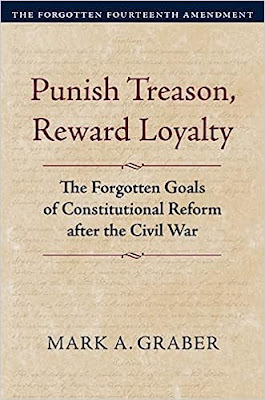
Mark A. Graber, Punish Treason, Reward Loyalty: The Forgotten Goals of Constitutional Reform after the Civil War (University of Kansas Press, 2023)
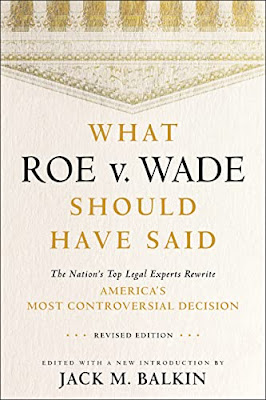
Jack M. Balkin, What Roe v. Wade Should Have Said: The Nation's Top Legal Experts Rewrite America's Most Controversial Decision - Revised Edition (NYU Press, 2023)

Andrew Koppelman, Burning Down the House: How Libertarian Philosophy Was Corrupted by Delusion and Greed (St. Martin’s Press, 2022)

Gerard N. Magliocca, Washington's Heir: The Life of Justice Bushrod Washington (Oxford University Press, 2022)
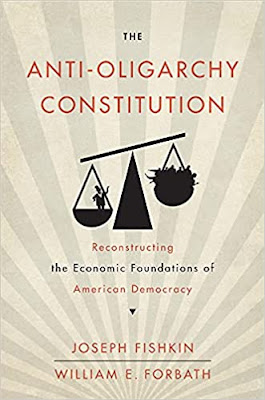
Joseph Fishkin and William E. Forbath, The Anti-Oligarchy Constitution: Reconstructing the Economic Foundations of American Democracy (Harvard University Press, 2022)
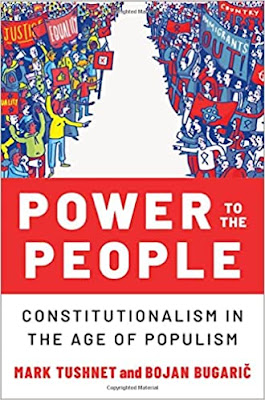
Mark Tushnet and Bojan Bugaric, Power to the People: Constitutionalism in the Age of Populism (Oxford University Press 2021).

Mark Philip Bradley and Mary L. Dudziak, eds., Making the Forever War: Marilyn B. Young on the Culture and Politics of American Militarism Culture and Politics in the Cold War and Beyond (University of Massachusetts Press, 2021).

Jack M. Balkin, What Obergefell v. Hodges Should Have Said: The Nation's Top Legal Experts Rewrite America's Same-Sex Marriage Decision (Yale University Press, 2020)

Frank Pasquale, New Laws of Robotics: Defending Human Expertise in the Age of AI (Belknap Press, 2020)

Jack M. Balkin, The Cycles of Constitutional Time (Oxford University Press, 2020)

Mark Tushnet, Taking Back the Constitution: Activist Judges and the Next Age of American Law (Yale University Press 2020).

Andrew Koppelman, Gay Rights vs. Religious Liberty?: The Unnecessary Conflict (Oxford University Press, 2020)

Ezekiel J Emanuel and Abbe R. Gluck, The Trillion Dollar Revolution: How the Affordable Care Act Transformed Politics, Law, and Health Care in America (PublicAffairs, 2020)

Linda C. McClain, Who's the Bigot?: Learning from Conflicts over Marriage and Civil Rights Law (Oxford University Press, 2020)
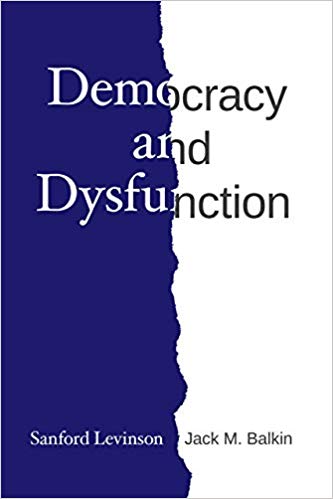
Sanford Levinson and Jack M. Balkin, Democracy and Dysfunction (University of Chicago Press, 2019)

Sanford Levinson, Written in Stone: Public Monuments in Changing Societies (Duke University Press 2018)

Mark A. Graber, Sanford Levinson, and Mark Tushnet, eds., Constitutional Democracy in Crisis? (Oxford University Press 2018)

Gerard Magliocca, The Heart of the Constitution: How the Bill of Rights became the Bill of Rights (Oxford University Press, 2018)

Cynthia Levinson and Sanford Levinson, Fault Lines in the Constitution: The Framers, Their Fights, and the Flaws that Affect Us Today (Peachtree Publishers, 2017)

Brian Z. Tamanaha, A Realistic Theory of Law (Cambridge University Press 2017)

Sanford Levinson, Nullification and Secession in Modern Constitutional Thought (University Press of Kansas 2016)

Sanford Levinson, An Argument Open to All: Reading The Federalist in the 21st Century (Yale University Press 2015)

Stephen M. Griffin, Broken Trust: Dysfunctional Government and Constitutional Reform (University Press of Kansas, 2015)

Frank Pasquale, The Black Box Society: The Secret Algorithms That Control Money and Information (Harvard University Press, 2015)

Bruce Ackerman, We the People, Volume 3: The Civil Rights Revolution (Harvard University Press, 2014)
Balkinization Symposium on We the People, Volume 3: The Civil Rights Revolution

Joseph Fishkin, Bottlenecks: A New Theory of Equal Opportunity (Oxford University Press, 2014)

Mark A. Graber, A New Introduction to American Constitutionalism (Oxford University Press, 2013)

John Mikhail, Elements of Moral Cognition: Rawls' Linguistic Analogy and the Cognitive Science of Moral and Legal Judgment (Cambridge University Press, 2013)

Gerard N. Magliocca, American Founding Son: John Bingham and the Invention of the Fourteenth Amendment (New York University Press, 2013)

Stephen M. Griffin, Long Wars and the Constitution (Harvard University Press, 2013)

Andrew Koppelman, The Tough Luck Constitution and the Assault on Health Care Reform (Oxford University Press, 2013)

James E. Fleming and Linda C. McClain, Ordered Liberty: Rights, Responsibilities, and Virtues (Harvard University Press, 2013)
Balkinization Symposium on Ordered Liberty: Rights, Responsibilities, and Virtues

Andrew Koppelman, Defending American Religious Neutrality (Harvard University Press, 2013)

Brian Z. Tamanaha, Failing Law Schools (University of Chicago Press, 2012)

Sanford Levinson, Framed: America's 51 Constitutions and the Crisis of Governance (Oxford University Press, 2012)

Linda C. McClain and Joanna L. Grossman, Gender Equality: Dimensions of Women's Equal Citizenship (Cambridge University Press, 2012)

Mary Dudziak, War Time: An Idea, Its History, Its Consequences (Oxford University Press, 2012)

Jack M. Balkin, Living Originalism (Harvard University Press, 2011)

Jason Mazzone, Copyfraud and Other Abuses of Intellectual Property Law (Stanford University Press, 2011)

Richard W. Garnett and Andrew Koppelman, First Amendment Stories, (Foundation Press 2011)

Jack M. Balkin, Constitutional Redemption: Political Faith in an Unjust World (Harvard University Press, 2011)

Gerard Magliocca, The Tragedy of William Jennings Bryan: Constitutional Law and the Politics of Backlash (Yale University Press, 2011)

Bernard Harcourt, The Illusion of Free Markets: Punishment and the Myth of Natural Order (Harvard University Press, 2010)

Bruce Ackerman, The Decline and Fall of the American Republic (Harvard University Press, 2010)
Balkinization Symposium on The Decline and Fall of the American Republic

Ian Ayres. Carrots and Sticks: Unlock the Power of Incentives to Get Things Done (Bantam Books, 2010)

Mark Tushnet, Why the Constitution Matters (Yale University Press 2010)

Ian Ayres and Barry Nalebuff: Lifecycle Investing: A New, Safe, and Audacious Way to Improve the Performance of Your Retirement Portfolio (Basic Books, 2010)
.jpg)
Jack M. Balkin, The Laws of Change: I Ching and the Philosophy of Life (2d Edition, Sybil Creek Press 2009)

Brian Z. Tamanaha, Beyond the Formalist-Realist Divide: The Role of Politics in Judging (Princeton University Press 2009)
Andrew Koppelman and Tobias Barrington Wolff, A Right to Discriminate?: How the Case of Boy Scouts of America v. James Dale Warped the Law of Free Association (Yale University Press 2009)

Jack M. Balkin and Reva B. Siegel, The Constitution in 2020 (Oxford University Press 2009)

Heather K. Gerken, The Democracy Index: Why Our Election System Is Failing and How to Fix It (Princeton University Press 2009)

Mary Dudziak, Exporting American Dreams: Thurgood Marshall's African Journey (Oxford University Press 2008)

David Luban, Legal Ethics and Human Dignity (Cambridge Univ. Press 2007)

Ian Ayres, Super Crunchers: Why Thinking-By-Numbers is the New Way to be Smart (Bantam 2007)

Jack M. Balkin, James Grimmelmann, Eddan Katz, Nimrod Kozlovski, Shlomit Wagman and Tal Zarsky, eds., Cybercrime: Digital Cops in a Networked Environment (N.Y.U. Press 2007)

Jack M. Balkin and Beth Simone Noveck, The State of Play: Law, Games, and Virtual Worlds (N.Y.U. Press 2006)

Andrew Koppelman, Same Sex, Different States: When Same-Sex Marriages Cross State Lines (Yale University Press 2006)

Brian Tamanaha, Law as a Means to an End (Cambridge University Press 2006)

Sanford Levinson, Our Undemocratic Constitution (Oxford University Press 2006)

Mark Graber, Dred Scott and the Problem of Constitutional Evil (Cambridge University Press 2006)

Jack M. Balkin, ed., What Roe v. Wade Should Have Said (N.Y.U. Press 2005)

Sanford Levinson, ed., Torture: A Collection (Oxford University Press 2004)
Balkin.com homepage
Bibliography
Conlaw.net
Cultural Software
Writings
Opeds
The Information Society Project
BrownvBoard.com
Useful Links
Syllabi and Exams
