Balkinization
an unanticipated consequence of
Jack M. Balkin
Balkinization Symposiums: A Continuing List
E-mail:
Jack Balkin:
jackbalkin at yahoo.com
Bruce Ackerman
bruce.ackerman at yale.edu
Ian Ayres
ian.ayres at yale.edu
Corey Brettschneider
corey_brettschneider at brown.edu
Mary Dudziak
mary.l.dudziak at emory.edu
Joey Fishkin
joey.fishkin at gmail.com
Heather Gerken heather.gerken at yale.edu
Abbe Gluck abbe.gluck at yale.edu
Mark Graber
mgraber at law.umaryland.edu
Stephen Griffin
sgriffin at tulane.edu
Jonathan Hafetz
jonathan.hafetz at shu.edu
Jeremy Kessler
jkessler at law.columbia.edu
Andrew Koppelman
akoppelman at law.northwestern.edu
Marty Lederman
msl46 at law.georgetown.edu
Sanford Levinson
slevinson at law.utexas.edu
David Luban
david.luban at gmail.com
Gerard Magliocca
gmaglioc at iupui.edu
Jason Mazzone
mazzonej at illinois.edu
Linda McClain
lmcclain at bu.edu
John Mikhail
mikhail at law.georgetown.edu
Frank Pasquale
pasquale.frank at gmail.com
Nate Persily
npersily at gmail.com
Michael Stokes Paulsen
michaelstokespaulsen at gmail.com
Deborah Pearlstein
dpearlst at yu.edu
Rick Pildes
rick.pildes at nyu.edu
David Pozen
dpozen at law.columbia.edu
Richard Primus
raprimus at umich.edu
K. Sabeel Rahmansabeel.rahman at brooklaw.edu
Alice Ristroph
alice.ristroph at shu.edu
Neil Siegel
siegel at law.duke.edu
David Super
david.super at law.georgetown.edu
Brian Tamanaha
btamanaha at wulaw.wustl.edu
Nelson Tebbe
nelson.tebbe at brooklaw.edu
Mark Tushnet
mtushnet at law.harvard.edu
Adam Winkler
winkler at ucla.edu
Compendium of posts on Hobby Lobby and related cases
The Anti-Torture Memos: Balkinization Posts on Torture, Interrogation, Detention, War Powers, and OLC
The Anti-Torture Memos (arranged by topic)
Recent Posts
A Thorough Debunking of the "Statutory" Argument for the NSA Surveillance Program -- But Alas, Congress Doesn't Care
![[Powered by Blogger]](https://lh3.googleusercontent.com/blogger_img_proxy/AEn0k_tTRknw1mPTRjz4JqXkyrL3TZqsPZMD34uE97ZnsRJJFbjhiB-YcED08rSnUrBosW8Q_cZgV3JiMLihiypY4hdKkLEUgJ_5GgnuC2HE0SXI=s0-d)
Just A Few Blogs
ACS Blog
Alas, a Blog
Althouse
Arts and Letters Daily
Atrios (Eschaton)
Bill of Health
Buzzflash.com
Buzz Machine
Cato at Liberty
Juan Cole (Informed Comment)
Concurring Opinions
The Constitution in 2020
Corrente
Crooked Timber
Daily Howler
Daily Kos
Dana Boyd
Brad DeLong
Digby (Hullabaloo)
Discriminations
Daniel Drezner
Kevin Drum (Mother Jones)
Electrolite
En Banc
Eunomia (Daniel Larison)
Fafblog
Michael Froomkin (Discourse.net)
GovLab (Beth Noveck)
Rick Hasen (Election Law)
History News Network
How Appealing
Ignatz (Sam Heldman)
The Importance of (Ernie Miller)
Infolaw
Instapundit
International Economic Law and Policy Blog
IntLawGrrls
Jacob Levy
Jesus' General
Jurisdynamics
The Kitchen Cabinet
Mark Kleiman
Law Blog Central
Larry Lessig
Lawyers, Guns and Money
Liberal Oasis
Brian Leiter's Law School Reports
The Leiter Reports
Marginal Revolution
Megan McArdle
Memeorandum
Metafilter
Mirror of Justice
The New Republic
Newseum
No More Mister Nice Blog
Brendan Nyhan
Opinio Juris
Orcinus
The Originalism Blog
Pandagon
Passport (Foreign Policy)
Overcoming Bias
Political Animal (Washington Monthly)
Political Theory Daily Review
Political Wire (Taegan Goddard)
The Poor Man
Virginia Postrel
Prawfsblawg
Public Reason
Jonathan Rauch
Raw Story
Redstate
ReligiousLeftLaw.com
Reporters Committee For Freedom of the Press
Reproductive Rights Blog
Rothman's Roadmap to the Right of Publicity
SCOTUS Blog
Seeing the Forest
Clay Shirky
The Shifted Librarian
The Situationist
Larry Solum (Legal Theory)
Andrew Sullivan
Talking Points Memo
Talk Left
Tapped
Tbogg
TechPresident
The Paper Chase (Jurist)
Tom Paine
Tom Tomorrow (This Modern World)
Eve Tushnet
Uggabugga
University of Chicago Law School Faculty Blog
Unqualified Offerings
The Volokh Conspiracy
War and Piece (Laura Rozen)
Wampum
Oliver Willis
Wonkette
Written Description
Matthew Yglesias
Yin
Your Choice of Feeds
1. XML
powered by

2. Atom Feed
3. RSS 2.0
A Thorough Debunking of the "Statutory" Argument for the NSA Surveillance Program -- But Alas, Congress Doesn't Care
Marty Lederman
Today's Washington Post reports that David Kris, DOJ's Associate Deputy Attorney General in charge of national security issues from 2000 to 2003 -- now a counsel at Time-Warner -- is "highly critical" of the legal arguments that DOJ has offered in support of the legality of the NSA domestic spying program. That's putting it mildly.
I worked with David at the Department of Justice. It's very safe to say he was one of the very best appellate lawyers in the Department -- and became one of the most trusted, most well-respected authorities in the Department on criminal law and electronic surveillance issues once he moved on to the DAG's Office. He's extremely thorough, careful, and impartial. And those qualities are on display in his recent analysis of the NSA program, contained in this series of e-mails to the Attorney General's Office in December and January, and, much more importantly, in this remarkable 23-page memo dated January 25, 2006. (All were written in his personal capacity, and do not reflect the views of DOJ or Time-Warner.)
David's memo is by a large measure the most thorough and careful -- and, for those reasons, the most effective -- critique anyone has yet offered of the DOJ argument that Congress statutorily authorized the NSA program. It largely confirms the statutory argument contained in two letters that I and 13 other academics and former government officials recently sent to Congress (here and here), but David's analysis is much more comprehensive than anything we could have done in that format -- it delves deep into the interstices and legislative history of FISA (a subject that David knows inside and out), and takes apart with precision all of the technical statutory arguments offered in the DOJ "White Paper" defense of the program.
Two things in particular stand out:
(i) David provides a comprehensive analysis of FISA's "exclusive means" provision (18 U.S.C. 2511(2)(f)), and shows both why that provision precludes the NSA program unless it was impliedly repealed, and why it was not repealed.
(ii) David pinpoints (pp. 6-7 & nns. 59-62) why the DOJ notion that Congress approved the NSA rogram in the 9/18/01 Authorization for Use of Military Force is undermined by the drafting, negotiation and enactment of the PATRIOT Act that was happening at approximately the same time. We've heard a lot in recent days about how critical it is that the PATRIOT Act be renewed to permit the President to fight the War on Terrorism. Just check out the President's remarks today on signing the renewal -- it's all about how the PATRIOT Act is so critical to the fight against the terrorists responsible for 9/11. (Hasn't the President heard the news that those authorities were already enacted in the AUMF?) We heard the same thing back in 2001, when the Act was first introduced. But the logic of the DOJ defense of the NSA program, if it were correct, would mean that many key provisions of the PATRIOT are largely superfluous. (Few observers have noted one of the most extraordinary aspects of the DOJ White Paper: In footnote 13 of that White Paper, DOJ responds to this PATRIOT-Act-is-superfluous argument by explaining that, in fact, the PATRIOT Act was not necessary for the "current armed conflict against Al Qaeda and its allies," and that it was instead merely a vehicle for removing "long-standing impediments to the effectiveness of FISA." In other words, the "necessary to defeat Al Qaeda" argument was merely a stalking horse, and the PATRIOT truly was, and remains, a DOJ wish-list to address issues that had long preceded September 11th. This doesn't mean that the PATRIOT Act should, or should not, have been renewed; it's merely to point out that, on DOJ's own reading of the AUMF, the PATRIOT Act is hardly necessary to address the current conflict with Al Qaeda.)
Another remarkable thing -- perhaps the most important thing -- about the Kris memo is that it is dated January 2006, rather than January 2003: David did not produce anything of the sort when he was actually at DOJ, when the legality of the program was being considered. That's not David's fault. Although he was the person in the DAG's office whose portfolio included FISA and electronic surveillance, and although DOJ often trotted David out to testify and speak on such matters well after September 11th, David was never so much as briefed on the NSA program. Now we have reason to understand why: Perhaps DOJ knew that if it ran its legal arguments by serious, trusted and objective lawyers in the Department -- those who knew FISA inside and out -- they would not have passed muster. It's hard to imagine any other reason why someone of David's skills, and in his position on these precise issues, would have been kept out of the loop. Once again, it's evidence of an Administration that is indifferent as to what the correct legal answers might be, but is instead looking only for some legal hook, no matter how tenuous, on which to hang its desired operational programs. See also, e.g., the legal justifications for torture and other unlawful means of interrogation that were reached without the input of those lawyers in the Administration with the most knowledge on the questions; and the finalization and use of the DoD Working Group Report without even informing the Working Group itself (which included several skeptics). This is a much more systemic problem than the particular NSA dispute at issue here.
David's memo also includes shorter discussions of the Fourth Amendment and Commander-in-Chief questions. I don't agree with quite all of what David writes in these respects -- in particular, I don't think the bona fides of the Article II argument are as fact-dependent as he suggests -- but his analysis is, again, serious, balanced, and well worth reading.
I would go into more detail on the Kris memo, but I'm afraid this is where the story turns sour. (More on the Kris e-mails from "georgia10" here.) You see, David's analysis is really beside the point now, for two reasons: the first comforting, the other disheartening.
First, as far as I'm aware no one in Congress has been persuaded by the Administration's statutory argument: It was dead on arrival. As Senators Graham and Specter, among others, have explained, they were present at the negotiation and enactment of the AUMF, and they guarantee that neither they nor their colleagues intended to authorize the sort of circumvention of FISA that the Administration has been engaged in for the past five years. (Attorney General Gonzales's testimony, in response to Graham's explanation to this effect, was basically that Congress unknowingly authorized a major restructuring of a central framework statute, and that actual legislative intent is irrelevant. You can imagine how well that notion went over in Congress.)
Second, it now appears that Congress simply (and unfortunately) doesn't care that the Administration's (secret) legal justification was implausible, nor does it care that the Executive branch treated the legislature (and its statutory enactments) with contempt. Republican Senators, including Roberts and Hagel, yesterday negotiated a "deal" with the White House for legislation that would actually authorize warrantless, virtually unlimited surveillance of Americans. According to a report in today's New York Times, the bill "would give Congressional approval to the eavesdropping program much as it was secretly authorized by Mr. Bush after the 2001 terrorist attacks, with limited notification to a handful of Congressional leaders. The N.S.A. would be permitted to intercept the international phone calls and e-mail messages of people in the United States if there was 'probable cause to believe that one party to the communication is a member, affiliate, or working in support of a terrorist group or organization,' according to a written summary of the proposal issued by its Republican sponsors. The finding of probable cause would not be reviewed by any court. [A]fter 45 days, the attorney general would be required to drop the eavesdropping on that target, seek a warrant from the Foreign Intelligence Surveillance Court or explain under oath to two new Congressional oversight subcommittees why he could not seek a warrant." Details on Senator Snowe's webiste.
Oh, and in "exchange" for affording the Administration this huge loophole in FISA, the Senate agrees not to investigate the NSA program, and not to look further into the Administration's past lawbreaking. Quite a deal, right? Here's the best part: On Tuesday, Senator Rockefeller remarked that the Senate Intel Committee Republicans were "under the control" of the White House. Senator Roberts responded on Wednesday that he resented being portrayed as what he called a "lap dog of the administration," explaining that Rockefeller "doesn't know how hard we worked."
I don't doubt that Roberts and Hagel did "work hard" to reach their "compromise." After all, look where they started the "negotiations": The Vice President's opening gambit was to scoff at Congress altogether, and to insist that the program would go forward come hell or high water, no matter how many legislators thought it was illegal. So Roberts, et al., actually secured a great victory: They've put an end to the Administration's lawbreaking . . . by amending the law to make the conduct legal. (That'll show 'em.) Checks and balances in living color. (Much, much more on this development over at Glenn Greenwald's site, which is fast becoming the locale for one-stop web shopping on the NSA issue.)
P.S. In signing the PATRIOT Act extension today, the President included this typical qualification: "The executive branch shall construe the provisions of H.R. 3199 that call for furnishing information to entities outside the executive branch, such as sections 106A and 119, in a manner consistent with the President's constitutional authority to supervise the unitary executive branch and to withhold information the disclosure of which could impair foreign relations, national security, the deliberative processes of the Executive, or the performance of the Executive's constitutional duties."
Translation: There are numerous provisions of the Act that require the Department of Justice to provide information and documents to congressional committees for purposes of oversight. We will ignore those requirements when we conclude that it will "impair" what occurs in the Executive branch. Thanks for asking, though.
Don't be surprised when the President included similar language if and when he signs the touted NSA-surveillance "oversight" bill that Senators Roberts, Hagel and Snowe just worked so hard to negotiate.
P.P.S. I've been meaning also to link to this brief filed a couple of weeks ago with the Foreign Intelligence Surveillance Court by Hogan & Hartson on behalf of the Constitution Project and the Center for National Security Studies. The brief argues at length that the NSA program is unlawful, and urges the FISA court to hold NSA's electronic surveillance under the program to be unlawful "in any proceeding where the lawfulness of any such surveillance is at issue." More on this development from Lyle Denniston on SCOTUSblog.
Posted
5:54 PM
by Marty Lederman [link]
The AUMF authorizes force against "those nations, organizations, or persons [the president] determines planned, authorized, committed, or aided" the attacks of September 11, 2001. If the wiretapping is limited to those persons, then an argument could be made that wiretapping them is permitted. There are other problems with that position, not the least of them being whether Congress intended to override FISA without expressly saying so, but I'll grant it for the moment. In any case, the wiretapping seems to be much broader than this and therefore not covered by this language.
Even this argument is problematic because of the amendments Congress rejected before voting on the AUMF. There were two suggested by the Administration:
1. On September 12, 2001, to add a clause expanding the scope to allow the use of force to "deter and preempt any future acts of terrorism or aggression against the United States."
2. Just before the Senate vote, to add the words "in the United States and" after "appropriate force" in the text.
The rejection of these two amendments pretty well eliminates any claim that Congress authorized actions in the US, including warrantless wiretapping. It makes even less likely the assertion that Congress modified FISA without any mention that it was doing so.
The latest developments indicate that Congress is interested in reasonable regulation of the program, and not interested in an unconstitutional overreach to end the program. Seen in this way, the proposed amendments are as much confession of error as indication of interest.
This is an odd conclusion to reach regarding the Art. II issue. If Congress is drafting legislation to authorize the program, that legislation is a specific rejection of claims that the President has sole authority under Art. II. Congress is not "confessing error", it's stating "the President was wrong".

Laura Rozen is untangling one of its darker corners:
March 10, 2006
I think Congress is going to wait until there is a quiet Middle East and a Guantanamo depopulation after those issues are settled in court, before addressing a genuine rewrite of FISA so it too becomes realtime responsive; unless congress opts for secret laws to govern secret programs, sooner.
I see the DeWine and Specter measures and Frist's own recommendations, as cosmetic.
I see the current Supreme Court's getting involved but incrementally via all the habeas suits which it certs; and temporizing, as well, until there is some kind of peace and stability.
To me it is all extralegal, wherefrom the hue and cry and justly so, especially from former decisionmakers and a majority of the most respected longterm experts from academia, but the executive is winning realtime in the antiterrorism conflicts.
What do we do if NSA lofted the omnisnoop P10Cs on 9-12 and vacuumed and datamined every cellphone call from VA to MA,e.g.
I think this is why Graham and Frist are willing to acquiesce, predominantly, although there is caucus politics motivating much of their work.
Until there is an armistice, there will be no deep lawmaking. Not exactly the best time to blast the Yoo theory out of the firmament, though the evidence tainting will be the Achilles heel of that scoping of executive's reach: FISC will begin to reject 5th amendment violations, and SCOTUS will, as well; probably, why the reconstitution of the commissions has yet to occur; the executive as well is procrastinating while the clocks tick in Iraq, and toward primaries here ninety days from now.
And of course the President and congress, both, are going to write interim claims of responsibility for success and taut revisions of statute to apply to this innovative conflict in telecoms, and in Iraq, and in Afghanistan; the 'work'. I look forward to studying the materials at the Snowe site; I appreciate that link.
There may be a forgiveness session like the Iran-Contra hearings; sins will be outed; but destruction occurred in Nicaragua region, not Manhattan. I think that is the difference.
The sooner politics leads to a change of policies and officeholders, the more quickly the pressure on the Supreme Court will subside and the more thorough congress will become.
As you point out, at least if I am grasping the gist, the move and countermove for now are fairly transparently shells without much substance. Executive is prosecuting its course, one which likely is drawing to a close because five years is too much time now.
More light on the dark corners:
Blogger Gets Education in Gestapo Tactics
Bush's Mysterious 'New Programs'
Crystal X
Crystal x Asli
Natural Crytsal x
Jual crystal x Asli
ciri-ciri crystal x asli
Crystal X Yogyakarta
Crystal X Jogja
Crystal X Asli
Crystal X
Jual Crystal X Asli
serumrambut | healtybeautycare | kioscantiksehat | kiosprodukkecantikan | kiosobatherbal
Jersey Bola Online Murah
Grosir Jersey Bola Grade Ori
Obat Herbal Tulang Keropos Obat Herbal Amandel Kronis Tanpa Operasi Obat Herbal Vertigo Akut Obat Herbal Glaukoma Tanpa Operasi Obat Herbal Varises Obat Herbal Kanker Usus Halus Obat Herbal Alzheimer Paling Ampuh Obat Herbal Epilepsi Obat Herbal Sipilis Obat Herbal Pasca Stroke Obat Herbal Kanker Hati Tanpa Operasi Obat Herbal Meningitis Obat Herbal Untuk Penyakit Faringitis suplemen pemutih wajah Obat Herbal Bopeng Di Wajah
kosmetik murah
jual kosmetik murah
Pusat Grosir Kosmetik
jual skateboard
jual skateboard murah
jual papan skateboard
jual papan skateboard murah
Obat kutil di sekitar kelamin
Obat farmasi untuk kutil kelamin
Obat generik untuk kutil kelamin
Obat kutil kelamin imiquimod
Jual obat kutil kelamin
Jual obat kutil kelamin murah
Obat kutil kelamin yg di jual di apotik
Jual obat penghilang kutil kelamin
Obat kimia kutil kelamin
Kapur sirih untuk obat kutil kelamin
Obat kutil kelamin medis
Obat menghilangkan kutil kelamin
Obat kutil kelamin tradisional
Obat kutil kelamin
Obat kutil kelamin wanita
Obat kutil kelamin di apotik
Obat kutil kelamin untuk ibu hamil
Obat kutil kelamin untuk wanita
Obat kutil kelamin mujarab
Obat kutil kelamin di anus
Obat kutil kelamin/jengger ayam
Obat kutil kelamin paling murah
obat gonore pada ibu hamil
obat gonore tradisional
obat gonore tenggorokan
obat gonore paling efektif
obat gonore pada wanita
obat gonore atau kencing nanah
Obat herpes untuk bayi
Obat herpes untuk ibu hamil
Obat herpes ampuh
Obat herpes untuk anak
Obat herpes mulut
Pengobatan herbal kutil kelamin wanita
pengobatan ampuh kutil kelamin pada wanita
obat kutil kelamin yang ada di apotik
obat kutil kelamin yg dijual di apotik
obat kutil di kemaluan wanita
pengobatan kutil kelamin pada pria
pengobatan penyakit kutil kelamin pada pria
obat penyakit kutil pada kelamin pria
Pengobatan kutil kelamin aman dan tanpa operasi
obat kutil pada alat kelamin pria
pengobatan kutil kelamin
pengobatan kutil kelamin pada pria dan wanita
pengobatan kutil kelamin pria
pengobatan kutil kelamin wanita
pengobatan kutil kelamin dengan cuka apel
pengobatan kutil kelamin di anus
Cara mengobati kutil di kelamin wanita hamil
pengobatan kutil kelamin di bandung
Cara mengobati jengger ayam dan kutil kelamin
obat kutil kelamin
Obat wasir herbal tanpa operasi
Obat wasir herbal stadium 4 tanpa operasi
Cara mengobati wasir dan ambeien
Pengobatan ambeien keluar benjolan tanpa operasi
Pengobatan wasir stadium 4 tanpa operasi
Obat wasir untuk ibu setelah melahirkan
Obat wasir tradisional yang ampuh
Cara ampuh atasi wasir pada wanita
Obat yang bagus untuk wasir
Obat wasir aman buat ibu hamil
Obat wasir aman ibu menyusui
Obat wasir untuk ibu habis melahirkan
Obat de nature khusus untuk wasir stdium 4
Cara mengobati wasir tana perlu operasi
Pengobatan wasir dan ambeien mujarab
Pengobatan wasir tanpa operasi
Obat wasir dan ambeien stadium 4
Obat penyakit wasir herbal De Nature
Obat untuk wasir pada ibu hamil
Cara mengobati wasir yang parah tanpa operasi
Obat ambeien tradisional
Obat wasir herbal De Nature
Obat wasir ambeclear
Obat wasir alami
Obat wasir ambeven
Obat wasir berdarah
Obat wasir ampuh
Obat wasir untuk ibu hamil
Obat wasir ardium
Obat wasir ampuh di apotik
Obat wasir luar
Obat wasir paling ampuh
Obat herpes untuk bayi
Obat herpes untuk ibu hamil
Obat herpes ampuh
Obat herpes untuk anak
Obat herpes mulut
Pengobatan herbal kutil kelamin wanita
pengobatan ampuh kutil kelamin pada wanita
obat kutil kelamin yang ada di apotik
obat kutil kelamin yg dijual di apotik
obat kutil di kemaluan wanita
pengobatan kutil kelamin pada pria
pengobatan penyakit kutil kelamin pada pria
obat penyakit kutil pada kelamin pria
Pengobatan kutil kelamin aman dan tanpa operasi
obat kutil pada alat kelamin pria
pengobatan kutil kelamin
pengobatan kutil kelamin pada pria dan wanita
pengobatan kutil kelamin pria
pengobatan kutil kelamin wanita
pengobatan kutil kelamin dengan cuka apel
pengobatan kutil kelamin di anus
Cara mengobati kutil di kelamin wanita hamil
pengobatan kutil kelamin di bandung
Cara mengobati jengger ayam dan kutil kelamin
obat kutil kelamin
Obat wasir herbal tanpa operasi
Obat wasir herbal stadium 4 tanpa operasi
Cara mengobati wasir dan ambeien
Pengobatan ambeien keluar benjolan tanpa operasi
Pengobatan wasir stadium 4 tanpa operasi
Obat wasir untuk ibu setelah melahirkan
Obat wasir tradisional yang ampuh
Cara ampuh atasi wasir pada wanita
Obat yang bagus untuk wasir
Obat wasir aman buat ibu hamil
Obat wasir aman ibu menyusui
Obat wasir untuk ibu habis melahirkan
Obat de nature khusus untuk wasir stdium 4
Cara mengobati wasir tana perlu operasi
Pengobatan wasir dan ambeien mujarab
Pengobatan wasir tanpa operasi
Obat wasir dan ambeien stadium 4
Obat penyakit wasir herbal De Nature
Obat untuk wasir pada ibu hamil
Cara mengobati wasir yang parah tanpa operasi
Obat ambeien tradisional
Obat wasir herbal De Nature
Obat wasir ambeclear
Obat wasir alami
Obat wasir ambeven
Obat wasir berdarah
Obat wasir ampuh
Obat wasir untuk ibu hamil
Obat wasir ardium
Obat wasir ampuh di apotik
Obat wasir luar
Obat wasir paling ampuh
Cara Agar Cepat Hamil
Crystal X Mengatasi Susah Hamil
Tips Menggunakan Crystal X
Crystal X Merawat Vagina
Cara Agar tetap Awet Muda
Cara Merawat Kesehatan Miss V Secara Alami
Cara Pakai Acai Plus Pelangsing Herbal NASA
Manfaat SBMN Serbuk beras Merah Natural
Cara Mengobati Penyakit Asma Secara Alami
Cara Mengobati Penyakit Asam Urat Secara Alami
Cara Mencegah Miom dan Kista
Mengobati Keputihan Secara Alami
Manfaat Crystal X Merawat Vagina
Cara Pakai Crystal X Gimana..?
Efek Samping Crystal X
Collaskin Untuk Ibu Hamil dan Menyusui
Cara Mengatasi Kulit kering dan Kusam
Tips Memilih Kosmetik Yang Aman
Cara Merawat Kecantikan Kulit Wajah
Efek Samping Moreskin
Cara Merawat Kebersihan Vagina
Crystal X Merapatkan Vagina
Senam Payudara Membersarkan Payudara
Cara Mengatasi Payudara Kendur
Cara Mencegah Miom dan Kista
Crystal X Mengatasi Kanker Serviks
Gejala Keputihan Tidak Normal
Cream Pembesar Payudara Herbal Bantul
Ayla Breast Care Pembesar Payudara Herbal
Manfaat Collaskin Pemutihh Kulit Herbal
Crystal X Bantul
Saat ini semakin banyak pria yang semakin tidak percaya diri dengan ukuran dari penisnya, dan oleh karena itu banyak yang merasa memerlukan bantuan untuk menambah ukuran dari penisnya sehingga mereka bisa memuaskan pasangan mereka. inilah sebabnya saat ini semakin banyak juga produsen Vimax.
Ini Dia Cara Memperbesar Alat Vital Secara Alami
Mengatasi Ejakulasi Dan Susah Ereksi Dengan Vimax Anda Tidak Perlu Kerja Extra Untuk Mengatasi Semua Problem Kejantanan Anda | ” JANGAN SALAH DALAM MEMILIH,, PRODUK PALSU BISA BERAKIBAT FATAL UNTUK KESEHATAN “ Ciri Ciri Vimax Asli
Vimax Asli telah membantu banyak orang untuk meningkatkan kinerja seksual dan memperbesar penis mereka. Dengan lebih dari 85% pelanggan Pembesar Penis Alami Yang telah disurvei melaporkan bahwa kenikmatan yang lebih besar selama berhubungan seksual. Bukanlah hal mengherankan bahwa pelanggan Obat Pembesar Alat Vital Vimax Asli Canada Terus berdatangan kembali. Ciri Vimax Asli

Books by Balkinization Bloggers

Gerard N. Magliocca, The Actual Art of Governing: Justice Robert H. Jackson's Concurring Opinion in the Steel Seizure Case (Oxford University Press, 2025)

Linda C. McClain and Aziza Ahmed, The Routledge Companion to Gender and COVID-19 (Routledge, 2024)

David Pozen, The Constitution of the War on Drugs (Oxford University Press, 2024)

Jack M. Balkin, Memory and Authority: The Uses of History in Constitutional Interpretation (Yale University Press, 2024)
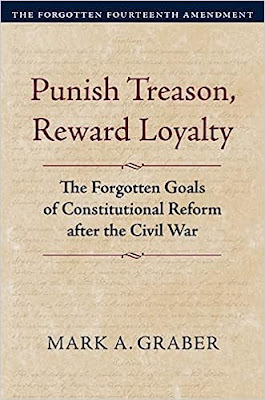
Mark A. Graber, Punish Treason, Reward Loyalty: The Forgotten Goals of Constitutional Reform after the Civil War (University of Kansas Press, 2023)
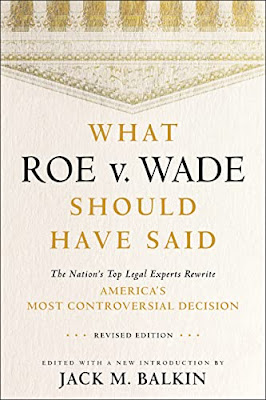
Jack M. Balkin, What Roe v. Wade Should Have Said: The Nation's Top Legal Experts Rewrite America's Most Controversial Decision - Revised Edition (NYU Press, 2023)

Andrew Koppelman, Burning Down the House: How Libertarian Philosophy Was Corrupted by Delusion and Greed (St. Martin’s Press, 2022)

Gerard N. Magliocca, Washington's Heir: The Life of Justice Bushrod Washington (Oxford University Press, 2022)
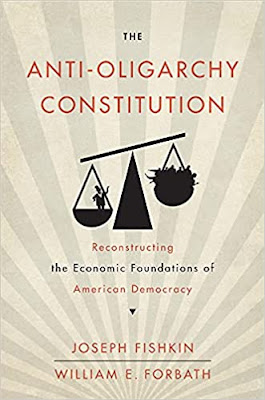
Joseph Fishkin and William E. Forbath, The Anti-Oligarchy Constitution: Reconstructing the Economic Foundations of American Democracy (Harvard University Press, 2022)
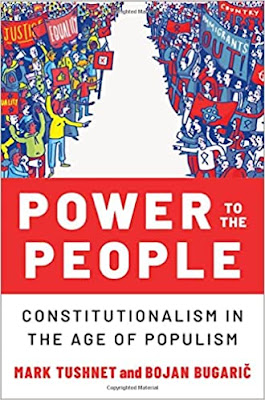
Mark Tushnet and Bojan Bugaric, Power to the People: Constitutionalism in the Age of Populism (Oxford University Press 2021).

Mark Philip Bradley and Mary L. Dudziak, eds., Making the Forever War: Marilyn B. Young on the Culture and Politics of American Militarism Culture and Politics in the Cold War and Beyond (University of Massachusetts Press, 2021).

Jack M. Balkin, What Obergefell v. Hodges Should Have Said: The Nation's Top Legal Experts Rewrite America's Same-Sex Marriage Decision (Yale University Press, 2020)

Frank Pasquale, New Laws of Robotics: Defending Human Expertise in the Age of AI (Belknap Press, 2020)

Jack M. Balkin, The Cycles of Constitutional Time (Oxford University Press, 2020)

Mark Tushnet, Taking Back the Constitution: Activist Judges and the Next Age of American Law (Yale University Press 2020).

Andrew Koppelman, Gay Rights vs. Religious Liberty?: The Unnecessary Conflict (Oxford University Press, 2020)

Ezekiel J Emanuel and Abbe R. Gluck, The Trillion Dollar Revolution: How the Affordable Care Act Transformed Politics, Law, and Health Care in America (PublicAffairs, 2020)

Linda C. McClain, Who's the Bigot?: Learning from Conflicts over Marriage and Civil Rights Law (Oxford University Press, 2020)
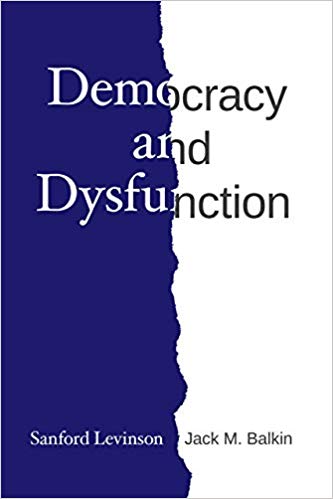
Sanford Levinson and Jack M. Balkin, Democracy and Dysfunction (University of Chicago Press, 2019)

Sanford Levinson, Written in Stone: Public Monuments in Changing Societies (Duke University Press 2018)

Mark A. Graber, Sanford Levinson, and Mark Tushnet, eds., Constitutional Democracy in Crisis? (Oxford University Press 2018)

Gerard Magliocca, The Heart of the Constitution: How the Bill of Rights became the Bill of Rights (Oxford University Press, 2018)

Cynthia Levinson and Sanford Levinson, Fault Lines in the Constitution: The Framers, Their Fights, and the Flaws that Affect Us Today (Peachtree Publishers, 2017)

Brian Z. Tamanaha, A Realistic Theory of Law (Cambridge University Press 2017)

Sanford Levinson, Nullification and Secession in Modern Constitutional Thought (University Press of Kansas 2016)

Sanford Levinson, An Argument Open to All: Reading The Federalist in the 21st Century (Yale University Press 2015)

Stephen M. Griffin, Broken Trust: Dysfunctional Government and Constitutional Reform (University Press of Kansas, 2015)

Frank Pasquale, The Black Box Society: The Secret Algorithms That Control Money and Information (Harvard University Press, 2015)

Bruce Ackerman, We the People, Volume 3: The Civil Rights Revolution (Harvard University Press, 2014)
Balkinization Symposium on We the People, Volume 3: The Civil Rights Revolution

Joseph Fishkin, Bottlenecks: A New Theory of Equal Opportunity (Oxford University Press, 2014)

Mark A. Graber, A New Introduction to American Constitutionalism (Oxford University Press, 2013)

John Mikhail, Elements of Moral Cognition: Rawls' Linguistic Analogy and the Cognitive Science of Moral and Legal Judgment (Cambridge University Press, 2013)

Gerard N. Magliocca, American Founding Son: John Bingham and the Invention of the Fourteenth Amendment (New York University Press, 2013)

Stephen M. Griffin, Long Wars and the Constitution (Harvard University Press, 2013)

Andrew Koppelman, The Tough Luck Constitution and the Assault on Health Care Reform (Oxford University Press, 2013)

James E. Fleming and Linda C. McClain, Ordered Liberty: Rights, Responsibilities, and Virtues (Harvard University Press, 2013)
Balkinization Symposium on Ordered Liberty: Rights, Responsibilities, and Virtues

Andrew Koppelman, Defending American Religious Neutrality (Harvard University Press, 2013)

Brian Z. Tamanaha, Failing Law Schools (University of Chicago Press, 2012)

Sanford Levinson, Framed: America's 51 Constitutions and the Crisis of Governance (Oxford University Press, 2012)

Linda C. McClain and Joanna L. Grossman, Gender Equality: Dimensions of Women's Equal Citizenship (Cambridge University Press, 2012)

Mary Dudziak, War Time: An Idea, Its History, Its Consequences (Oxford University Press, 2012)

Jack M. Balkin, Living Originalism (Harvard University Press, 2011)

Jason Mazzone, Copyfraud and Other Abuses of Intellectual Property Law (Stanford University Press, 2011)

Richard W. Garnett and Andrew Koppelman, First Amendment Stories, (Foundation Press 2011)

Jack M. Balkin, Constitutional Redemption: Political Faith in an Unjust World (Harvard University Press, 2011)

Gerard Magliocca, The Tragedy of William Jennings Bryan: Constitutional Law and the Politics of Backlash (Yale University Press, 2011)

Bernard Harcourt, The Illusion of Free Markets: Punishment and the Myth of Natural Order (Harvard University Press, 2010)

Bruce Ackerman, The Decline and Fall of the American Republic (Harvard University Press, 2010)
Balkinization Symposium on The Decline and Fall of the American Republic

Ian Ayres. Carrots and Sticks: Unlock the Power of Incentives to Get Things Done (Bantam Books, 2010)

Mark Tushnet, Why the Constitution Matters (Yale University Press 2010)

Ian Ayres and Barry Nalebuff: Lifecycle Investing: A New, Safe, and Audacious Way to Improve the Performance of Your Retirement Portfolio (Basic Books, 2010)
.jpg)
Jack M. Balkin, The Laws of Change: I Ching and the Philosophy of Life (2d Edition, Sybil Creek Press 2009)

Brian Z. Tamanaha, Beyond the Formalist-Realist Divide: The Role of Politics in Judging (Princeton University Press 2009)
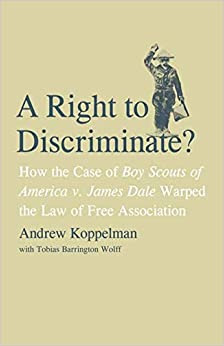
Andrew Koppelman and Tobias Barrington Wolff, A Right to Discriminate?: How the Case of Boy Scouts of America v. James Dale Warped the Law of Free Association (Yale University Press 2009)

Jack M. Balkin and Reva B. Siegel, The Constitution in 2020 (Oxford University Press 2009)

Heather K. Gerken, The Democracy Index: Why Our Election System Is Failing and How to Fix It (Princeton University Press 2009)

Mary Dudziak, Exporting American Dreams: Thurgood Marshall's African Journey (Oxford University Press 2008)

David Luban, Legal Ethics and Human Dignity (Cambridge Univ. Press 2007)

Ian Ayres, Super Crunchers: Why Thinking-By-Numbers is the New Way to be Smart (Bantam 2007)

Jack M. Balkin, James Grimmelmann, Eddan Katz, Nimrod Kozlovski, Shlomit Wagman and Tal Zarsky, eds., Cybercrime: Digital Cops in a Networked Environment (N.Y.U. Press 2007)
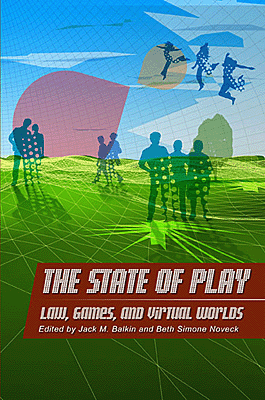
Jack M. Balkin and Beth Simone Noveck, The State of Play: Law, Games, and Virtual Worlds (N.Y.U. Press 2006)

Andrew Koppelman, Same Sex, Different States: When Same-Sex Marriages Cross State Lines (Yale University Press 2006)

Brian Tamanaha, Law as a Means to an End (Cambridge University Press 2006)

Sanford Levinson, Our Undemocratic Constitution (Oxford University Press 2006)

Mark Graber, Dred Scott and the Problem of Constitutional Evil (Cambridge University Press 2006)

Jack M. Balkin, ed., What Roe v. Wade Should Have Said (N.Y.U. Press 2005)

Sanford Levinson, ed., Torture: A Collection (Oxford University Press 2004)
Balkin.com homepage
Bibliography
Conlaw.net
Cultural Software
Writings
Opeds
The Information Society Project
BrownvBoard.com
Useful Links
Syllabi and Exams
