Balkinization
an unanticipated consequence of
Jack M. Balkin
Jack Balkin:
jackbalkin at yahoo.com
Bruce Ackerman
bruce.ackerman at yale.edu
Ian Ayres
ian.ayres at yale.edu
Corey Brettschneider
corey_brettschneider at brown.edu
Mary Dudziak
mary.l.dudziak at emory.edu
Joey Fishkin
joey.fishkin at gmail.com
Heather Gerken heather.gerken at yale.edu
Abbe Gluck abbe.gluck at yale.edu
Mark Graber
mgraber at law.umaryland.edu
Stephen Griffin
sgriffin at tulane.edu
Jonathan Hafetz
jonathan.hafetz at shu.edu
Jeremy Kessler
jkessler at law.columbia.edu
Andrew Koppelman
akoppelman at law.northwestern.edu
Marty Lederman
msl46 at law.georgetown.edu
Sanford Levinson
slevinson at law.utexas.edu
David Luban
david.luban at gmail.com
Gerard Magliocca
gmaglioc at iupui.edu
Jason Mazzone
mazzonej at illinois.edu
Linda McClain
lmcclain at bu.edu
John Mikhail
mikhail at law.georgetown.edu
Frank Pasquale
pasquale.frank at gmail.com
Nate Persily
npersily at gmail.com
Michael Stokes Paulsen
michaelstokespaulsen at gmail.com
Deborah Pearlstein
dpearlst at yu.edu
Rick Pildes
rick.pildes at nyu.edu
David Pozen
dpozen at law.columbia.edu
Richard Primus
raprimus at umich.edu
K. Sabeel Rahmansabeel.rahman at brooklaw.edu
Alice Ristroph
alice.ristroph at shu.edu
Neil Siegel
siegel at law.duke.edu
David Super
david.super at law.georgetown.edu
Brian Tamanaha
btamanaha at wulaw.wustl.edu
Nelson Tebbe
nelson.tebbe at brooklaw.edu
Mark Tushnet
mtushnet at law.harvard.edu
Adam Winkler
winkler at ucla.edu
Compendium of posts on Hobby Lobby and related cases
The Anti-Torture Memos: Balkinization Posts on Torture, Interrogation, Detention, War Powers, and OLC
The Anti-Torture Memos (arranged by topic)
Recent Posts
Battle Royale at the Pentagon: David Addington v. Common Article 3
![[Powered by Blogger]](https://lh3.googleusercontent.com/blogger_img_proxy/AEn0k_vShPqn6ZFbOZasmMj2041F1_R9WLVoA_isSKyyDjGttTt39XkIhRCEDrlvQZruPMA76yGJO8z6VOVuQhWU70GtxCl0TjWrZNcQ6OYogNMs=s0-d)
Just A Few Blogs
ACS Blog
Alas, a Blog
Althouse
Arts and Letters Daily
Atrios (Eschaton)
Bill of Health
Buzzflash.com
Buzz Machine
Cato at Liberty
Juan Cole (Informed Comment)
Concurring Opinions
The Constitution in 2020
Corrente
Crooked Timber
Daily Howler
Daily Kos
Dana Boyd
Brad DeLong
Digby (Hullabaloo)
Discriminations
Daniel Drezner
Kevin Drum (Mother Jones)
Electrolite
En Banc
Eunomia (Daniel Larison)
Fafblog
Michael Froomkin (Discourse.net)
GovLab (Beth Noveck)
Rick Hasen (Election Law)
History News Network
How Appealing
Ignatz (Sam Heldman)
The Importance of (Ernie Miller)
Infolaw
Instapundit
International Economic Law and Policy Blog
IntLawGrrls
Jacob Levy
Jesus' General
Jurisdynamics
The Kitchen Cabinet
Mark Kleiman
Law Blog Central
Larry Lessig
Lawyers, Guns and Money
Liberal Oasis
Brian Leiter's Law School Reports
The Leiter Reports
Marginal Revolution
Megan McArdle
Memeorandum
Metafilter
Mirror of Justice
The New Republic
Newseum
No More Mister Nice Blog
Brendan Nyhan
Opinio Juris
Orcinus
The Originalism Blog
Pandagon
Passport (Foreign Policy)
Overcoming Bias
Political Animal (Washington Monthly)
Political Theory Daily Review
Political Wire (Taegan Goddard)
The Poor Man
Virginia Postrel
Prawfsblawg
Public Reason
Jonathan Rauch
Raw Story
Redstate
ReligiousLeftLaw.com
Reporters Committee For Freedom of the Press
Reproductive Rights Blog
Rothman's Roadmap to the Right of Publicity
SCOTUS Blog
Seeing the Forest
Clay Shirky
The Shifted Librarian
The Situationist
Larry Solum (Legal Theory)
Andrew Sullivan
Talking Points Memo
Talk Left
Tapped
Tbogg
TechPresident
The Paper Chase (Jurist)
Tom Paine
Tom Tomorrow (This Modern World)
Eve Tushnet
Uggabugga
University of Chicago Law School Faculty Blog
Unqualified Offerings
The Volokh Conspiracy
War and Piece (Laura Rozen)
Wampum
Oliver Willis
Wonkette
Written Description
Matthew Yglesias
Yin
Your Choice of Feeds
1. XML
powered by

2. Atom Feed
3. RSS 2.0
Battle Royale at the Pentagon: David Addington v. Common Article 3
Marty Lederman
As I have previously explained, perhaps the single most important turning point in the torture and abuse scandals was the President's determination, on February 7, 2002, that the United States would no longer uniformly abide by the standards prescribed in Common Article 3 of the Geneva Conventions, which provides, inter alia, that detained persons "shall in all circumstances be treated humanely," and that "[t]o this end," certain specified acts "are and shall remain prohibited at any time and in any place whatsoever"—including "cruel treatment and torture," and "outrages upon personal dignity, in particular humiliating and degrading treatment."
First, the President concluded and decreed that Common Article 3 does not apply by its terms -- as a matter of treaty obligation -- to our conflicts with al Qaeda and the Taliban. A divided court of appeals (with John Roberts as the decisive vote) affirmed this determination in the Hamdan case last summer (the appeal of which the Supreme Court is presently considering). As I've noted, that legal determination about the meaning of the Geneva Conventions was very significant, and it is vigorously contested by many; but, be that as it may, the Executive Branch (rightly or wrongly) has long been of the view -- shared by the State Department -- that Common Article 3 is limited to internal conflicts, such as civil wars, and does not cover conflicts such as the war against Al Qaeda.
Nevertheless, for more than a half-century preceding February 7, 2002, the United States had agreed that Common Article 3 reflects a norm of customary international law, and it was U.S. policy to abide by that norm, even where the treaty provision does not apply of its own accord.
All that changed on February 7, 2002, when the President directed the Armed Services to treat detainees consistent with the "principles" of Geneva (that's code for Common Article 3) only "to the extent appropriate and consistent with military necessity." State Department Legal Advisor Will Taft strongly argued that this was a serious mistake in judgment, and that we should abide by Common Article 3, just as we have purported to do in every other modern conflict, with respect to many other detainees not legally entitled to POW protections (e.g., the Viet Cong).
And the 9/11 Commission agreed. At page 380 of its Report, the Commission recommended that the United States "engage its friends to develop a common coalition approach toward the detention and humane treatment of captured terrorists," and expressly urged the U.S. to "draw upon Article 3 of the Geneva Conventions on the law of armed conflict," which was "specifically designed for those cases in which the usual laws of war did not apply." Common Article 3's minimum standards, reasoned the 9/11 Commission, "are generally accepted throughout the world as customary international law." (I should briefly add here that there are at least two serious arguments that the Executive is legally obliged to abide by Common Article 3, even if it is "only" a law of armed conflict, rather than a treaty obligation: (i) that the President's constitutional Commander-in-Chief authority only extends in the first instance to conduct that is consistent with the laws of armed conflict (a topic on which David Golove of NYU is currently writing); and (ii) the notion, suggested in the Court's Hamdi decision, that Congress's authorizations to the President to used all "necessary and appropriate" force against certain enemies (such as Al Qaeda) implicitly limit the President to using only those forms of force that are consistent with the laws of armed conflict, such as Common Article 3. But I do not dwell on those arguments here, because the Administration obviously rejects them and is not acting in accord with any such notions.)
In a very important story in tomorrow's New York Times, Tim Golden and Eric Schmidt reveal that many officials at the Pentagon, stung and shocked by the military's abuse scandals, have made great strides to implement the 9/11 Commission's recommendation, and to re-adopt the standards of Common Article 3 in a major Pentagon directive on interrogations, and in a new Army interrogations "field manual" that was largely completed months ago.
So far, so good. But then . . .
Enter the ubiquitous David Addington, newly appointed Chief of Staff to the Vice President, accompanied by DoD General Counsel Jim Haynes and Pentagon Under-Secretary Stephen Cambone, and fighting tooth and nail to continue to allow the military to deviate from Common Article 3 and from a half-century of military learning and practice:
A central player in the fight over the directive is David S. Addington, who was the vice president's counsel until he was named on Monday to succeed I. Lewis Libby Jr. as Mr. Cheney's chief of staff. According to several officials, Mr. Addington verbally assailed a Pentagon aide who was called to brief him and Mr. Libby on the draft, objecting to its use of language drawn from Article 3 of the Geneva Conventions. "He left bruised and bloody," one Defense Department official said of the Pentagon aide, Matthew C. Waxman, Mr. Rumsfeld's chief adviser on detainee issues. "He tried to champion Article 3, and Addington just ate him for lunch." Despite his vehemence, Mr. Addington did not necessarily win the argument, officials said. They predicted that it would be settled by Mr. Rumsfeld after consultation with other agencies. . . .
A spokesman for the vice president, Stephen E. Schmidt, said Mr. Addington would have no comment on his reported role in the policy debates. A Defense Department spokesman, Bryan Whitman, also would not discuss Mr. Waxman's role except to say it was 'certainly an exaggeration' to characterize him as having been bloodied by Mr. Addington." . . .
Many officials said Mr. Addington, who helped create the legal framework after 9/11, remains a bulwark in support of those policies, deftly blocking or weakening proposed changes. Nonetheless, the internal politics of those issues have begun to shift in Mr. Bush's second term. Several architects of the original policies have left the government. Some other senior officials, who had challenged aspects of the policy with limited success, have gained stronger voices in new posts.
Condoleezza Rice, who occasionally questioned the Pentagon's management of Guantánamo when she was national security adviser, has called more forcefully for a reconsideration of some detention policies as secretary of state, a stance generally backed by her successor at the White House, Stephen J. Hadley, administration officials said. The new deputy defense secretary, Gordon R. England, has also been an influential advocate for reviewing the detention policies within the Pentagon, officials said.
"The results may not be very different, but the discussions have changed," a senior military lawyer said. "And there are more discussions." . . .
Lawyers at the State Department raised the issue repeatedly, officials said. But because the department opposed the president's original decision to put aside the conventions, the efforts of its lawyers were largely dismissed as attempts to revive a question that had already been decided, they added.
Beginning late last year, Defense Department lawyers took up the issue as they revised Directive 23.10, the "DoD Program for Enemy Prisoners of War and Other Detainees." A roughly 12-page draft of the directive, which began circulating in the Pentagon in mid-September, received strong support from lawyers for the armed services, the military vice chiefs and some civilian defense officials, several officials said.
"The uniformed service lawyers are behind the rewrite because it brings the policy into line with Geneva," one senior defense official said. "Their concern was that we were losing our standing with allies as well as the moral high ground with the rest of the world."
Following one of the recommendations of the Sept. 11 commission, the draft, written by officials in Mr. Waxman's office and military lawyers, lifted directly from Article 3 of the Geneva accords in setting out new rules for the treatment of terrorism suspects, three officials who have reviewed the document said. . . .
The draft Pentagon directive adopted the language of Common Article 3 "as a matter of policy rather than law," one defense official said. Even so, the Geneva reference was opposed by two senior Pentagon officials, Stephen A. Cambone, the under secretary of defense for intelligence policy, and, William J. Haynes, the department's general counsel, defense officials said.
Mr. Addington, who has been a close bureaucratic ally of both defense officials, soon called Mr. Waxman to the Old Executive Office Building to brief him and Mr. Libby on the directive. Two defense officials who were told about the meeting said Mr. Addington objected to phrases taken from Article 3 - which proscribes "cruel treatment and torture," and "outrages upon personal dignity, in particular murder of all kinds, mutilation, humiliating and degrading treatment" - as problematically vague. . . . Another official said Mr. Addington and others also argued that Mr. Bush had specifically rejected the Article 3 standard in 2002, setting out a different one when he ordered that military detainees "be treated humanely and, to the extent appropriate and consistent with military necessity, in a manner consistent with the principles of Geneva."
Only when the dispute is resolved, defense officials said, would the Pentagon conclude the drafting of the second directive, known as 31.15, on the interrogation of prisoners including terrorism suspects. That document, in turn, would make possible the publication of a roughly 200-page Army manual for interrogations that was virtually completed last spring, officials said.
"If we don't resolve this soon," one defense official said, referring to the overlapping debate over Senator McCain's proposal, "Congress is going to do it for us."
Meanwhile, over at the CIA (see above) . . .
Posted
10:23 PM
by Marty Lederman [link]
Well, the VC *did* conduct a vicious campaign of terrorism in South Vietnam during the early 60s. They didn't use airplanes, but they were fond of such techniques as murdering village chiefs and their families in the middle of the night, then putting the bodies out in public to be found the next morning with placards around their necks saying such nice things as "Thus perish all enemies of the people's power." Oh, yeah, and they killed a lot more civilians than the 3,000 or so who died on 9/11. If we didn't throw aside usual standards of humane treatment for scum would do that, I don't know why we're doing so for those we think may be the accomplices of those who flew airplanes into buildings.

1. The Moral Dilemma
We claim superiority in the conflict against Al-Quaeda, but to what avail if we engage in the same savagery as they.
2. The Pragmatic Dilemma
Torture provides low quality intelligence, and it's use creates a climate where atrocities on both sides can only escalate.
Why is it no christian ever steps into this debate with the obvious new testament quotes. I would suggest that our national response to 9/11 is still trapped in a pre-rational lust for revenge; rather than a rational hunt for least damage scenarios.
Obat kutil kelamin dari dalam
Obat antibiotik kutil kelamin
Obat kutil kelamin yang dijual di apotik
Beli obat kutil kelamin di apotik
Nama obat kutil kelamin di apotek
Obat kutil kelamin yang tersedia di apotik
Cuka apel obat kutil kelamin
Obat ampuh menghilangkan kutil kelamin
Obat alami menyembuhkan kutil kelamin
Obat apotek untuk kutil kelamin
Ace max's obat kutil kelamin
Cara ampuh mengobati jengger ayam tanpa kambuh lagi
Cara ampuh mengobati jengger ayam tanpa kambuh lagi
obat apotik jengger ayam
obat dokter jengger ayam
obat herbal untuk jengger ayam
obat penyakit kulit jengger ayam
obat untuk menghilangkan jengger ayam
obat untuk menghilangkan jengger ayam
obat penyakit jengger ayam alami
obat ampuh jengger ayam
obat antibiotik jengger ayam
obat alami untuk penyakit jengger ayam
obat ampuh penyakit jengger ayam
obat kutil atau jengger ayam
obat dokter penyakit jengger ayam
obat ampuh menyembuhkan gonore
obat ampuh menyembuhkan gonore
obat tetes mata gonore
madu obat gonore
obat tradisional untuk mengobati gonore
obat mujarab gonore
obat gonore paling manjur
obat tradisional menyembuhkan gonore
obat untuk mengobati gonore
merk obat gonore di apotik
macam2 obat gonore
nama obat gonore
Obat sipilis herbal
Obat sipilis murah
Obat sipilis manjur
Obat sipilis antibiotik
Obat sipilis adalah
Obat sipilis generik
Obat sipilis ampuh
Obat sipilis atau raja singa
Obat sipilis herbal
Obat sipilis murah
Obat sipilis jogja
Obat sipilis Yang manjur
obat sipilis denature indonesia
Obat sipilis resep dokter
Obat sipilis paling manjur
Obat sipilis pada wanita
Obat sipilis paling ampuh
Obat sipilis manjur
Obat sipilis ampuh
Obat sipilis atau raja singa
Obat sipilis herbal
Obat sipilis murah
Obat sipilis ampuh
Obat sipilis atau raja singa
Obat sipilis herbal
Obat sipilis murah
Obat sipilis jogja
Obat sipilis apotik
Obat sipilis apa ya
Obat sipilis akut
Obat sipilis amoxilin
obat sipilis yang ada di apotik
obat sipilis jogja
obat sipilis de nature
obat sipilis tradisional daun sirih
obat sipilis antibiotik
obat sipilis kimia farma
obat sipilis dokter
obat sipilis murah
obat sipilis thiamycin
obat sipilis apotik
Cara untuk menghilangkan jengger ayam
obat herbal untuk jengger ayam
obat penyakit kulit jengger ayam
obat untuk menghilangkan jengger ayam
obat penyakit jengger ayam alami
obat ampuh jengger ayam
obat antibiotik jengger ayam
obat alami untuk penyakit jengger ayam
obat ampuh penyakit jengger ayam
obat kutil atau jengger ayam
Ramuan untuk obat kencing nanah
Resep obat tradisional kencing nanah
Resep obat untuk kencing nanah
Obat kencing nanah surabaya
Obat kencing nanah secara tradisional
Obat kencing nanah super tetra
Obat kencing nanah semarang
Obat sakit kencing nanah
Super tetra obat kencing nanah
Cara mengobati jengger ayam dan kutil kelamin
obat kutil kelamin
obat kutil kelamin di apotik
obat kutil kelamin tradisional
obat kutil kelamin wanita
obat kutil kelamin pada pria
obat kutil kelamin apotik
obat kutil kelamin murah
obat kutil kelamin de nature
obat kutil kelamin untuk ibu hamil
obat kutil kelamin dokter
resep obat herpes
ramuan obat herpes
obat herpes kulit ringan
obat herpes selain acyclovir
obat herpes salep acyclovir
obat herpes secara alami
obat herpes sembuh total
obat herpes selangkangan
Obat kutil kelamin/jengger ayam
Obat kutil kelamin paling murah
Obat kutil kelamin dari dalam
Obat antibiotik kutil kelamin
Obat kutil kelamin yang dijual di apotik
Beli obat kutil kelamin di apotik
Nama obat kutil kelamin di apotek
Obat kutil kelamin yang tersedia di apotik
Cuka apel obat kutil kelamin
Obat ampuh menghilangkan kutil kelamin
Obat alami menyembuhkan kutil kelamin
Obat apotek untuk kutil kelamin
Apa obat untuk kutil kelamin
Obat alami untuk mengobati kutil kelamin
Obat kutil kelamin yang ada di apotik
Obat kutil kelamin bandung
Beli obat kutil kelamin
Dimana beli obat kutil kelamin
Obat wasir anoral
Obat wasir ambeven
Obat wasir ardium hd
Obat wasir berdarah di apotik
Obat wasir bentuk peluru
Obat wasir bengkak
Obat wasir boraginol
Obat wasir bagus
Obat wasir paling ampuh
Obat wasir ardium
Obat wasir di apotik
Obat wasir luar
Obat wasir ampuh di apotik
Obat wasir alami dari tumbuhan
Obat wasir untuk ibu menyusui
Obat wasir parah
Obat wasir venaron
Obat wasir dalam
Obat wasir alami bagus
Obat wasir ampuh tanpa operasi
Obat wasir ambeien
Obat wasir ambeclear
Obat wasir akut
Obat wasir atau ambeien
Obat wasir aman untuk ibu hamil
Obat wasir ampuh bagus
Obat wasir alami untuk ibu hamil
Obat wasir anak
Cuka apel obat kutil kelamin
Obat ampuh menghilangkan kutil kelamin
Obat alami menyembuhkan kutil kelamin
Obat apotek untuk kutil kelamin
Apa obat untuk kutil kelamin
Obat kutil kelamin yang ada di apotik
Dimana beli obat kutil kelamin
Obat tradisional buat kutil kelamin
Beli obat kutil kelamin
Obat salep buat kutil kelamin
Www.obat kutil kelamin.com
Obat cina kutil kelamin
Cuka obat kutil kelamin
Obat cina untuk kutil kelamin
Obat cina penghilang kutil kelamin
Obat china untuk kutil kelamin
Obat kutil di kelamin pria
Obat tradisional kutil di kelamin
Obat kutil di daerah kelamin
Obat untuk menghilangkan kutil di kelamin
Obat dokter untuk kutil kelamin
Obat kutil di sekitar kelamin
Obat farmasi untuk kutil kelamin
Obat generik untuk kutil kelamin
Obat kutil kelamin imiquimod
Jual obat kutil kelamin
Jual obat kutil kelamin murah
Obat kutil kelamin yg di jual di apotik
Jual obat penghilang kutil kelamin
Obat sipilis raja singa paling ampuh
obat sipilis amoxicillin
obat sipilis adalah
obat sipilis atau raja singa
obat sipilis apa
obat sipilis anjuran dokter
obat sipilis apa ya
obat sifilis akut
obat sipilis apa namanya
obat alami sipilis pada pria
obat antibiotik sipilis di apotik
obat sifilis ampuh
apa obat sipilis
obat sifilis apotek
obat sifilis adalah
obat sifilis atau raja singa
Cara paling ampuh mengobati kutil kelamin
pengobatan ampuh kutil kelamin pada wanita
obat kutil kelamin yang ada di apotik
obat kutil kelamin yg dijual di apotik
obat kutil di kemaluan wanita
pengobatan kutil kelamin pada pria
pengobatan penyakit kutil kelamin pada pria
obat penyakit kutil pada kelamin pria
Pengobatan kutil kelamin aman dan tanpa operasi
obat kutil pada alat kelamin pria
pengobatan kutil kelamin
Obat herpes zoster tradisional
Obat herpes untuk ibu hamil
Obat herpes ampuh
Obat herpes untuk anak
Obat herpes mulut
Obat herpes tradisional yang ampuh
Obat kutil di sekitar kelamin
Obat farmasi untuk kutil kelamin
Obat generik untuk kutil kelamin
Obat kutil kelamin imiquimod
Jual obat kutil kelamin
Jual obat kutil kelamin murah
Obat kutil kelamin yg di jual di apotik
Jual obat penghilang kutil kelamin
Obat kimia kutil kelamin
Obat kutil kelamin/jengger ayam
Obat kutil kelamin paling murah
Obat kutil kelamin dari dalam
Obat antibiotik kutil kelamin
Obat kutil kelamin yang dijual di apotik
Beli obat kutil kelamin di apotik
Nama obat kutil kelamin di apotek
Obat kutil kelamin yang tersedia di apotik
Obat kutil kelamin tradisional
Obat kutil kelamin
Obat kutil kelamin wanita
Obat kutil kelamin di apotik
Obat kutil kelamin mujarab
http://oplosanobatkutilkelamin.blogspot.com/
http://www.smaboy.com/u/obatkutil
http://tinyblogs.net/u/obatkutil/
http://tinyblogs.net/u/obatkutil/
http://obatkutil.over-blog.com/
http://obatkutilkelamin-tradisional.jimdo.com/
http://www.lautanindonesia.com/blog/obatkutilkelamindanjenggerayam/
http://obatkutilmanjur.weebly.com/
http://obatkutilampuh.livejournal.com/
http://obatkutilkelamintradisional123.blogdetik.com/
http://obatkutil12345.edublogs.org/
http://pengobatankutil.blog.planetbiru.com/
http://obatkutil.freeblog.biz/
http://batkutil.blog.com/
Pengobatan kencing nanah atau gonore manjur
Obat kencing nanah pada pria
Obat kencing nanah pada pria di apotik
Obat kencing nanah di apotik
Obat kencing nanah di apotek
Obat kencing nanah herbal
Obat kencing nanah yang ada di apotik
Obat kencing nanah di apotik kimia farma
Obat kencing nanah yang di jual di apotik
Obat kencing nanah dari dokter
Obat kencing nanah ampuh
Obat kencing nanah kaskus
Obat kencing nanah surabaya
Obat kencing nanah jogja
Obat kencing nanah yang tersedia di apotik
Obat kencing nanah apotek
Obat kencing nanah yang ada di apotek
Cara mengobati sipilis atau gonore (GO)
Cara pengobatan kencing nanah dan sipilis
Agen Judi Online Terpercaya
Books by Balkinization Bloggers

Jack M. Balkin, Memory and Authority: The Uses of History in Constitutional Interpretation (Yale University Press, 2024)
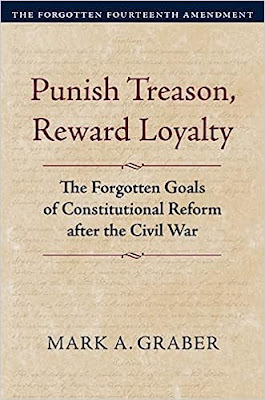
Mark A. Graber, Punish Treason, Reward Loyalty: The Forgotten Goals of Constitutional Reform after the Civil War (University of Kansas Press, 2023)
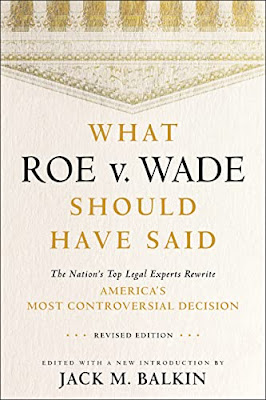
Jack M. Balkin, What Roe v. Wade Should Have Said: The Nation's Top Legal Experts Rewrite America's Most Controversial Decision - Revised Edition (NYU Press, 2023)

Andrew Koppelman, Burning Down the House: How Libertarian Philosophy Was Corrupted by Delusion and Greed (St. Martin’s Press, 2022)

Gerard N. Magliocca, Washington's Heir: The Life of Justice Bushrod Washington (Oxford University Press, 2022)
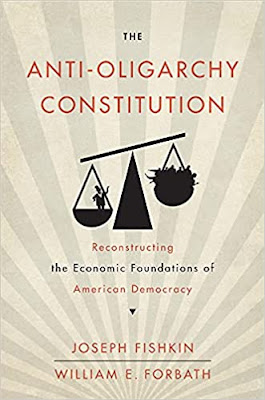
Joseph Fishkin and William E. Forbath, The Anti-Oligarchy Constitution: Reconstructing the Economic Foundations of American Democracy (Harvard University Press, 2022)
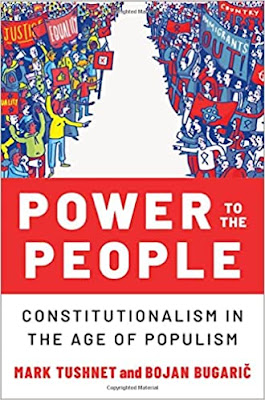
Mark Tushnet and Bojan Bugaric, Power to the People: Constitutionalism in the Age of Populism (Oxford University Press 2021).

Mark Philip Bradley and Mary L. Dudziak, eds., Making the Forever War: Marilyn B. Young on the Culture and Politics of American Militarism Culture and Politics in the Cold War and Beyond (University of Massachusetts Press, 2021).
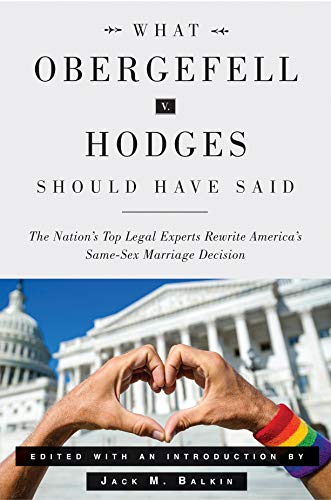
Jack M. Balkin, What Obergefell v. Hodges Should Have Said: The Nation's Top Legal Experts Rewrite America's Same-Sex Marriage Decision (Yale University Press, 2020)
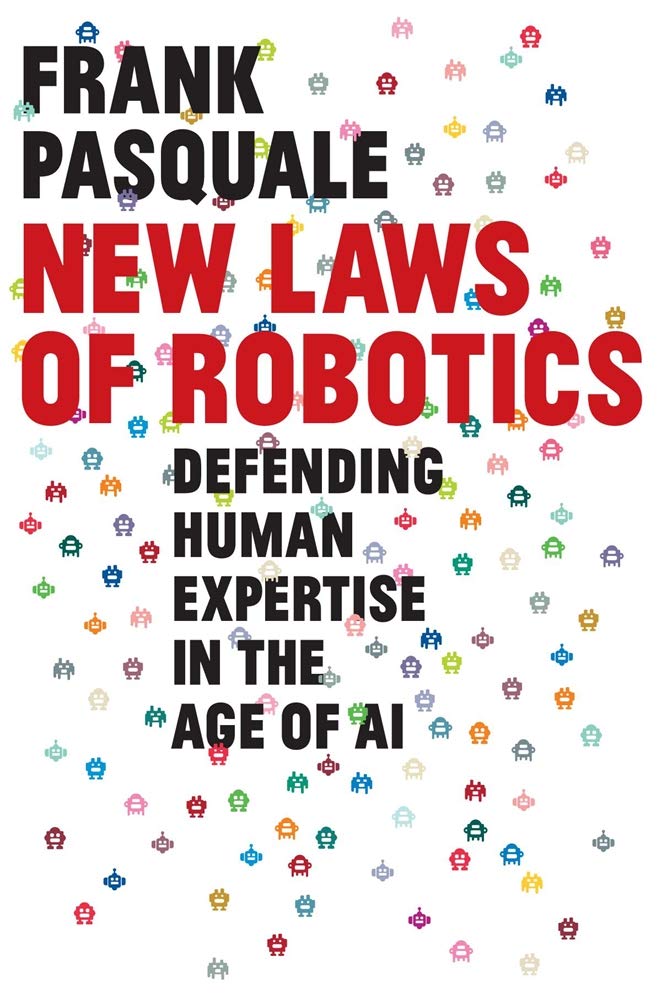
Frank Pasquale, New Laws of Robotics: Defending Human Expertise in the Age of AI (Belknap Press, 2020)
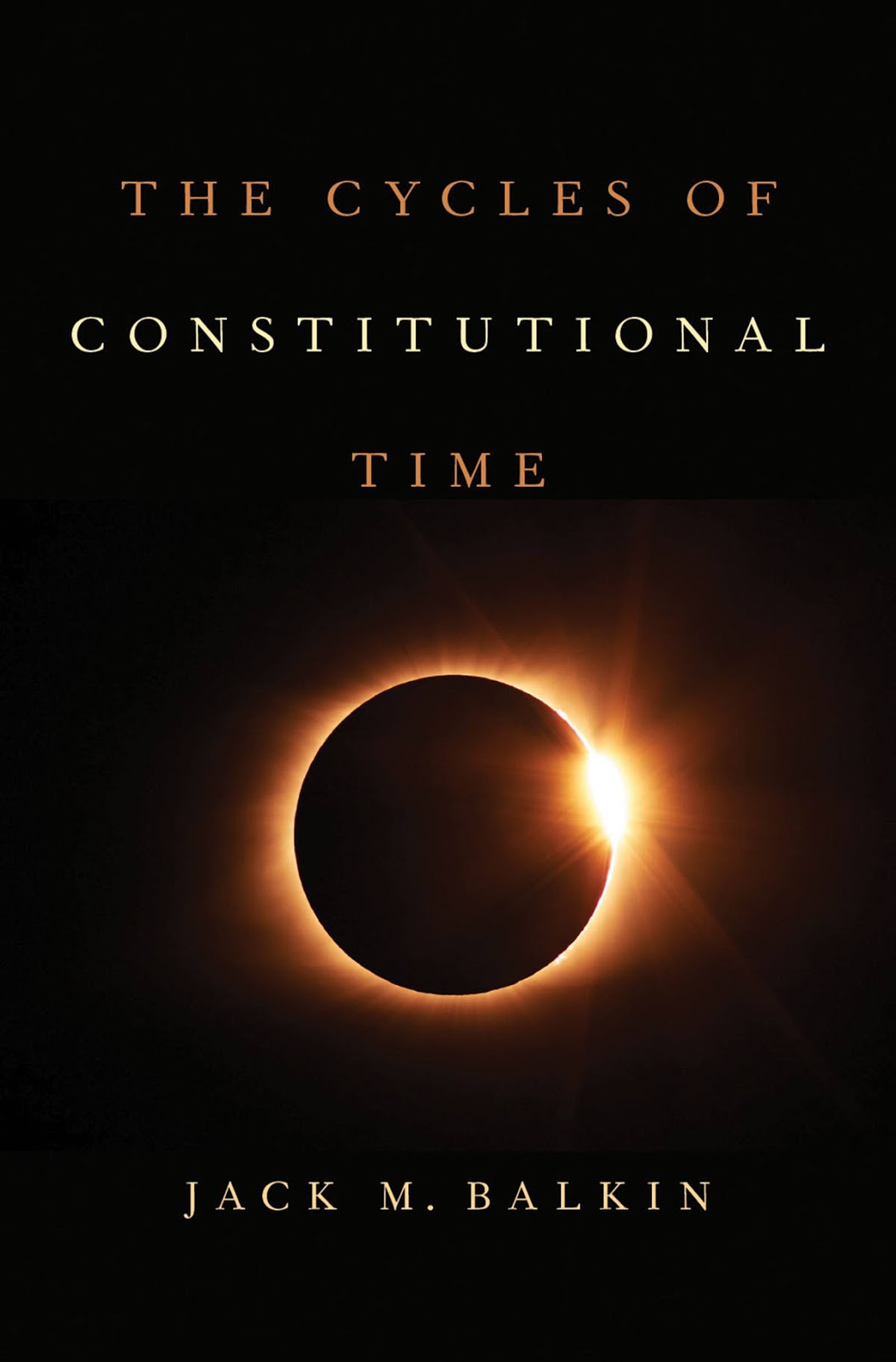
Jack M. Balkin, The Cycles of Constitutional Time (Oxford University Press, 2020)
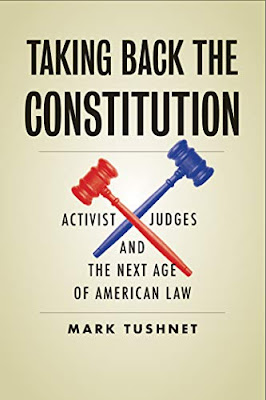
Mark Tushnet, Taking Back the Constitution: Activist Judges and the Next Age of American Law (Yale University Press 2020).
Andrew Koppelman, Gay Rights vs. Religious Liberty?: The Unnecessary Conflict (Oxford University Press, 2020)
Ezekiel J Emanuel and Abbe R. Gluck, The Trillion Dollar Revolution: How the Affordable Care Act Transformed Politics, Law, and Health Care in America (PublicAffairs, 2020)

Linda C. McClain, Who's the Bigot?: Learning from Conflicts over Marriage and Civil Rights Law (Oxford University Press, 2020)
Sanford Levinson and Jack M. Balkin, Democracy and Dysfunction (University of Chicago Press, 2019)
Sanford Levinson, Written in Stone: Public Monuments in Changing Societies (Duke University Press 2018)
Mark A. Graber, Sanford Levinson, and Mark Tushnet, eds., Constitutional Democracy in Crisis? (Oxford University Press 2018)

Gerard Magliocca, The Heart of the Constitution: How the Bill of Rights became the Bill of Rights (Oxford University Press, 2018)
Cynthia Levinson and Sanford Levinson, Fault Lines in the Constitution: The Framers, Their Fights, and the Flaws that Affect Us Today (Peachtree Publishers, 2017)
Brian Z. Tamanaha, A Realistic Theory of Law (Cambridge University Press 2017)
Sanford Levinson, Nullification and Secession in Modern Constitutional Thought (University Press of Kansas 2016)

Sanford Levinson, An Argument Open to All: Reading The Federalist in the 21st Century (Yale University Press 2015)

Stephen M. Griffin, Broken Trust: Dysfunctional Government and Constitutional Reform (University Press of Kansas, 2015)

Frank Pasquale, The Black Box Society: The Secret Algorithms That Control Money and Information (Harvard University Press, 2015)
Bruce Ackerman, We the People, Volume 3: The Civil Rights Revolution (Harvard University Press, 2014)
Balkinization Symposium on We the People, Volume 3: The Civil Rights Revolution

Joseph Fishkin, Bottlenecks: A New Theory of Equal Opportunity (Oxford University Press, 2014)

Mark A. Graber, A New Introduction to American Constitutionalism (Oxford University Press, 2013)

John Mikhail, Elements of Moral Cognition: Rawls' Linguistic Analogy and the Cognitive Science of Moral and Legal Judgment (Cambridge University Press, 2013)

Gerard N. Magliocca, American Founding Son: John Bingham and the Invention of the Fourteenth Amendment (New York University Press, 2013)
Stephen M. Griffin, Long Wars and the Constitution (Harvard University Press, 2013)
Andrew Koppelman, The Tough Luck Constitution and the Assault on Health Care Reform (Oxford University Press, 2013)

James E. Fleming and Linda C. McClain, Ordered Liberty: Rights, Responsibilities, and Virtues (Harvard University Press, 2013)
Balkinization Symposium on Ordered Liberty: Rights, Responsibilities, and Virtues

Andrew Koppelman, Defending American Religious Neutrality (Harvard University Press, 2013)
Brian Z. Tamanaha, Failing Law Schools (University of Chicago Press, 2012)
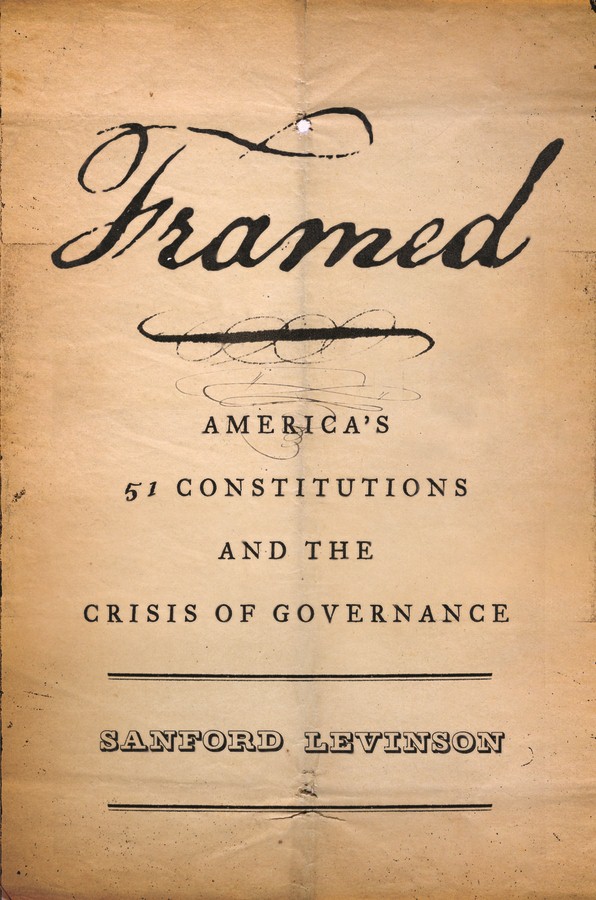
Sanford Levinson, Framed: America's 51 Constitutions and the Crisis of Governance (Oxford University Press, 2012)

Linda C. McClain and Joanna L. Grossman, Gender Equality: Dimensions of Women's Equal Citizenship (Cambridge University Press, 2012)

Mary Dudziak, War Time: An Idea, Its History, Its Consequences (Oxford University Press, 2012)

Jack M. Balkin, Living Originalism (Harvard University Press, 2011)

Jason Mazzone, Copyfraud and Other Abuses of Intellectual Property Law (Stanford University Press, 2011)
Richard W. Garnett and Andrew Koppelman, First Amendment Stories, (Foundation Press 2011)

Jack M. Balkin, Constitutional Redemption: Political Faith in an Unjust World (Harvard University Press, 2011)
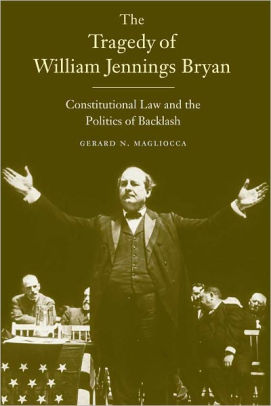
Gerard Magliocca, The Tragedy of William Jennings Bryan: Constitutional Law and the Politics of Backlash (Yale University Press, 2011)

Bernard Harcourt, The Illusion of Free Markets: Punishment and the Myth of Natural Order (Harvard University Press, 2010)

Bruce Ackerman, The Decline and Fall of the American Republic (Harvard University Press, 2010)
Balkinization Symposium on The Decline and Fall of the American Republic

Ian Ayres. Carrots and Sticks: Unlock the Power of Incentives to Get Things Done (Bantam Books, 2010)
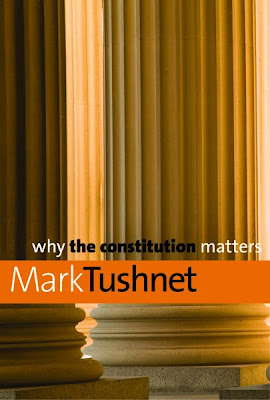
Mark Tushnet, Why the Constitution Matters (Yale University Press 2010)

Ian Ayres and Barry Nalebuff: Lifecycle Investing: A New, Safe, and Audacious Way to Improve the Performance of Your Retirement Portfolio (Basic Books, 2010)
.jpg)
Jack M. Balkin, The Laws of Change: I Ching and the Philosophy of Life (2d Edition, Sybil Creek Press 2009)

Brian Z. Tamanaha, Beyond the Formalist-Realist Divide: The Role of Politics in Judging (Princeton University Press 2009)

Andrew Koppelman and Tobias Barrington Wolff, A Right to Discriminate?: How the Case of Boy Scouts of America v. James Dale Warped the Law of Free Association (Yale University Press 2009)

Jack M. Balkin and Reva B. Siegel, The Constitution in 2020 (Oxford University Press 2009)

Heather K. Gerken, The Democracy Index: Why Our Election System Is Failing and How to Fix It (Princeton University Press 2009)
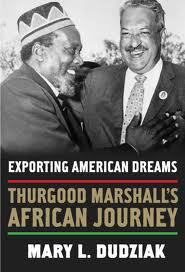
Mary Dudziak, Exporting American Dreams: Thurgood Marshall's African Journey (Oxford University Press 2008)

David Luban, Legal Ethics and Human Dignity (Cambridge Univ. Press 2007)

Ian Ayres, Super Crunchers: Why Thinking-By-Numbers is the New Way to be Smart (Bantam 2007)
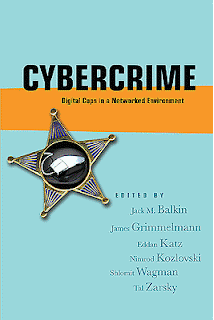
Jack M. Balkin, James Grimmelmann, Eddan Katz, Nimrod Kozlovski, Shlomit Wagman and Tal Zarsky, eds., Cybercrime: Digital Cops in a Networked Environment (N.Y.U. Press 2007)
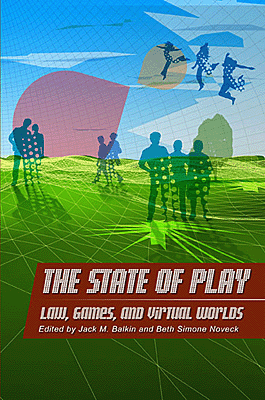
Jack M. Balkin and Beth Simone Noveck, The State of Play: Law, Games, and Virtual Worlds (N.Y.U. Press 2006)

Andrew Koppelman, Same Sex, Different States: When Same-Sex Marriages Cross State Lines (Yale University Press 2006)

Brian Tamanaha, Law as a Means to an End (Cambridge University Press 2006)

Sanford Levinson, Our Undemocratic Constitution (Oxford University Press 2006)

Mark Graber, Dred Scott and the Problem of Constitutional Evil (Cambridge University Press 2006)

Jack M. Balkin, ed., What Roe v. Wade Should Have Said (N.Y.U. Press 2005)

Sanford Levinson, ed., Torture: A Collection (Oxford University Press 2004)
Balkin.com homepage
Bibliography
Conlaw.net
Cultural Software
Writings
Opeds
The Information Society Project
BrownvBoard.com
Useful Links
Syllabi and Exams
