Balkinization
an unanticipated consequence of
Jack M. Balkin
Balkinization Symposiums: A Continuing List
E-mail:
Jack Balkin:
jackbalkin at yahoo.com
Bruce Ackerman
bruce.ackerman at yale.edu
Ian Ayres
ian.ayres at yale.edu
Corey Brettschneider
corey_brettschneider at brown.edu
Mary Dudziak
mary.l.dudziak at emory.edu
Joey Fishkin
joey.fishkin at gmail.com
Heather Gerken heather.gerken at yale.edu
Abbe Gluck abbe.gluck at yale.edu
Mark Graber
mgraber at law.umaryland.edu
Stephen Griffin
sgriffin at tulane.edu
Jonathan Hafetz
jonathan.hafetz at shu.edu
Jeremy Kessler
jkessler at law.columbia.edu
Andrew Koppelman
akoppelman at law.northwestern.edu
Marty Lederman
msl46 at law.georgetown.edu
Sanford Levinson
slevinson at law.utexas.edu
David Luban
david.luban at gmail.com
Gerard Magliocca
gmaglioc at iupui.edu
Jason Mazzone
mazzonej at illinois.edu
Linda McClain
lmcclain at bu.edu
John Mikhail
mikhail at law.georgetown.edu
Frank Pasquale
pasquale.frank at gmail.com
Nate Persily
npersily at gmail.com
Michael Stokes Paulsen
michaelstokespaulsen at gmail.com
Deborah Pearlstein
dpearlst at yu.edu
Rick Pildes
rick.pildes at nyu.edu
David Pozen
dpozen at law.columbia.edu
Richard Primus
raprimus at umich.edu
K. Sabeel Rahmansabeel.rahman at brooklaw.edu
Alice Ristroph
alice.ristroph at shu.edu
Neil Siegel
siegel at law.duke.edu
David Super
david.super at law.georgetown.edu
Brian Tamanaha
btamanaha at wulaw.wustl.edu
Nelson Tebbe
nelson.tebbe at brooklaw.edu
Mark Tushnet
mtushnet at law.harvard.edu
Adam Winkler
winkler at ucla.edu
Compendium of posts on Hobby Lobby and related cases
The Anti-Torture Memos: Balkinization Posts on Torture, Interrogation, Detention, War Powers, and OLC
The Anti-Torture Memos (arranged by topic)
Recent Posts
LSAC Responds to Balkinization Post
![[Powered by Blogger]](https://lh3.googleusercontent.com/blogger_img_proxy/AEn0k_uBZqQOnCfkfZfZxVa4UB4xhtbrEz90rL4tFn2cfCRPZz-GiWVtY1-PN0WYmlPe0n14vQSj7lTag22DBL962OKzizmuEyx6qwP0zMUyAvQ5=s0-d)
Just A Few Blogs
ACS Blog
Alas, a Blog
Althouse
Arts and Letters Daily
Atrios (Eschaton)
Bill of Health
Buzzflash.com
Buzz Machine
Cato at Liberty
Juan Cole (Informed Comment)
Concurring Opinions
The Constitution in 2020
Corrente
Crooked Timber
Daily Howler
Daily Kos
Dana Boyd
Brad DeLong
Digby (Hullabaloo)
Discriminations
Daniel Drezner
Kevin Drum (Mother Jones)
Electrolite
En Banc
Eunomia (Daniel Larison)
Fafblog
Michael Froomkin (Discourse.net)
GovLab (Beth Noveck)
Rick Hasen (Election Law)
History News Network
How Appealing
Ignatz (Sam Heldman)
The Importance of (Ernie Miller)
Infolaw
Instapundit
International Economic Law and Policy Blog
IntLawGrrls
Jacob Levy
Jesus' General
Jurisdynamics
The Kitchen Cabinet
Mark Kleiman
Law Blog Central
Larry Lessig
Lawyers, Guns and Money
Liberal Oasis
Brian Leiter's Law School Reports
The Leiter Reports
Marginal Revolution
Megan McArdle
Memeorandum
Metafilter
Mirror of Justice
The New Republic
Newseum
No More Mister Nice Blog
Brendan Nyhan
Opinio Juris
Orcinus
The Originalism Blog
Pandagon
Passport (Foreign Policy)
Overcoming Bias
Political Animal (Washington Monthly)
Political Theory Daily Review
Political Wire (Taegan Goddard)
The Poor Man
Virginia Postrel
Prawfsblawg
Public Reason
Jonathan Rauch
Raw Story
Redstate
ReligiousLeftLaw.com
Reporters Committee For Freedom of the Press
Reproductive Rights Blog
Rothman's Roadmap to the Right of Publicity
SCOTUS Blog
Seeing the Forest
Clay Shirky
The Shifted Librarian
The Situationist
Larry Solum (Legal Theory)
Andrew Sullivan
Talking Points Memo
Talk Left
Tapped
Tbogg
TechPresident
The Paper Chase (Jurist)
Tom Paine
Tom Tomorrow (This Modern World)
Eve Tushnet
Uggabugga
University of Chicago Law School Faculty Blog
Unqualified Offerings
The Volokh Conspiracy
War and Piece (Laura Rozen)
Wampum
Oliver Willis
Wonkette
Written Description
Matthew Yglesias
Yin
Your Choice of Feeds
1. XML
powered by

2. Atom Feed
3. RSS 2.0
LSAC Responds to Balkinization Post
Brian Tamanaha
The Chair of the LSAC Board of Trustees sent out a mass email today with a pointed response to my recent post raising questions about LSAC's priorities. In fairness to LSAC, I will post his response (with a few comments).It is true that fees for the LSAT are scheduled to go up by about 15% next year and the total cost of the test and admissions reports for an applicant who applies to six schools will be about $450. Considered against the total cost of a legal education, this is a very modest sum – about 0.3% of total law school costs. This percentage has been going down over the past decade and, at the same time, the LSAC has expanded its efforts to enable low-income students to avoid the costs entirely (see below). Compared to other professional graduate tests, the cost of the LSAT is quite low – 66% of the cost of the tests for students planning to attend business or medical school.
My criticisms were that this is a bad time to raise fees and $450 is a lot of money for students. To tell us that this sum is a fraction of the cost of legal education and cheaper than applications to B-school, while true, does not respond to the concerns I raised.It is also true that the LSAC has a large reserve. Years ago, the Board tried to estimate the number of students who would take the test each year and adjust its price accordingly – lower if we expected lots of students and higher if we expected fewer students. This resulted in large year-to-year swings in our prices (and it turned out to be very difficult to predict how many students would take the test each year). Then, about 20 years ago, we decided to implement a policy of steadier increases which would permit us to build up a reserve when lots of students happened to be applying to law school and to call on that reserve when the numbers went down. (We are an organization with large fixed costs; for example, the cost to produce the test is about the same whether 1,000 or 100,000 students take the test.) Then, for several years (especially in later years up to 2009-2010), many students took the test and we ran surpluses. Now fewer students are taking the test. Next year, we project a deficit in our annual operating budget of about $7.5 million and it looks like we’ll see deficits for several years to come. So we’re now calling on the reserve we’ve prudently built up during the flush years instead of hitting students with huge price spikes.
My criticism was that LSAC, a non-profit organization, is raising fees when it has $170,000,000 on hand in cash and securities, which provides it a huge reserve. At a time of declining demand, rather than raising fees, another way to go is draw down on the reserve and cut expenses. This is the rainy day they have been preparing for. The operating budget deficit is the product of the many things the LSAC does for law students and law schools. More than half of the deficit last year – $3.4 million of it – was caused by the LSAC’s fee waiver program. To do its part to help law schools become more diversified socioeconomically, the LSAC waived its test and application-processing fees for over 9,000 low-income students last year. When the recession hit, the LSAC also increased its direct subsidies to schools to help them weather the storm; for example, the LSAC began to pay more of the costs for admissions staff to attend candidate forums and the annual professional meeting. Finally, the LSAC provides generous support for a variety of diversity initiatives. For example, it probably provides more support than anyone in legal education for diversity pipeline efforts.
The fee waivers for low income students should be applauded. Nevertheless, the fee increase will be felt by many people who do not qualify for a waiver.Some bloggers complain that the compensation for certain LSAC employees is too high. Our employees are well-compensated, but they are not excessively compensated, especially in view of the difficulty and technical complexity of their work. The LSAC Board scrutinizes salaries very closely and regularly commissions professional salary surveys to assess the fairness of our compensation structure. What we pay is fair in the market – not too much or too little.
I pointed out that in 2009 the President earned $624,000 (which is nearly $200,000 more than his predecessor earned just two years earlier), and that the officers earned salaries of $375,707, $322,827, etc.--plus supplemental payments ranging from $75,000 to $100,000 in 2008. The LSAC administers a testing and application service that holds a monopoly position. It's not obvious that the handsomely compensated high officers, including their general counsel, are engaged in work of great technical complexity (the current President is a former law school dean).Some bloggers claim that the LSAC spends $1 million per year on lobbying expenses. That is just plain wrong. Over the last three years (which were typical), the LSAC’s lobbying expenses have been less than $25,000 per year.
I took the $1 million dollar figure from LSAC's 990 form, under the category "Lobbying Expenditures During 4-Year Averaging Period," #2a "Lobbying non-taxable amount:" 2007--$1,000,000; 2008--$1,000,000; 2009--$1,000,000. If I spoke in error, I stand corrected.There are those who think the LSAC should confirm each school’s reported LSAT and UGPA scores, and who claim it would be easy to do. The LSAC is in discussions with the ABA to see if it can do this. But it is very wrong to think it will be an easy task. It turns out that the LSAC is missing a crucial piece of information to do this – it doesn’t know which students go to which schools until well after the reporting period and, even then, the LSAC knows only what the schools report. It also turns out that an unknown number of schools – those with variances from ABA Standard 503 – have an unknown number of students who are completely off the LSAC’s radar screen. And many students can legitimately be counted as attending more than one school under current ABA standards. Yes, the LSAC should try to help make this reporting more reliable; the LSAC has already said it will do that if it can solve these problems and do the task well. We’re working on it, but it is a very complicated task.
It is great to hear that LSAC is working on confirming the LSAT/GPA medians reported by law schools. This is a welcome change from the LSAC President's statement in the National Law Journal suggesting that LSAC would not do this: “That’s just not something we have done historically, and I don’t see why we would. We are not in the reporting business.” Given recent news of false reporting by two law schools (after years of rumors about false reporting), this will go a long way toward restoring the reliability of these numbers. Whatever difficulties this will pose for LSAC are minor by comparison.
Here is the Chair's closing paragraph:The LSAC is by no means perfect. It relies on the hard work and insights of its outstanding staff and of hundreds of volunteers from its member schools who all do their very best to make the LSAC a valuable and responsive organization. It’s a tough environment right now for law schools and affiliated organizations like the LSAC, AALS, and ABA. There is great value in constructive criticism and new ideas, and we welcome them from any and all sources. On the other hand, poorly considered and uninformed complaints are not helpful to the LSAC, law students, or law schools.
That last line was directed at me. Readers of the original post--and the Chair's response--can decide for themselves whether the concerns I raised are "poorly considered and uninformed complaints." More important, it is nice to see that LSAC recognizes that it must be responsive to concerns raised about its operation.
The original post.
Posted
3:55 PM
by Brian Tamanaha [link]
Thanks for your great job in reporting this. The LSAC Chair's E-mail is a true and absolute masterpiece of lawyerly-doubletalk. It does everything except address the actual issues you raised. These people should be ashamed of themselves -- especially since their rhetoric is nearly an exact replica of what we've heard from the people on Wall Street who destroyed our economy.
The same goes for the outrageous salaries being paid these people -- again just like the monstrosities going on on Wall Street. This group has an absolute monopoly on this situation, and are abusing that situation for their own gain.
Keep up the good work.
Ross Taylor
University of Washington 1977

This part of the reply is striking: "When the recession hit, the LSAC also increased its direct subsidies to schools to help them weather the storm; for example, the LSAC began to pay more of the costs for admissions staff to attend candidate forums and the annual professional meeting."
Does this mean LSAC not only subsidizes applications by lower-income students (which seems laudable, if and to the extent those candidates will be able eventually to attend), but also subsidizes less wealthy law schools? The idea of charging students more so that they can be exposed to schools less likely to be able to offer financial aid, and (as a rough correlation) perhaps even less likely to generate jobs for them, seems more dubious. Is LSAC understood to serve as a cross-subsidizing insurance vehicle for legal education providers?
The fault lies with the legal profession, which, in the interests of justice and as Milton Friedman often proposed, should simply abolish all barriers to the practice of law, including required courses, LSATs, diplomas, and state bars.
I'm not sure why the LSAC chair was so evasive, everyone is raising their prices and what he says about overall cost of application and Fee Waiver is true of all the entry tests.
Second, on compensation, what you really need is the comparisons and analysis done by the independent compensation consultant, and how the compensation committee used such reports. Having these reports or minutes would be very helpful. Simply saying the LSAC's compensation is too high without an understanding of how it was arrived is knee jerk, but if such reports and minutes could be obtained and carefully analyzed, then this discussion on compensation would be more useful.
Third, on the cash and securities, query whether a written internal policy exists that explains why such amounts are being held. Having a copy of the written policy would be very helpful.
One of the biggest problems with law school is that the bulk of the costs come at the end, whether it be debt repayment or fees to take the bar exam and retain one's licensure as an attorney. Anything that increses the up-front costs to be somewhat akin to the back-end costs is a good thing - especially when 22-year-olds are involved.
That also makes me wonder about the wisdom of subsidising low-income students. If you can't cough up $160 to take the LSAT, how are you going to put down a deposit to school once admitted (mine was $750, back in the day), move to whatever school you attend, put down deposits for rent, and, after graduating, pay for the bar, and pay to be licensed? (Okay, yes, you can take out yet another loan for bar studying, but that's not necessarily a solution....) The $500 to apply to law schools is the least of your worries.
The fair price of anything is what it would bring in a free market. There is no other valid measure.
The problem is that in Law, as in Medicine, there is no free market. That's why Milton Friedman's suggestion that we abolish all barriers to professional practice, including residency, LSATs, JDs, bar exams and the like, is particularly apt.
If such barriers had been in place for engineering, we probably wouldn't have the light bulb, electricity, car, airplane, and movies, much less the cell phone.
If my money was being managed by a tree, it would be a tree fund. If my money was being managed by a hedge...
Keep digging - and, as always - follow the money.
Very awesome post , i am really impressed with it a lot
فوائد الزنجبيل
فوائد الرمان فوائد الحلبة فوائد البصل فوائد الزعتر فوائد زيت السمسم علاج البواسير فوائد اليانسون فوائد الكركم قصص جحا صور يوم الجمعه علامات الحمل تعريف الحب حياة البرزخ فوائد الزبيب
Agen Judi Online Terpercaya
Books by Balkinization Bloggers

Gerard N. Magliocca, The Actual Art of Governing: Justice Robert H. Jackson's Concurring Opinion in the Steel Seizure Case (Oxford University Press, 2025)

Linda C. McClain and Aziza Ahmed, The Routledge Companion to Gender and COVID-19 (Routledge, 2024)

David Pozen, The Constitution of the War on Drugs (Oxford University Press, 2024)

Jack M. Balkin, Memory and Authority: The Uses of History in Constitutional Interpretation (Yale University Press, 2024)
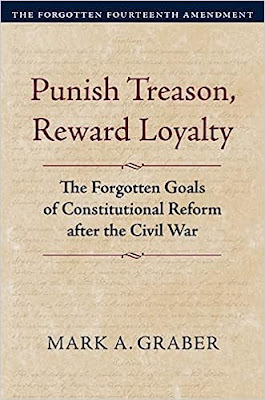
Mark A. Graber, Punish Treason, Reward Loyalty: The Forgotten Goals of Constitutional Reform after the Civil War (University of Kansas Press, 2023)
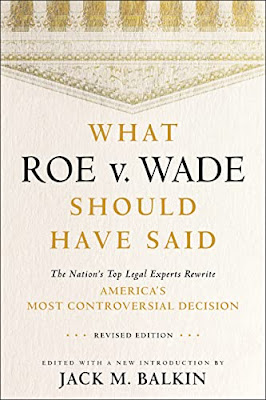
Jack M. Balkin, What Roe v. Wade Should Have Said: The Nation's Top Legal Experts Rewrite America's Most Controversial Decision - Revised Edition (NYU Press, 2023)

Andrew Koppelman, Burning Down the House: How Libertarian Philosophy Was Corrupted by Delusion and Greed (St. Martin’s Press, 2022)

Gerard N. Magliocca, Washington's Heir: The Life of Justice Bushrod Washington (Oxford University Press, 2022)
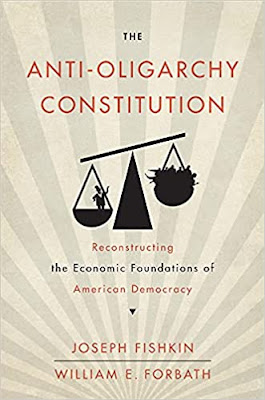
Joseph Fishkin and William E. Forbath, The Anti-Oligarchy Constitution: Reconstructing the Economic Foundations of American Democracy (Harvard University Press, 2022)
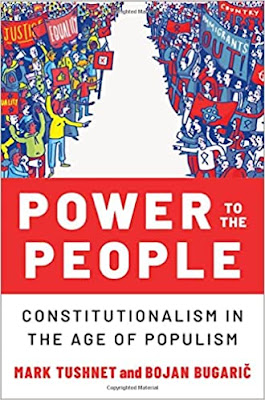
Mark Tushnet and Bojan Bugaric, Power to the People: Constitutionalism in the Age of Populism (Oxford University Press 2021).

Mark Philip Bradley and Mary L. Dudziak, eds., Making the Forever War: Marilyn B. Young on the Culture and Politics of American Militarism Culture and Politics in the Cold War and Beyond (University of Massachusetts Press, 2021).

Jack M. Balkin, What Obergefell v. Hodges Should Have Said: The Nation's Top Legal Experts Rewrite America's Same-Sex Marriage Decision (Yale University Press, 2020)

Frank Pasquale, New Laws of Robotics: Defending Human Expertise in the Age of AI (Belknap Press, 2020)

Jack M. Balkin, The Cycles of Constitutional Time (Oxford University Press, 2020)

Mark Tushnet, Taking Back the Constitution: Activist Judges and the Next Age of American Law (Yale University Press 2020).

Andrew Koppelman, Gay Rights vs. Religious Liberty?: The Unnecessary Conflict (Oxford University Press, 2020)

Ezekiel J Emanuel and Abbe R. Gluck, The Trillion Dollar Revolution: How the Affordable Care Act Transformed Politics, Law, and Health Care in America (PublicAffairs, 2020)

Linda C. McClain, Who's the Bigot?: Learning from Conflicts over Marriage and Civil Rights Law (Oxford University Press, 2020)
Sanford Levinson and Jack M. Balkin, Democracy and Dysfunction (University of Chicago Press, 2019)

Sanford Levinson, Written in Stone: Public Monuments in Changing Societies (Duke University Press 2018)

Mark A. Graber, Sanford Levinson, and Mark Tushnet, eds., Constitutional Democracy in Crisis? (Oxford University Press 2018)

Gerard Magliocca, The Heart of the Constitution: How the Bill of Rights became the Bill of Rights (Oxford University Press, 2018)

Cynthia Levinson and Sanford Levinson, Fault Lines in the Constitution: The Framers, Their Fights, and the Flaws that Affect Us Today (Peachtree Publishers, 2017)

Brian Z. Tamanaha, A Realistic Theory of Law (Cambridge University Press 2017)

Sanford Levinson, Nullification and Secession in Modern Constitutional Thought (University Press of Kansas 2016)

Sanford Levinson, An Argument Open to All: Reading The Federalist in the 21st Century (Yale University Press 2015)

Stephen M. Griffin, Broken Trust: Dysfunctional Government and Constitutional Reform (University Press of Kansas, 2015)

Frank Pasquale, The Black Box Society: The Secret Algorithms That Control Money and Information (Harvard University Press, 2015)

Bruce Ackerman, We the People, Volume 3: The Civil Rights Revolution (Harvard University Press, 2014)
Balkinization Symposium on We the People, Volume 3: The Civil Rights Revolution

Joseph Fishkin, Bottlenecks: A New Theory of Equal Opportunity (Oxford University Press, 2014)

Mark A. Graber, A New Introduction to American Constitutionalism (Oxford University Press, 2013)

John Mikhail, Elements of Moral Cognition: Rawls' Linguistic Analogy and the Cognitive Science of Moral and Legal Judgment (Cambridge University Press, 2013)

Gerard N. Magliocca, American Founding Son: John Bingham and the Invention of the Fourteenth Amendment (New York University Press, 2013)

Stephen M. Griffin, Long Wars and the Constitution (Harvard University Press, 2013)

Andrew Koppelman, The Tough Luck Constitution and the Assault on Health Care Reform (Oxford University Press, 2013)

James E. Fleming and Linda C. McClain, Ordered Liberty: Rights, Responsibilities, and Virtues (Harvard University Press, 2013)
Balkinization Symposium on Ordered Liberty: Rights, Responsibilities, and Virtues

Andrew Koppelman, Defending American Religious Neutrality (Harvard University Press, 2013)

Brian Z. Tamanaha, Failing Law Schools (University of Chicago Press, 2012)

Sanford Levinson, Framed: America's 51 Constitutions and the Crisis of Governance (Oxford University Press, 2012)

Linda C. McClain and Joanna L. Grossman, Gender Equality: Dimensions of Women's Equal Citizenship (Cambridge University Press, 2012)

Mary Dudziak, War Time: An Idea, Its History, Its Consequences (Oxford University Press, 2012)

Jack M. Balkin, Living Originalism (Harvard University Press, 2011)

Jason Mazzone, Copyfraud and Other Abuses of Intellectual Property Law (Stanford University Press, 2011)

Richard W. Garnett and Andrew Koppelman, First Amendment Stories, (Foundation Press 2011)

Jack M. Balkin, Constitutional Redemption: Political Faith in an Unjust World (Harvard University Press, 2011)

Gerard Magliocca, The Tragedy of William Jennings Bryan: Constitutional Law and the Politics of Backlash (Yale University Press, 2011)

Bernard Harcourt, The Illusion of Free Markets: Punishment and the Myth of Natural Order (Harvard University Press, 2010)

Bruce Ackerman, The Decline and Fall of the American Republic (Harvard University Press, 2010)
Balkinization Symposium on The Decline and Fall of the American Republic

Ian Ayres. Carrots and Sticks: Unlock the Power of Incentives to Get Things Done (Bantam Books, 2010)

Mark Tushnet, Why the Constitution Matters (Yale University Press 2010)

Ian Ayres and Barry Nalebuff: Lifecycle Investing: A New, Safe, and Audacious Way to Improve the Performance of Your Retirement Portfolio (Basic Books, 2010)
.jpg)
Jack M. Balkin, The Laws of Change: I Ching and the Philosophy of Life (2d Edition, Sybil Creek Press 2009)

Brian Z. Tamanaha, Beyond the Formalist-Realist Divide: The Role of Politics in Judging (Princeton University Press 2009)
Andrew Koppelman and Tobias Barrington Wolff, A Right to Discriminate?: How the Case of Boy Scouts of America v. James Dale Warped the Law of Free Association (Yale University Press 2009)

Jack M. Balkin and Reva B. Siegel, The Constitution in 2020 (Oxford University Press 2009)

Heather K. Gerken, The Democracy Index: Why Our Election System Is Failing and How to Fix It (Princeton University Press 2009)

Mary Dudziak, Exporting American Dreams: Thurgood Marshall's African Journey (Oxford University Press 2008)

David Luban, Legal Ethics and Human Dignity (Cambridge Univ. Press 2007)

Ian Ayres, Super Crunchers: Why Thinking-By-Numbers is the New Way to be Smart (Bantam 2007)

Jack M. Balkin, James Grimmelmann, Eddan Katz, Nimrod Kozlovski, Shlomit Wagman and Tal Zarsky, eds., Cybercrime: Digital Cops in a Networked Environment (N.Y.U. Press 2007)
Jack M. Balkin and Beth Simone Noveck, The State of Play: Law, Games, and Virtual Worlds (N.Y.U. Press 2006)

Andrew Koppelman, Same Sex, Different States: When Same-Sex Marriages Cross State Lines (Yale University Press 2006)

Brian Tamanaha, Law as a Means to an End (Cambridge University Press 2006)

Sanford Levinson, Our Undemocratic Constitution (Oxford University Press 2006)

Mark Graber, Dred Scott and the Problem of Constitutional Evil (Cambridge University Press 2006)

Jack M. Balkin, ed., What Roe v. Wade Should Have Said (N.Y.U. Press 2005)

Sanford Levinson, ed., Torture: A Collection (Oxford University Press 2004)
Balkin.com homepage
Bibliography
Conlaw.net
Cultural Software
Writings
Opeds
The Information Society Project
BrownvBoard.com
Useful Links
Syllabi and Exams
