Balkinization
an unanticipated consequence of
Jack M. Balkin
Balkinization Symposiums: A Continuing List
E-mail:
Jack Balkin:
jackbalkin at yahoo.com
Bruce Ackerman
bruce.ackerman at yale.edu
Ian Ayres
ian.ayres at yale.edu
Corey Brettschneider
corey_brettschneider at brown.edu
Mary Dudziak
mary.l.dudziak at emory.edu
Joey Fishkin
joey.fishkin at gmail.com
Heather Gerken heather.gerken at yale.edu
Abbe Gluck abbe.gluck at yale.edu
Mark Graber
mgraber at law.umaryland.edu
Stephen Griffin
sgriffin at tulane.edu
Jonathan Hafetz
jonathan.hafetz at shu.edu
Jeremy Kessler
jkessler at law.columbia.edu
Andrew Koppelman
akoppelman at law.northwestern.edu
Marty Lederman
msl46 at law.georgetown.edu
Sanford Levinson
slevinson at law.utexas.edu
David Luban
david.luban at gmail.com
Gerard Magliocca
gmaglioc at iupui.edu
Jason Mazzone
mazzonej at illinois.edu
Linda McClain
lmcclain at bu.edu
John Mikhail
mikhail at law.georgetown.edu
Frank Pasquale
pasquale.frank at gmail.com
Nate Persily
npersily at gmail.com
Michael Stokes Paulsen
michaelstokespaulsen at gmail.com
Deborah Pearlstein
dpearlst at yu.edu
Rick Pildes
rick.pildes at nyu.edu
David Pozen
dpozen at law.columbia.edu
Richard Primus
raprimus at umich.edu
K. Sabeel Rahmansabeel.rahman at brooklaw.edu
Alice Ristroph
alice.ristroph at shu.edu
Neil Siegel
siegel at law.duke.edu
David Super
david.super at law.georgetown.edu
Brian Tamanaha
btamanaha at wulaw.wustl.edu
Nelson Tebbe
nelson.tebbe at brooklaw.edu
Mark Tushnet
mtushnet at law.harvard.edu
Adam Winkler
winkler at ucla.edu
Compendium of posts on Hobby Lobby and related cases
The Anti-Torture Memos: Balkinization Posts on Torture, Interrogation, Detention, War Powers, and OLC
The Anti-Torture Memos (arranged by topic)
Recent Posts
Accountability for Private Military Contractors
![[Powered by Blogger]](https://lh3.googleusercontent.com/blogger_img_proxy/AEn0k_uHRXGqzTXpwFO12gblCG1MbHdV7y_MZKXlNLDUBnORY454-AYHfNekGR_X2gG5VG-U7RvtJoz5HnHOCQB6t-1ifegwnPBQkGRYxT01FUTq=s0-d)
Just A Few Blogs
ACS Blog
Alas, a Blog
Althouse
Arts and Letters Daily
Atrios (Eschaton)
Bill of Health
Buzzflash.com
Buzz Machine
Cato at Liberty
Juan Cole (Informed Comment)
Concurring Opinions
The Constitution in 2020
Corrente
Crooked Timber
Daily Howler
Daily Kos
Dana Boyd
Brad DeLong
Digby (Hullabaloo)
Discriminations
Daniel Drezner
Kevin Drum (Mother Jones)
Electrolite
En Banc
Eunomia (Daniel Larison)
Fafblog
Michael Froomkin (Discourse.net)
GovLab (Beth Noveck)
Rick Hasen (Election Law)
History News Network
How Appealing
Ignatz (Sam Heldman)
The Importance of (Ernie Miller)
Infolaw
Instapundit
International Economic Law and Policy Blog
IntLawGrrls
Jacob Levy
Jesus' General
Jurisdynamics
The Kitchen Cabinet
Mark Kleiman
Law Blog Central
Larry Lessig
Lawyers, Guns and Money
Liberal Oasis
Brian Leiter's Law School Reports
The Leiter Reports
Marginal Revolution
Megan McArdle
Memeorandum
Metafilter
Mirror of Justice
The New Republic
Newseum
No More Mister Nice Blog
Brendan Nyhan
Opinio Juris
Orcinus
The Originalism Blog
Pandagon
Passport (Foreign Policy)
Overcoming Bias
Political Animal (Washington Monthly)
Political Theory Daily Review
Political Wire (Taegan Goddard)
The Poor Man
Virginia Postrel
Prawfsblawg
Public Reason
Jonathan Rauch
Raw Story
Redstate
ReligiousLeftLaw.com
Reporters Committee For Freedom of the Press
Reproductive Rights Blog
Rothman's Roadmap to the Right of Publicity
SCOTUS Blog
Seeing the Forest
Clay Shirky
The Shifted Librarian
The Situationist
Larry Solum (Legal Theory)
Andrew Sullivan
Talking Points Memo
Talk Left
Tapped
Tbogg
TechPresident
The Paper Chase (Jurist)
Tom Paine
Tom Tomorrow (This Modern World)
Eve Tushnet
Uggabugga
University of Chicago Law School Faculty Blog
Unqualified Offerings
The Volokh Conspiracy
War and Piece (Laura Rozen)
Wampum
Oliver Willis
Wonkette
Written Description
Matthew Yglesias
Yin
Your Choice of Feeds
1. XML
powered by

2. Atom Feed
3. RSS 2.0
Accountability for Private Military Contractors
Scott Horton
I appear here this afternoon in support of H.R. 369, the Transparency and Accountability in Security Contracting Act, co-sponsored by Representatives Price, Schakowsky, and 39 other Members, as well as H.R. 2740, which pulls out the provisions of H.R. 369 relevant to the Judiciary Committee. The focus of this bill is highly technical – expansion of the scope of the Military Extraterritorial Jurisdiction Act (“MEJA”). But it addresses a fundamental and pressing problem: lack of accountability of U.S. private military contractors to the “law of war” and the principles of the Geneva Conventions. By making MEJA applicable to all persons employed under a contract (or subcontract) written by any agency of the U.S. Government which is being performed outside of the United States and in connection with a contingency operation, H.R. 369 would address an serious gap in the current system. Its passage would help to ensure that private security contractors understand and adhere to the laws of war which govern U.S. military actions around the world.
The United States has had an extremely honorable record with respect to the law of war, not just with respect to American initiative and authorship, but also in providing training, oversight and accountability under the law of war for those it deploys in combat abroad. The “war on terror” has, however, been undertaken in a different way from former conflicts, and that has raised questions about whether training, oversight and accountability for law of war rules have been changed to reflect this different approach..
In the Second World War and Korean War, contractors amounted to somewhere between three and five per cent of the total force deployed. In the Vietnam conflict that number certainly exceeded five per cent, but just barely. The first Gulf War saw the ratio change fairly dramatically, to roughly ten per cent. But in the current conflict, the number appears to be climbing steadily closer to parity. Before the commencement of the surge, for instance, the total community of contractors in Iraq was around 100,000 and the number of uniformed service personnel was around 125,000.
This represents an extremely radical transformation in the force configuration. While the majority of these contractors are providing non-combat services like the provision of food and laundry services, a significant number of others are armed and involved directly in security operations. I cite these numbers not to criticize the reliance on contractors, but merely to highlight the fact that a very large part of the total force is not in uniform. Our training, oversight and accountability system has historically been geared to those in uniform. Yet despite the transformative expansion in the reliance on military contractors, that’s still the case today.
There is good reason to ask whether the accountability system works with respect to government contractors and subcontractors. Since the invasion of Iraq, there have been more than four dozen courts-martial commenced with respect to law of war issues. This number is generally consistent with American historical performance in wartime and suggests that the court-martial system, providing accountability for uniformed military personnel in war time, is functioning normally. But if we contrast this with enforcement action involving contract personnel, we get a different result. To date only one enforcement action has been brought to a conclusion – the Passaro prosecution in North Carolina. It is noteworthy that the Passaro case was brought under the Patriot Act, not under MEJA, and that case helps explain why the amendment is necessary. (The Patriot Act provision used in that case applies only to “crimes on U.S. facilities,” so it would not work for most of the cases we have examined, which are usually not on U.S. installations; conversely, the current MEJA language, limiting jurisdiction to contractors “in support of Department of Defense missions” might not work for Passaro, who was a CIA contractor.) The available data so far – which are still incomplete – suggest that contractors are certainly not less prone to infractions than uniformed soldiers are. If anything, the absence of military training and discipline would suggest that security contractors are more likely to commit violations of the laws of war when they become involved in difficult security operations.
Just a few days ago, I participated in a workshop sponsored by the Law and Public Affairs Program at Princeton University concerning the accountability of private military contractors. There were roughly three dozen bipartisan participants drawn from corporate executives from private military contractors firms, Government policy makers from the Department of Defense, intelligence community and other agencies, academics, Congressional staffers, and think-tank analysts. The sponsors asked us at one point to define the current problem. There was an almost immediate consensus on a great number of issues: that the roles of military contractors had not been well-defined and that there was a lack of clarity about limitations on the use of contractors in military operations, for instance. After that, there was general agreement that the law for prosecuting misconduct among contractors required careful review in light of the very troubling lack of follow-up in prosecutions that had been investigated in the field and referred for prosecution. Why exactly were criminal investigations not occurring? Why were there no prosecutions, even in cases in which the military had conducted criminal investigations?
H.R. 369 addresses what the conference participants identified as a major priority, namely insuring that a clear statutory basis exists for criminal justice action back in the United States. The original text of MEJA is in this context limited to persons “accompanying the Armed Forces.” It included contractors under the term “employed by the Armed Forces outside of the United States” provided they are contractors of the Department of Defense or “any other Federal agency . . . to the extent such employment relates to supporting the mission of the Department of Defense overseas.” H.R. 369 would expand this to include U.S. Government contractors or subcontractors who are outside of the United States in a region in which the United States is conducting a contingency operation, i.e, an operation in which members of the armed forces are or may become involved in military actions, operations, or hostilities against an enemy of the United States or against an opposing military force.
This change would update the law to better reflect the current situation in Iraq and Afghanistan in which a large number of contractors are present, with contracts written by a variety of different government agencies, including the Departments of Interior and State. It is unclear whether the majority of contractors operating in these places are doing so puruant to a contract with the Department of Defense, or even whether their contract “supports the mission of the Department of Defense overseas.” In some cases personnel are working with the Department of Defense, for instance, in connection with contracts written by the Department of the Interior. And indeed, a large part of the security contractors – the specific subgroup that presents the most cause for concern – have contracts and subcontracts written by the Department of State under the rubric of “diplomatic security.” Clearly, the specific contracting agency should be irrelevant for the purpose of ensuring that all contractors adhere to the laws of war. What counts is that the United States Government funds them, directly or indirectly, and brought them into the theater of combat. The United States assertion of criminal law jurisdiction over such personnel should not be viewed as something hostile. To the contrary, it is an essentially protective position. H.R. 369 makes this essential change.
The fact pattern of violations by contractors in the cases I have studied so far is consistent. An incident occurs, frequently involving homicide or assault. The contractor generally conducts a preliminary investigation, prepares a report and, if the initial concerns are borne out, employment of the personnel in question is terminated and they are put on a plane to America within a couple of days. However, in some cases, contractors have failed to conduct an investigation but have transferred the personnel involved out of the theater of operations, sometimes resulting in a redeployment from Iraq to Afghanistan, Kuwait or Jordan, for instance. But that’s been the end of the story. If we were talking about a uniformed service person, the Criminal Investigative Division would come in, a criminal investigation would ensue, and if sufficient evidence were present, there would be a court-martial or a nonjudicial punishment for a lesser offense. With contractors, however, no hand off to investigators and prosecutors appears to occur. This is a severe problem.
We are in the process of independently investigating a number of incidents which reflect criminal activity involving contractors. I draw your attention to these reports not in order to comment on the guilt or innocence of persons named in them. Rather I note that each presents a case that should, in the ordinary course, have been the subject of a criminal investigation and potential law enforcement action. Yet no action appears to have occurred in any of these cases.
If these alleged offenses were to occur inside the United States, of course, it would be up to the FBI and federal prosecutors or state and local law enforcement officials depending on the circumstances of the offense to investigate and prosecute them. But in Iraq, contractors are beyond the reach of the local Iraqi law enforcement agencies. Without U.S. government oversight, investigation and prosecutorial authority, contractors have criminal law immunity.
This immunity was granted under Order No. 17 issued by Lewis Paul Bremer III as head of the Coalition Provisional Authority for Iraq. It was issued on June 27, 2004, the day Mr. Bremer left Iraq, when authority was transferred from the CPA to the Government of Iraq. The Government of Iraq was required to accept and maintain Order No. 17 as a condition of the transfer of authority to it. However, since the interim government transferred authority to the new government, the Minister of Justice and other officials have consistently challenged the legality and validity of Order No. 17.
The theory underlying Order No. 17 parallels various Status of Forces Agreements (“SoFA”) negotiated by the United States around the world – such as those in effect with Germany, Japan and Korea. But there is one significant difference. Most SoFAs do not provide immunity; rather they grant a first right to prosecute American personnel to American authorities. In the event of a failure to exercise this right, the host nation would have the power to bring charges if it chooses to do so. For a number of reasons, including the difficulty of dealing in a foreign language with persons operating in a foreign culture and environment, host nations would generally prefer not to take the lead on such prosecutions. Rather, they would prefer that the United States do so. The United States likewise would generally prefer to exercise this criminal law authority for a simple reason: in a conflict or military environment, the exercise of law enforcement enhances or bolsters the position of the command authority. The introduction of a foreign law enforcement authority confuses or has the potential of undermining that authority. However, when the United States has failed to act, as it has in recent incidents in Okinawa and Korea, this has had a chilling effect on relations with the host country. The Okinawa and Korea incidents – as well as a recent homicide case at Ganci Air Force Base in the Kyrgyz Republic – provide good examples of how U.S. failure to investigate or prosecute can severely damage relations with the host nation. The far better U.S. track record in Germany provides a good example of how criminal investigation and prosecution can help maintain excellent host nation relations.
However, the notion of immunity introduced in Order No. 17 is far more sweeping than the prior SoFA practice. It contains a blanket bar to criminal justice action in Iraq. This is particularly strange because there is no alternative arrangement made for a prosecution by U.S. authorities on Iraqi soil (such as exists, for instance, in the U.S.-Korea SoFA). It creates a situation in which removal to the United States and prosecution in the United States is the sole alternative. Yet no such prosecution has yet occurred with respect to contractor crimes in Iraq. This is certain to be cited by the Iraqi authorities as an argument in support of stripping contractor immunity in their country.
General Petraeus and others in the chain of command have noted that the future U.S. role with respect to Iraq is likely to proceed on the “Korean model,” which is to say a scenario in which a substantial military contingent is deployed in Iraq for a very lengthy period. Considering the current deployment model, then, we should anticipate a long-term presence of substantial numbers of U.S. government contractors and subcontractors in Iraq for the next generation. If the United States wishes to retain the power to address criminal justice issues for these contractors and avoid having them dealt with by the Iraqi criminal justice authority, it must provide a clear basis for criminal justice accountability in the United States with respect to wrongdoing in the Iraqi theater of operations. H.R. 369 will help achieve that goal.
It’s not enough simply to provide a clear jurisdictional footing. Resources also need to be allocated for enforcement. H.R. 369 starts the process by providing for an FBI investigative unit and providing for an Inspector General’s report on the quantum of cases.
As this Committee considers legislative solutions to the pressing problem of contractor accountability, I want to suggest one final point. Some have argued that Congress should either expand and develop MEJA as an accountability mechanism to be administered by the Department of Justice, or leave the issue in the hands of the Department of Defense drawing on long-standing but recently clarified provisions of the Uniform Code of Military Justice (“UCMJ”) that would allow military justice to apply to military contractors overseas during contingency operations. I reject this perspective. As Senator Lindsey Graham has argued, I believe it is essential that command authority in a war zone and in times of war retain the ability to wield military justice as a disciplinary tool with respect to contractors. I believe that this tool would and should be sparingly used, reserved for cases where there has been a direct conflict with command authority involving security contractors. But in most cases, the preference of command authority has and will continue to be to immediately evacuate the offender to U.S. territory, and in this circumstance that would mean to the authority of the Department of Justice.
Both mechanisms are important. As I see it, the approach taken by H.R. 369, and the recently enacted amendment of the UCMJ sponsored by Senator Graham are mutually supportive and not in conflict.
When we talk about the “Geneva Conventions” and the “law of war,” we frequently lose sight of the fact that this entire body of international law is a distinctively American contribution. The core of this law was laid down by Abraham Lincoln on April 23, 1863, when he promulgated the Lieber Code, and over the next seventy years international humanitarian law developed on the basis of American advocacy – ensuring, as Theodore Roosevelt’s Secretary of State, Elihu Root, stated, that the vision of America’s greatest president would emerge as the law not only of the United States, but of the entire world community. The Hague Conventions on Land Warfare and several successive versions of the Geneva Conventions emerged during this process, and over time international law did in fact come progressively closer and closer to Lincoln’s vision.
These efforts were primarily the work of the Republican Party, which pursued them as a memorial to their greatest president. It was and is a fitting memorial.
President Lincoln’s law of war advisor, Francis Lieber, wrote in 1862 that by zealously enforcing the rules of war, we maintain the good discipline and morale of America’s armed forces and uphold our nation’s reputation. Once we stop enforcing the rules, the system will break down and it will be very difficult to restore it. He wrote, “And such a state of things results speedily, too; for all growth, progress, and rearing, moral or material, are slow; all destruction, relapse, and degeneracy fearfully rapid. It requires the power of the Almighty and a whole century to grow an oak tree; but only a pair of arms, an ax, and an hour or two to cut it down.” Lincoln’s doctrine of war has grown into a mighty oak which surely has not fallen, but it is badly in need of care and attention from this Congress. H.R. 369 provides some essential maintenance.
Testimony before the House Judiciary Committee on June 19, 2007
Posted
4:45 PM
by Scott Horton [link]

Books by Balkinization Bloggers

Gerard N. Magliocca, The Actual Art of Governing: Justice Robert H. Jackson's Concurring Opinion in the Steel Seizure Case (Oxford University Press, 2025)

Linda C. McClain and Aziza Ahmed, The Routledge Companion to Gender and COVID-19 (Routledge, 2024)

David Pozen, The Constitution of the War on Drugs (Oxford University Press, 2024)

Jack M. Balkin, Memory and Authority: The Uses of History in Constitutional Interpretation (Yale University Press, 2024)
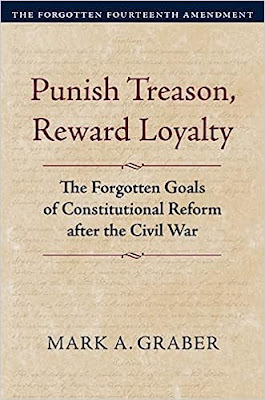
Mark A. Graber, Punish Treason, Reward Loyalty: The Forgotten Goals of Constitutional Reform after the Civil War (University of Kansas Press, 2023)
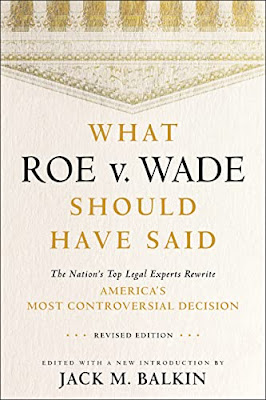
Jack M. Balkin, What Roe v. Wade Should Have Said: The Nation's Top Legal Experts Rewrite America's Most Controversial Decision - Revised Edition (NYU Press, 2023)

Andrew Koppelman, Burning Down the House: How Libertarian Philosophy Was Corrupted by Delusion and Greed (St. Martin’s Press, 2022)

Gerard N. Magliocca, Washington's Heir: The Life of Justice Bushrod Washington (Oxford University Press, 2022)
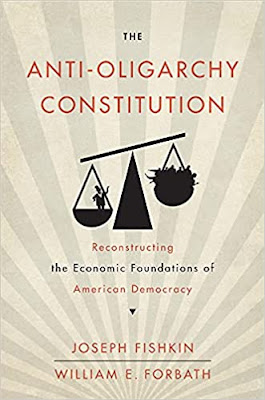
Joseph Fishkin and William E. Forbath, The Anti-Oligarchy Constitution: Reconstructing the Economic Foundations of American Democracy (Harvard University Press, 2022)
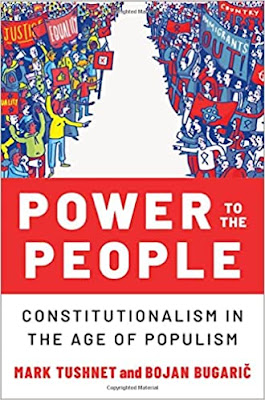
Mark Tushnet and Bojan Bugaric, Power to the People: Constitutionalism in the Age of Populism (Oxford University Press 2021).

Mark Philip Bradley and Mary L. Dudziak, eds., Making the Forever War: Marilyn B. Young on the Culture and Politics of American Militarism Culture and Politics in the Cold War and Beyond (University of Massachusetts Press, 2021).

Jack M. Balkin, What Obergefell v. Hodges Should Have Said: The Nation's Top Legal Experts Rewrite America's Same-Sex Marriage Decision (Yale University Press, 2020)

Frank Pasquale, New Laws of Robotics: Defending Human Expertise in the Age of AI (Belknap Press, 2020)

Jack M. Balkin, The Cycles of Constitutional Time (Oxford University Press, 2020)

Mark Tushnet, Taking Back the Constitution: Activist Judges and the Next Age of American Law (Yale University Press 2020).

Andrew Koppelman, Gay Rights vs. Religious Liberty?: The Unnecessary Conflict (Oxford University Press, 2020)

Ezekiel J Emanuel and Abbe R. Gluck, The Trillion Dollar Revolution: How the Affordable Care Act Transformed Politics, Law, and Health Care in America (PublicAffairs, 2020)

Linda C. McClain, Who's the Bigot?: Learning from Conflicts over Marriage and Civil Rights Law (Oxford University Press, 2020)
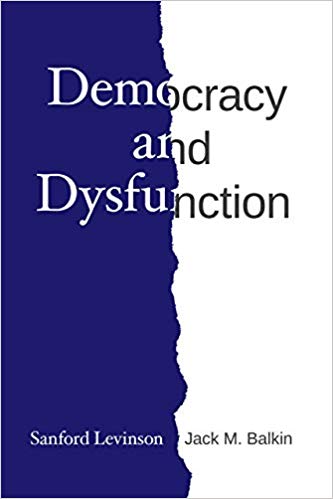
Sanford Levinson and Jack M. Balkin, Democracy and Dysfunction (University of Chicago Press, 2019)

Sanford Levinson, Written in Stone: Public Monuments in Changing Societies (Duke University Press 2018)

Mark A. Graber, Sanford Levinson, and Mark Tushnet, eds., Constitutional Democracy in Crisis? (Oxford University Press 2018)

Gerard Magliocca, The Heart of the Constitution: How the Bill of Rights became the Bill of Rights (Oxford University Press, 2018)

Cynthia Levinson and Sanford Levinson, Fault Lines in the Constitution: The Framers, Their Fights, and the Flaws that Affect Us Today (Peachtree Publishers, 2017)

Brian Z. Tamanaha, A Realistic Theory of Law (Cambridge University Press 2017)

Sanford Levinson, Nullification and Secession in Modern Constitutional Thought (University Press of Kansas 2016)

Sanford Levinson, An Argument Open to All: Reading The Federalist in the 21st Century (Yale University Press 2015)

Stephen M. Griffin, Broken Trust: Dysfunctional Government and Constitutional Reform (University Press of Kansas, 2015)

Frank Pasquale, The Black Box Society: The Secret Algorithms That Control Money and Information (Harvard University Press, 2015)

Bruce Ackerman, We the People, Volume 3: The Civil Rights Revolution (Harvard University Press, 2014)
Balkinization Symposium on We the People, Volume 3: The Civil Rights Revolution

Joseph Fishkin, Bottlenecks: A New Theory of Equal Opportunity (Oxford University Press, 2014)

Mark A. Graber, A New Introduction to American Constitutionalism (Oxford University Press, 2013)

John Mikhail, Elements of Moral Cognition: Rawls' Linguistic Analogy and the Cognitive Science of Moral and Legal Judgment (Cambridge University Press, 2013)

Gerard N. Magliocca, American Founding Son: John Bingham and the Invention of the Fourteenth Amendment (New York University Press, 2013)

Stephen M. Griffin, Long Wars and the Constitution (Harvard University Press, 2013)

Andrew Koppelman, The Tough Luck Constitution and the Assault on Health Care Reform (Oxford University Press, 2013)

James E. Fleming and Linda C. McClain, Ordered Liberty: Rights, Responsibilities, and Virtues (Harvard University Press, 2013)
Balkinization Symposium on Ordered Liberty: Rights, Responsibilities, and Virtues

Andrew Koppelman, Defending American Religious Neutrality (Harvard University Press, 2013)

Brian Z. Tamanaha, Failing Law Schools (University of Chicago Press, 2012)

Sanford Levinson, Framed: America's 51 Constitutions and the Crisis of Governance (Oxford University Press, 2012)

Linda C. McClain and Joanna L. Grossman, Gender Equality: Dimensions of Women's Equal Citizenship (Cambridge University Press, 2012)

Mary Dudziak, War Time: An Idea, Its History, Its Consequences (Oxford University Press, 2012)

Jack M. Balkin, Living Originalism (Harvard University Press, 2011)

Jason Mazzone, Copyfraud and Other Abuses of Intellectual Property Law (Stanford University Press, 2011)

Richard W. Garnett and Andrew Koppelman, First Amendment Stories, (Foundation Press 2011)

Jack M. Balkin, Constitutional Redemption: Political Faith in an Unjust World (Harvard University Press, 2011)

Gerard Magliocca, The Tragedy of William Jennings Bryan: Constitutional Law and the Politics of Backlash (Yale University Press, 2011)

Bernard Harcourt, The Illusion of Free Markets: Punishment and the Myth of Natural Order (Harvard University Press, 2010)

Bruce Ackerman, The Decline and Fall of the American Republic (Harvard University Press, 2010)
Balkinization Symposium on The Decline and Fall of the American Republic

Ian Ayres. Carrots and Sticks: Unlock the Power of Incentives to Get Things Done (Bantam Books, 2010)

Mark Tushnet, Why the Constitution Matters (Yale University Press 2010)

Ian Ayres and Barry Nalebuff: Lifecycle Investing: A New, Safe, and Audacious Way to Improve the Performance of Your Retirement Portfolio (Basic Books, 2010)
.jpg)
Jack M. Balkin, The Laws of Change: I Ching and the Philosophy of Life (2d Edition, Sybil Creek Press 2009)

Brian Z. Tamanaha, Beyond the Formalist-Realist Divide: The Role of Politics in Judging (Princeton University Press 2009)
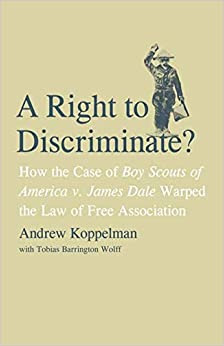
Andrew Koppelman and Tobias Barrington Wolff, A Right to Discriminate?: How the Case of Boy Scouts of America v. James Dale Warped the Law of Free Association (Yale University Press 2009)

Jack M. Balkin and Reva B. Siegel, The Constitution in 2020 (Oxford University Press 2009)

Heather K. Gerken, The Democracy Index: Why Our Election System Is Failing and How to Fix It (Princeton University Press 2009)

Mary Dudziak, Exporting American Dreams: Thurgood Marshall's African Journey (Oxford University Press 2008)

David Luban, Legal Ethics and Human Dignity (Cambridge Univ. Press 2007)

Ian Ayres, Super Crunchers: Why Thinking-By-Numbers is the New Way to be Smart (Bantam 2007)

Jack M. Balkin, James Grimmelmann, Eddan Katz, Nimrod Kozlovski, Shlomit Wagman and Tal Zarsky, eds., Cybercrime: Digital Cops in a Networked Environment (N.Y.U. Press 2007)

Jack M. Balkin and Beth Simone Noveck, The State of Play: Law, Games, and Virtual Worlds (N.Y.U. Press 2006)

Andrew Koppelman, Same Sex, Different States: When Same-Sex Marriages Cross State Lines (Yale University Press 2006)

Brian Tamanaha, Law as a Means to an End (Cambridge University Press 2006)

Sanford Levinson, Our Undemocratic Constitution (Oxford University Press 2006)

Mark Graber, Dred Scott and the Problem of Constitutional Evil (Cambridge University Press 2006)

Jack M. Balkin, ed., What Roe v. Wade Should Have Said (N.Y.U. Press 2005)

Sanford Levinson, ed., Torture: A Collection (Oxford University Press 2004)
Balkin.com homepage
Bibliography
Conlaw.net
Cultural Software
Writings
Opeds
The Information Society Project
BrownvBoard.com
Useful Links
Syllabi and Exams
