Balkinization
an unanticipated consequence of
Jack M. Balkin
Balkinization Symposiums: A Continuing List
E-mail:
Jack Balkin:
jackbalkin at yahoo.com
Bruce Ackerman
bruce.ackerman at yale.edu
Ian Ayres
ian.ayres at yale.edu
Corey Brettschneider
corey_brettschneider at brown.edu
Mary Dudziak
mary.l.dudziak at emory.edu
Joey Fishkin
joey.fishkin at gmail.com
Heather Gerken heather.gerken at yale.edu
Abbe Gluck abbe.gluck at yale.edu
Mark Graber
mgraber at law.umaryland.edu
Stephen Griffin
sgriffin at tulane.edu
Jonathan Hafetz
jonathan.hafetz at shu.edu
Jeremy Kessler
jkessler at law.columbia.edu
Andrew Koppelman
akoppelman at law.northwestern.edu
Marty Lederman
msl46 at law.georgetown.edu
Sanford Levinson
slevinson at law.utexas.edu
David Luban
david.luban at gmail.com
Gerard Magliocca
gmaglioc at iupui.edu
Jason Mazzone
mazzonej at illinois.edu
Linda McClain
lmcclain at bu.edu
John Mikhail
mikhail at law.georgetown.edu
Frank Pasquale
pasquale.frank at gmail.com
Nate Persily
npersily at gmail.com
Michael Stokes Paulsen
michaelstokespaulsen at gmail.com
Deborah Pearlstein
dpearlst at yu.edu
Rick Pildes
rick.pildes at nyu.edu
David Pozen
dpozen at law.columbia.edu
Richard Primus
raprimus at umich.edu
K. Sabeel Rahmansabeel.rahman at brooklaw.edu
Alice Ristroph
alice.ristroph at shu.edu
Neil Siegel
siegel at law.duke.edu
David Super
david.super at law.georgetown.edu
Brian Tamanaha
btamanaha at wulaw.wustl.edu
Nelson Tebbe
nelson.tebbe at brooklaw.edu
Mark Tushnet
mtushnet at law.harvard.edu
Adam Winkler
winkler at ucla.edu
Compendium of posts on Hobby Lobby and related cases
The Anti-Torture Memos: Balkinization Posts on Torture, Interrogation, Detention, War Powers, and OLC
The Anti-Torture Memos (arranged by topic)
Recent Posts
Charting the Forest: A Continuation of the Times' Must-Do List
![[Powered by Blogger]](https://lh3.googleusercontent.com/blogger_img_proxy/AEn0k_sNNXG2QAgZqkvC9Uez_0rWWo-t9U_lNWORtAchVYyYM6GLcPKLbwJ_7Z-9oFGO0bfKNFhq0KOq_Xn3jpjM9Sv2WJQ_BpIlP1Ad-e1dRD_Y=s0-d)
Just A Few Blogs
ACS Blog
Alas, a Blog
Althouse
Arts and Letters Daily
Atrios (Eschaton)
Bill of Health
Buzzflash.com
Buzz Machine
Cato at Liberty
Juan Cole (Informed Comment)
Concurring Opinions
The Constitution in 2020
Corrente
Crooked Timber
Daily Howler
Daily Kos
Dana Boyd
Brad DeLong
Digby (Hullabaloo)
Discriminations
Daniel Drezner
Kevin Drum (Mother Jones)
Electrolite
En Banc
Eunomia (Daniel Larison)
Fafblog
Michael Froomkin (Discourse.net)
GovLab (Beth Noveck)
Rick Hasen (Election Law)
History News Network
How Appealing
Ignatz (Sam Heldman)
The Importance of (Ernie Miller)
Infolaw
Instapundit
International Economic Law and Policy Blog
IntLawGrrls
Jacob Levy
Jesus' General
Jurisdynamics
The Kitchen Cabinet
Mark Kleiman
Law Blog Central
Larry Lessig
Lawyers, Guns and Money
Liberal Oasis
Brian Leiter's Law School Reports
The Leiter Reports
Marginal Revolution
Megan McArdle
Memeorandum
Metafilter
Mirror of Justice
The New Republic
Newseum
No More Mister Nice Blog
Brendan Nyhan
Opinio Juris
Orcinus
The Originalism Blog
Pandagon
Passport (Foreign Policy)
Overcoming Bias
Political Animal (Washington Monthly)
Political Theory Daily Review
Political Wire (Taegan Goddard)
The Poor Man
Virginia Postrel
Prawfsblawg
Public Reason
Jonathan Rauch
Raw Story
Redstate
ReligiousLeftLaw.com
Reporters Committee For Freedom of the Press
Reproductive Rights Blog
Rothman's Roadmap to the Right of Publicity
SCOTUS Blog
Seeing the Forest
Clay Shirky
The Shifted Librarian
The Situationist
Larry Solum (Legal Theory)
Andrew Sullivan
Talking Points Memo
Talk Left
Tapped
Tbogg
TechPresident
The Paper Chase (Jurist)
Tom Paine
Tom Tomorrow (This Modern World)
Eve Tushnet
Uggabugga
University of Chicago Law School Faculty Blog
Unqualified Offerings
The Volokh Conspiracy
War and Piece (Laura Rozen)
Wampum
Oliver Willis
Wonkette
Written Description
Matthew Yglesias
Yin
Your Choice of Feeds
1. XML
powered by

2. Atom Feed
3. RSS 2.0
Charting the Forest: A Continuation of the Times' Must-Do List
Scott Horton
In 1768, the German Enlightenment novelist Christoph Martin Wieland wrote in the first part of his Musarion that "there are certain writers who are blinded by too much light, it seems, who don't see the forest for the trees." Within a few years this expression, vividly characterizing the notorious human proclivity to observe only what is immediately before us rather than take the full measure of things, achieved status as a colloquialism in several European languages, including English. Wieland's coinage of this expression is well known, but the context is perhaps less so, and it's telling. He was writing about the perspective of journalists, more particularly about their tendency to address things too narrowly to be useful. Indeed, Musarion also marks one of the first appearances of the word "journalist" the way we use it today, and one of the first descriptions of journalism as a profession. The concept of an educated and socially responsible public whose views are informed by open discourse ("publicity," in the Kantian sense) lies at the core of Enlightenment thinking. It stretches towards democratic institutions, and the accountability of those who wield power in them. It is a concept that would have directly connected Wieland sitting in Weimar with Hume in Britain, Diderot in Paris and Washington, Jefferson and Madison in the emerging United States. It is one of the animating concepts that gave birth to the United States, and continues to be a vital force in it. But I wonder sometimes if the fire doesn't need a bit of occasional stoking.
Today, the Bush Administration stands on the brink of what many pundits have already termed a "second Katrina," a witching hour of scandals which are rocking the White House, the Department of Defense and the Department of Justice with particular force. For the most part these scandals have little to do with current dealings; they relate to heavy handed assertions of executive power going back almost to the beginning of the Administration. An attentive and clear-sighted press would have exposed these dealings much earlier were it not for a curiously uncritical perspective that settled in with the dust of 9/11. More significantly, with the remarkable exception of the eloquent and analytically adept editorial page of the New York Times, the press generally is failing to see the "forest for the trees" in this process.
Taking a clue from the recent Times editorial which offered a legal "must-do" list - systematically identifying the Bush Administration's assaults on foundational American legal values in connection with the prosecution of the "War on Terror," I would like here to extend their list by cataloguing the issues which have arisen in the administration of justice but were not included in the Times "must-do" list and suggest some policy issues they highlight. I am doing this as a post at Balkinization in order to enlist our readership in the development of the project. The idea here is not to offer any sort of comprehensive discussion, but merely an effort to catalogue - an exercise in charting the forest, as it were.
Here's the Times' list: (1) restore habeas corpus, (2) stop illegal spying, really, (3) close the CIA prisons, (4) account for "ghost prisoners," (5) ban extraordinary rendition, (6) tighten the definition of "illegal enemy combatant," (7) screen prisoners fairly and effectively, (8) ban tainted evidence, (9) ban secret evidence, (10) better define "classified" evidence, (11) respect the right to counsel.
Here's my continuation:
1. The Gonzales 8 - I'll take the label from a current Times editorial though the number will likely prove to be far more than eight in the end. The issue is politicization of the US Attorney's offices and prosecutorial process around the country, as well as politicization of key offices within the Department of Justice in Washington. The manifestations are "leaning on" US Attorneys to pursue corruption cases involving political adversaries, to suspend or stop corruption cases involving adherents of the administration, to interfere with the voting process through support of voter suppression projects, particularly targeting minorities. Other manifestations include the handling of torture and coercive-interrogation-related cases against contractors, particularly in the Eastern District of Virginia, perhaps the most politicized US Attorney's office in the country, and the home of Gonzales' deputy, Paul J. McNulty. Moreover, the allegations of the Gonzales 8 cast a dark shadow over the entire US Attorney's service. It raises an obvious question: how many other US Attorneys were "leaned on" in the same way, and relented to the pressure?
2. Judicial Nominations - This process has become increasingly politicized, and is now overtly so - as the nomination of Harriet Miers, a former state bar association president, showed. Miers was a solidly conservative candidate, who nevertheless failed an ideological litmus test demanded by the Bush Administration's Theocon base. But other factors now also appear paramount in this process, including allegiance to the notion of an executive which is not coequal but supreme, or at least vastly more powerful in certain fields (such as war-making, foreign relations and national security) than the other branches. Finally, as Marty Lederman has noted - very astutely in my view - the concept of immunity (or more precisely, impunity) for the executive and its agents plays an increasingly potent role in this process. It may now be an ideological issue as significant to the Administration as abortion and the unitary executive. There is also a direct tie between the judicial nominations process and the US attorneys, as a judicial appointment is frequently seen as a highly desirable "promotion" for a US Attorney. US Attorneys who fail to perform to the Bush Administration's political expectations (because, for instance, they observe clear ethical guidelines) are seen as disqualified for judicial nomination. This suggests that partisan fidelity overrides all other considerations.
3. Political Intimidation of Judges - The Administration's Theocon base regularly attacks judges in vicious terms, often using language suggesting physical violence. The Family Research Council's two "Justice Sundays" are the clearest evidence of this. Both drew Bush Administration acolytes to the podium. Attorney General Gonzales has repeatedly made speeches which reflect a toned-down version of the same thing: Gonzales warns judges to keep out of matters in which national security interests are high, and to avoid tampering with the president's discretion in war-making. Gonzales' speeches are barely veiled threats, and a number of cases - most significantly involving ending life support to a woman in Florida - show the sort of vicious attacks that can be unleashed on judges who fail to toe the line. In particular, the Bush Administration's agenda here is a complement to its judicial nominations strategy, buttressing a bench packed with ideological adherents by intimidating more moderate and less ideological judges into silence. In particular, this strategy is meant to reinforce the absolutist claims of the Bush Administration to governance in all national security and war matters (which, given their conceptualization of a Nietzschean "long war into the twilight" is an ever larger part of the total world of legal decision-making).
4. Persecution of Whistleblowers - the price of good governance is eternal vigilance before the public trust, which requires both legislators rising to ask the question that Cicero always put ("Cui bono?" - "And whom does it benefit?" - Pro Roscio Amerino sec. 84) and civil servants committed to uphold that trust and prepared to alert the organs of independent oversight about the corruption and illegal deeds of office holders. The Bush Administration has developed the persecution of whistleblowers into a new art form. Whistleblowers who avail themselves of the formal channels find themselves immediately under attack - they face immediate disciplinary review, firing, and harassment and persecution even after their termination. The case of Jesselyn Raddack at DOJ is an astonishing example, as is the case of Sibel Edmonds at the FBI, and the witnesses that Congressman Chris Shays brought together at his February 14, 2006 hearing.
5. Perversion of the Inspectors General - Another aspect of this issue is the corruption of inspector general’s offices throughout the Administration. From the outset, these offices - designed to be the watchdogs of ethics and legality - were selected as homes for the least-qualified political hacks. Four times in the last three years I have met with whistleblowers to discuss their interaction with inspectors general. In each case, the conduct of the ostensible federal ethics officer was horrendous. By and large Bush Administration inspectors general understand their role to be this: persecute and silence whistleblowers. Humiliate them. Do whatever you can to make their claims seem ridiculous or not credible. And above all, protect political appointees in the administration. In sum, the office of inspector general has served to obscure and divert attention from corruption and mismanagement, not to root it out.
6. Persecution of Defense Counsel - in my nearly thirty years of work as a human rights monitor, I have noted some features which are common to tyrannical, particularly to wannabe totalitarian regimes, whether they be of the left or the right. One is that defense counsel - and particularly defense counsel in politically sensitive cases who do their job professionally and articulately - always draw fire, and sometimes brutal repression. The tyrannical regime wants and needs defense counsel to give their show trials credibility. Their role is to insure a smooth functioning of the legal process. As an experienced defense attorney explained to me in Uzbekistan shortly after the collapse of the Soviet Union: "I always had a simple understanding of my role. It was to convince my client to plead guilty and throw himself on the mercy of the court. Only by this path could he ever really hope to achieve a milder sentence." In my career, I witnessed vicious repression of defense counsel in the Soviet Union, Uzbekistan, Zimbabwe and Cuba. I certainly never expected to see it in America. But under the Bush Administration, it has arrived. The particular victims are counsel who volunteer on a pro bono basis - doing a public service - to handle cases for prisoners in the "War on Terror," but detailed JAG lawyers have also taken their blows. These lawyers have been routinely denigrated and attacked by the Administration : Major Dan Mori was recently told by the Gitmo chief prosecutor that criminal charges might be brought against him for his criticisms of the Military Commissions process. These criticisms are not only completely accurate, Mori would be breaching his duty of zealous advocacy were he to fail to make them. Mori's colleague Lieutenant Commander Charlie Swift, the man who won the Supreme Court decision in Hamdan, and the only JAG officer to make a leading legal periodical's list of the 100 most influential lawyers in the United States, was passed over for promotion and is therefore being forced out (the same is rumored to be the case for all the best known JAG defense counsel, leading one to call the appointment a "guaranteed career stopper"). Defense counsel were accused of being responsible for the suicides of Guantanamo detainees. They are repeatedly accused of jeopardizing national security concerns when they discuss their clients' cases, and particularly when they note that their clients have been tortured or mistreated. (The DOJ and DOD position is that the torture techniques applied are highly classified national security secrets, which cannot be divulged. This is not a new posture. In fact, it was adopted by the Soviet NKVD in the 1920's.) Other defense counsel have described to me, often in graphic terms, acts of physical intimidation in the process of security clearances in Guantanamo and at other high-security installations. All of this reflects a highly ideological perspective of the Bush Administration in a doctrine called "lawfare." It holds that defense counsel are continuing the adversary's struggle against the United States into the courtroom. The "lawfare" concept is also nothing new. Anyone who is familiar with legal theory texts from the Soviet Union in the 1950's knows that the idea of impartial justice is a bourgeois delusion, and that true justice is a vehicle through which the state rules over its subjects, crushing all opposition. Granting "rights" to enemies of the state is therefore a nonsensical proposition.
7. State Secrets Doctrine - most states have a doctrine of state secrets of some sort. The modern notion of justice - dating to the trial of John Lilburne in 1649 - is inextricably linked today to the idea of public trials, increasingly covered by the media. Every state has national security matters - relating to war plans and the instruments of war, for instance, which it strives to keep secret for sound reasons. A logical conflict arises when legal proceedings arise in which state secrets are at issue. As President Kennedy noted, however, the mere word "secrecy" is inimical to the values of our democracy, and the invocation of the state secrets doctrine must therefore be constrained to the narrowest circle of cases. However, under the Bush Administration, this doctrine has proliferated out of all perspective and control. Increasingly it is plainly being used as a show-stopper whenever a legal proceeding would politically embarrass the Administration. Excellent examples of the extremely abusive invocation of the state secrets doctrine can be found in legal proceedings involving Maher Arar, Khaled el-Masri and Sibel Edmonds. In each case the "secrets" which would be divulged have been spread in lurid detail in newspapers all around the world. The disclosure of "secrets" is objectively not the issue. The issue is avoiding embarrassment to political figures. This constitutes an impermissible corruption of the entire judicial process, and one which draws striking parallel to events that occurred in the English Court of Star Chamber in the first half of the 17th century.
8. Erosion of Posse Comitatus Act Protections - one of the few salutary aspects of the Compromise of 1876-77 was agreement to preclude the military from exercising police functions within the territory of the United States with a handful of very limited exceptions, all implemented in the Posse Comitatus Act of 1878. This included protections of civilians not on or immediately around military installations from surveillance by the mushrooming intelligence apparatus of the DOD. The Bush Administration's disdain for the Posse Comitatus Act limitations is well known. It is increasingly clear that the Bush Administration has adopted a secret, internal understanding of the Posse Comitatus Act which is at odds with the statute and its traditional interpretation. There is some evidence linking John Yoo to this inventive, new reading. For four years reports have surfaced of DOD surveillance within the United States targeting religious and other non-governmental associations which oppose military operations, and particularly the Iraq War. Accordingly, to the extent exposed, the Posse Comitatus Act violations reflect a consistent pattern of targeting the Administration's domestic political adversaries. DOD denials of some of these reports lack credibility. No serious Congressional oversight of this matter has occurred.
9. FISA Violations - as has been extensively discussed on Balkinization, the Administration has adopted surveillance practices which are a violation of Federal criminal law. These practices continued even after exposed and publicly condemned. This is one of the strongest proofs that the Administration is veering towards the legal premise of Charles I: rex est lex.
The issues flagged above cannot be justified as a sort of justice reform package. Indeed, no Republican platform has identified or presumed to campaign on these matters as an issue. But the package is virulently political. I am most struck by the parallels to Carl Schmitt and his program for consolidation of political power over the legal sector spelled out in writings in the mid-thirties. Schmitt considered the idea of impartial justice to be a dangerous liberal fallacy, a concept that liberal judges could exploit to impose their own values and ideas for those of the executive. Schmitt's prescription was a reorganized legal sector in which the dominance of the executive was clear, and all legal professionals - lawyers, prosecutors and judges alike - were to be bound to him. In two writings, Schmitt furnished a battle plan - how could the liberal constitutionalism of Weimar be converted to a new, more authoritarian and centrally directed model. This entailed vetting the judiciary to uproot "independent" judges, insuring political alignment of prosecutors, and intimidating the defense bar as well as a series of reforms of criminal process which greatly enhanced the power of the state and undermined civil liberties.
Viewed at some distance, the parallels between the Bush Administration's tactics and those advocated by Schmitt are extremely disturbing. What Attorney General Gonzales has undertaken is no more than a mild echo of the Schmittian agenda. But its objective cannot be mistaken. It assumes a fundamental shift of the underpinnings of the American system, one which greatly enhances the power of the executive at the expense of civil liberties and the independent judiciary. No less striking is the partisan political dynamic. Clearly what is being attempted is the creation of a one-party state, where political fidelity is the essential credential for service as a prosecutor or judge. It is the logical aspiration of any political party to seek and retain power. But it was the genius of the American constitutional system to impose severe restraints on that aspiration. As George Washington wrote to his Attorney General, Edmund Randolph, in 1789: Impressed with a conviction that the due administration of justice is the firmest pillar of good Government, I have considered the first arrangement of the Judicial department as essential to the happiness of our Country, and to the stability of its political system; hence the selection of the fittest characters to expound the law, and dispense justice, has been an invariable object of my anxious concern.
Washington made clear that he felt partisanship should not be a factor in the selection of officers of the Justice Department or judges, and that the executive should likewise avoid other displays of favoritism based on family or other association, keeping only to merit. Of course, Washington’s approach did not last long, and it would be unrealistic to imagine America in the twenty-first century returning to a standard in which involvement with political parties and their agendas is excluded. However, it is time to recognize that the pendulum has swung too far, and it is urgent that it be brought back to the center.
In the Bush presidency, we have witnessed a severe systems test of foundational principles, indeed, an effort to transform the system. At this point, the outcome remains uncertain. A few scattered newspapers and Congressional hearings will not be enough to check the sea change that Bush's legal team has launched. This will require a pinch of indignation. But first it will require seeing the forest and not just the trees.
Posted
9:25 PM
by Scott Horton [link]

1. Comply with the Geneva Conventions.
2. Stop torturing people.
Here's the Times' list: (1) restore habeas corpus
Before Rasul and after the MCA, there was no habeas corpus for enemy combatants being held during wartime. Thus, there is nothing to restore.
(2) stop illegal spying, really
If the NYT is referring to the TSP, that program was already folded into FISA...or more accurately, FISA appears to have been gutted by the FISC to accommodate the TSP.
(3) close the CIA prisons
This happened months ago when the 14 high value al Qaeda were sent to Gitmo.
(4) account for "ghost prisoners,"
Who exactly are these people?
(5) ban extraordinary rendition
Why? War is not a criminal matter requiring extradition. We can take down the enemy in any country where he resides.
(6) tighten the definition of "illegal enemy combatant,"
To what? We already have a definitions provided by the Geneva Conventions and the MCA.
(7) screen prisoners fairly and effectively
This is already being done.
(8) ban tainted evidence
What the hell is "tainted evidence?"
(9) ban secret evidence
This is insane. We use secret evidence before the FISC, which the Times claims is perfectly legal. Nearly all of our evidence against terrorists is gained through top secret intelligence sources, which would be killed if their identities were released.
(10) better define "classified" evidence
To what? These people are morons.
(11) respect the right to counsel.
Enemy combatants being held during wartime have never and do not now have a right to counsel unless they are being tried for crimes.
If you'd like to respond to Scott Horton's post, I'd be interested in hearing what you have to say. If you insist on derailing this comment thread to talk about the New York Times article, I'll continue on with my day.
she's got a new campaign to have hearings into her case and the state secrets privilege - 30 groups have signed the petition - aclu, Citizen Outreach, OMB Watch, EPIC, GAP , EFF, National Coalition Against the Censorship etc. It also ties into the FISA violations that you mentioned. Sibel released an official document earlier in the week (from another FBI whistleblower) - "major violations of FISA by the FBI" spying on "high-profile U.S. public officials." I can't believe the story didn't attract any attention. James Bamford discussed it here.
1) Amend the Constitution to ensure an individual right to vote for president that cannot be abridged by a state legislature and can never be abridged ex post facto.
2) Amend the Constitution to limit presidential use of the pardon power only in cases where the president has no conflict of interest, including any case that involves a member or former member of their own administration.
One has to wonder if the NYT has a concept of history or even current events...
Here's the Times' list: (1) restore habeas corpus
Before Rasul and after the MCA, there was no habeas corpus for enemy combatants being held during wartime. Thus, there is nothing to restore.
Ummm, like Hertz says, "not quite". As we've noted numerous times, Rasul recognised such, and the Dubya-herded and Republican-led legislature has had to try twice to rewrite the laws to deny such relief ex post facto (with the final result still in the process of working its way through the courts).
(2) stop illegal spying, really
If the NYT is referring to the TSP, that program was already folded into FISA...or more accurately, FISA appears to have been gutted by the FISC to accommodate the TSP.
Perhaps. If so, we still don't know. Nice of "Bart" to tacitly acknowledge that the Dubya maldaministration's hand was forced here, and that they're apparently tried a new way around he law. But newsflash for "Bart": The FISC cannot rewrite statute; if it turns out that the plain language of the statute is being violated by the new 'program', expect more legal wrangling.
(3) close the CIA prisons
This happened months ago when the 14 high value al Qaeda were sent to Gitmo.
Actually, all we have is the Dubya maladministration's say-so on this ... and they're a bunch of liars!!!.
I say that Congress needs to hold hearings to see what was done, what is being done, and then pass laws to prevent any such thing from ever happpening again (as well as pressing for the criminal prosecution of those that participated in illegal kidnappings and "renderings").
(4) account for "ghost prisoners,"
Who exactly are these people?
Well, what say we go find out?
(5) ban extraordinary rendition
Why? War is not a criminal matter requiring extradition. We can take down the enemy in any country where he resides.
Alleged "enem[ies". That's not what "extraordinary rendition" is about, and "Bart" damn well knows it....
(6) tighten the definition of "illegal enemy combatant,"
To what? We already have a definitions provided by the Geneva Conventions and the MCA.
The Geneva Conventions contain the words "illegal enemy combatants" exactly ... nowhere.
The definition in the MCA boils down to essentially "anyone who Dubya or his minions and assignees designates as such". Nothing to see here, folks, move along, move along....
(7) screen prisoners fairly and effectively
This is already being done.
Absent reporters and even defence lawyers, and without seeing the 'evidence'. Wow. Whatta deal....
(8) ban tainted evidence
What the hell is "tainted evidence?"
Evidence through coercion (or even torture) or hearsay evidence; you know, Mr. "DUI defence lawyer", the kind of stuff that the Unied States for its entire existence has though not sufficiently reliable to pass muster in our courts.
(9) ban secret evidence
This is insane. We use secret evidence before the FISC, which the Times claims is perfectly legal.
Not entirely true. This may be used to show "probable cause" to get a warrant, but if it comes to criminal trials, it needs to be produced. And if a subject is found not to be a legitimate target, absent dire needs, they need t be told they got snooped on.
... Nearly all of our evidence against terrorists is gained through top secret intelligence sources, which would be killed if their identities were released.
Nonsense. "Bart" is just making up facts here.
(10) better define "classified" evidence
To what? These people are morons.
No. As has been repeatedly shown here (and elsewhere), "Bart" is either a moron, illiterate, or dishonest (or a combination of these).
(11) respect the right to counsel.
Enemy combatants being held during wartime have never and do not now have a right to counsel unless they are being tried for crimes.
"Bart" assumes his conclusion once again. But I'd note that Schiever and the three Spanish sailors had representiation. This is apparent from the record.
Cheers,d
The mediating force in American politics has always been the bi-polar swing between parties, but now that this administration has so blatently abused the law entrusted to them, perhaps it is time to discuss Constitutioal remedies - serperating the Justice Department from the Executive by, for instance, electing the AG.
The mediating force in American politics has always been the bi-polar swing between parties, but now that this administration has so blatantly abused the law entrusted to them, perhaps it is time to discuss Constitutional remedies - separating the Justice Department from the Executive by, for instance, electing the AG.
That's done in many states. Seems to work reasonably well.
Cheers,
Add the politicization of agencies. "Don't talk about polar bears" was the recent directive to scientists.
Incompetence is not the word. This is all deliberate and systematic.
Wonderful series of posts for Sat am reading. Thank you.
Bart-If you'd like to respond to Scott Horton's post, I'd be interested in hearing what you have to say.
Sorry, I did not have the time because I am prepping for a trial. However, while I am having Saturday breakfast, here goes...
1. The Gonzales 8
The US Attorneys serve at the pleasure of the and speak for the President, who is the "sole executive" under the Constitution. This is actually a good example of what the unitary executive theory is all about - the executive speaks with one voice, the President's.
As an aside, if Mr. Horton or any other Dem gave a peep when Mr. Clinton fired every single US Attorney serving under George I, I might conclude that this current complaint is something more than partisan sniping.
2. Judicial Nominations - This process has become increasingly politicized, and is now overtly so...This suggests that partisan fidelity overrides all other considerations.
So? Elections have consequences...although not as many as we conservatives would like. If a liberal is elected president, you will get a liberal judge. If a conservative is elected, you may have a 60% chance of ending up with a conservative judge, if you are lucky. See the Burger Court, Souter, O'Connor and now Kennedy. However, these problem children are not enough to cause me to join this whine. You make your picks and take the consequences.
3. Political Intimidation of Judges
Last time I checked, the First Amendment was still in effect. If I were to argue that you should not be able to fairly or unfairly criticize Mr. Bush simply because he occupies the office of President, you would rightly tell me where I could go. Judges are no different. When judges insert their personal policy preferences into the law, they join the political process and the only kind of accountability they are subject to are the opinions of the citizenry.
4. Persecution of Whistleblowers... The Bush Administration has developed the persecution of whistleblowers into a new art form.
Oh please. Do you have any objective comparisons between administrations concerning the treatment of whistle blowers? I have yet to see any bureaucracy which does not turn on whistle blowers or anyone else which crosses the political consensus of the organization.
5. Perversion of the Inspectors General...
See above. Prove your case.
6. Persecution of Defense Counsel...In my career, I witnessed vicious repression of defense counsel in the Soviet Union, Uzbekistan, Zimbabwe and Cuba. I certainly never expected to see it in America. But under the Bush Administration, it has arrived.
Really? I look forward to seeing your proof that the Bush Administration tossed attorneys into the Gulag or simply killed them as in those countries...
These lawyers have been routinely denigrated and attacked by the Administration : Major Dan Mori was recently told by the Gitmo chief prosecutor that criminal charges might be brought against him for his criticisms of the Military Commissions process. These criticisms are not only completely accurate, Mori would be breaching his duty of zealous advocacy were he to fail to make them.
I presume you have not served in the military. Under the UCMJ, a subordinate can indeed be criminally prosecuted for undermining good order and discipline of a unit by trashing the performance of superior officer or the military organization as a whole.
This is actually very similar to the concept of contempt of court. If you paraded around town telling the press that the judge before whom you are trying a case runs a kangaroo court, you can expect to be hauled in front of that judge and tossed into jail for contempt.
In the case of Major Mori, he was simply chided.
There is a fundamental difference between zealously defending a client with every legal means at your disposal and attacking the legal means itself. If Maj. Mori wants to reshape policy, he can resign his commission and run for political office or join the CCR and try to convince an outlaw court to rewrite the law. However, as a soldier, he acts within the confines of the military justice system as he agreed to do when he accepted a commission.
Mori's colleague Lieutenant Commander Charlie Swift, the man who won the Supreme Court decision in Hamdan, and the only JAG officer to make a leading legal periodical's list of the 100 most influential lawyers in the United States, was passed over for promotion and is therefore being forced out (the same is rumored to be the case for all the best known JAG defense counsel, leading one to call the appointment a "guaranteed career stopper").
Have you ever worked for a District Attorney or Public Defender? I guarantee that if you cross the boss' policy in one of those offices, you will not only be passed over for promotion, but you will most likely be faxing resumes.
I ran into this problem in the last State Attorney's Office for which I worked. Our very zealous Florida legislature made it a felony crime to possess a firearm while under a temporary restraining order (TRO). The problem with this statute was that the possessor of the firearm might not know the court entered a TRO against him for some days, making this a virtual strict liability offense. My office wanted to prosecute these men even if they did not know about the TRO and, worse still, even if the TRO had no basis and was simply a tool being used in a divorce. I made it clear that I did not want to prosecute when there was no mens rea and the office made it clear that I would do as I was told. I understood that the State Attorney is the boss and started looking for another job without whining about it.
If you are going to rock the boat, be prepared for the consequences.
Defense counsel were accused of being responsible for the suicides of Guantanamo detainees.
These suicides were a coordinated and the participants were not in communication with one another at Gitmo. Therefore, one could reasonably assume that this information was passed by a third party in communication with the suicides. Were these defense counsel passing information which assisted in this coordination? This is hardly unheard of. Lynne Stewart was criminally convicted of just this offense.
They are repeatedly accused of jeopardizing national security concerns when they discuss their clients' cases, and particularly when they note that their clients have been tortured or mistreated. (The DOJ and DOD position is that the torture techniques applied are highly classified national security secrets, which cannot be divulged. This is not a new posture. In fact, it was adopted by the Soviet NKVD in the 1920's.)
Actually, this has been the position of the United States under President's of both parties since the CIA began interrogations. It is common sense that you do not tell the enemy what to expect so that they can train to resist the disclosed interrogation techniques. Indeed, the nature of the SERE training which our forces undergo to resist interrogation is also classified so the enemy does not know what our troops have been trained to resist. Consequently, anyone who informs the enemy what interrogation techniques to expect is in fact providing aid and comfort to the enemy. This is no different from telling the enemy the specs of a weapons system so that they can learn how to defeat that system.
Other defense counsel have described to me, often in graphic terms, acts of physical intimidation in the process of security clearances in Guantanamo and at other high-security installations.
Care to share with the rest of us?
All of this reflects a highly ideological perspective of the Bush Administration in a doctrine called "lawfare." It holds that defense counsel are continuing the adversary's struggle against the United States into the courtroom.
Do you want to address the charge? It would appear to have more than a small amount of merit.
If the goal of these defense attorneys is to extend criminal defendant status to POWs for the first time in history and secure the release of those POWs so they can try to kill service members like my brother, then I would say that there is a reasonable argument that these attorneys are advancing the objectives of the enemy.
7. State Secrets Doctrine
This has nothing to do with defending a criminal defendant. Rather, this doctrine is meant to keep parties from offensively abusing the discovery process to obtain information about classified intelligence gathering which has not been used as evidence to prosecute the civil plaintiffs or criminal defendants.
Of all the accusations made against attorneys, this is the clearest case of providing aid and comfort to the enemy. There is no effective difference between an al Qaeda mole in the NSC feeding information on the Terrorist Surveillance Program (TSP) to bin Laden and a NYT reporter or attorney publishing this same information to the enemy. This is especially true when both the FISC and Congress were aware of and could provide oversight of the TSP. Under such circumstances, disclosure to the enemy is simply inexcusable.
8. Erosion of Posse Comitatus Act Protections... For four years reports have surfaced of DOD surveillance within the United States targeting religious and other non-governmental associations which oppose military operations, and particularly the Iraq War. Accordingly, to the extent exposed, the Posse Comitatus Act violations reflect a consistent pattern of targeting the Administration's domestic political adversaries.
The Posse Comitatus Act prevents the military from performing domestic law enforcement. When a government police forces monitors and file reports on demonstrators within their jurisdiction, then there is no violation of the Posse Comitatus Act. Do you have some evidence that the military is participating in domestic law enforcement against these groups?
9. FISA Violations - as has been extensively discussed on Balkinization, the Administration has adopted surveillance practices which are a violation of Federal criminal law.
This has been beaten to death. The fact that FISA exceeds the Congress' Article I powers is moot now that Justice has convinced the FISC to effectively gut the FISA probable cause requirement and issue warrants so that the resulting intelligence can arguably be used in criminal court.
I have no problem with the FISC declining to enforce the parts of FISA which the FISC judges told the Senate they thought were the unconstitutional. However, the possibility of using intelligence gathering for the express purpose of gathering criminal evidence in violation of Truong and having the FISC grant the cover of a warrant without traditional probable cause does raise serious 4th Amendment questions in my mind. That part of this arrangement needs to be monitored.
The US Attorneys serve at the pleasure of the and speak for the President, who is the "sole executive" under the Constitution. This is actually a good example of what the unitary executive theory is all about - the executive speaks with one voice, the President's.
Let's take that one step further. The preznit "serves at the pleasure of" Congress. Maybe they'll finally see fit to fire the incompetent and criminal thug.
As an aside, if Mr. Horton or any other Dem gave a peep when Mr. Clinton fired every single US Attorney serving under George I, I might conclude that this current complaint is something more than partisan sniping.
Dubya did the same thing on assuming office. But no one is complaining about that. It's a bit different when Dubya goes and fires all the attorneys he's appointed because they wouldn't do his political dirty work. It's kind of like Nixon demanding the sacking of Cox. More than anything, that "Saturday Night Massacre" decisively turned the tide against Nixon. People can see abuse of justice and abuse of power.
Cheers,
3. Political Intimidation of Judges
Last time I checked, the First Amendment was still in effect. If I were to argue that you should not be able to fairly or unfairly criticize Mr. Bush simply because he occupies the office of President, you would rightly tell me where I could go. Judges are no different. When judges insert their personal policy preferences into the law, they join the political process and the only kind of accountability they are subject to are the opinions of the citizenry.
Ummm, we're not talking "criticism" here (and "Bart" well knows it, but wilfully ignores it). We're talking the likes of this.
These lawyers have been routinely denigrated and attacked by the Administration : Major Dan Mori was recently told by the Gitmo chief prosecutor that criminal charges might be brought against him for his criticisms of the Military Commissions process. These criticisms are not only completely accurate, Mori would be breaching his duty of zealous advocacy were he to fail to make them.
I presume you have not served in the military. Under the UCMJ, a subordinate can indeed be criminally prosecuted for undermining good order and discipline of a unit by trashing the performance of superior officer or the military organization as a whole.
So tell me again why we should let the "prosecution" (that does sh*te like this) provide the only defence lawyers?!?!?
This is actually very similar to the concept of contempt of court.
No, it's not.
... If you paraded around town telling the press that the judge before whom you are trying a case runs a kangaroo court, you can expect to be hauled in front of that judge and tossed into jail for contempt.
And where did Major Mori do this? And for that matter, if he did make similar claims and the claims were true, wouldn't you say the process was irredeemably broken?
In the case of Major Mori, he was simply chided.
"simply chided"?!?!?
There is a fundamental difference between zealously defending a client with every legal means at your disposal and attacking the legal means itself. If Maj. Mori wants to reshape policy, he can resign his commission and run for political office or join the CCR and try to convince an outlaw court to rewrite the law. However, as a soldier, he acts within the confines of the military justice system as he agreed to do when he accepted a commission.
Once again, good reason not to have the military providing the "defence" counsel.
Mori's colleague Lieutenant Commander Charlie Swift, the man who won the Supreme Court decision in Hamdan, and the only JAG officer to make a leading legal periodical's list of the 100 most influential lawyers in the United States, was passed over for promotion and is therefore being forced out (the same is rumored to be the case for all the best known JAG defense counsel, leading one to call the appointment a "guaranteed career stopper").
Have you ever worked for a District Attorney or Public Defender? I guarantee that if you cross the boss' policy in one of those offices, you will not only be passed over for promotion, but you will most likely be faxing resumes.
Perhaps. Does that make it right?
I ran into this problem in the last State Attorney's Office for which I worked. Our very zealous Florida legislature made it a felony crime to possess a firearm while under a temporary restraining order (TRO). The problem with this statute was that the possessor of the firearm might not know the court entered a TRO against him for some days, making this a virtual strict liability offense. My office wanted to prosecute these men even if they did not know about the TRO and, worse still, even if the TRO had no basis and was simply a tool being used in a divorce. I made it clear that I did not want to prosecute when there was no mens rea and the office made it clear that I would do as I was told. I understood that the State Attorney is the boss and started looking for another job without whining about it.
And the law's the better for it. Pity the poor drunks in Colorado Springs, though.
"Bart", it's not your job to decide which crimes are to require mens rea and which crimes are strict liability crimes. When they appoint you to be the Florida State Legislature, you get to do that. Until they do, you're saying that you won't enforce the laws on the books. Perhaps as good a reason as any to let you go, eh?
If you are going to rock the boat, be prepared for the consequences.
Particularly from the Dubya-Cheney maladministration. In spades. Glad you recognise that, "Bart". OTOH, take a bullet for Der Führe... -- umm, sorry, the Deciderator-In-Chief, and there's a Preznitential Medal of Freedom in it for you somewhere.....
Cheers,
All of this reflects a highly ideological perspective of the Bush Administration in a doctrine called "lawfare." It holds that defense counsel are continuing the adversary's struggle against the United States into the courtroom.
Do you want to address the charge? It would appear to have more than a small amount of merit.
Before asking someone to "address the charge", mabe you'd be so kind as to make the charge?!?!? Oh, yeah, nevermind ... in the new Fourth Reich we doan' need no steenking actual charges (much less need to tell the accused what they are)....
Cheers,
If the goal of these defense attorneys is to extend criminal defendant status to POWs for the first time in history and secure the release of those POWs so they can try to kill service members like my brother, then I would say that there is a reasonable argument that these attorneys are advancing the objectives of the enemy.
So all defence lawyers are just trying to let drunken drivers out on the reads again so they can kill more of or families and children.... IC. They're truly "in bed with the enemy". Glad you made that clear, "Bart".
Cheers,
This is especially true when both the FISC and Congress were aware of and could provide oversight of the TSP. Under such circumstances, disclosure to the enemy is simply inexcusable.
So the Dubya maladministration didn't bring these cases to the FISC and didn't tell Congress about it for what reason again?!?!?
Cheers,
This has been beaten to death. The fact that FISA exceeds the Congress' Article I powers is moot now that Justice has convinced the FISC to effectively gut the FISA probable cause requirement and issue warrants so that the resulting intelligence can arguably be used in criminal court.
FISC has no power to rewrite the plain langage of the FISA law.
If Dubya thought that FISA needed to be changed, he should have asked Congress to do so. IN fact, he told them no change was needed in 2001.
Cheers,
I have no problem with the FISC declining to enforce the parts of FISA which the FISC judges told the Senate they thought were the unconstitutional.
Dragging out this old dead horse by its hooves again? The "FISC judges" said no such thing, and certainly held no such thing, not to mention your favourite "FISC judge" quote doesn't come from a "FISC judge" at all.
Typical "Bart" MO. Ignore any refutation of his misleading and/or false claims, and then trot them out a month later like no one said anything....
There is no "discussion" with "Bart"; just "Bart" opining ex cathedra like he was the friggin' pope....
Cheers,
"Bart" DePalma: This has been beaten to death. The fact that FISA exceeds the Congress' Article I powers is moot now that Justice has convinced the FISC to effectively gut the FISA probable cause requirement and issue warrants so that the resulting intelligence can arguably be used in criminal court.
FISC has no power to rewrite the plain langage of the FISA law.
Amongst all the smart ass snarks, you make a valid point for once.
I agree that the FISC does not have the power to ignore the plain meaning of the FISA provisions unless it first held that those provisions were unconstitutional. I wonder if they did.
["Bart" DePalma]: This has been beaten to death. The fact that FISA exceeds the Congress' Article I powers is moot now that Justice has convinced the FISC to effectively gut the FISA probable cause requirement and issue warrants so that the resulting intelligence can arguably be used in criminal court.
[Arne]: FISC has no power to rewrite the plain langage of the FISA law.
Amongst all the smart ass snarks, you make a valid point for once.
Well, if you don't include the fact that the SCTUS didn't say what you said they said in Brown II, and if you don't include the fact that the U.S. Supreme Court never held that the N.Y. Times could be prosecuted post-publication in the Pentagon Papers case, and if you don't include your malarkey about SJ only being appropriate after all discovery has been done....
I agree that the FISC does not have the power to ignore the plain meaning of the FISA provisions unless it first held that those provisions were unconstitutional. I wonder if they did.
Ummm, how can they have done this? What kind of a "holding" can they make in issuing a FISA court order? And we get down into the turtles too then; if FISA is invalid, what power does the FISC court have?
You know, I think that a lawyer should be quite uncomfortable about the idea of secret courts giving secret opinions on what the Constitution means. Don't you?
Cheers,
BD: I agree that the FISC does not have the power to ignore the plain meaning of the FISA provisions unless it first held that those provisions were unconstitutional. I wonder if they did.
Bart hits a new low in making stuff up: Just "wonder" if a court has made some secret, activist holding to expand its jurisdiction beyond the statute that created it, and assume that no one in the congressional oversight committees would care. That is a solid basis for an argument! RFLMAO.
My friend, the reporting indicates that the FISC is now issuing anticipatory and perhaps program wide warrants to authorize the TSP. There is no way in hell Justice can be providing individual probable cause as required by FISA to justify these warrants under these circumstances.
You are left with two choices...
1) The FISC is simply ignoring FISA's probable cause requirement and is granting "warrants" to Justice in exchange for being allowed to provide a modicum of oversight.
OR
2) The FISC has ruled that Congress may not constitutionally require probable cause for intelligence gathering and is granting "warrants" to Justice in exchange for being allowed to provide a modicum of oversight.
If you can come up with a reasonable third scenario which fits these facts, go right ahead and post it.
Further, your implication the Congressional Intelligence Committees would object to this arrangement is naive in the extreme.
The Elephants and Donkeys on these committees know and have known for years that the TSP is an effective intelligence program against the enemy which does not "spy on innocent Americans" like the leftist propaganda claims. There has never been any evidence otherwise. The only targets which have been disclosed are convicted al Qaeda financiers and terrorists.
The Donkeys on these committees had no problem at all with allowing the TSP to proceed for years until the NYT informed al Qaeda and the Donkey leftist base about the program. Since then we have been treated to a very bad imitation of Inspector Renault exclaiming: I'm shocked - shocked - to find spying is going on..."
Folding the program back into FISA enables the Donkeys to claim that the same exact program is now "legal" because the FISC blesses it. Why on Earth would you think that the Donkeys on these committees would actually decline that political fig leaf? That fig leaf sure beats having to tell the truth by following David Obey's lead and informing their lunatic fringe that they are clueless idiots.
"The Elephants and Donkeys on these committees know and have known for years that the TSP is an effective intelligence program against the enemy which does not "spy on innocent Americans" like the leftist propaganda claims. There has never been any evidence otherwise. The only targets which have been disclosed are convicted al Qaeda financiers and terrorists."
Bart, you just called it, but not the way you expected--"The only targets which have been disclosed..." You assume that any non-terrorist targets would also have been disclosed. However, if they were targets that weren't legal to go after under TSP, then it is unlikely that they would have been disclosed along with the terrorists.
OR
2) The FISC has ruled that Congress may not constitutionally require probable cause for intelligence gathering and is granting "warrants" to Justice in exchange for being allowed to provide a modicum of oversight.
If they have decided that the warrant requirement is "unconstitutional", there would be no need for warrants (or more accurately, FISA court orders). Regardless, whether the law is valid or invalid constitutionally, they have no authority to issue "warrants" in contravention to the law.
Cheers,
The Elephants and Donkeys on these committees know and have known for years that the TSP is an effective intelligence program against the enemy which does not "spy on innocent Americans" like the leftist propaganda claims.
Yes, the Church Commission determined this in the '70s.
Not to mention the IG report just issued....
Cheers,
Books by Balkinization Bloggers

Gerard N. Magliocca, The Actual Art of Governing: Justice Robert H. Jackson's Concurring Opinion in the Steel Seizure Case (Oxford University Press, 2025)

Linda C. McClain and Aziza Ahmed, The Routledge Companion to Gender and COVID-19 (Routledge, 2024)

David Pozen, The Constitution of the War on Drugs (Oxford University Press, 2024)

Jack M. Balkin, Memory and Authority: The Uses of History in Constitutional Interpretation (Yale University Press, 2024)
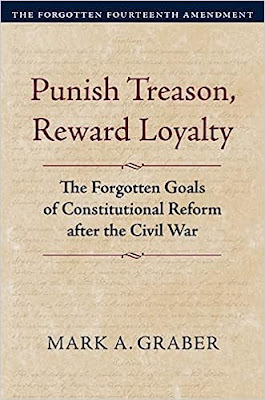
Mark A. Graber, Punish Treason, Reward Loyalty: The Forgotten Goals of Constitutional Reform after the Civil War (University of Kansas Press, 2023)
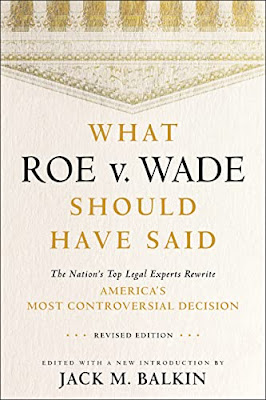
Jack M. Balkin, What Roe v. Wade Should Have Said: The Nation's Top Legal Experts Rewrite America's Most Controversial Decision - Revised Edition (NYU Press, 2023)

Andrew Koppelman, Burning Down the House: How Libertarian Philosophy Was Corrupted by Delusion and Greed (St. Martin’s Press, 2022)

Gerard N. Magliocca, Washington's Heir: The Life of Justice Bushrod Washington (Oxford University Press, 2022)
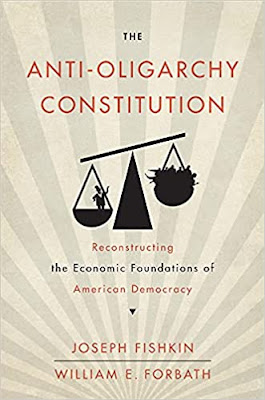
Joseph Fishkin and William E. Forbath, The Anti-Oligarchy Constitution: Reconstructing the Economic Foundations of American Democracy (Harvard University Press, 2022)
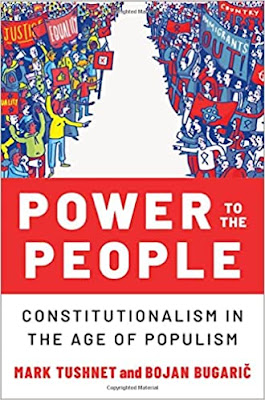
Mark Tushnet and Bojan Bugaric, Power to the People: Constitutionalism in the Age of Populism (Oxford University Press 2021).

Mark Philip Bradley and Mary L. Dudziak, eds., Making the Forever War: Marilyn B. Young on the Culture and Politics of American Militarism Culture and Politics in the Cold War and Beyond (University of Massachusetts Press, 2021).

Jack M. Balkin, What Obergefell v. Hodges Should Have Said: The Nation's Top Legal Experts Rewrite America's Same-Sex Marriage Decision (Yale University Press, 2020)

Frank Pasquale, New Laws of Robotics: Defending Human Expertise in the Age of AI (Belknap Press, 2020)

Jack M. Balkin, The Cycles of Constitutional Time (Oxford University Press, 2020)

Mark Tushnet, Taking Back the Constitution: Activist Judges and the Next Age of American Law (Yale University Press 2020).

Andrew Koppelman, Gay Rights vs. Religious Liberty?: The Unnecessary Conflict (Oxford University Press, 2020)

Ezekiel J Emanuel and Abbe R. Gluck, The Trillion Dollar Revolution: How the Affordable Care Act Transformed Politics, Law, and Health Care in America (PublicAffairs, 2020)

Linda C. McClain, Who's the Bigot?: Learning from Conflicts over Marriage and Civil Rights Law (Oxford University Press, 2020)
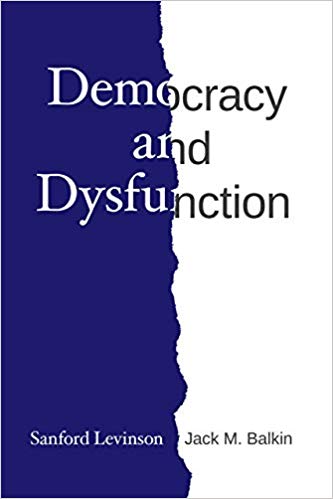
Sanford Levinson and Jack M. Balkin, Democracy and Dysfunction (University of Chicago Press, 2019)

Sanford Levinson, Written in Stone: Public Monuments in Changing Societies (Duke University Press 2018)

Mark A. Graber, Sanford Levinson, and Mark Tushnet, eds., Constitutional Democracy in Crisis? (Oxford University Press 2018)

Gerard Magliocca, The Heart of the Constitution: How the Bill of Rights became the Bill of Rights (Oxford University Press, 2018)

Cynthia Levinson and Sanford Levinson, Fault Lines in the Constitution: The Framers, Their Fights, and the Flaws that Affect Us Today (Peachtree Publishers, 2017)

Brian Z. Tamanaha, A Realistic Theory of Law (Cambridge University Press 2017)

Sanford Levinson, Nullification and Secession in Modern Constitutional Thought (University Press of Kansas 2016)

Sanford Levinson, An Argument Open to All: Reading The Federalist in the 21st Century (Yale University Press 2015)

Stephen M. Griffin, Broken Trust: Dysfunctional Government and Constitutional Reform (University Press of Kansas, 2015)

Frank Pasquale, The Black Box Society: The Secret Algorithms That Control Money and Information (Harvard University Press, 2015)

Bruce Ackerman, We the People, Volume 3: The Civil Rights Revolution (Harvard University Press, 2014)
Balkinization Symposium on We the People, Volume 3: The Civil Rights Revolution

Joseph Fishkin, Bottlenecks: A New Theory of Equal Opportunity (Oxford University Press, 2014)

Mark A. Graber, A New Introduction to American Constitutionalism (Oxford University Press, 2013)

John Mikhail, Elements of Moral Cognition: Rawls' Linguistic Analogy and the Cognitive Science of Moral and Legal Judgment (Cambridge University Press, 2013)

Gerard N. Magliocca, American Founding Son: John Bingham and the Invention of the Fourteenth Amendment (New York University Press, 2013)

Stephen M. Griffin, Long Wars and the Constitution (Harvard University Press, 2013)

Andrew Koppelman, The Tough Luck Constitution and the Assault on Health Care Reform (Oxford University Press, 2013)

James E. Fleming and Linda C. McClain, Ordered Liberty: Rights, Responsibilities, and Virtues (Harvard University Press, 2013)
Balkinization Symposium on Ordered Liberty: Rights, Responsibilities, and Virtues

Andrew Koppelman, Defending American Religious Neutrality (Harvard University Press, 2013)

Brian Z. Tamanaha, Failing Law Schools (University of Chicago Press, 2012)

Sanford Levinson, Framed: America's 51 Constitutions and the Crisis of Governance (Oxford University Press, 2012)

Linda C. McClain and Joanna L. Grossman, Gender Equality: Dimensions of Women's Equal Citizenship (Cambridge University Press, 2012)

Mary Dudziak, War Time: An Idea, Its History, Its Consequences (Oxford University Press, 2012)

Jack M. Balkin, Living Originalism (Harvard University Press, 2011)

Jason Mazzone, Copyfraud and Other Abuses of Intellectual Property Law (Stanford University Press, 2011)

Richard W. Garnett and Andrew Koppelman, First Amendment Stories, (Foundation Press 2011)

Jack M. Balkin, Constitutional Redemption: Political Faith in an Unjust World (Harvard University Press, 2011)

Gerard Magliocca, The Tragedy of William Jennings Bryan: Constitutional Law and the Politics of Backlash (Yale University Press, 2011)

Bernard Harcourt, The Illusion of Free Markets: Punishment and the Myth of Natural Order (Harvard University Press, 2010)

Bruce Ackerman, The Decline and Fall of the American Republic (Harvard University Press, 2010)
Balkinization Symposium on The Decline and Fall of the American Republic

Ian Ayres. Carrots and Sticks: Unlock the Power of Incentives to Get Things Done (Bantam Books, 2010)

Mark Tushnet, Why the Constitution Matters (Yale University Press 2010)

Ian Ayres and Barry Nalebuff: Lifecycle Investing: A New, Safe, and Audacious Way to Improve the Performance of Your Retirement Portfolio (Basic Books, 2010)
.jpg)
Jack M. Balkin, The Laws of Change: I Ching and the Philosophy of Life (2d Edition, Sybil Creek Press 2009)

Brian Z. Tamanaha, Beyond the Formalist-Realist Divide: The Role of Politics in Judging (Princeton University Press 2009)
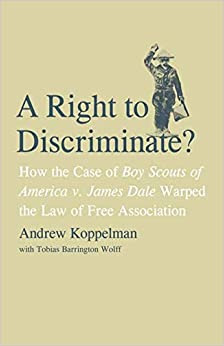
Andrew Koppelman and Tobias Barrington Wolff, A Right to Discriminate?: How the Case of Boy Scouts of America v. James Dale Warped the Law of Free Association (Yale University Press 2009)

Jack M. Balkin and Reva B. Siegel, The Constitution in 2020 (Oxford University Press 2009)

Heather K. Gerken, The Democracy Index: Why Our Election System Is Failing and How to Fix It (Princeton University Press 2009)

Mary Dudziak, Exporting American Dreams: Thurgood Marshall's African Journey (Oxford University Press 2008)

David Luban, Legal Ethics and Human Dignity (Cambridge Univ. Press 2007)

Ian Ayres, Super Crunchers: Why Thinking-By-Numbers is the New Way to be Smart (Bantam 2007)

Jack M. Balkin, James Grimmelmann, Eddan Katz, Nimrod Kozlovski, Shlomit Wagman and Tal Zarsky, eds., Cybercrime: Digital Cops in a Networked Environment (N.Y.U. Press 2007)

Jack M. Balkin and Beth Simone Noveck, The State of Play: Law, Games, and Virtual Worlds (N.Y.U. Press 2006)

Andrew Koppelman, Same Sex, Different States: When Same-Sex Marriages Cross State Lines (Yale University Press 2006)

Brian Tamanaha, Law as a Means to an End (Cambridge University Press 2006)

Sanford Levinson, Our Undemocratic Constitution (Oxford University Press 2006)

Mark Graber, Dred Scott and the Problem of Constitutional Evil (Cambridge University Press 2006)

Jack M. Balkin, ed., What Roe v. Wade Should Have Said (N.Y.U. Press 2005)

Sanford Levinson, ed., Torture: A Collection (Oxford University Press 2004)
Balkin.com homepage
Bibliography
Conlaw.net
Cultural Software
Writings
Opeds
The Information Society Project
BrownvBoard.com
Useful Links
Syllabi and Exams
